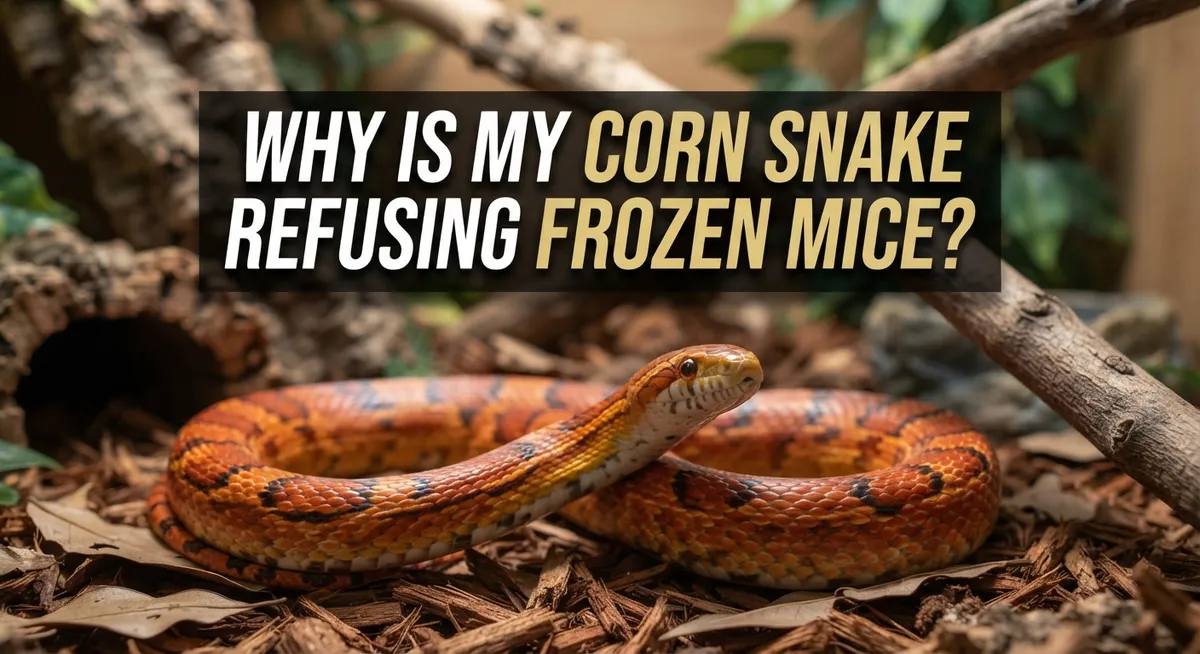
Why Is My Corn Snake Refusing Frozen Mice? Causes and Solutions
Does your corn snake turn away from its frozen mouse again and again? You are not alone. Many snake owners face this same puzzle.
Corn snakes can be surprisingly picky eaters. This is especially true when they switch from live prey to frozen. That refusal might seem worrying at first.
But here is the good news. Most feeding refusals have simple explanations. Your snake could be shedding soon. It might be in breeding mode. Or it simply prefers the thrill of live prey.
In a Nutshell
- Shedding cycles often lower appetite. Your snake may skip meals right before or after shedding its skin.
- Breeding season can make snakes lose interest in food. This is natural and temporary for both males and females.
- Live prey preference is common. Some corn snakes simply like the movement and smell of live mice more than frozen ones.
- Temperature matters a lot. If the frozen mouse is not warmed properly, your snake will likely ignore it completely.
- Hunting instinct drives feeding. If your snake is not actively searching for food, it probably is not ready to eat yet.
- Patience pays off. Leave the rejected mouse in the fridge and try offering it again the next day.
- Forcing a feeding rarely works and can stress your snake unnecessarily.
Understanding Corn Snake Feeding Behavior
Corn snakes show distinct feeding patterns that change based on their life stage and environment. Understanding these patterns helps you recognize when refusal is normal behavior versus a sign of concern.
Active hunting behavior signals that your snake is ready to eat. When your corn snake moves around the enclosure and shows interest in movement, feeding time works best. If your snake stays coiled in its hide, it simply isn’t hungry yet. Forcing food during this inactive phase rarely succeeds.
Temperature sensitivity plays a major role in appetite. Corn snakes eat more frequently when their environment stays warm. Cooler temperatures naturally reduce their desire to hunt. Check that your snake’s warm side reaches the proper temperature range for its age.
Feeding frequency varies by age and size. Young corn snakes eat more often than adults. As your snake grows, it needs food less frequently. Overfeeding can cause refusal as your snake’s stomach needs time to digest.
Seasonal changes affect feeding behavior significantly. During breeding season, both male and female corn snakes often lose interest in food. This is completely normal and temporary. Your snake will resume eating once this phase passes.
Individual personality matters too. Some corn snakes prefer live prey and need gradual adjustment to frozen options. Others accept frozen mice immediately. Your snake’s personal preference develops over time based on its early feeding experiences.
Pay close attention to body condition while your snake refuses food. A healthy corn snake can skip meals for weeks without harm. If your snake looks thin or shows other health signs, consult a veterinary professional. Most refusals resolve naturally when you understand what your snake needs.
Common Reasons Corn Snakes Refuse Frozen Mice
Your corn snake might refuse frozen mice for several straightforward reasons. Understanding these causes helps you respond correctly instead of forcing the issue.
Shedding cycles reduce appetite significantly. When your snake sheds its skin, eating becomes less important. Your snake’s body focuses energy on the shedding process. Wait until the shed completes before offering food again. You will notice clearer eyes and fresh skin when shedding finishes.
Breeding season affects feeding behavior dramatically. Male corn snakes often stop eating during mating season. Female snakes may also lose interest in food when breeding hormones activate. This refusal is normal and temporary. Your snake will resume eating once breeding season passes.
Live prey preference is common in corn snakes. Some snakes develop a strong preference for moving prey. Frozen mice lack the movement that triggers hunting instincts. Your snake may simply be waiting for something that moves. This preference can change over time with patience and gradual transitions.
Temperature matters greatly. Frozen mice must be warmed to body temperature before feeding. A cold mouse does not trigger the same hunting response. Warm the mouse properly so your snake recognizes it as food. Cold prey feels wrong to your snake’s heat sensing abilities.
Hunting readiness is another factor. If your snake stays hidden and shows no interest in exploring, it is not ready to eat. Active snakes emerge from their hides and move around the enclosure. Inactive snakes simply do not want food right now.
Monitor your snake’s overall health while it refuses food. Weight loss, lethargy, or other unusual signs warrant veterinary attention. Most refusals resolve on their own with time and proper conditions.
How Shedding Cycles Affect Appetite
Shedding cycles have a major impact on your corn snake’s appetite. During this time, your snake’s focus shifts away from hunting and eating. Instead, your snake concentrates energy on removing its old skin.
When your corn snake sheds, it typically stops eating for several days before the process begins. This is completely normal behavior. Your snake’s body prepares itself by reducing hunger signals.
The pre-shed period usually lasts about one week. You might notice your snake’s eyes turn milky or cloudy during this phase. This cloudiness means shedding will happen soon. Your snake will seem less interested in food right now.
After your snake sheds its skin, appetite returns gradually. Some snakes eat immediately after shedding. Others need a few more days to feel hungry again. This varies from snake to snake.
During the actual shedding, do not offer frozen mice. Your snake cannot digest food properly while its skin is coming off. Offering food during this time causes unnecessary stress.
Wait until your snake’s eyes clear and look normal again. This signals that shedding has completed. Then you can try offering frozen mice once more.
Track your snake’s shedding schedule. Most corn snakes shed every four to eight weeks. Knowing when shedding happens helps you understand feeding refusals better.
Understanding this cycle prevents frustration. You will stop wondering why your snake refuses food during these natural periods. Simply wait for the shedding cycle to finish. Your snake will return to normal eating habits afterward.
If your snake refuses food for more than two weeks after shedding ends, monitor for other health problems. This extended refusal might indicate something else is wrong.
Breeding Season and Its Impact on Feeding
During breeding season, your corn snake’s appetite changes dramatically. Males and females both reduce food intake when their bodies focus on reproduction. This is completely normal behavior and not a sign of illness.
Male corn snakes often refuse food entirely during breeding season. They become more interested in finding mates than eating. This period typically lasts several weeks and can be frustrating for snake owners. Your male may seem restless and spend more time exploring his enclosure instead of hunting.
Female corn snakes also stop eating when preparing to breed or lay eggs. Their bodies prioritize egg production over digestion. A gravid female (one carrying eggs) needs space to move around, not frequent feeding attempts. Offering food during this time usually results in refusal.
The key is recognizing breeding season behavior as normal. Your snake is not sick. His or her body is simply redirecting energy toward reproduction. This is a biological process you cannot override with warmer mice or different feeding techniques.
How long does this last? Breeding season refusal can continue for four to eight weeks depending on your snake’s age and individual cycle. Some snakes refuse food longer than others. Monitor your snake’s body weight during this time to ensure it remains healthy.
Once breeding season ends, your corn snake’s appetite returns. You can resume your regular feeding schedule. Resume offering frozen mice at appropriate intervals. Most snakes bounce back quickly and feed normally again.
If your snake refuses food outside of breeding season, investigate other causes like recent shedding, temperature problems, or health issues. Breeding season is temporary and expected. Patience during this period prevents unnecessary stress for both you and your snake.
Step-by-Step Guide to Properly Thawing and Offering Frozen Mice
Your frozen mouse needs to reach your snake’s body temperature before offering it. A cold mouse won’t trigger a hunting response in most corn snakes. Start by removing the mouse from your freezer and placing it in warm water.
Use water that feels warm to your touch, around 100 to 110 degrees Fahrenheit. This matches your snake’s natural body temperature. Let the mouse thaw for 15 to 20 minutes in this warm water. You want the entire mouse to feel warm throughout, not just the outside.
Check the mouse by touching it with your finger. It should feel like a freshly killed prey item, not cold or icy. Pat it dry with a paper towel before offering it to your snake.
Present the thawed mouse while it’s still warm. A mouse that cools down loses its appeal. Move it gently in front of your snake using feeding tongs or tweezers. This mimics natural prey movement and signals to your snake that food is available.
If your snake doesn’t show hunting interest within a few minutes, remove the mouse. Don’t leave warm prey sitting in the enclosure for extended periods. Store it back in your refrigerator for the next feeding attempt tomorrow.
Some snakes need multiple exposures to warm frozen prey before accepting it. Consistency matters here. Use this same warming method every single feeding day. Your snake will eventually recognize the warm mouse as food worth eating.
Temperature is often the missing piece when snakes refuse frozen mice. Many owners skip the warming step entirely, then wonder why their snake shows no interest.
Transitioning Your Corn Snake from Live to Frozen Prey
Making the switch from live to frozen prey takes patience and strategy. Your corn snake may resist at first because frozen mice feel different and don’t move like living prey. This is completely normal behavior.
Start by offering frozen mice that you’ve warmed to your snake’s body temperature. Cold prey won’t trigger a feeding response. Your snake relies on heat and movement to recognize food. A thawed mouse that’s still warm mimics a freshly killed meal much better than a cold one.
Observe your snake’s hunting behavior carefully. If your snake stays hidden and shows no interest in exploring, it’s not ready to eat. Snakes only strike when they feel motivated to hunt. Forcing food into an uninterested snake causes stress and creates negative associations with feeding time.
Try offering frozen prey every few days rather than daily. This gives your snake time to build appetite and confidence. Some snakes need multiple exposures before accepting frozen options. Patience during this transition prevents long term feeding problems.
If your snake refuses the thawed mouse, remove it immediately. Don’t leave rejected food in the enclosure. Store it in your refrigerator and try again the next feeding day. Repeated exposure in a low pressure environment works better than forcing acceptance.
Document what works and what doesn’t. Track feeding times, temperatures, and your snake’s response. You’ll start seeing patterns. Some snakes prefer mice offered in a specific location or time of day. Others need slightly warmer temperatures or longer thawing periods.
The transition typically takes two to four weeks. Stay consistent with your approach. Your corn snake will eventually accept frozen prey once it understands the new feeding routine.
Mistakes to Avoid When Feeding a Reluctant Corn Snake
Many owners make simple mistakes when feeding a reluctant corn snake. Understanding these errors helps you troubleshoot feeding refusal quickly.
Offering food at the wrong time is the most common mistake. If your snake recently shed, wait five to seven days before trying again. A freshly shed snake has no appetite. Similarly, if your snake shows no hunting behavior, it’s not ready to eat yet. Forcing the issue wastes food and frustrates both you and your snake.
Not warming frozen prey enough causes many refusals. A cold mouse looks dead and unappetizing. Your snake expects warm prey that signals a fresh kill. Always warm the mouse until it matches your snake’s body temperature. Test it with your finger before offering it.
Leaving rejected food in the enclosure creates problems too. Remove uneaten mice immediately after ten minutes. Leaving dead prey in the tank attracts bacteria and mold. It also stresses your snake. Store the mouse in your refrigerator and retry the next day instead.
Ignoring your snake’s hunting signals leads to unnecessary feeding attempts. Watch your snake’s behavior carefully. Does it emerge from its hide? Does it show interest in movement? If your snake stays hidden and ignores the mouse, remove it. Your snake simply isn’t hungry.
Switching prey types too quickly frustrates snakes that prefer live food. Gradual transitions work better than sudden changes. Offer warm frozen mice alongside live prey occasionally. This helps your snake adjust to the new food type without stress.
Pay attention to these mistakes and your feeding sessions improve dramatically.
When to Worry: Signs That Refusal May Indicate a Health Problem
Your corn snake’s refusal to eat frozen mice might signal a health issue. You need to watch for specific warning signs that go beyond simple pickiness.
Watch for weight loss as your first red flag. A healthy corn snake maintains steady weight between feedings. If your snake appears thinner or has a sunken appearance around the head and neck, something is wrong. Weigh your snake every two weeks to track changes.
Check your snake’s body condition carefully. Run your finger along its spine. You should feel ribs slightly, but not see them prominently. Visible ribs mean your snake is losing muscle mass from not eating enough.
Lethargy and hiding are important signs. Your snake should move around the enclosure regularly and explore. If your snake stays coiled in one spot for days without moving, even when you offer food, this suggests illness rather than feeding preference.
Look at your snake’s eyes and skin. Clear eyes indicate good health. Cloudy or sunken eyes mean your snake may be stressed or sick. Healthy skin sheds in one complete piece. If your snake struggles to shed or sheds in patches, this points to health problems.
Monitor your snake’s droppings. Normal waste appears dark and firm. Diarrhea or lack of droppings after several weeks without eating indicates digestive issues.
Temperature problems can cause refusal too. Check your enclosure temperature with a reliable thermometer. Corn snakes need a warm side between 85 to 90 degrees Fahrenheit and a cool side around 75 to 80 degrees.
If you notice any combination of these signs, contact a reptile veterinarian. Refusal lasting more than two weeks with other symptoms requires professional evaluation.
Final Thoughts
Corn snakes refuse frozen mice for many reasons. Shedding, breeding season, and simple food preferences all play a part.
Patience matters most when your snake stops eating. Most snakes return to normal feeding within a few weeks.
Your snake’s hunting behavior tells you everything. If it stays hidden and shows no curiosity, it’s telling you it’s not ready.
Don’t panic over short refusal periods. Corn snakes naturally skip meals during certain life stages.
Watch for real warning signs instead of assuming the worst. Weight loss, lethargy, and abnormal droppings need attention.
A healthy snake with normal energy and good body condition is likely just being picky. This is normal snake behavior, not an emergency.
Keep your feeding routine consistent and stress free. Warm the prey properly every single time you offer it.
Avoid forcing feeding attempts when your snake shows no interest. This only creates negative associations with mealtime.
Trust the transition process if you’re moving from live to frozen prey. Most snakes adapt successfully with enough time and consistency.
Some snakes take longer than others to accept change. This doesn’t mean something is wrong with your pet.
Stay observant but relaxed about occasional refusals. Your snake knows its own body better than you might think.
If problems persist beyond a month, or health signs appear, reach out to a reptile veterinarian. Getting expert advice early prevents bigger issues later.
Most corn snake owners face this challenge at some point. With patience and the right approach, your snake will likely return to eating frozen mice happily.
Frequently Asked Questions
Why won’t my corn snake eat frozen mice when it ate live ones before?
Your snake likely has a hunting preference. Live prey triggers natural hunting instincts that frozen mice don’t activate. Some corn snakes need time to adjust to the change. Warming the frozen mouse to body temperature helps make it more appealing. Your snake may also need a gradual transition period of two to four weeks.
Could breeding season affect my snake’s appetite?
Yes, absolutely. Male and female corn snakes often stop eating during breeding season. This is completely normal behavior. Males become focused on finding mates instead of food. Females may refuse meals while preparing to lay eggs. This refusal typically lasts several weeks and resolves on its own.
What if my snake recently shed its skin?
Corn snakes lose appetite after shedding. Their eyes cloud over and they feel stressed during this process. Wait at least three to five days after shedding before offering food again. Your snake will return to normal feeding once its skin fully sheds and clears.
How can I tell if refusal means something is wrong?
Watch for additional warning signs beyond refusing food. Weight loss, lethargy, and excessive hiding suggest health problems. Check your snake’s eyes, skin, and droppings for abnormalities. A healthy snake with normal energy is likely just being picky. If you notice multiple concerning signs together, contact a reptile veterinarian for evaluation.
Should I keep trying to feed my snake the same day?
No. Remove uneaten food immediately and refrigerate it. Try again the next feeding day. Leaving rejected food in the enclosure creates stress and mess. Your snake will eat when it’s genuinely hungry and ready.

Hi, I’m Liza — pet lover, lifelong animal enthusiast, and the voice behind Liza4Pets. I created this space to share honest, practical pet care advice for fellow pet parents who want the best for their furry (and not-so-furry) companions.