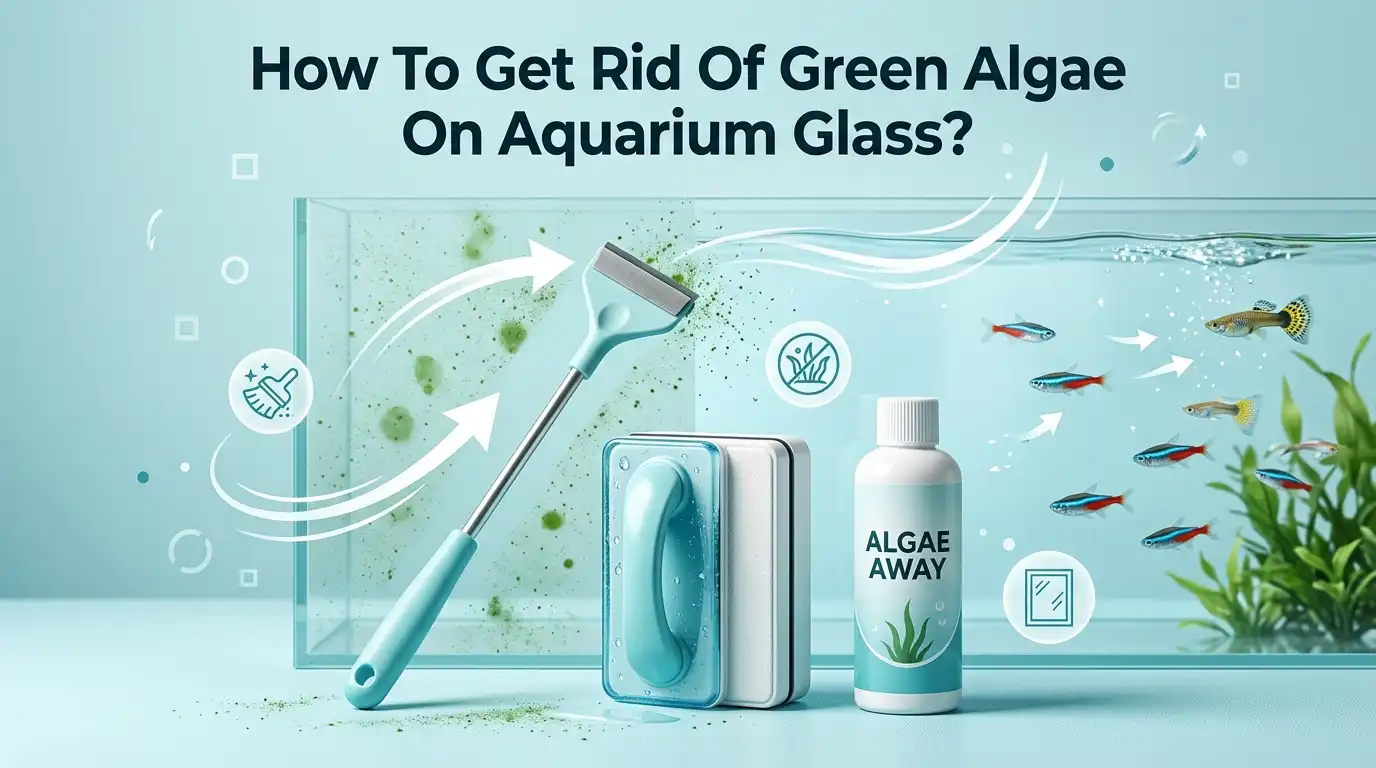
How To Get Rid Of Green Algae On Aquarium Glass?
Green algae on aquarium glass is one of the most common headaches for fish keepers. You clean the tank, the water looks crystal clear, and a few days later a green film creeps back across the glass.
It blocks your view of the fish. It makes the whole tank look neglected. The good news is that you can fix this problem for good. Green algae is not a sign that you are a bad aquarist.
This guide walks you through every step, from quick cleaning tricks to long term fixes that stop algae from coming back.
In a Nutshell:
- Algae needs three things to grow: light, nutrients, and time. Remove or reduce any one of these and the green film slows down dramatically.
- Manual scrubbing gives instant results, but it only treats the symptom. Use an algae scraper or melamine sponge for a quick clear view of your tank.
- Algae eating animals like nerite snails, otocinclus, and amano shrimp act as a natural cleanup crew, but each species eats only certain algae types.
- Too much light is a leading cause. Keep lights on for 6 to 8 hours a day in unplanted tanks and avoid direct sunlight on the glass.
- High nitrate and phosphate feed algae. Test your water, feed your fish less, and do regular water changes to starve the algae.
- Chemical treatments are a last resort. They work, but they do not fix the root cause, so the algae returns unless you balance light and nutrients first.
What Causes Green Algae On Aquarium Glass?
Green algae grows because your tank gives it the perfect conditions to thrive. Algae is a plant in its simplest form, and like every plant it needs light, water, and food. The food comes mostly from nitrate and phosphate.
These nutrients build up from fish waste, uneaten food, and sometimes from your tap water. When light and nutrients are both high, algae spreads fast across the glass.
New tanks are especially prone to green algae because the biological balance is not settled yet. Direct sunlight from a nearby window makes it much worse.
Overfeeding your fish adds extra waste that algae loves. Old light bulbs that have shifted color also favor algae over your plants. Understanding these causes is the first step. Once you know what is feeding the green film, you can cut off its supply.
How To Identify The Type Of Green Algae You Have
Not all green algae is the same, and knowing your type helps you choose the right fix. The two most common kinds on glass are green spot algae and green dust algae.
The difference matters because they behave differently. Green spot algae forms small, hard, round dots that stick stubbornly to the glass. You usually need a blade or scraper to remove it. It often appears in tanks with low phosphate.
Green dust algae is soft and forms a thin film that wipes off with the gentlest touch. It tends to return quickly after cleaning. A simple test tells them apart.
Rub the glass with your finger. If the algae lifts off easily, it is green dust algae. If it resists and stays put, it is green spot algae. Knowing your type saves you time and effort when picking a removal method.
Step By Step Guide To Scrubbing Algae Off The Glass
Manual cleaning gives you the fastest results. Here is a simple process you can follow today. First, gather your tools.
You will need an algae scraper, a melamine foam pad, or a magnetic glass cleaner. Avoid rough kitchen sponges because they can scratch the glass and ruin acrylic tanks.
Start at the top of the glass and work downward in straight strokes. For soft green dust algae, a melamine pad wipes it away in seconds.
For hard green spot algae, use a scraper with a glass safe blade and apply firm, steady pressure. Hold the blade at a low angle to avoid gouging the glass. After scrubbing, the loosened algae will float in the water.
Do a partial water change and siphon out the debris. This removes the algae cells before they settle and regrow. Clean the glass during your regular maintenance to keep it under control.
Pros: Instant results, low cost, no chemicals, safe for fish.
Cons: It is only a temporary fix, it does not stop regrowth, and it takes regular effort.
Using A Magnetic Algae Cleaner For Easy Maintenance
A magnetic algae cleaner is one of the handiest tools for glass tanks. It has two parts. One magnet sits inside the tank against the glass, and the other stays outside.
You move the outer magnet, and the inner pad scrubs the algae off the glass. This means you never have to put your hands in the water for routine cleaning.
The big advantage is convenience. You can wipe the glass in under a minute without getting wet. Many models include a stiffer blade attachment for tackling hard green spot algae.
Be careful near the substrate, though. If a grain of gravel gets trapped under the magnet, it can scratch the glass. Lift the magnet away from the bottom and rinse it before reaching the gravel line. A magnetic cleaner is great for daily upkeep.
Pros: Fast, hands stay dry, good for routine cleaning, works on tall tanks.
Cons: It can trap gravel and scratch glass, weak magnets struggle with thick glass, and it only treats the symptom.
Best Algae Eating Fish For Aquarium Glass
Some fish make excellent natural cleaners and reduce how often you scrub. They graze on the glass and surfaces all day long.
Otocinclus catfish are gentle, peaceful, and love to clean glass and plant leaves. They work well in nano tanks and planted setups. A small school does a great job in smaller aquariums.
For larger tanks, bristlenose plecos and Siamese algae eaters cover more surface area. Siamese algae eaters also tackle some tougher algae types that other fish ignore.
Be careful not to confuse the Siamese algae eater with the more aggressive Chinese algae eater that looks similar.
Always research a fish before adding it, because some plecos grow large and may nibble soft plants. Add these fish as helpers, not as a complete solution, since they cannot clean every spot.
Pros: Natural cleaning, fun to watch, low ongoing effort, good for planted tanks.
Cons: Each species eats only certain algae, they add bioload and waste, and they cannot clean the whole tank alone.
Snails And Shrimp That Eat Green Algae
Invertebrates are some of the best algae cleaners you can add, and they fit in tanks of any size. Nerite snails are the stars of glass cleaning.
They graze constantly and even eat hard green spot algae that most fish leave behind. They will not overrun your tank because they need brackish water to breed, so their eggs never hatch in freshwater.
Amano shrimp are excellent at eating hair algae and soft green growth. They are active, peaceful, and safe with most community fish. Mystery snails also help by eating algae and leftover food.
Keep a secure lid on your tank, because nerite snails like to climb out. Add a calcium source to keep snail shells healthy. A small cleanup crew of snails and shrimp keeps glass and surfaces tidy with very little work from you.
Pros: Clean glass and tight spots, peaceful, will not breed out of control, low maintenance.
Cons: Nerites can climb out, they need calcium, and shrimp may be eaten by larger fish.
How To Adjust Lighting To Stop Algae Growth
Light is fuel for algae, so controlling it is one of the most powerful long term fixes. Too much light gives algae the energy it needs to spread.
The first rule is to keep your aquarium away from direct sunlight. Even a few hours of sun on the glass each day can trigger a heavy green film.
Use a timer to set a consistent light schedule. For tanks without live plants, 6 to 8 hours of light per day is plenty. Planted tanks need more, around 10 to 12 hours, because the plants compete with algae for resources.
Replace old fluorescent bulbs every 10 to 12 months, because aging bulbs shift color in a way that favors algae over plants. If algae keeps coming back, try reducing your light period by an hour and watch the results over a couple of weeks.
Pros: Addresses a root cause, free or low cost, easy with a timer, helps plants thrive.
Cons: Takes weeks to show results, requires patience, and you must fine tune the timing.
Controlling Nutrients To Starve The Algae
Algae feeds on nitrate and phosphate, so lowering these nutrients cuts off its food supply. Test your water first to see where you stand.
Aim to keep nitrate below 10 ppm and phosphate below 0.5 ppm in most tanks. High readings tell you that nutrients are building up faster than your tank can handle.
The main sources are overfeeding and infrequent water changes. Feed your fish only what they can eat in a few minutes, and remove any leftovers. Regular partial water changes are the simplest way to lower nutrients.
Use water that is low in nitrate and phosphate, since some tap water already carries these. If your tap water tests high, consider using reverse osmosis water for changes.
Starving the algae works slowly but surely, and it keeps the green film from returning after you clean the glass.
Pros: Fixes the root cause, improves fish health, prevents regrowth, no chemicals needed.
Cons: Requires regular water testing, takes consistent effort, and results are gradual.
Adding Live Plants To Outcompete Algae
Live plants are one of the best natural defenses against green algae. Plants and algae compete for the same nutrients and light.
When you fill a tank with healthy plants, they soak up the nitrate and phosphate that algae would otherwise eat. A heavily planted tank rarely has serious algae problems.
The key is to plant generously, not just one or two stems. Fast growing plants like hornwort, wisteria, and water sprite are the most effective because they use nutrients quickly.
These plants act like a sponge, pulling food away from the algae. Give your plants good light and a quality fertilizer so they stay strong and keep competing.
Healthy plants are your long term insurance against algae. Trim away any dead or yellowing leaves during water changes, since rotting plant matter adds nutrients that feed algae.
Pros: Natural and long lasting, beautiful display, improves water quality, supports fish.
Cons: Needs good light and fertilizer, takes time to establish, and some fish eat plants.
Using A UV Sterilizer And Better Filtration
If green algae keeps coming back or your water turns green, a UV sterilizer can help. A UV sterilizer passes water past an ultraviolet light that kills floating algae cells.
It is especially good for green water blooms where the whole tank looks like pea soup. It also helps stop algae from restarting after you clean the glass.
Strong filtration plays a supporting role too. Good water flow prevents dead zones where debris and algae like to settle. Clean your filter regularly so it can remove waste efficiently.
A clogged filter lets nutrients build up, which feeds algae. Run a UV sterilizer for 7 to 10 days to clear an active bloom, and do small water changes while it runs. These tools work best alongside good light and nutrient control, not as a replacement for them.
Pros: Clears green water fast, kills floating algae, prevents regrowth, low maintenance.
Cons: Extra cost and equipment, does not stop algae on glass, and adds to electricity use.
How To Treat Algae With Hydrogen Peroxide Safely
Hydrogen peroxide is a low cost treatment for stubborn algae on decorations and hardscape. Use the standard 3 percent solution sold at any drugstore.
This method works best on items you can expose to air, not directly on the glass while fish swim nearby. Always handle it with care to protect your fish and plants.
To use it, drain enough water so the algae covered decor sits above the surface. Spray the peroxide on the algae and let it sit for about five minutes. Then refill the tank with fresh water.
You can also remove the item and treat it outside the tank for safety. The dying algae turns red or clear, and your cleanup crew may eat it afterward. Reduce the contact time for delicate plants so they survive the treatment.
Pros: Cheap, effective on tough algae, easy to find, breaks down safely in water.
Cons: Can harm sensitive plants and fish if overused, requires draining water, and needs careful dosing.
Why Chemical Algaecides Should Be Your Last Resort
Store bought algaecides promise a quick kill, and they do work in the short term. The problem is that they do not fix what caused the algae in the first place.
Once the chemical wears off, the green film returns, often worse than before. Treating the cause always beats treating the symptom.
If you decide to use one, follow the directions exactly. Remove activated carbon from your filter first, because it will absorb the chemical and make it useless. Do several small water changes after treatment to clear the dead algae and chemical residue.
Watch your fish closely, since sudden algae die offs can cause ammonia spikes. Use algaecides only when natural methods have failed, and always pair them with better light and nutrient control. Otherwise you are simply buying time, not solving the problem.
Pros: Fast acting, easy to use, works on heavy outbreaks, widely available.
Cons: Does not fix the cause, algae returns, can stress fish, and may cause ammonia spikes.
Daily And Weekly Habits To Keep Glass Algae Free
Prevention is far easier than fighting a full outbreak. A few simple habits keep your glass clear for good.
Each week, do a partial water change of about 20 to 30 percent to keep nutrients low. Wipe the glass with your magnetic cleaner or scraper during the same session. A quick weekly wipe stops algae from building into a thick layer.
Feed your fish only what they finish in a few minutes, and skip a feeding day now and then. Check that your light timer keeps the schedule consistent. Trim dead leaves, rinse your filter media in old tank water, and test your nitrate and phosphate every couple of weeks.
Keep your tank out of direct sunlight at all times. These small, steady actions add up and make heavy algae a thing of the past. Consistency is the real secret to a clear tank.
Frequently Asked Questions
Why does green algae keep coming back after I clean the glass?
Green algae returns because cleaning only removes the visible film, not the cause. If light and nutrients stay high, the algae simply regrows. To stop it for good, reduce your lighting hours, feed less, and do regular water changes to lower nitrate and phosphate.
Is green algae harmful to my fish?
In small amounts, green algae is harmless and even helps purify the water. It is mostly a cosmetic problem that blocks your view. However, a heavy green water bloom can lower oxygen at night, so it is best to keep algae under control for a healthy, clear tank.
How long does it take to get rid of green algae?
Scrubbing clears the glass instantly, but stopping regrowth takes time. Expect two to four weeks to see real improvement once you adjust light and nutrients. Wait two to three weeks between changes so you can judge what works before adjusting again.
Can I use a razor blade on my aquarium glass?
Yes, a glass safe blade works well on hard green spot algae. Hold it at a low angle and use steady pressure to avoid scratches. Never use a blade on acrylic tanks, because it will scratch the surface. Use a melamine pad on acrylic instead.
Does reducing light really stop algae?
Yes, light is a main fuel for algae growth. Cutting your light period and blocking sunlight slows algae a lot. Keep unplanted tanks at 6 to 8 hours of light per day, use a timer for consistency, and replace old bulbs that may favor algae.
What is the best natural way to control glass algae?
The best natural approach combines a few methods. Add algae eaters like nerite snails and otocinclus, grow healthy live plants, and keep nutrients low with water changes. Together these starve the algae and clean what little remains, giving you a clear tank without chemicals.

Hi, I’m Liza — pet lover, lifelong animal enthusiast, and the voice behind Liza4Pets. I created this space to share honest, practical pet care advice for fellow pet parents who want the best for their furry (and not-so-furry) companions.