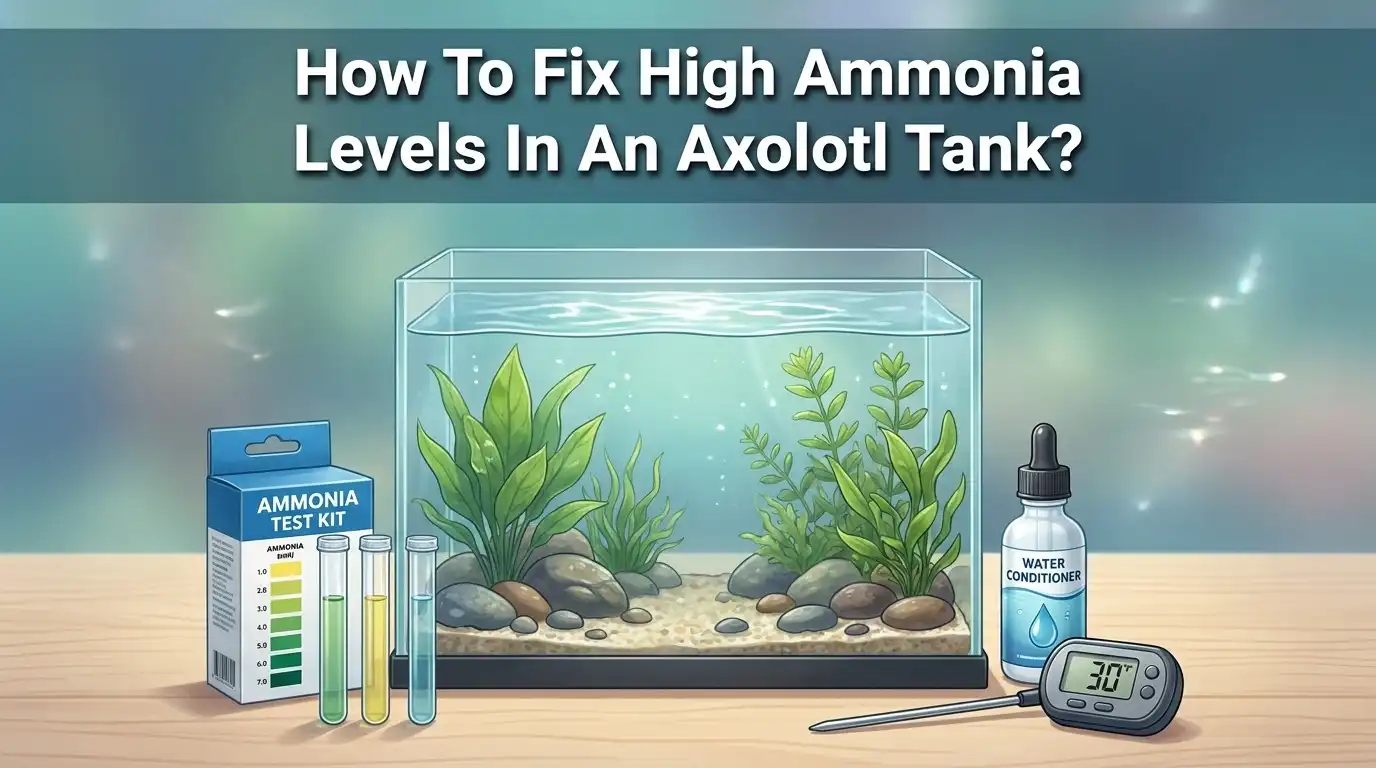
How To Fix High Ammonia Levels In An Axolotl Tank?
Your axolotl floats in its tank, and something feels off. Maybe its gills look shorter than before. Maybe it stopped eating.
You test the water, and the ammonia reading shocks you. High ammonia is one of the most common problems axolotl owners face, and it can turn dangerous fast.
The good news is simple. You can fix high ammonia levels, and you can do it starting today. Your axolotl can heal from ammonia stress once you act.
This guide walks you through every step. You will learn why ammonia rises, how to bring it down quickly, and how to keep it at zero for good.
Key Takeaways
- Ammonia is toxic at any level above 0 ppm. Even a small reading stresses your axolotl and can cause gill damage. Your target is always zero.
- Immediate water changes are your fastest fix. A 25 to 50 percent water change lowers ammonia right away and buys your axolotl time while you solve the root cause.
- A water conditioner that detoxifies ammonia protects your pet fast. Products that bind ammonia make it non toxic for around 24 hours, giving you a safety window.
- Tubbing saves lives during a crisis. Moving your axolotl to a clean tub with daily 100 percent water changes removes it from the toxic tank completely.
- An uncycled tank is the number one cause. Most ammonia problems come from a tank that never finished the nitrogen cycle. Fixing the cycle fixes the problem permanently.
- Overfeeding and poor cleaning make things worse. Uneaten food and waste rot into ammonia. Feeding less and cleaning more keeps levels low long term.
Understand What Ammonia Is And Why It Harms Axolotls
Ammonia is a waste product. Your axolotl releases it constantly through its skin, gills, and poop. Leftover food and rotting plant matter also break down into ammonia inside your tank.
Ammonia is toxic to axolotls at any concentration above 0 ppm. This point matters a lot. Many owners think a small reading is fine, but even 0.25 ppm causes stress and discomfort.
Axolotls have soft, permeable skin and delicate external gills. This makes them far more sensitive than most fish. Ammonia burns their gills, damages their skin, and weakens their whole body.
When ammonia builds up, your axolotl cannot escape it. The chemical enters its bloodstream and disrupts normal function. Understanding this danger is the first step toward fixing it, because it shows you why acting quickly always beats waiting and hoping.
Recognize The Warning Signs Of Ammonia Poisoning
Your axolotl often tells you something is wrong before your test kit confirms it. Learning these signs helps you catch trouble early and respond fast.
Watch for gill changes first. Healthy gills look full and feathery. With ammonia stress, the gill fluff shrinks, curls forward, or turns red and inflamed. This is the clearest early warning.
Look at behavior next. An affected axolotl may stop eating, sit still for long periods, or float at the surface. Some curl their tail forward over their body, a classic stress posture.
Check the skin too. Red patches, bumps, discoloration, or a slimy coat all point to ammonia burns. Lethargy and gasping motions are serious signals.
If you spot several of these signs together, treat it as urgent. The sooner you react, the better your axolotl recovers. Grab your test kit and confirm the ammonia level right away.
Test Your Water To Confirm The Problem
Never guess about ammonia. Always test your water with a reliable liquid test kit. Liquid kits give far more accurate readings than paper strips, which often fade or mislead.
Fill the test tube with tank water. Add the drops as the instructions say, shake, and wait. Then compare the color to the chart under good lighting.
Test for ammonia, nitrite, and nitrate all at once. These three numbers tell the full story of your water. Ammonia and nitrite should both read 0 ppm in a healthy tank, and nitrate should stay below 20 ppm.
Write down your results each time. Tracking your numbers over several days reveals patterns and shows whether your fixes are working. Test daily during any crisis, and keep testing weekly once things stabilize. Knowing your real numbers turns panic into a clear plan of action.
Do An Immediate Partial Water Change
When ammonia spikes, a water change is your fastest tool. Removing dirty water instantly lowers the ammonia your axolotl sits in. This step buys precious time while you fix the deeper cause.
Start with a 25 to 50 percent water change. Never do a huge sudden swap on a cycled tank, because that can shock helpful bacteria. For very high readings, repeat several smaller changes across the day.
Always prepare the new water first. Dechlorinate it and match the temperature to the tank. Cold, chlorine free water protects both your axolotl and your bacteria.
Pros of this method: it works fast, costs almost nothing, and helps every single time. Cons: it treats the symptom, not the root cause, and you must repeat it until the real problem is solved. Think of water changes as first aid, not a permanent cure.
Use A Water Conditioner That Detoxifies Ammonia
A quality water conditioner does more than remove chlorine. Certain conditioners bind ammonia and turn it into a non toxic form for around 24 hours. This protects your axolotl during a spike.
Add the correct dose to your tank based on its water volume. The product locks up the ammonia so it cannot burn your pet, while still leaving it available for your beneficial bacteria to process.
This gives you a safety window every single day. You can redose every 24 to 48 hours during a crisis or while your tank finishes cycling.
Pros: it acts within minutes, it is affordable, and it makes ammonia harmless while your cycle catches up. Cons: it is a temporary bridge, not a fix, and your test kit may still show ammonia even though it is now detoxified. Use it alongside water changes, never as your only solution.
Tub Your Axolotl To Remove It From Danger
Tubbing means moving your axolotl into a clean container away from the toxic tank. This is the safest choice during a serious ammonia crisis. It fully removes your pet from the harmful water.
Use a food safe plastic tub large enough for your axolotl to turn around. Fill it with cold, dechlorinated water. Do a 100 percent water change on the tub every 24 hours so waste never builds up.
Keep the tub in a cool, quiet spot. Add a hide so your axolotl feels secure, and skip gravel or decorations that trap waste.
Pros: it gives your axolotl an ammonia free home immediately and lets you rescue the main tank without stress. Cons: it needs daily attention and manual water changes. Axolotls can live safely in tubs for weeks or even months, so do not rush them back too soon.
Fix The Root Cause By Cycling Your Tank
Most ammonia problems come from one thing: an uncycled tank. Cycling grows beneficial bacteria that eat ammonia and turn it into safer compounds. Without these bacteria, ammonia has nowhere to go.
The nitrogen cycle works in stages. First, bacteria convert ammonia into nitrite. Then a second group converts nitrite into nitrate, which is far less harmful and removed through water changes.
A tank is only truly cycled when it can process 2 ppm of ammonia down to 0 ppm ammonia and 0 ppm nitrite within 24 hours. This is the gold standard.
To cycle, add a pure ammonia source to reach 1 to 2 ppm, then test regularly and dose again as it drops. Fixing the cycle solves ammonia problems permanently, unlike quick patches. It takes patience, often four to eight weeks, but it is the real answer.
Speed Up Your Cycle With Established Bacteria
Cycling from scratch takes weeks, and that feels slow during a crisis. You can speed it up by borrowing beneficial bacteria from an already cycled tank. This gives your tank a running start.
The best method uses seeded filter media. Ask a fish keeping friend or a local shop for a piece of sponge or filter material from a healthy, established tank. Add it to your own filter and the bacteria colonize your system.
Bottled bacteria products are another option, but results vary. Many shelf stored bottles contain dead bacteria that do nothing. Refrigerated products tend to perform better.
Pros of seeded media: it can cut cycling time dramatically and it is often free. Cons: you must find a trusted, disease free source, and the bacteria are fragile during transfer. Never trust claims of instant cycling, since real bacteria always need a little time to settle and grow strong.
Add A Chemical Filter Media Like Zeolite
Zeolite is a natural mineral that soaks up ammonia directly from the water. It works like a sponge, pulling ammonia out until it becomes saturated. This makes it a handy emergency tool.
Place zeolite in a media bag inside your filter or tank. It starts absorbing ammonia right away and can bring a scary reading down within hours. This helps a lot while your biological cycle is still developing.
Remember that zeolite fills up over time. Once saturated, it stops working and must be replaced or recharged in a salt solution.
Pros: it lowers ammonia fast, it is affordable, and it works without electricity. Cons: it is temporary, it needs regular swapping, and it can slow your natural cycle by removing the ammonia your bacteria need to grow. Use zeolite as short term support, then remove it once your tank cycles fully so your bacteria can thrive.
Stop Overfeeding And Remove Uneaten Food
Feeding habits play a huge role in ammonia levels. Every scrap of uneaten food rots and releases ammonia into your water. This is one of the easiest problems to fix.
Feed your axolotl only what it eats within a few minutes. Adult axolotls do not need daily feeding. Two or three feedings per week suits most adults just fine.
Many keepers add fasting days on purpose. Skipping food for a day or two each week gives the digestive system a rest and cuts down on waste production.
Always remove leftover food promptly. A turkey baster works well for spot cleaning bits of worm or pellet off the tank floor.
Pros: feeding less costs nothing and reduces waste at the source. Cons: you must watch portions carefully so your axolotl still gets enough nutrition. Right sized meals keep your water cleaner and your pet healthier at the same time.
Keep Your Tank Clean With Regular Maintenance
A clean tank rarely develops ammonia problems. Regular maintenance stops waste from piling up and turning toxic. A steady routine keeps your numbers low without emergencies.
Use a gravel vacuum or turkey baster to remove poop and debris during weekly water changes. Aim for a 20 to 30 percent water change each week on a cycled tank. This exports nitrate and keeps the whole system balanced.
Clean your filter media in old tank water only, never in tap water. Chlorine and sudden temperature swings kill the good bacteria you worked hard to grow.
Do not replace all your filter media at once. Swap only part of it at a time so your bacteria colony survives.
Pros: routine care prevents problems before they start and takes little time. Cons: it requires consistency week after week. A simple schedule keeps ammonia at zero for good.
Manage pH And Temperature To Support Bacteria
Your water chemistry affects how well your ammonia eating bacteria work. Keep your pH above 6.5 at all times, because a low pH slows or stalls the nitrogen cycle. A pH below 6.0 stops the cycle completely.
If your pH drops too low, you can raise it gently. Adding crushed coral in a media bag releases minerals slowly and steadies your pH over time.
Temperature matters too. Axolotls need cool water, ideally between 60 and 68 degrees Fahrenheit. Warmer water speeds bacteria growth but stresses your axolotl, so never overheat the tank to rush a cycle.
Pros of managing these factors: your bacteria stay strong and process ammonia efficiently. Cons: it adds a couple more things to monitor. Stable pH and cool, steady temperatures create the healthy foundation your beneficial bacteria need to keep ammonia locked at zero.
Prevent Future Ammonia Spikes For Good
Once your tank is stable, your goal shifts to keeping it that way. Prevention is far easier than fixing another crisis. A few steady habits protect your axolotl for life.
Test your water every week, even when everything looks fine. Catching a tiny rise early lets you act before it becomes dangerous. Keep your test kit fresh and replace it before it expires.
Avoid common triggers. Do not overstock your tank, do not add new animals without quarantine, and never do drastic tank changes that disturb your bacteria.
Keep spare dechlorinated water ready so you can respond fast if needed. Watch your axolotl daily for any change in gills, appetite, or behavior.
Pros: prevention saves stress, time, and money. Cons: it asks for ongoing attention. A calm, well maintained tank with zero ammonia is completely achievable, and your axolotl will reward you with years of healthy, happy living.
Frequently Asked Questions
How long does it take to lower high ammonia in an axolotl tank?
You can lower ammonia within minutes using a water change and a detoxifying conditioner. These give immediate relief. However, fixing the true cause by cycling your tank takes longer, usually four to eight weeks. During that time, use daily water changes and conditioner to keep your axolotl safe while the bacteria grow.
Can an axolotl recover from ammonia poisoning?
Yes, axolotls are remarkably resilient. Most recover fully once you remove them from the toxic water. Even ammonia burns on the gills and skin usually heal over time in clean, cool, ammonia free water. Tub your axolotl, do daily 100 percent water changes, and let it rest quietly. Serious cases with infection may need a vet’s help, so consult an exotics vet if symptoms worsen.
What is a safe ammonia level for axolotls?
The only safe ammonia level is 0 ppm. Any reading above zero causes stress and can harm your axolotl. Nitrite should also stay at 0 ppm, and nitrate should remain below 20 ppm. A properly cycled tank keeps both ammonia and nitrite at zero at all times, which is exactly why cycling matters so much.
Should I stop feeding my axolotl during an ammonia spike?
Reducing or pausing feeding during a spike helps a lot. Less food means less waste and less ammonia. A short fast of a day or two will not harm a healthy adult axolotl. Once your water stabilizes, return to a normal schedule of two or three feedings per week, removing any uneaten food promptly.
Why does my ammonia keep coming back after water changes?
This almost always means your tank is not cycled. Water changes only remove ammonia temporarily, while the waste keeps producing more. Without enough beneficial bacteria, ammonia returns quickly. The permanent fix is to complete the nitrogen cycle so your bacteria process ammonia as fast as your axolotl produces it, keeping levels at zero on their own.

Hi, I’m Liza — pet lover, lifelong animal enthusiast, and the voice behind Liza4Pets. I created this space to share honest, practical pet care advice for fellow pet parents who want the best for their furry (and not-so-furry) companions.