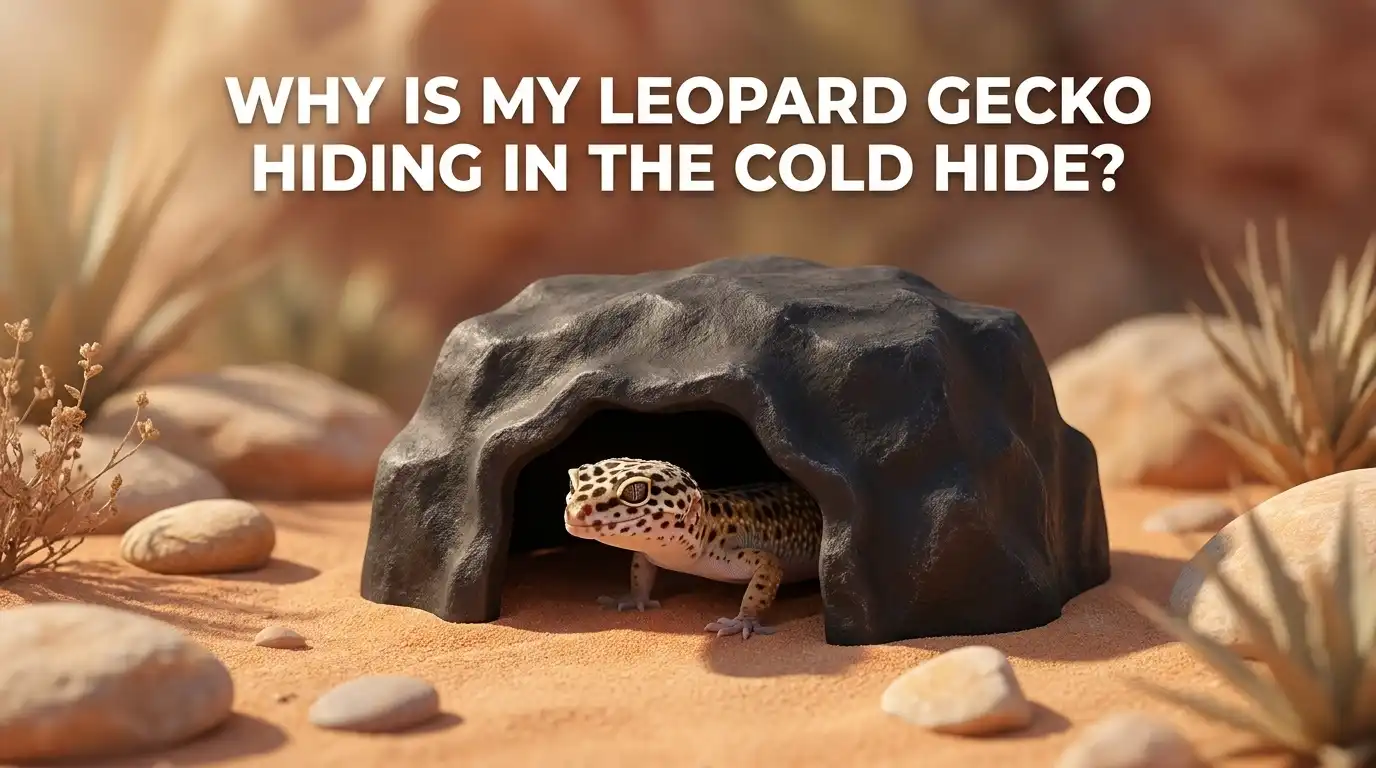
Why Is My Leopard Gecko Hiding In The Cold Hide?
Your leopard gecko keeps choosing the cool hide, and you feel confused. You built a warm spot for basking, yet your pet ignores it. This behavior worries many new keepers.
The good news is simple. Most reasons behind this habit are easy to understand and easy to fix.
Leopard geckos move between warm and cool zones on purpose. This movement is called thermoregulation. Sometimes the choice is normal.
In A Nutshell:
- Cold hide use is often normal. Leopard geckos rest in cooler spots during the day. They are more active at dawn and dusk, so daytime hiding is expected.
- A too hot warm side is the top cause. If the warm hide feels uncomfortable, your gecko will escape to the cool hide to avoid overheating.
- Stress drives geckos into hiding. A new tank, loud noise, or a fresh move can push your pet into the safest spot it can find.
- Health problems change hide habits. Impaction, illness, or brumation can make a gecko stay cold and still. Watch for weight loss and no poop.
- Correct temperatures fix most cases. A warm side of 88 to 92°F and a cool side of 70 to 77°F solve the majority of these problems.
- Tools matter more than guesses. A digital probe thermometer and a thermostat give you real numbers instead of hope.
Is It Normal For A Leopard Gecko To Use The Cold Hide?
Yes, using the cold hide can be completely normal. Leopard geckos are crepuscular animals. This means they stay most active during dawn and dusk. During bright daylight hours, they often sleep in a quiet, cool, and dark spot.
Your gecko is not broken if it picks the cool hide during the day. Wild leopard geckos hide in cool burrows to escape the desert heat. Your pet follows the same instinct at home.
The key is watching the full picture. A healthy gecko still comes out in the evening. It hunts, explores, and uses the warm hide to digest food.
If your gecko eats well, poops normally, and moves around at night, cold hide napping is fine. Problems only appear when the gecko never leaves the cool zone.
Reason 1: The Warm Side Is Simply Too Hot
This is the most common cause by far. Many keepers set the warm hide too high without knowing it. When the heat feels harsh, your gecko runs to the cool hide to protect its body.
A leopard gecko cannot tell you the temperature is wrong. It votes with its feet instead. Constant cool hide use is often a loud signal that your warm side burns too hot.
The correct warm hide floor temperature sits around 88 to 92°F (31 to 33°C). The basking surface can reach the low 90s.
If your readings climb past 95°F on the floor, that is likely the trap. Your gecko avoids the heat mat or bulb because it feels like standing on a hot pan. Lower the heat, and your gecko will start using both sides again.
How To Measure And Fix Your Tank Temperatures
Guessing never works. You need real numbers to fix a heat problem. Start with the right tools and check both zones carefully.
Step one: Buy a digital thermometer with a probe. Place the probe on the floor inside the warm hide. Avoid stick on dial gauges, since they read air, not surface, and give false numbers.
Step two: Check the warm side. It should read 88 to 92°F. Check the cool side. It should read 70 to 77°F. Write these numbers down over several days to spot patterns.
Step three: Connect your heat source to a thermostat. A thermostat holds the temperature steady and stops dangerous spikes.
Pros of using a thermostat: it prevents burns, keeps heat stable, and removes daily guessing. Cons: it costs money upfront and needs correct setup. Still, the safety and stability it gives are worth far more than the price.
Reason 2: Your Room Or House Is Too Warm
Sometimes the tank is fine, but the room is the issue. In summer, or in upper floor apartments, room heat climbs high. When the whole tank warms up, the cool side stops feeling cool.
If your cool hide reads 80°F or more, your gecko has nowhere cold to rest. It may still pick the coolest available spot, which happens to be the cool hide, even if it is warmer than ideal.
This creates a false alarm. You think something is wrong, but your gecko is only chasing the lowest temperature it can find. Check your room temperature with a separate thermometer.
To fix this, you can run air conditioning, open a window at night, or move the tank away from sunny walls. Lowering the wattage of your heat bulb during hot months also helps. A cooler room restores the temperature gradient your gecko needs to feel balanced.
Reason 3: Stress From A New Home Or Big Change
Stress pushes geckos into deep hiding. A new tank, a recent move, new decor, or a change in substrate can all unsettle your pet. When scared, a gecko picks the safest and most enclosed hide it can find.
A stressed gecko wants to disappear, not to bask. The cool hide may simply feel more secure or darker than the warm one. This is a comfort choice, not a temperature choice.
New geckos need time to settle. Give a fresh pet 7 to 14 days of calm with little handling. Keep noise low and avoid moving the tank around.
Signs of stress include glass surfing, waving the tail, hiding all day, and skipping food. Patience is your best tool here. Most geckos relax and explore once they learn the new space is safe. Rushing the process only makes hiding worse.
Reason 4: Your Gecko May Be In Brumation
Brumation is a reptile version of light hibernation. It usually happens in winter as daylight shrinks and temperatures drop. During brumation, a leopard gecko slows down, eats less, and stays hidden for long stretches.
A brumating gecko often picks the cool hide and rarely comes out during the day. It may stop basking and sleep far more than usual. This looks alarming, but it is a natural cycle for many geckos.
Watch for the classic signs together: reduced appetite, more sleep, slower movement, and cool hide preference in the colder months. The gecko should still hold its weight and look healthy.
If you suspect brumation, do not force feeding. Keep fresh water available and leave the humid hide in place. A healthy gecko keeps its body weight during brumation. If it loses weight fast, that points to illness instead, so a vet visit becomes important.
Reason 5: Health Problems And Illness
Sometimes cold hide hiding signals sickness. A sick gecko hides to feel safe and to conserve energy. Impaction is a common problem, where substrate or undigested food blocks the gut.
Watch for warning signs beyond hiding. These include no poop for many days, a hard or bloated belly, a thinning tail, weight loss, and refusing food. These clues separate illness from normal behavior.
A sick gecko may also look weak, keep its eyes closed often, or drag its body. If you notice several of these signs together, act quickly.
Pros of seeing a reptile vet early: fast diagnosis, correct treatment, and better recovery odds. Cons: exam fees and travel time.
Early care almost always costs less than treating a severe, late stage illness. Never guess with a sick reptile. A trained exotic vet gives your pet the safest path back to health.
How Many Hides Does A Leopard Gecko Need?
Your gecko needs at least three hides to feel safe and healthy. Each hide serves a clear purpose. Missing one can push your gecko into the wrong spot for the wrong reason.
The three core hides are a warm dry hide, a cool dry hide, and a humid hide. The warm hide helps digestion. The cool hide gives a stress free retreat. The humid hide supports clean, healthy shedding.
Place the warm hide on the hot side and the cool hide on the cool side. Many keepers set the humid hide in the middle or on the warm side, since warmth plus moisture aids shedding.
If your gecko only has one hide, it has no real choice. It will use whatever is available, even if the temperature is wrong. Giving your gecko options lets it pick the exact comfort zone its body wants.
The Right Hide Size And Placement
Hide size shapes gecko comfort more than looks. A hide should feel snug, with walls that touch the gecko’s back gently. Reptiles feel safe when they can press against surfaces on all sides.
A hide that is too big feels exposed and unsafe. Your gecko may skip it and crowd into a smaller, cooler hide instead. This can look like a cool hide preference when it is really a size problem.
Match the hides so both sides feel equally cozy. If the cool hide is tight and dark but the warm hide is large and open, your gecko will pick the tight one every time.
Place hides directly over the correct temperature zones. Keep the warm hide over the heat source and the cool hide far from it. Equal comfort on both sides gives your gecko a fair choice based on heat, not fear.
Step By Step Plan To Get Your Gecko Using Both Hides
Here is a clear action plan you can follow today. Work through each step in order and give changes time to work.
Step one: Measure both sides with a probe thermometer. Confirm the warm side hits 88 to 92°F and the cool side sits at 70 to 77°F.
Step two: Adjust heat using a thermostat if the warm side runs too hot. Lower it slowly and recheck.
Step three: Check your room temperature. Cool the room if the cool side climbs above 77°F.
Step four: Confirm you have three proper hides of the right snug size, each in the correct zone.
Step five: Reduce stress. Limit handling, lower noise, and keep the tank in a calm spot.
Give each change a few days before judging results. Small, patient steps fix most cold hide habits without any drama.
When You Should Call A Reptile Vet
Most cold hide cases are simple fixes. But some cases need a professional. Knowing the line between normal and serious protects your pet.
Call a reptile vet if you see clear illness signs. These include no bowel movement for over a week, rapid weight loss, a bloated hard belly, vomiting, or extreme weakness. These signs point past behavior and into health danger.
Also call if your gecko refuses food for a long stretch outside of brumation season. A gecko that hides constantly and loses body condition needs an exam.
Pros of a vet visit: expert diagnosis, proper medicine, and peace of mind. Cons: cost and the stress of transport. When health signs stack up, a vet visit is the responsible choice. Reptiles hide illness well, so acting early often saves a life. Trust the warning signs over hope.
Common Mistakes Keepers Make With Hides And Heat
Many keepers repeat the same errors without knowing it. Spotting these helps you avoid a repeat problem down the road.
The biggest mistake is using stick on dial thermometers. They read air near the glass, not the floor surface where your gecko rests. This gives false low readings while the floor cooks.
Another common mistake is running heat without a thermostat. This causes wild temperature swings that push a gecko off the warm side. A third mistake is offering only one hide, which removes all choice.
Some keepers also handle new geckos too soon. This raises stress and drives more hiding. Fixing these habits solves problems before they even start. Always measure surface temperature, control heat with a thermostat, offer three hides, and respect your gecko’s need for quiet settling time in its home.
Frequently Asked Questions
Why does my leopard gecko sleep in the cold hide all day?
Daytime cold hide sleeping is usually normal. Leopard geckos are most active at dawn and dusk, so they rest in cool, dark spots during bright hours. As long as your gecko comes out at night, eats, and poops normally, this habit is healthy and expected.
Is 80°F too warm for the cool side of my gecko tank?
The ideal cool side sits between 70 and 77°F. A reading of 80°F is slightly warm but usually not dangerous for short periods. If it stays high, cool the room or lower your heat bulb wattage so your gecko has a true cool zone to retreat to.
How do I know if my leopard gecko is brumating or sick?
A brumating gecko slows down but keeps its weight and looks healthy. A sick gecko loses weight fast, may have a bloated belly, and often skips poop. Brumation follows winter and shorter days. Rapid weight loss at any time points to illness, so see a vet.
Should I move my gecko to the warm side myself?
No, avoid moving your gecko by hand to force warm side use. This raises stress and does not fix the real cause. Instead, correct the temperatures, offer proper hides, and let your gecko choose freely. A comfortable gecko will use the warm side on its own.
Can the wrong hide size cause cool side hiding?
Yes, hide size matters a lot. A snug hide feels safe, while a large open hide feels exposed. If your cool hide is tight and your warm hide is too big, your gecko may pick the cool one for comfort, not temperature. Match both hides to a cozy, snug fit.
How long should I wait before worrying about this behavior?
Give a new gecko one to two weeks to settle before worrying. For an established gecko, watch for a few days while checking temperatures and health signs. If your gecko keeps eating and holding weight, stay calm. If you see illness signs, contact a reptile vet right away.

Hi, I’m Liza — pet lover, lifelong animal enthusiast, and the voice behind Liza4Pets. I created this space to share honest, practical pet care advice for fellow pet parents who want the best for their furry (and not-so-furry) companions.