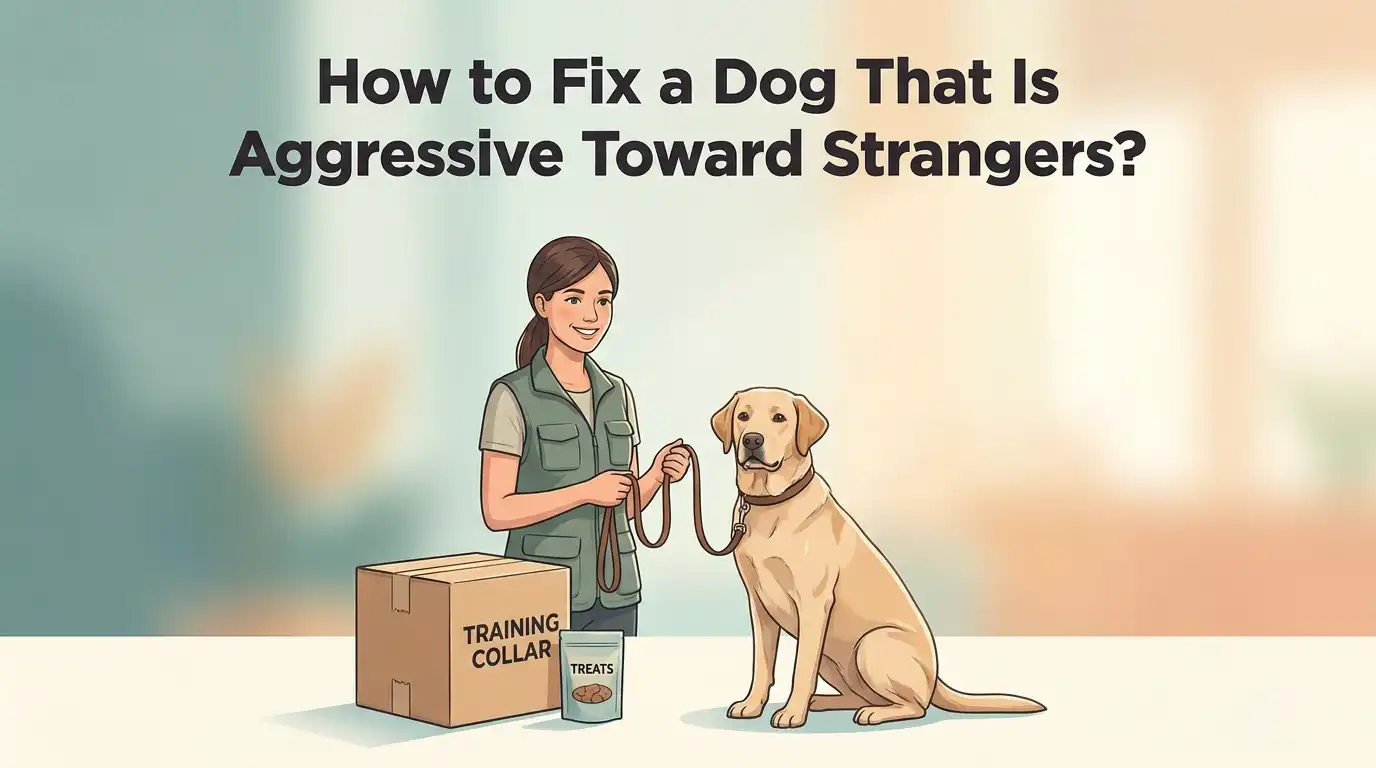
How to Fix a Dog That Is Aggressive Toward Strangers?
Does your dog turn into a different animal when a stranger walks in? Your sweet pup suddenly growls, barks, or even snaps at guests. This can feel confusing and stressful for any dog owner.
Here’s the truth: stranger aggression is usually rooted in fear, not dominance. Your dog isn’t trying to be “bad.” They are scared and don’t know how else to react.
The good news? You can help your dog feel safer around new people. This article will walk you through practical steps to manage and reduce this behavior.
In a Nutshell
- Fear drives the behavior. Most dogs act aggressive toward strangers because they feel scared, not because they want to dominate.
- Distance is your best friend. Keep space between your dog and new people until your dog feels calm and safe.
- Meet strangers in neutral spots. Outdoor locations work better than your home for introductions.
- Skip the punishment. Punishing growls or barks only hides the warning signs. This can lead to sudden biting later.
- Limit exposure to triggers. Fewer visitors and controlled situations help your dog recover faster.
- Management matters more than a quick fix. Some dogs need lifelong management. Others improve with professional training and patience.
Why Dogs Become Aggressive Toward Strangers
Dogs become aggressive toward strangers for one main reason: fear. Your pup isn’t trying to be mean or show dominance. Instead, your dog feels threatened by unfamiliar people and reacts defensively.
Think of it this way. Your dog knows you and trusts you. When a stranger appears, your dog doesn’t have that same trust. Your pup’s brain goes into protection mode. The barking, growling, or snapping is your dog’s way of saying “stay back, you’re scary.”
Some dogs had bad experiences with strangers early in life. Others simply didn’t meet enough people when they were puppies. A few dogs are naturally more cautious around new faces. All of these situations create fear based aggression.
Stress levels matter too. A dog in a tense household becomes more reactive to strangers. A dog that rarely leaves home gets extra nervous around new people. Your dog’s overall anxiety directly affects how your pup behaves toward visitors.
It’s important to understand that punishment makes this problem worse, not better. When you scold your dog for growling, your pup still feels afraid. Your dog just learns to hide the warning signs. Eventually, your dog may skip the growl and go straight to biting. The fear never goes away.
Your dog’s age and past experiences shape this behavior too. Older dogs may have developed stranger aggression over years. Rescue dogs might carry fear from previous situations you don’t know about.
The key insight is simple: your dog isn’t aggressive because your dog is bad. Your dog is aggressive because your dog feels unsafe. Once you understand this, you can start helping your pup feel calmer and more secure around new people. Management and gradual exposure in safe settings create real change over time.
Recognizing the Early Warning Signs
Your dog gives you clues before aggression happens. Learning to spot these signs helps you step in early and prevent a serious incident.
Body language tells the story first. Watch your dog’s ears. When they point backward or flatten against the head, your dog feels anxious. The tail matters too. A tucked tail shows fear, while a stiff, raised tail signals tension. Stiff body posture is another red flag.
Your dog’s mouth reveals a lot. A closed mouth with tight lips means stress. Some dogs show their teeth without growling yet. This is a warning. Raised hackles (the fur along the spine) stand up when your dog feels threatened or defensive.
Vocalizations come next in the warning chain. Growling is an early sign your dog feels uncomfortable. Barking at strangers might seem normal, but excessive barking shows anxiety. Your dog is essentially saying “stay away” before things escalate. Whining mixed with other signals also indicates distress.
Pay attention to how your dog moves around strangers. Does your dog back away or hide? That’s fear talking. Some dogs freeze when a stranger enters. Others pace back and forth, showing they cannot settle. These behaviors happen before biting.
Distance matters when you see these signs. If your dog shows any of these warnings, increase space between your dog and the stranger immediately. Do not wait for aggression to happen. Move your dog to another room or outside.
Keep a mental note of what triggers these responses. Does your dog react more to tall people? Loud voices? Men versus women? Understanding your dog’s specific triggers helps you prepare and prevent situations.
Early recognition saves everyone stress. Your dog gets to feel safer, and strangers stay protected. Watch closely, trust what you see, and act before tension builds.
Step-by-Step Strategies to Reduce Stranger Aggression
Start by increasing the distance between your dog and strangers. This is your foundation. If your dog reacts at 10 feet away, work at 15 feet instead. Gradually decrease distance only when your dog stays calm.
Arrange meetings in neutral outdoor locations. Parks, quiet streets, or open spaces work better than your home. Your dog feels less territorial outside. Strangers also seem less threatening in neutral territory.
Have strangers ignore your dog completely at first. No eye contact, no talking, no reaching out. Let your dog approach at their own pace. This removes pressure and helps your dog feel in control.
Use high value rewards when strangers are nearby. Give treats only when your dog notices a stranger but stays calm. This builds a positive connection: strangers appear, good things happen.
Keep visitor interactions short and predictable. Long visits overwhelm anxious dogs. Ask guests to sit down rather than stand. Standing feels more threatening to fearful dogs.
Manage exposure by limiting how often strangers visit your home. Frequent interactions worsen the problem. Space out introductions so your dog has recovery time between meetings.
Avoid punishing reactive behavior at all costs. Yelling, corrections, or physical punishment suppress warning signs. Your dog stops growling but escalates straight to biting. You lose the early warning system.
Practice these steps consistently over weeks and months. Progress isn’t always linear. Some days your dog does better than others, and that’s normal.
Work with a certified professional trainer who uses fear based approaches. They can adjust strategies based on your dog’s specific triggers and progress. Management often becomes a long term solution. Many dogs improve significantly but may always need careful stranger introductions. That’s okay. Your job is creating a safer, calmer life for your dog.
Managing Exposure at Home and in Public
Managing your dog’s exposure to strangers is the most practical step you can take right now. This means controlling when and how often your dog meets new people, both inside your home and outside in public spaces.
Start by reducing visitor traffic to your home. Each visit triggers your dog’s fear response. Fewer visits mean fewer opportunities for your dog to practice aggressive behavior. This isn’t avoiding the problem—it’s preventing your dog from rehearsing fear-based reactions that become stronger with repetition.
When visitors do come over, keep interactions brief and structured. Have them enter through a side door or wait outside while you settle your dog in another room. Your dog doesn’t need to meet every guest. Some visits work better without your dog present at all.
In public spaces, maintain greater distance from strangers than you normally would. Cross the street if you see someone approaching. Move to the side of the path. Your dog learns that strangers don’t have to get close. Distance reduces stress and prevents your dog from reaching the point where aggression feels necessary.
Choose quiet times for outdoor exposure. Busy parks or crowded streets overwhelm dogs with fear-based aggression. Early mornings or weekday afternoons offer calmer environments where your dog feels less threatened.
Pay attention to your dog’s body language before problems start. The moment your dog shows discomfort—ears back, stiff body, or distance-seeking—move away from the stranger. This prevents your dog from escalating to aggression.
Managing exposure isn’t permanent isolation. It’s strategic reduction while your dog learns that strangers don’t pose a threat. Think of it as giving your dog breathing room to recover from fear. With professional guidance, your dog’s tolerance can improve over months or years. Until then, controlled exposure protects everyone involved.
Common Mistakes That Make Aggression Worse
Many dog owners accidentally make stranger aggression worse by responding the wrong way. Understanding these mistakes helps you avoid setbacks in your dog’s progress.
Punishing your dog for aggressive behavior is the biggest mistake. When you scold, yell, or physically correct your dog after growling or snapping, you suppress the warning signs. Your dog learns to skip the growl and go straight to biting. The aggression doesn’t disappear. It just hides until it explodes into a serious incident.
Your dog’s growl is actually helpful communication. It tells you your dog feels scared or uncomfortable. Punishment teaches your dog to hide that fear, making the situation more dangerous for everyone involved.
Forcing too much exposure too quickly backfires dramatically. Some owners think their dog needs to “get over it” by meeting strangers constantly. This approach extends recovery time and worsens the problem. Your dog’s nervous system becomes more reactive, not less. Each stressful encounter makes the next one harder.
Exposure works best when it’s controlled and gradual. Your dog needs time to process that strangers aren’t threats. Rushing this process creates setbacks.
Allowing visitors to interact with your dog freely at home creates problems too. Your dog feels trapped in their own space. When strangers reach out, pet your dog, or make direct eye contact, it increases anxiety. Your dog has nowhere to escape.
Another common mistake is inconsistent management. Some days you’re careful about exposure. Other days you let your guard down. This unpredictability confuses your dog and slows progress.
The key is consistency and patience. Stick to your management plan every single day. Avoid situations that trigger aggression. Keep interactions brief and controlled. These practical steps work because they reduce stress, not because they eliminate your dog’s feelings. Your dog learns through repeated calm experiences that strangers aren’t dangerous.
When to Seek Professional Training Help
Professional training help becomes necessary when your dog’s aggression toward strangers reaches certain levels. You should consider calling a trainer if your dog has bitten someone or shown signs of escalating behavior over time.
Fear based aggression often requires expert guidance. A professional trainer can assess whether your dog’s behavior stems from anxiety, past trauma, or learned responses. They identify patterns you might miss at home. This diagnosis matters because treatment approaches differ based on the root cause.
Your dog needs professional help if management alone isn’t working after several weeks. You’ve tried increasing distance and controlling exposure, but your dog still reacts intensely? A trainer can create a customized plan specific to your dog’s triggers and personality.
Look for professional help when your dog shows warning signs that worry you. These include stiff body posture, hard staring, raised hackles, or growling that happens quickly without hesitation. Early intervention prevents escalation to bites.
Trainers also help when your living situation makes management difficult. Perhaps you live in an apartment with frequent visitors, or your job requires people coming to your home regularly. A professional can teach you realistic strategies that fit your actual life.
Consider professional training if multiple family members struggle with the same behavioral issues. Consistency matters tremendously with aggression work. A trainer ensures everyone in your household uses the same techniques and commands.
Your veterinarian can recommend certified trainers in your area. Ask about their experience specifically with stranger aggression and fear based behaviors. Good trainers focus on management and gradual desensitization rather than punishment.
Don’t wait until aggression becomes severe. Early professional guidance saves time and prevents your dog from practicing aggressive behavior repeatedly. The longer your dog practices aggression, the more automatic the response becomes. Professional trainers help interrupt this cycle before it becomes deeply ingrained in your dog’s behavior patterns.
Troubleshooting Setbacks and Slow Progress
When your dog shows aggression toward strangers despite your best efforts, it’s normal to feel frustrated. Progress often stalls for specific reasons. Understanding what’s happening helps you move forward.
Progress stops when management isn’t consistent. If some family members enforce boundaries while others don’t, your dog receives mixed signals. Everyone in your household must follow the same rules. Your dog needs predictability about when and how strangers appear.
Another common reason for slow progress is that you’re still exposing your dog to too many triggers. Even small interactions count as exposure. If your dog hasn’t fully recovered, each encounter resets the learning process. This extends recovery time significantly. Sometimes what feels like a small interaction to you feels overwhelming to your dog.
Your dog’s fear level matters more than your timeline. A dog who is deeply afraid needs much slower progress than one with mild concern. Rushing the process backfires. Your dog learns faster when each interaction feels manageable rather than stressful.
Environmental stress also slows improvement. If your dog is already anxious about other things like loud noises or changes in routine, stranger aggression gets worse. Reducing overall stress in your dog’s life helps with stranger aggression too.
Some setbacks happen because your dog isn’t getting enough physical exercise or mental stimulation. A tired dog is often a calmer dog. Daily walks, play sessions, and puzzle toys help your dog’s brain settle down.
The timeline for improvement varies by dog. Some dogs show progress in weeks. Others need months of consistent work. Setbacks don’t mean failure. They mean your dog needs a different approach or more time.
If nothing changes after several weeks of consistent management, professional trainers can identify what’s blocking progress and adjust your strategy accordingly.
Final Thoughts
Fixing stranger aggression takes patience and the right approach. Your dog’s fear drives this behavior, not a desire to be difficult.
Understanding this fact changes everything. You can stop blaming your dog and start helping them feel safe.
Management is your best tool for now. Limiting exposure to strangers protects everyone while you work on training. This isn’t giving up. It’s smart prevention.
Small, controlled steps create real change over time. Rushing the process only sets your dog back further.
Every dog progresses at their own pace. Some dogs improve within months. Others need management for life. Both outcomes are okay.
Watch your dog’s body language closely. Their signals tell you when they feel comfortable and when they don’t.
Consistency matters more than intensity. A little training done daily beats occasional intense sessions. Your dog learns through repetition and predictable routines.
Don’t hesitate to bring in a professional trainer. Fear based aggression often needs expert eyes to guide you correctly.
You know your dog better than anyone else. Trust your instincts when something feels wrong or unsafe.
Celebrate the small wins along the way. A calmer glance at a stranger or a relaxed posture counts as real progress.
Your dog depends on you to keep them safe. Strangers depend on you too. Good management protects both sides.
This journey isn’t always easy, but it’s worth it. A dog who trusts you and feels secure lives a happier life.
Stay patient with setbacks. They’re part of the process, not signs of failure.
With time, consistency, and the right support, most dogs learn to feel calmer around strangers. Your effort today builds a safer, happier tomorrow for your dog.
Frequently Asked Questions
Why is my dog friendly at home but aggressive toward strangers?
Your dog’s behavior likely stems from fear, not aggression. Dogs who feel safe with family may see strangers as threats. This fear response triggers defensive behavior. Your dog isn’t being mean. They’re protecting themselves from something unfamiliar.
Can stranger aggression in dogs be fixed?
Yes, but it requires time and the right approach. Professional training helps most dogs improve. However, management is often necessary long-term. You’ll need to control your dog’s exposure to strangers while working on the underlying fear. Some dogs progress within months. Others need longer.
What happens if I punish my dog for reacting to strangers?
Punishment backfires badly. It suppresses your dog’s warning signs instead of fixing the fear. Your dog may stop growling or barking, but the fear remains. This often leads to biting without warning. Your dog loses their ability to communicate discomfort first.
How do I manage my dog’s stranger aggression at home?
Limit visitor interactions. Reduce how often people come to your house. When guests do visit, keep your dog in a separate room. Meet new people in neutral outdoor locations instead. This removes the stress of protecting their territory.
When should I get professional help?
Seek a trainer if management alone doesn’t work after several weeks. You also need help if your dog shows warning signs that worry you. Professional trainers assess your dog’s fear level and create a safe training plan. They help when your living situation makes management difficult.

Hi, I’m Liza — pet lover, lifelong animal enthusiast, and the voice behind Liza4Pets. I created this space to share honest, practical pet care advice for fellow pet parents who want the best for their furry (and not-so-furry) companions.