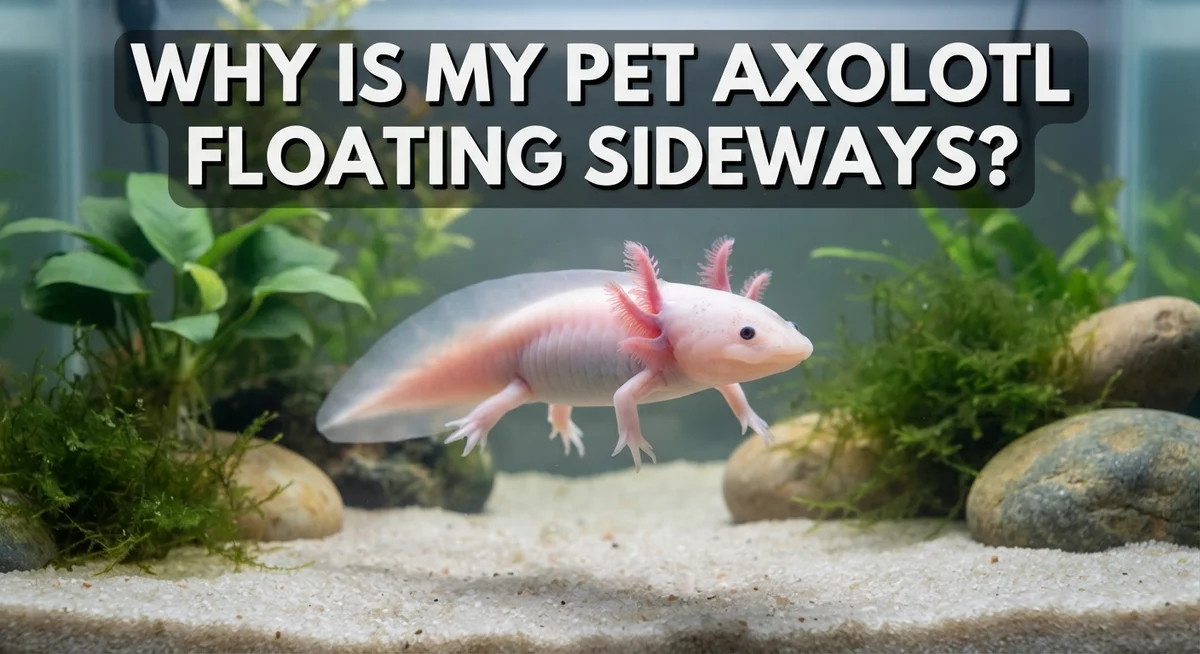
Why Is My Pet Axolotl Floating Sideways?
Do you see your axolotl floating on its side? This can look scary. You are right to worry, and you are right to look for answers now.
Sideways floating is not normal behavior. Healthy axolotls swim upright and rest calmly on tank floors. When your pet tips over or bobs at the surface, its body is sending a clear signal.
This usually points to gas buildup, impaction, or bloating inside your axolotl. These issues affect how your pet controls its position in water. Many owners think their axolotl is fine because it still eats. Sadly, that is not always true. Axolotls can eat while seriously sick.
In a Nutshell
- Sideways floating is a warning sign. It often points to gas buildup, impaction, or bloating inside your axolotl’s body.
- Eating does not mean your pet is fine. Axolotls can keep eating even while seriously sick, so this is not a reliable health check.
- Watch bowel movements closely. A lack of waste can signal impaction or constipation that needs quick attention.
- Symptoms lasting 4 or more days are serious. Do not wait this long to take action if floating continues.
- A floating tail can mean bloating. Keep a close eye on this symptom and note any changes.
- Get veterinary help fast if sideways swimming continues beyond one or two days. Early care improves the chance of recovery.
- Recovery depends on the cause. Mild gas may pass on its own, but severe impaction often needs medical support.
Is Sideways Floating Normal for Axolotls?
Sideways floating is not normal for axolotls. Healthy axolotls swim upright or rest flat on the tank bottom. When your axolotl floats on its side, something is wrong inside its body.
This behavior usually signals one of three problems: gas buildup in organs, impaction from food stuck in the digestive system, or bloating from swallowed air or food. Each of these conditions needs attention because they can become serious quickly.
The tricky part is that axolotls keep eating even when they’re sick. Many owners think their pet is fine because it still accepts food. This is dangerous thinking. Your axolotl may be eating while suffering from a major internal issue. Never assume eating means your pet is healthy.
Watch your axolotl’s bowel movements carefully. Constipation or impaction often causes sideways floating. If you don’t see waste in the tank for several days, this is a red flag. Lack of bowel movements combined with floating means action is needed now.
Pay close attention to how long the floating lasts. If your axolotl floats sideways for just a few hours and then returns to normal, monitor it closely but stay calm. However, if sideways floating continues for more than 1 to 2 days, contact a veterinarian who treats aquatic pets.
A floating tail is another warning sign. This usually points to bloating. Watch whether the tail floats while the body stays upright, or if the whole body tilts to one side. Both patterns need observation and possible veterinary care.
The bottom line: sideways floating means your axolotl needs help. Don’t wait for the problem to fix itself. Take action within 1 to 2 days if the behavior continues.
Common Causes: Gas Buildup, Impaction, and Bloating Explained
Gas buildup happens when air gets trapped inside your axolotl’s body. This causes your pet to lose control and float to the side or top of the tank. The gas pushes against the swim bladder, which normally helps fish and aquatic animals stay balanced in water.
Impaction is a blockage in the digestive system. Food or substrate (like gravel) gets stuck and your axolotl cannot pass waste normally. When this happens, gas builds up behind the blockage. Your pet feels uncomfortable and struggles to stay upright while swimming.
Bloating makes your axolotl’s belly swell and feel tight. You might see your pet looking puffed up or rounder than usual. This swelling pushes your axolotl’s body out of balance, making sideways floating more likely.
The confusing part is that your axolotl may still eat while experiencing these problems. Many owners think eating means their pet is healthy. This is not true. Sick axolotls continue eating because they do not feel pain the way humans do. Eating is not a sign that everything is fine.
Watch your axolotl’s bowel movements very carefully. Healthy axolotls produce waste regularly. If you notice no poop in the tank for several days, impaction may be the cause. Dark, stringy waste is normal. White or clear waste can signal stress or illness.
Pay attention to how long the floating lasts. Floating that continues for more than one or two days needs immediate attention. Do not assume your axolotl will recover on its own. These three conditions (gas, impaction, and bloating) can become life threatening quickly.
Check your tank temperature and water quality. Poor conditions make these problems worse. Your axolotl needs cool, clean water to stay healthy and digest food properly.
Key Warning Signs to Watch For
Your axolotl is sending you clear signals when something goes wrong. Learning to spot these warning signs helps you act fast and protect your pet’s health.
Floating on its side or top of the tank is the main red flag. This behavior tells you something is physically wrong inside your axolotl’s body. Do not ignore it, even if your pet seems to be eating normally. Many owners make this mistake and wait too long before seeking help.
Check for bloating around the belly area. A swollen or tight-looking stomach suggests gas buildup or constipation. Gently observe your axolotl from different angles. Compare how it looks today to how it looked last week. Any sudden puffiness is worth noting.
Watch your axolotl’s bathroom habits closely. Healthy axolotls produce waste regularly and consistently. If you notice a lack of bowel movements for more than a day or two, impaction may be the problem. This blockage prevents your pet from passing food or substrate through its digestive system.
A floating or drooping tail is another serious warning sign. This often indicates bloating or gas trapped in your axolotl’s body. Track how often this happens and whether it gets worse over time.
Pay attention to how long the floating lasts. If sideways swimming continues for 4 or more days, your axolotl needs professional help immediately. Do not assume your pet will recover on its own.
The most important warning: do not trust eating behavior as proof of wellness. Sick axolotls often keep eating despite serious internal problems. This false sense of security delays treatment and puts your pet at greater risk.
Temperature changes and poor water quality also trigger these symptoms. Check your tank conditions while monitoring your axolotl’s behavior. Multiple warning signs appearing together mean you need to act right away.
Why Eating Doesn’t Always Mean Your Axolotl Is Healthy
Your axolotl might be eating normally while still dealing with serious health problems. This is the biggest mistake pet owners make. They see their axolotl munching on food and assume everything is fine. That assumption can be dangerous.
Sick axolotls continue eating even when gas, impaction, or bloating is happening inside their bodies. Food intake does not equal good health in these creatures. Your pet’s appetite stays strong even during medical emergencies. This is why you cannot rely on eating behavior alone to judge wellness.
The real issue is that floating sideways signals something is already wrong physically. Your axolotl’s digestive system, organs, or buoyancy control has a problem. Eating does not fix these underlying issues. Your pet will keep eating while the condition gets worse if you ignore other warning signs.
Watch for these signals instead of just monitoring food consumption. Check if your axolotl produces waste regularly. Look for a swollen belly that feels tight or bloated. Notice if the floating lasts longer than a day or two. These signs matter much more than whether your pet eats.
The danger zone happens when you delay action because your axolotl seems to have a good appetite. Days pass. The floating continues. The condition worsens. By the time you realize eating is not a reliable health indicator, your pet may need emergency help.
Your axolotl’s behavior tells the real story. Sideways floating, reduced movement, and a drooping tail all matter more than food intake. If these symptoms persist beyond 1 to 2 days, get veterinary help immediately. Do not wait for your pet to stop eating. That may never happen, and waiting puts your axolotl’s life at risk.
Step-by-Step: What to Do When You Notice Floating
When you first notice your axolotl floating sideways, stay calm and take action immediately. Your pet is showing you a physical problem that needs attention right now.
Start by observing your axolotl’s bowel movements today. Check the tank floor and decorations for waste. Healthy axolotls produce poop regularly. If you see no waste for 24 hours or longer, impaction or constipation is likely happening inside your pet’s body.
Next, look at your axolotl’s belly carefully. Gently examine the stomach area from the side of the tank. Does the belly look swollen or puffy? Does it feel tight compared to normal? Bloating and gas buildup cause this appearance. A drooping or floating tail often goes with belly swelling.
Check your tank conditions right now. Water temperature should stay between 60 and 64 degrees Fahrenheit. Higher temperatures speed up digestion problems. Test your water quality with a kit. Poor conditions make floating worse and delay recovery.
Do not assume your axolotl is fine just because it eats. This is the biggest mistake owners make. Sick axolotls continue eating while serious problems happen inside. Eating does not mean wellness.
Monitor how long the sideways floating continues. If your axolotl floats on its side for more than 1 to 2 days, contact a veterinarian who treats aquatic animals. Do not wait longer than 4 days. The longer floating lasts, the more serious the problem becomes.
Write down what you observe each day. Note when you see waste, how much your axolotl eats, and how often it floats. This information helps a vet understand what is happening. Keep your axolotl in a quiet, dark space during this time. Stress makes floating worse and slows recovery.
Common Mistakes Owners Make When Diagnosing the Problem
Many owners make critical mistakes when their axolotl floats sideways. The biggest error is trusting eating behavior as a sign of health. Your axolotl can eat normally while suffering from serious internal problems like gas buildup, impaction, or bloating. Food intake does not guarantee wellness.
Another common mistake is ignoring how long the floating lasts. Owners often think sideways swimming is temporary and will pass on its own. If your axolotl floats sideways for more than one or two days, this signals a real medical issue that needs attention. Waiting too long makes recovery harder.
Some owners also fail to observe bowel movements carefully. They focus only on what their axolotl eats instead of checking for waste in the tank. Regular poop production is far more important than appetite. No waste for several days means your axolotl likely has impaction or constipation.
Many people delay getting veterinary help because the axolotl “seems fine otherwise.” This is dangerous. Sideways floating alone tells you something is physically wrong inside your pet’s body. The longer you wait, the worse the condition becomes.
Owners sometimes assume a drooping or floating tail is just a quirk. A tail that floats or droops usually indicates bloating or trapped gas. This requires immediate monitoring and possible intervention.
The final mistake is not checking for bloating signs. Look at your axolotl’s belly closely. A swollen or tight stomach compared to normal appearance suggests gas or constipation. These visual clues matter more than guessing based on behavior.
Stop relying on eating habits to determine health. Instead, watch for waste production, belly swelling, how long floating continues, and tail position. These signs tell the real story. Take action within one to two days if sideways floating persists. Your quick response can mean the difference between recovery and serious complications.
Troubleshooting: When to Monitor at Home vs. When to Call a Vet
Your axolotl’s sideways floating needs your attention, but not every situation requires an emergency vet visit right away. Learning when to monitor at home and when to seek professional help can save your pet’s life.
Monitor at home if your axolotl shows these signs. Your axolotl floats sideways for the first time today. The floating happens occasionally, not constantly. Your axolotl still moves around the tank and responds to stimuli. You observe normal bowel movements in the past 24 hours. Your tank water parameters are stable and clean.
Start by watching your axolotl closely for the next 1 to 2 days. Check for waste daily. Note how often your axolotl floats and for how long each episode lasts. Observe whether your axolotl’s belly looks swollen or bloated. Write down all changes you notice.
Call a vet immediately if you see these warning signs. Your axolotl floats sideways and shows no improvement after 2 days of home monitoring. You notice zero bowel movements for 3 or more days. Your axolotl’s belly appears severely bloated or distended. Your axolotl stops eating entirely or shows extreme lethargy. The floating becomes constant, and your axolotl cannot right itself at all. Your axolotl’s tail droops significantly or appears limp.
The critical difference is timing and severity. Early intervention matters greatly. A vet can identify whether gas, impaction, or another condition is causing the problem. Some issues resolve with minor adjustments to diet and tank conditions. Other situations need medication or professional care.
Do not delay seeking help if symptoms worsen or persist beyond 1 to 2 days. Trust your instincts as an owner. When in doubt, contact a veterinarian who treats aquatic animals. Your axolotl depends on you to recognize serious health problems quickly.
Final Thoughts
Sideways floating in your axolotl is a real warning sign. It tells you something is wrong inside their body. Your quick response can make a huge difference.
Gas buildup, impaction, and bloating are the main reasons behind this behavior. Each of these needs different care and attention. Understanding the cause helps you act faster.
Remember that eating normally does not mean your axolotl is healthy. Sick axolotls often continue eating even when they feel unwell. This is one of the trickiest parts of pet ownership.
Keep a close eye on bowel movements every single day. A lack of waste is a strong clue that something needs fixing. Small daily checks add up to better care.
Time matters more than anything else here. If symptoms last beyond one or two days, get professional help. Waiting too long can turn a small problem into a serious one.
Trust your instincts as a pet owner. You know your axolotl’s normal behavior better than anyone else. Any sudden change deserves your full attention.
A vet who treats amphibians can give you the best guidance. They can check for internal issues you cannot see at home. This step often saves precious time during a health crisis.
Your axolotl depends on you to notice small changes early. Consistent observation is your best tool for keeping them safe. Simple daily habits protect their long term health.
In the end, floating sideways is your axolotl’s way of asking for help. Listen closely, act quickly, and reach out for support when needed. This approach gives your pet the best chance to recover fully.
Frequently Asked Questions
Is sideways floating ever normal for axolotls?
No. Sideways floating always signals a health problem. Your axolotl’s body should stay upright when swimming or resting. If you see your pet on its side or tilted, something is wrong inside.
Gas buildup, impaction, or bloating causes this behavior. These issues need your attention right away.
Can my axolotl recover from floating sideways?
Yes, recovery is possible. The outcome depends on what caused the floating and how quickly you act. Early intervention gives your pet the best chance.
If you catch the problem within 1 to 2 days, your axolotl has a much better recovery rate. Waiting longer makes treatment harder.
Why does my axolotl keep eating even though it’s floating?
Eating does not mean your axolotl is healthy. This is a dangerous assumption many owners make. Your pet may eat while suffering from serious internal problems like gas or impaction.
Do not use appetite as your only health check. Watch for bowel movements, bloating, and how long the floating lasts instead.
What should I do if my axolotl’s tail floats?
A floating tail often indicates bloating or gas in the body. Monitor your pet closely for the next 1 to 2 days. Check for a swollen belly and lack of bowel movements.
If the tail keeps floating after 2 days, contact a vet who treats amphibians. Do not wait longer than this.
When should I call a vet?
Call a vet immediately if symptoms last beyond 1 to 2 days. Also get help right away if your axolotl shows severe bloating, stops eating, or floats completely upside down.
Time matters more than anything else. Early professional help saves lives.

Hi, I’m Liza — pet lover, lifelong animal enthusiast, and the voice behind Liza4Pets. I created this space to share honest, practical pet care advice for fellow pet parents who want the best for their furry (and not-so-furry) companions.