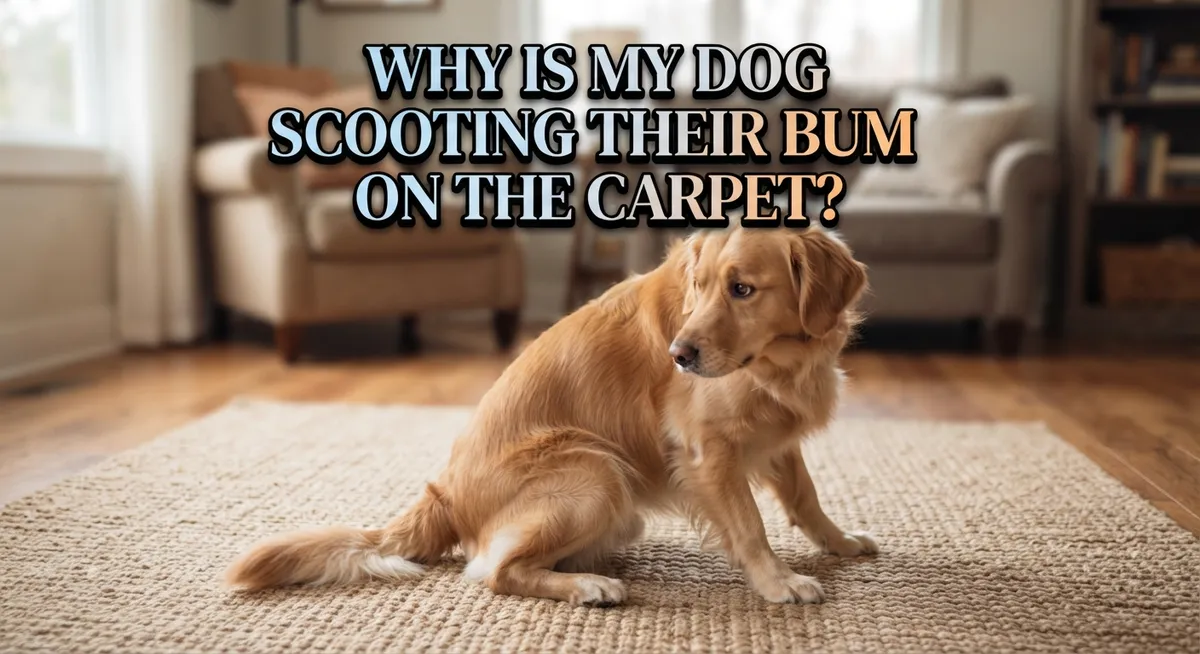
Why Is My Dog Scooting Their Bum On The Carpet?
Your dog drags their bum across the carpet, and it looks strange. Maybe even a little funny at first.
But this behavior is not a joke. It is your dog’s way of telling you something is wrong.
Scooting is one of the most common signs pet parents notice at home. Many people think it means their dog has worms or is simply being silly.
The real answer is usually different. In most cases, full or blocked anal glands cause this itchy, uncomfortable feeling.
Dogs have two small glands near their rectum. When these glands fill up, dogs feel pressure and irritation. Scooting becomes their instant relief.
In a Nutshell
- Full anal glands are the top reason dogs scoot on carpet. These small glands fill up and cause pressure.
- Scooting is not bad behavior. Your dog is not misbehaving. They feel discomfort and try to fix it themselves.
- Other causes include allergies, parasites like tapeworms, and skin infections. These can make the bum area itchy.
- A vet visit helps find the real cause. Vets can express the glands safely and check for other problems.
- Bathe your dog after any treatment. Gland discharge has a strong smell that lingers on fur.
- Never ignore this sign. Scooting almost always points to a medical issue, not a training problem.
What Does Scooting Actually Mean?
Dog scooting means your pet drags their rear end across the floor, carpet, or grass. This action looks odd, but it serves a real purpose. Your dog is trying to relieve discomfort or itching in their anal area.
The main reason dogs scoot is anal gland irritation. Dogs have two small glands located inside their rectum. These glands normally empty on their own when your dog has a bowel movement. Sometimes they become too full, blocked, or inflamed. When this happens, your dog feels uncomfortable and starts scooting to ease the pressure.
Think of scooting as your dog’s way of saying something feels wrong. It is not misbehavior or a sign your dog is dirty. Instead, it is a medical signal that demands your attention.
Several issues trigger scooting beyond full anal glands. Allergies make the skin around the anus itchy and irritated. Parasites like tapeworms can cause the same discomfort. Skin infections or general inflammation also lead to this behavior.
Your dog may scoot occasionally after a bowel movement. This is usually normal. However, frequent scooting or scooting that lasts more than a day signals a problem.
Pay attention to how often your dog scoots. If you notice it happening repeatedly, contact your veterinarian. A vet can examine your dog and determine the exact cause. They can express full anal glands, treat infections, or identify parasites.
Scooting is your dog’s way of communicating discomfort. Understanding this behavior helps you respond quickly and get your pet the help they need.
The Anal Glands: Anatomy and Their Role in Scooting
Your dog’s anal glands are two small pouches located inside the rectum, just below the anus. These glands sit on either side of the rectal opening and serve an important function in your dog’s body.
What do these glands do? Each gland produces a fluid that your dog naturally releases during bowel movements. This fluid helps mark territory and communicates information to other dogs. The glands empty on their own during normal bathroom trips.
Why do they cause scooting? When these glands become full, irritated, or blocked, they create pressure and discomfort. Your dog feels this sensation and responds by dragging their rear across the carpet, grass, or furniture. This scooting motion helps relieve the pressure temporarily.
When problems develop The glands can become overly full if your dog has soft stools or digestive issues. Inflammation from allergies or infections can also irritate the glands. Some dogs are simply prone to gland problems and need regular attention.
Understanding the connection Think of scooting as your dog’s way of self treating. The friction against the carpet mimics what happens during a normal bowel movement. Your dog is trying to empty those uncomfortable glands on their own.
Why this matters Ignoring scooting can lead to bigger problems. Blocked or infected glands may rupture or develop abscesses. These conditions cause pain and require professional veterinary treatment.
Your veterinarian can manually express the glands and check for infection or inflammation. This simple procedure brings immediate relief to your dog. Understanding your dog’s anatomy helps you recognize when professional help is needed.
Top Causes Behind Your Dog Scooting on the Carpet
Your dog scoots because something is bothering their rear end. The most common culprit is full or blocked anal glands. These small pouches sit inside your dog’s rectum and release fluid during bowel movements. When they get too full, they create pressure and discomfort.
Your dog drags their bottom across the carpet to relieve this pressure. It’s their way of self treating because the sensation bothers them.
Allergies rank as the second major cause of scooting. When your dog has allergies, the skin around their anus becomes itchy and irritated. Your dog scoots to scratch that itch.
Parasites like tapeworms also trigger scooting behavior. Tapeworms irritate the intestines and anal area. Your dog feels uncomfortable and drags their rear to find relief.
Skin infections and general irritation can cause scooting too. Yeast infections or bacterial infections around the anus make your dog want to scoot.
Here’s what makes scooting important: it’s always a sign of discomfort, not misbehavior. Your dog isn’t being naughty or trying to get attention. They’re telling you something feels wrong.
The key difference is frequency. Occasional scooting after a bowel movement is normal. Your dog might clean themselves this way. But repeated scooting throughout the day signals a real problem.
Pay attention to how often you see this behavior. If your dog scoots multiple times daily or shows signs of discomfort, contact your veterinarian. Your vet can examine your dog, express the anal glands if needed, and identify the underlying cause. Early action prevents bigger health issues down the road.
How to Tell If It’s Anal Glands, Parasites, or Skin Irritation
Your dog’s scooting can stem from three main culprits. Let’s break down how to identify which one is causing the problem.
Anal glands produce the most common scooting cases. When these glands become full or blocked, your dog feels pressure and discomfort. You might notice your dog scooting more frequently or seeming uncomfortable when sitting. The area around the anus may look swollen or irritated. Your vet can examine and express the glands to confirm this issue.
Parasites like tapeworms create a different type of irritation. Tapeworms live in your dog’s intestines and can cause itching around the anus. You may spot rice like segments in your dog’s stool or around their rear end. This scooting often happens alongside other signs like weight loss or a dull coat. A stool sample from your vet will reveal parasite problems.
Skin irritation shows up as redness, flaking, or rawness around the anus. Allergies cause this type of irritation most often. Your dog may also lick or bite at their rear end constantly. The skin might feel warm or look inflamed compared to normal areas.
Here’s how to narrow it down: Watch for patterns. Does scooting happen after meals? That points to anal glands. Do you see visible parasites in stool? That suggests worms. Is the skin visibly irritated or does your dog have other allergy symptoms like ear scratching? That indicates skin problems.
Don’t guess on your own. Your veterinarian can examine your dog properly and identify the exact cause. They’ll perform tests if needed and recommend the right treatment. Scooting always means something needs attention, so schedule a vet visit soon.
What to Do at Home Before Visiting the Vet
Your dog’s scooting tells you something needs attention right now. While you wait for your vet appointment, you can take several helpful steps at home to ease your dog’s discomfort.
Start with a warm bath. Use lukewarm water and gently clean your dog’s rear end. This removes any irritating discharge or debris stuck to their fur. Pat the area dry completely afterward. Moisture trapped in fur can make irritation worse.
Check your dog’s diet next. Soft or loose stools make anal gland problems worse. If your dog’s poop seems mushy, add a little fiber to their meals. Pumpkin puree or plain cooked sweet potato works well. Firmer stools help your dog’s anal glands empty naturally during bowel movements.
Keep your dog from licking or biting at the irritated area. Constant licking damages the skin further and introduces bacteria. If your dog won’t stop, consider a soft cone collar to prevent access temporarily.
Monitor what you see happening. Write down how often scooting occurs. Note if you spot any blood, discharge, or swelling around the anus. Share these details with your vet. They help identify whether you’re dealing with anal gland issues, parasites, or skin infection.
Avoid home remedies that claim to “express” anal glands yourself. This requires proper technique and can cause injury if done wrong. Your vet has the training and experience to do this safely.
Keep your home clean. Wash bedding and carpets where your dog spends time. This reduces bacteria exposure while the area heals.
These steps provide comfort while you wait for professional care. Your vet will determine the exact cause and provide proper treatment.
When Scooting Means It’s Time to See a Vet
Your dog’s scooting behavior signals discomfort that deserves professional attention. While home care helps temporarily, a veterinarian visit becomes essential when scooting continues or worsens.
Schedule a vet appointment if scooting happens frequently. One or two incidents might be minor irritation, but regular scooting indicates an underlying problem. Your vet can properly examine your dog and identify the exact cause. They have the tools and training to check anal glands, test for parasites, and evaluate skin conditions.
Certain signs make a vet visit urgent. If you notice blood or discharge around your dog’s rear end, don’t wait. Excessive licking or biting at the area suggests serious discomfort. Swelling, redness, or a foul smell also warrant immediate professional care.
Your vet can express anal glands safely and effectively. Attempting this at home risks injury to your dog and infection. A professional knows the correct technique and can treat any complications. They may also prescribe medication if infection or parasites are present.
During your appointment, mention how often scooting occurs and what else you’ve noticed. Tell your vet about your dog’s diet, any recent changes, and whether other symptoms appear. This information helps them diagnose faster.
After the vet visit, your dog usually feels relief within hours. The discomfort that triggered scooting gets addressed. Your vet might recommend dietary changes, parasite prevention, or allergy management to prevent future episodes.
Never ignore persistent scooting as simple misbehavior. It’s always your dog’s way of communicating pain or irritation. Professional veterinary care stops the problem at its source and keeps your dog comfortable and healthy.
Common Mistakes Dog Owners Make With Scooting Behavior
Many dog owners make the same mistake when their dog starts scooting. They think their pet is just being silly or picking up a bad habit. This misunderstanding can delay the help your dog actually needs.
The biggest error is treating scooting as a behavior problem instead of a medical one. Your dog isn’t trying to annoy you or act out. Scooting means something hurts, and your dog is trying to fix it. When you punish or ignore this behavior, you miss the real issue causing the discomfort.
Another common mistake is waiting too long before calling the vet. Some owners think one scooting incident will go away on its own. While occasional scooting might seem minor, repeated scooting always signals a problem that needs professional attention. Waiting gives the underlying issue time to get worse.
Many people also try to “fix” anal glands at home. This is risky and often painful for your dog. Expressing anal glands requires proper technique and knowledge. Doing it wrong can cause infection or injury to your dog’s sensitive tissues.
Some owners also skip bathing their dog after a vet visit. Anal gland discharge leaves a strong odor and sticky residue on your dog’s fur and skin. A warm bath after treatment removes this discharge and helps your dog feel cleaner and more comfortable.
Finally, owners sometimes fail to follow up on the underlying cause. Your vet might identify allergies, parasites, or skin issues triggering the scooting. Addressing these root causes prevents the problem from returning. Treating only the symptom means your dog will likely scoot again.
Preventing Future Scooting Episodes
Preventing future scooting episodes starts with understanding what causes them in the first place. Since anal gland problems lead most scooting cases, you’ll want to focus on keeping those glands healthy and functioning properly.
Diet plays a major role in preventing anal gland issues. A diet with enough fiber helps your dog produce firm stools. Firm stools naturally empty the anal glands as your dog poops. Soft or loose stools don’t apply the right pressure, so glands stay full and irritated. Talk to your vet about whether your dog’s current food provides adequate fiber.
Regular grooming also helps prevent problems. Keep the area around your dog’s rear end clean and dry. Matted fur or moisture in that area can trap bacteria and cause irritation. Bathing your dog every few weeks maintains cleanliness without overdoing it.
Watch for early warning signs before scooting starts. If you notice your dog licking or paying extra attention to their rear end, that’s your cue to take action. Address minor irritation before it becomes a scooting problem.
Parasite prevention is essential too. Tapeworms and other parasites irritate anal glands and cause scooting. Keep your dog on a regular parasite prevention schedule that your vet recommends.
Finally, manage allergies if your dog has them. Allergies cause itching that leads to anal gland irritation. Work with your vet to identify and control any allergies through diet or other treatments.
These prevention steps reduce the chances of future scooting episodes significantly. Most importantly, schedule regular vet checkups. Your vet can catch anal gland problems early before they cause your dog discomfort.
Final Thoughts
Scooting is your dog’s way of telling you something feels wrong. It is rarely about bad behavior or attitude.
Most cases point back to one simple cause. Full or irritated anal glands cause the itching and discomfort behind this action.
Your dog cannot explain the itch to you in words. Scooting is the only tool they have to communicate that something feels off.
Pay attention when you see this happen even once. A single incident might be minor, but repeated scooting means it is time to act.
A vet visit solves the problem quickly and safely. Vets know how to express anal glands without causing pain or injury to your dog.
Home remedies often make things worse instead of better. Leave gland expression to trained professionals who handle this daily.
After treatment, give your dog a bath to remove any odor. This simple step keeps your home smelling fresh and your dog comfortable.
Think about prevention once the current issue clears up. Good diet, regular grooming, and parasite control all reduce future risk.
Small changes now can save you and your dog from repeat trips to the vet. Fiber rich food and routine checkups go a long way.
Your dog depends on you to notice these signals early. Quick action means less discomfort and faster relief for them.
Scooting is not something to laugh off or ignore. It is a clear signal that deserves your attention and care.
Treat it seriously, act fast, and your dog will thank you with a happier, healthier life. Trust your instincts when something seems different.
Frequently Asked Questions
Is scooting always caused by anal gland problems?
Scooting usually means anal gland issues, but not always. Your dog might scoot because of allergies, parasites like tapeworms, skin infections, or general itching. The anal glands are the most common culprit though. These small sacs inside your dog’s rectum fill up and cause discomfort. Your dog drags their bottom on the carpet to get relief from the pressure or irritation.
Other causes include fleas, ear mites, or yeast infections. Sometimes a dirty rear end triggers scooting too. The key is that scooting signals discomfort, not misbehavior.
How quickly should I call my vet about scooting?
Call your vet as soon as you notice scooting happening. Don’t wait to see if it stops on its own. Scooting indicates your dog feels uncomfortable right now.
Your vet can examine your dog and figure out the real problem. They might express the anal glands, check for parasites, or look for skin issues. Quick action prevents the problem from getting worse.
Can I express my dog’s anal glands at home?
No, leave this job to your vet. Home attempts often cause injury, infection, or incomplete emptying. Your vet has the right training and tools to do this safely and completely.
Why does my dog need a bath after a vet visit?
Anal gland discharge smells bad and gets on your dog’s fur. A bath removes this odor and keeps your dog clean and comfortable.
What should I do after the vet treats the scooting?
Focus on prevention next. Add fiber to your dog’s diet to keep stools firm. Keep up with parasite prevention and watch for allergies. Regular grooming helps too. These steps reduce repeat episodes significantly.

Hi, I’m Liza — pet lover, lifelong animal enthusiast, and the voice behind Liza4Pets. I created this space to share honest, practical pet care advice for fellow pet parents who want the best for their furry (and not-so-furry) companions.