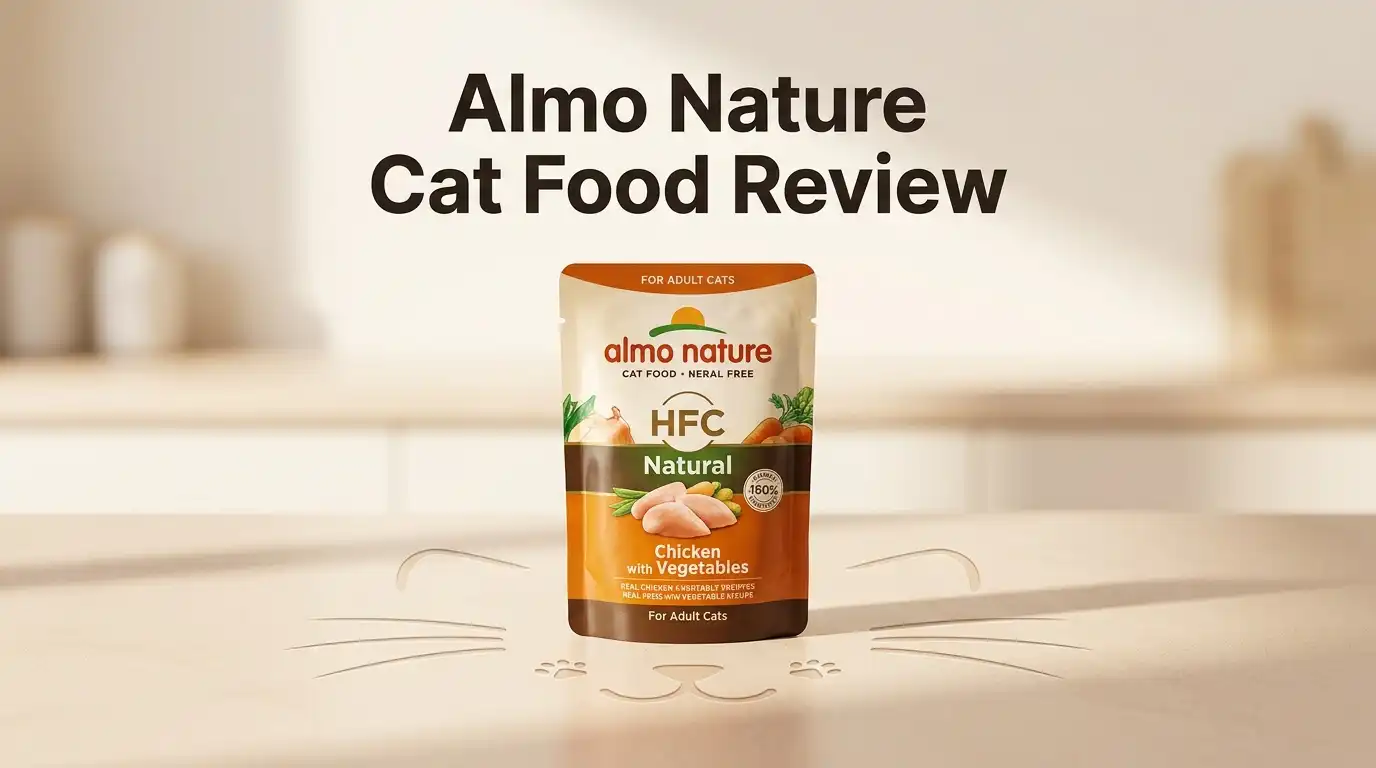
Almo Nature Cat Food Review 2026: Worth Buying?
Your cat sniffs the bowl, walks away, and you feel defeated again. Most cat owners know that moment well. Almo Nature promises a fix with short ingredient lists, real fish chunks, and a business model that sends profits to animal charities. That sounds almost too good for a pet food brand.
I fed Almo Nature to two cats for several weeks and tracked every reaction. I read the labels closely. I compared prices per ounce against the big names. Some results impressed me. Others frustrated me enough to warn you before you click buy.
This review covers the good, the bad, and the label detail that trips up thousands of buyers every year. Keep reading before you spend a cent.
In a Nutshell:
- Ingredient quality ranks near the top of the wet food market. The recipes list fish or chicken first, use no artificial colors, no artificial flavors, and no carrageenan. Protein on a dry matter basis runs around 61 percent across the Complete line, which beats most supermarket brands by a wide margin.
- Many Almo Nature products are supplemental, not complete. Only the HQS Complete line meets AAFCO adult maintenance standards. Feeding the Natural or La Cucina lines alone can cause nutrient gaps. This is the single biggest mistake buyers make.
- Cats generally love the taste. The large fish chunks in real broth won over both of my testers, including the picky one. Fussy eaters respond well to the Natural line.
- The price hurts. Expect roughly 0.28 to 0.79 dollars per ounce depending on the recipe and pack size. Feeding a 10 pound cat the Complete food exclusively can approach 6 dollars per day.
- Recall history is spotless. The brand has never issued a product recall since launching in 2000.
- Profits fund animal welfare. Fondazione Capellino owns the company and directs revenue toward cats, dogs, and habitat protection.
What Is Almo Nature Cat Food?


Last update on 2026-11-01 / Affiliate links / Images from Amazon Product Advertising API
Almo Nature started in Genoa, Italy, in 2000. Pier Giovanni Capellino founded it with a simple idea. Use ingredients that were originally fit for human consumption, then keep the recipe short.
The company took an unusual turn in 2018. Capellino announced that all profits would go to a nonprofit benefiting cats and dogs. Since June 2019, Fondazione Capellino has owned the company outright. That makes Almo Nature the rare pet food brand where your money funds animal welfare instead of shareholder dividends.
The United States arm operates out of Miami, Florida. A Canadian branch sits in Quebec. Canned production happens in Thailand, which explains the heavy fish focus across the catalog.
Almo Nature sells five main cat lines: HQS Natural, HQS Made in Italy, HQS Complete, HQS La Cucina, and Daily. HQS stands for high quality sourced. Every recipe skips GMO ingredients, artificial preservatives, and carrageenan. The catalog is wet food only, sold in cans and pouches.
Almo Nature HQS Natural Chicken Drumstick in Broth
This is the product most people meet first, and it earns its popularity. Open a can and you see actual chicken drumstick meat, shredded into visible strands, floating in clear broth. No pate paste. No mystery gel.
The ingredient list runs three items long: chicken drumstick, water, and rice. That is it. Protein arrives at roughly 14 percent as fed, with moisture over 80 percent, which helps cats who never drink enough.
My tester cat finished the bowl in under two minutes. The broth disappeared first, then the meat. Hydration is the real win here for cats with urinary history.
Now the catch. This recipe is supplemental feeding only. It lacks taurine supplementation, added vitamins, and the mineral balance a cat needs long term. Use it as a topper, a treat, or a hydration boost. Do not make it the whole diet.
Almo Nature HQS Complete Tuna Recipe with Pumpkin in Gravy

Last update on 2026-11-01 / Affiliate links / Images from Amazon Product Advertising API
The Complete line solves the nutrition problem. This tuna and pumpkin recipe meets AAFCO adult maintenance standards, so it works as a sole diet without guilt.
Tuna sits first on the label. Water comes second. Sunflower oil lands third, followed by tapioca starch, gums, and a full vitamin and mineral pack. Dry matter protein reaches about 63 percent, with fat near 10 percent and carbohydrates around 19 percent.
Texture is soft shreds suspended in a light gravy. The pumpkin adds gentle fiber, which helped one of my cats with soft stool. The gravy amount is generous, so picky cats usually lick the plate clean.
The negatives are real. Sunflower oil delivers omega 6 fats but no omega 3s, so canola or fish oil would serve better. Tuna heavy diets also raise mercury questions over years of feeding. Rotate proteins rather than feeding tuna daily.
Top 3 Alternative for Almo Nature Cat Food

Last update on 2026-11-01 / Affiliate links / Images from Amazon Product Advertising API
Tiki Cat After Dark Wet Cat Food, Chicken and Quail Egg

Last update on 2026-10-30 / Affiliate links / Images from Amazon Product Advertising API
Weruva Cats in the Kitchen, Chicken Frick A Zee Wet Cat Food

Last update on 2026-11-01 / Affiliate links / Images from Amazon Product Advertising API
Wellness CORE Signature Selects Variety Pack Canned Wet Cat Food
Unboxing Experience and First Impressions
The box arrived compact and heavier than expected. Almo Nature packs cans tightly with minimal filler, which I appreciated. No rattling. No dented lids in my shipment.
The cans themselves are small at 2.47 ounces. They feel light in the hand. Each one carries a pull tab lid, so no can opener needed. The tabs pulled cleanly on every can I opened, which is not always true for budget brands.
Label design is clean and honest. The front photo matches what sits inside. I noticed the feeding statement printed in small type near the bottom, and that placement is exactly why so many buyers miss it.
Smell hits you immediately. The fish recipes are pungent. My kitchen carried a tuna scent for a solid hour. Cats sprinted in. Humans winced.
One practical annoyance surfaced fast. The 2.47 ounce cans mean a hungry adult cat needs three or four per day, so you stack empty cans quickly.
Ingredient Quality Breakdown
Short ingredient lists define this brand. Most Natural recipes contain two or three items. That simplicity helps cats with food sensitivities and makes elimination trials easier.
The animal protein comes first in every recipe I checked. Chicken, tuna, mackerel, salmon, trout, and tilapia rotate through the catalog. The company states these ingredients were originally fit for human consumption.
What is missing matters too. No carrageenan, which some owners link to gut inflammation. No artificial colors. No artificial flavors. No GMO ingredients. No byproduct meals.
The Complete line adds thickeners and supplements. You will see guar gum, locust bean gum, xanthan gum, tapioca starch, and sodium tripolyphosphate. These are common and generally considered safe, though sodium tripolyphosphate draws criticism from some reviewers.
My main ingredient complaint stays the same: sunflower oil. It resists heat well but supplies zero omega 3 fatty acids. A fish oil or flaxseed addition would strengthen the coat and joint benefits considerably.
Complete Versus Supplemental: The Label Trap
This section might save your cat’s health. Almo Nature sells two very different kinds of food in nearly identical packaging.
Only the HQS Complete line is nutritionally complete for adult maintenance. The Natural, Made in Italy, La Cucina, and most Daily products carry a supplemental feeding statement. That means they lack the full vitamin and mineral profile a cat requires.
Amazon reviews show the consequences. One reviewer wrote bluntly that feeding the product exclusively would produce a sick cat. Another warned that plenty of buyers never read labels. Both comments are fair and worth taking seriously.
Here is the practical rule. Check the can for the phrase “complete and balanced.” If you see “intended for supplemental feeding only,” treat that food as a topper or snack.
Taurine deficiency causes heart disease and blindness in cats. Thiamine gaps cause neurological damage. These outcomes take months to appear, which makes the mistake easy to miss until it is serious.
Nutrition Numbers That Actually Matter
Numbers tell you more than marketing claims. Here is what the dry matter analysis shows for the Complete range.
Protein averages 61.1 percent across the line. That sits well above the wet food average. High protein suits cats as obligate carnivores and supports lean muscle.
Fat averages 10.8 percent, which lands near the category average. That moderate level helps overweight cats without starving active ones. The fat to protein ratio comes to roughly 18 percent.
Carbohydrates average 20.1 percent. Lower than typical wet food, though not the lowest available. The tapioca starch and gums contribute most of that figure.
Moisture runs above 80 percent in most recipes. For cats prone to urinary crystals or kidney trouble, that water content is genuinely valuable. One Amazon reviewer credited the Natural cans with clearing her cat’s urinary crystals.
Calories vary widely by recipe. The Natural mackerel delivers about 16 calories per ounce. The chicken drumstick hits 34. Read each label before portioning.
Taste Test: What Cats Really Think
I tested four Natural recipes: Atlantic Tuna, Mackerel, Chicken and Shrimp, and Trout and Tuna. Both cats ate all four, which surprised me.
The Atlantic Tuna won clearly. Large chunks of fish sat in flavorful broth, and both cats licked the plate spotless. The chunk texture seems to matter more to cats than the flavor itself.
The Chicken and Shrimp came second. My older cat picked out the shrimp pieces first, then returned for the chicken.
Mackerel divided them. One cat devoured it. The other sniffed and hesitated before eating half. Mackerel carries the strongest smell in the lineup, so start elsewhere with a sensitive nose.
Owner reviews match my results. Cats described as picky eat this food. Several reviewers called it their cat’s favorite. A minority report mood dependent eating, which honestly describes every cat food ever made.
Price and Value in 2026
Cost is where Almo Nature loses points. Expect to pay between 0.28 and 0.79 dollars per ounce depending on recipe, size, and pack count.
The Natural mackerel runs around 0.62 dollars per ounce in small cans. The chicken drumstick drops closer to 0.36. The Complete tuna with pumpkin sits near 0.79 in the 2.47 ounce size.
Larger cans change the math significantly. The 9.87 ounce Complete cans cut the per ounce cost noticeably, so multi cat homes should buy big.
Feeding a 10 pound cat exclusively on Complete food in small cans can reach 6 dollars per day. That is roughly 180 dollars per month for one cat. Most households cannot sustain that.
My honest recommendation: use Almo Nature as a premium topper rather than the entire diet. Amazon frequently runs coupons worth 1.90 to 2.60 dollars per pack, and subscription discounts help further.
What Almo Nature Does Not Do Well
Authentic reviews name the weak spots, so here they are without softening.
No dry food exists. If your cat relies on kibble for free feeding, this brand cannot serve that role at all.
Variety within the complete range is limited. Fish dominates heavily. Cats with fish allergies or owners avoiding mercury exposure will find few options.
Sunflower oil replaces better fat sources. No omega 3 content from the added oil weakens the skin and coat benefits.
The smell is strong. Several reviewers describe an overwhelming fishy odor. Open cans in a ventilated space.
Recipe changes happen without warning. Multiple owners report shredded formulas switching to pate texture. Cats notice and sometimes refuse.
Small cans create waste. Three or four cans per cat per day means a lot of metal in your recycling bin.
Label confusion is the brand’s own fault. Supplemental and complete foods should not look this similar on the shelf.
Pros and Cons of Almo Nature Cat Food
Pros
- High quality animal protein listed first in every recipe, with dry matter protein averaging above 61 percent in the Complete line.
- Short, readable ingredient lists that help cats with sensitivities and simplify elimination diets.
- Very high moisture content above 80 percent, which supports urinary and kidney health in cats that drink little water.
- Zero recalls in more than two decades of operation, which signals consistent manufacturing control.
- No carrageenan, no artificial colors, no artificial flavors, no GMO ingredients, and no byproduct meals anywhere in the catalog.
- Profits fund animal welfare and habitat protection through Fondazione Capellino ownership.
- Strong palatability with visible meat chunks that convince picky cats to eat.
- Pull tab cans open without tools and arrive well packed.
Cons
- Expensive per ounce, reaching close to 6 dollars per day for one cat on an exclusive Complete diet.
- Most lines are supplemental only, which risks nutrient deficiency if fed alone.
- No dry food option at all for free feeding households.
- Sunflower oil supplies no omega 3 fatty acids, a missed opportunity for coat and joint support.
- Heavy fish reliance limits choices for cats with fish sensitivities.
- Strong odor that lingers in the kitchen after opening.
- Occasional texture reformulations frustrate owners of habit driven cats.
- Small can sizes create frequent restocking and more packaging waste.
Who Should Buy Almo Nature Cat Food?
This food fits specific situations well and fails in others.
Buy it if your cat refuses to drink water. The broth heavy Natural cans work beautifully as a hydration tool alongside a complete base diet.
Buy it if your cat has food sensitivities. Two ingredient recipes make trigger identification far easier than 30 ingredient formulas.
Buy it if you want a topper that converts picky eaters. A spoonful over regular food often ends mealtime standoffs.
Buy the Complete line if budget allows and you want a genuinely high protein, low carbohydrate sole diet.
Skip it if you feed multiple cats on a tight budget. The cost scales badly.
Skip it if your cat needs kibble for dental texture preference or free feeding convenience.
Skip it if fish is off limits for allergy or mercury reasons. The catalog simply does not offer enough poultry only complete recipes to sustain a rotation.
Safety, Sourcing, and Recall History
Safety records deserve attention, and Almo Nature performs well here. The brand has never issued a recall in over 25 years of trading.
Canned production takes place in Thailand. Thai facilities dominate global pet food fish canning, and the plants supplying Almo Nature also serve human food markets.
The company does not publish specific supplier names. That transparency gap is common across the industry but still worth noting. I would prefer full sourcing disclosure from a brand charging premium prices.
Quality standards the company does state publicly include no GMO ingredients, no added hormones, no gluten, no carrageenan, and no artificial preservatives. Ingredients were originally selected as fit for human consumption.
One critic, Susan Thixton of Truth About Pet Food, has argued that Almo Nature’s complete diet labeling misleads consumers. Her concern centers on the supplemental versus complete confusion I described earlier. That criticism is legitimate and the company has not fully resolved it.
Final Verdict: Is Almo Nature Worth It in 2026?
Almo Nature earns a solid recommendation with one firm condition. Know which line you are buying.
The ingredient quality is genuinely excellent. Protein levels beat most competitors. Moisture content helps urinary health. Cats eat it eagerly. The recall record is clean. The charitable ownership model is admirable and rare.
The price limits who can use it as a sole diet. Around 6 dollars per day per cat pushes most budgets past breaking point. Multi cat homes should treat the Complete line as an occasional upgrade rather than a daily staple.
My practical approach after testing: use the Natural cans as a hydrating topper two or three times per week, and build the base diet from a complete food you can afford consistently. That captures most of the benefit at a fraction of the cost.
Rating: 8 out of 10. Strong food, strong ethics, frustrating labeling, and a price that demands careful planning.
Frequently Asked Questions
Is Almo Nature cat food complete and balanced?
Only the HQS Complete line is complete and balanced for adult maintenance. The Natural, Made in Italy, La Cucina, and most Daily products carry a supplemental feeding statement. Always read the nutritional adequacy statement on the can before making a food your cat’s only diet.
Has Almo Nature ever been recalled?
No. Almo Nature has no recall history since the company launched in 2000. Cat Food Advisor and Cats.com both rate the brand’s recall record at the top of their scales.
Where is Almo Nature cat food made?
The company is Italian and headquartered in Genoa. All canned cat food is produced in Thailand. The United States operation runs from Miami, Florida, and a Canadian subsidiary operates from Quebec.
Can kittens eat Almo Nature?
Yes, but only specific recipes. Almo Nature makes a kitten formula in the HQS Natural line, and some Complete recipes list all life stages. Check the label because most adult recipes are not formulated for growth.
How much Almo Nature should I feed my cat?
Feeding amounts vary by recipe because calorie content ranges from roughly 16 to 34 calories per ounce. A 10 pound adult cat needs about 200 to 250 calories daily. Follow the guide printed on each can and adjust based on body condition.
Does Almo Nature contain carrageenan?
No. The company excludes carrageenan from all recipes. It also excludes artificial colors, artificial flavors, artificial preservatives, GMO ingredients, gluten, and byproduct meals.
Is Almo Nature good for cats with urinary problems?
The high moisture content helps dilute urine, which supports urinary health. One Amazon reviewer reported her cat’s crystals resolved while eating the Natural line. Always discuss urinary conditions with your veterinarian before changing diets, since some cases require prescription food.
Why does Almo Nature smell so strong?
Most recipes use real fish as the first ingredient, and fish carries a naturally powerful aroma. The mackerel and tuna recipes smell strongest. Cats find this appealing even when owners do not.

Hi, I’m Liza — pet lover, lifelong animal enthusiast, and the voice behind Liza4Pets. I created this space to share honest, practical pet care advice for fellow pet parents who want the best for their furry (and not-so-furry) companions.