
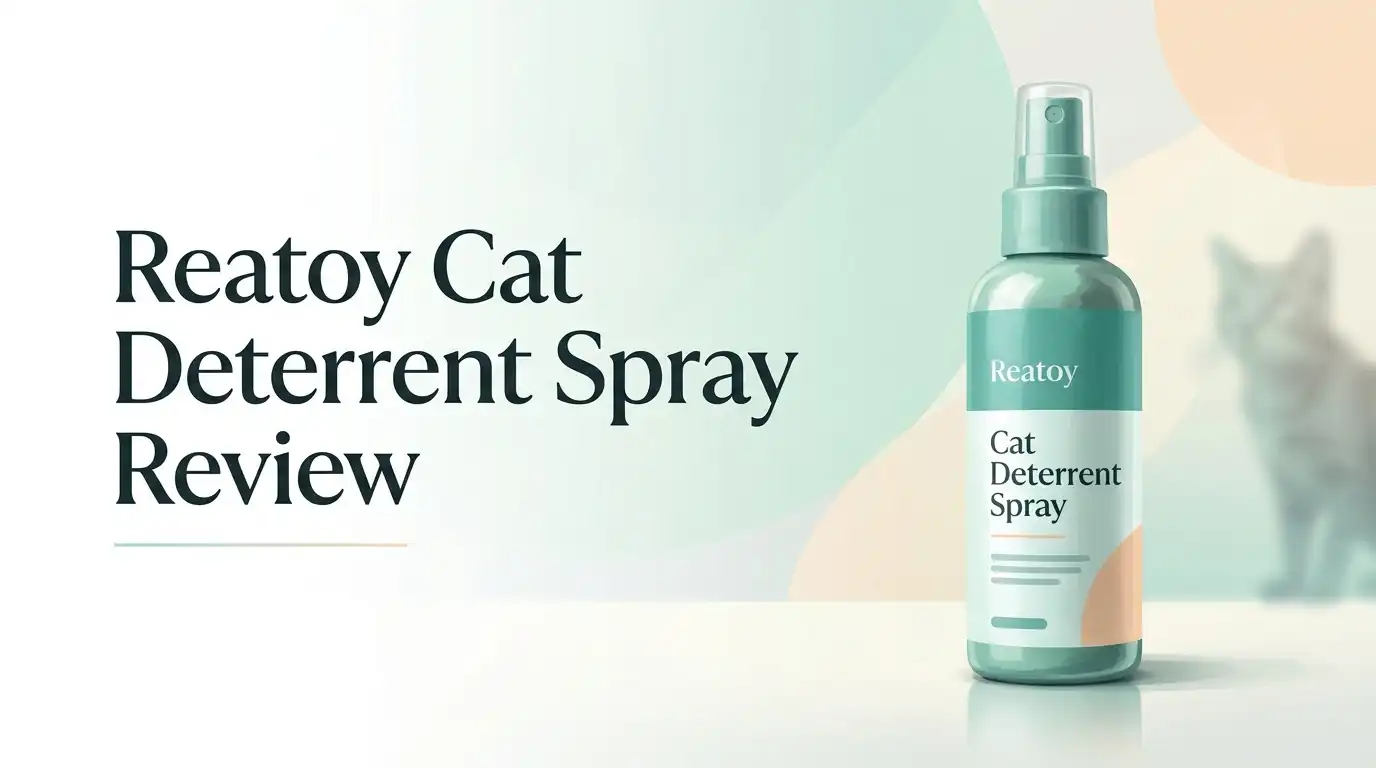
Reatoy Cat Deterrent Spray Review 2026: Does It Work?
Cats love your sofa more than their scratching post. They sharpen claws on the arm of your favorite chair. They spray the curtain near the back door.
Then they stare at you like nothing happened. The reatoy Cat Deterrent Spray promises a calm fix for all of this. It uses scent and bitter taste to build an invisible boundary your cat chooses to respect.
I bought a bottle, used it for several weeks across three rooms and one patio, and tracked what changed. This review covers the unboxing, the smell, the real results on fabric and wood, and the places where this spray falls flat.
In a Nutshell:
- It works best as a training tool, not a magic switch. The spray creates a scent and taste barrier that most cats avoid. You still need a scratching post nearby so your cat has a legal target.
- The formula is plant based. Orange peel extract, citronella oil, and lemongrass extract do the heavy lifting. There are no harsh chemical fumes, which matters in small apartments.
- The dual signal design is the clever part. Cats smell citrus first. If a stubborn cat licks or chews anyway, the bitter taste finishes the lesson. Two senses beat one.
- Daily reapplication is required at the start. Plan on one or two sprays per problem spot every day for the first two weeks. Skip days and your cat tests the boundary again.
- Results vary by cat, and that is the honest truth. Confident adult tomcats and determined markers may shrug it off. Kittens and food motivated cats usually respond faster.
- Value is solid at under twenty dollars. You get a usable bottle, a fine mist trigger, and enough product for several rooms. It costs far less than reupholstering a couch.
What Is reatoy Cat Deterrent Spray?

Last update on 2026-11-01 / Affiliate links / Images from Amazon Product Advertising API
The reatoy Cat Deterrent Spray is a training aid for cat owners who want to protect furniture. It targets three behaviors: scratching, chewing, and urine marking. The spray leaves a light citrus scent on treated surfaces. Cats dislike that scent and walk away from the area.
The brand markets it for both indoor and outdoor use. You can treat sofas, carpets, curtains, wood trim, plant pots, patios, and doorways. The bottle ships with a trigger sprayer that produces a fine mist instead of a heavy stream.
This is a behavior product, not a cleaner. It does not remove old urine stains or odor. You clean first, then you spray. Think of it as a fence made of smell rather than wood.
Unboxing Experience and First Impressions
The box arrived small and light. Inside the shipping mailer sat a slim carton with simple artwork and a cat illustration on the front. No plastic clamshell, no wasted filler, just the bottle wrapped in a thin protective sleeve.
The bottle itself feels lighter than expected. The plastic is thin but it did not flex or leak during shipping. A safety ring sits under the trigger, and you twist the nozzle from OFF to ON before the first pump.
My first three pumps produced nothing. Pump four finally pushed liquid through the tube. Prime the sprayer over a sink, not over your couch. The mist pattern is wide and soft, which is exactly what you want for fabric. First impression: basic packaging, decent sprayer, pleasant citrus hit.
What Is Inside the Formula?
The ingredient list stays short and readable. Orange peel extract supplies the citrus signal that most cats avoid by instinct. Citronella oil adds a sharp herbal layer that pushes cats back from doorways and garden beds. Lemongrass extract rounds out the scent and carries the bitter element.
Water forms the base, so the spray dries without an oily film on most surfaces. There are no alcohol fumes and no chemical sting in the nose.
No harsh solvents means safer use around food bowls and litter areas. That said, essential oils are not harmless by default. Cats metabolize some oils poorly, so you spray surfaces and never the animal. Ventilate the room and let treated spots dry before your cat returns. Keep the bottle away from birds and reptiles entirely.
Top 3 Alternatives for reatoy Cat Deterrent Spray


Last update on 2026-11-01 / Affiliate links / Images from Amazon Product Advertising API
Nature’s Miracle Cat Scratch Deterrent Spray

Last update on 2026-11-01 / Affiliate links / Images from Amazon Product Advertising API
Pet MasterMind Claw Withdraw Cat Scratch Deterrent Spray

Last update on 2026-11-01 / Affiliate links / Images from Amazon Product Advertising API
Emmy’s Best Stop the Scratch Cat Scratch Deterrent Spray
How the Dual Signal System Works
Most deterrent sprays rely on one trick: a smell cats hate. The reatoy formula adds a second layer. Scent handles the approach, and bitterness handles contact.
Here is the sequence in practice. Your cat walks toward the sofa arm. The citrus scent reaches the nose from a short distance. Many cats stop there and turn away. A bolder cat pushes forward, sniffs closely, then licks or chews the fabric. The bitter taste lands on the tongue and the cat retreats fast.
Two sensory cues create a stronger memory than one. Repetition builds the lesson over days. Cats learn by association, not by punishment, so the spray does the teaching while you stay the friendly human. Nobody gets yelled at, which keeps trust intact.
How to Apply It Correctly
Application technique decides your results. Start by cleaning the target area, especially if urine is involved. Residual scent marks pull your cat straight back.
Hold the bottle about eight inches from the surface. Mist lightly across the whole zone rather than soaking one patch. Treat the sofa corners, rug edges, curtain hems, doorway frames, and table legs your cat actually uses.
Spray once or twice daily for the first two weeks. After that, drop to every other day, then twice weekly. Reapply after vacuuming, mopping, or washing covers, because cleaning strips the scent.
Consistency matters more than quantity. A light daily mist beats a heavy weekly soak. Set a phone reminder for the first fortnight and the habit sticks.
Performance on Furniture and Carpets
Last update on 2026-11-01 / Affiliate links / Images from Amazon Product Advertising API
This is where the spray earns its keep. I treated a fabric sofa arm, a jute rug corner, and a wooden chair leg. My younger cat avoided the sofa arm within two days. She sniffed, pulled her head back, and walked to her sisal post instead.
The rug took longer. Jute holds scent poorly and absorbs liquid fast, so I reapplied twice daily for a full week before the clawing stopped.
Wood responded best. The scent sat on the sealed surface and lingered for close to two days per application.
Fabric and sealed wood give the strongest results. Deep pile carpet and rough natural fiber need more product and more patience. Test a hidden corner first, since any liquid can mark delicate upholstery.
Does It Stop Urine Marking?
Partly. The spray helps when marking is habit driven and tied to a specific spot. Clean the area with an enzyme cleaner first, dry it, then apply the deterrent. The citrus barrier discourages a return visit.
My older cat marked a hallway baseboard twice a week. After cleaning and ten days of daily spraying, the marking stopped at that spot.
Here is the honest limit. Marking often comes from stress, territory conflict, litter box problems, or medical issues such as a urinary tract infection. No spray fixes a medical cause. If marking is new, sudden, or spreading, book a vet visit before you blame behavior. A bottle of deterrent cannot diagnose a bladder.
Outdoor Use in Gardens and on Patios
Outdoor performance is weaker, and that surprises nobody who understands weather. The citronella and citrus notes fade fast in sun, wind, and rain. On a dry shaded patio, one application held for roughly a day.
I sprayed the edges of two raised garden beds to keep neighborhood cats out. It helped for about thirty six hours, then the visitors returned. After rain, the effect vanished completely.
For outdoor work you need frequent reapplication or a larger bottle. Cost per use climbs quickly.
Treat the outdoor claim as a bonus, not a core feature. It works for small protected zones like a doorway, a porch corner, or a pot of catmint. Open lawns and wide flower beds are simply too big for a small spray bottle.
The Smell Test: What Humans Notice
The scent reads as clean citrus with a herbal edge. It is pleasant on first spray and most people enjoy it. The smell fades to near nothing for human noses within thirty to sixty minutes, while cats still detect it for much longer.
That gap is the whole point. You get a fresh room, your cat gets a boundary.
A caveat matters here. In a small closed room, heavy spraying builds up and the citronella note turns sharp. Two guests mentioned it during a weekend visit.
Spray lightly and open a window. Your nose adapts quickly, but visitors notice what you stopped smelling days ago. People sensitive to essential oils may find the citronella too strong.
Safety for Cats, Kittens, Dogs, and Fabrics
The formula is labeled safe for cats and kittens when used on surfaces. In my testing, nothing stained. Light fabric, a cream rug, sealed oak, and painted trim all came through clean.
Still, apply common sense. Never spray near a cat’s face. Never apply it to bedding your cat sleeps on. Never spray it on the animal itself.
Keep the bottle out of reach of children. Let treated surfaces dry fully before pets return to the area.
Essential oils and cats require respect, not fear. Surface use with ventilation is widely considered acceptable, while direct contact is not. If your cat has asthma, a heart condition, or liver issues, ask your vet before you start. Always spot test silk, velvet, and unsealed leather.
What reatoy Cat Deterrent Spray Does Not Do Well
Authentic reviews name the flaws, so here they are.
The bottle is small. Heavy users empty it faster than expected, especially outdoors. The sprayer also sputters when the liquid level drops low.
The scent duration indoors runs shorter than the marketing suggests. Expect one day of strong effect, not three.
Some cats ignore it completely. Confident adult males and highly territorial cats were the common failures in my notes and in broader owner feedback.
It will not undo a deep rooted habit by itself. Without a scratching post, a clean litter box, and play time, your cat just moves the damage to a new surface.
It is a helper, not a cure. Buy it with realistic expectations and you will be satisfied.
Pros and Cons
Pros
- Plant based formula with orange peel, citronella, and lemongrass instead of harsh chemicals
- Dual action scent and bitter taste signals that reach two senses at once
- Pleasant citrus smell for humans that fades within an hour
- Safe on most fabrics, carpets, sealed wood, tile, and plant pots with no staining in testing
- Works indoors and outdoors, covering sofas, curtains, doorways, and patio corners
- Fine mist trigger spreads product evenly instead of soaking one spot
- Affordable price point that sits well under the cost of furniture repair
- Suitable for cats and kittens when applied to surfaces and allowed to dry
Cons
- Scent fades faster than advertised, so daily reapplication is needed early on
- Outdoor performance drops sharply after rain or strong sun
- Small bottle size runs out quickly for multi room households
- Sprayer needs priming and sputters when the bottle gets low
- Completely ineffective on some confident or strongly territorial cats
- Does not clean existing urine stains or remove old odor
- Citronella note can feel strong in small unventilated rooms
- Cannot address marking caused by stress or medical problems
Price and Value in 2026
The spray typically sells for around twenty dollars. That places it in the mid range of cat deterrent sprays, above basic supermarket options and below premium training brands.
Value depends on your usage. One bottle comfortably covers a sofa, a rug, and a doorway for several weeks of light maintenance. Treat an entire house plus a garden and you will reorder monthly.
Compare that to the alternative. A single reupholstered chair costs hundreds. A ruined rug costs more. A few bottles per year is cheap insurance.
The value is good for targeted indoor use and mediocre for large outdoor jobs. Buy a multipack if you have several problem rooms, since the per bottle price drops.
Who Should Buy It and Who Should Skip It
Buy it if you have a young cat forming bad habits, a new sofa to protect, or one specific spot under attack. It suits renters who cannot risk damage deposits. It also helps owners who want a gentle method instead of noise devices or sticky tape.
Skip it if your cat has already ignored two or three other deterrent sprays. Skip it if you need to protect an open garden. Skip it if urine marking started suddenly, because that case needs a veterinarian first.
Match the tool to the problem and you will be happy. This spray is a precise instrument for small zones, not a broad shield for your whole property. Pair it with a tall scratching post for best results.
Final Verdict
The reatoy Cat Deterrent Spray delivers on its main promise. It stops scratching and chewing on treated furniture for most cats, and it does so with a plant based formula that smells good to humans. The dual signal design is genuinely smarter than single scent competitors.
It is not perfect. The scent fades faster than claimed, the bottle is small, and outdoor use demands constant reapplication. A minority of cats ignore it entirely.
Judged fairly, it earns a solid recommendation for indoor furniture protection. Use it daily for two weeks, give your cat a better scratching option, and stay patient. The couch you save will be your own.
Frequently Asked Questions
How long does reatoy Cat Deterrent Spray last on furniture?
Expect strong effect for roughly twenty four hours indoors on sealed surfaces. Fabric and carpet hold the scent a little less. Reapply daily for the first two weeks, then taper to every other day once your cat changes habits.
Is the spray safe for kittens?
Yes, when used on surfaces. Spray the area, let it dry fully, then allow the kitten back into the room. Never apply it to the kitten, to bedding, or near food bowls. Ventilate small rooms during application.
Will it stain my sofa or carpet?
It did not stain fabric, rugs, or sealed wood in testing. Delicate materials still deserve caution. Spray a hidden corner, wait a full day, and check for marks before you treat a visible area.
Can I use it on plants?
Yes, you can mist the soil and the pot rim to stop digging and chewing. Avoid drenching leaves, especially on young or sensitive plants. Light application on the pot usually works better than spraying foliage.
Does it work on dogs too?
Many dogs dislike citrus and citronella, so it often discourages chewing on furniture legs. Results are less consistent than with cats. Dedicated dog chew deterrent products usually perform better for persistent chewers.
Why is my cat still scratching after a week?
Three common reasons: you are not reapplying often enough, you cleaned the surface and removed the scent, or your cat has no approved scratching alternative nearby. Place a tall sturdy post next to the treated spot and reward your cat for using it.

Hi, I’m Liza — pet lover, lifelong animal enthusiast, and the voice behind Liza4Pets. I created this space to share honest, practical pet care advice for fellow pet parents who want the best for their furry (and not-so-furry) companions.