
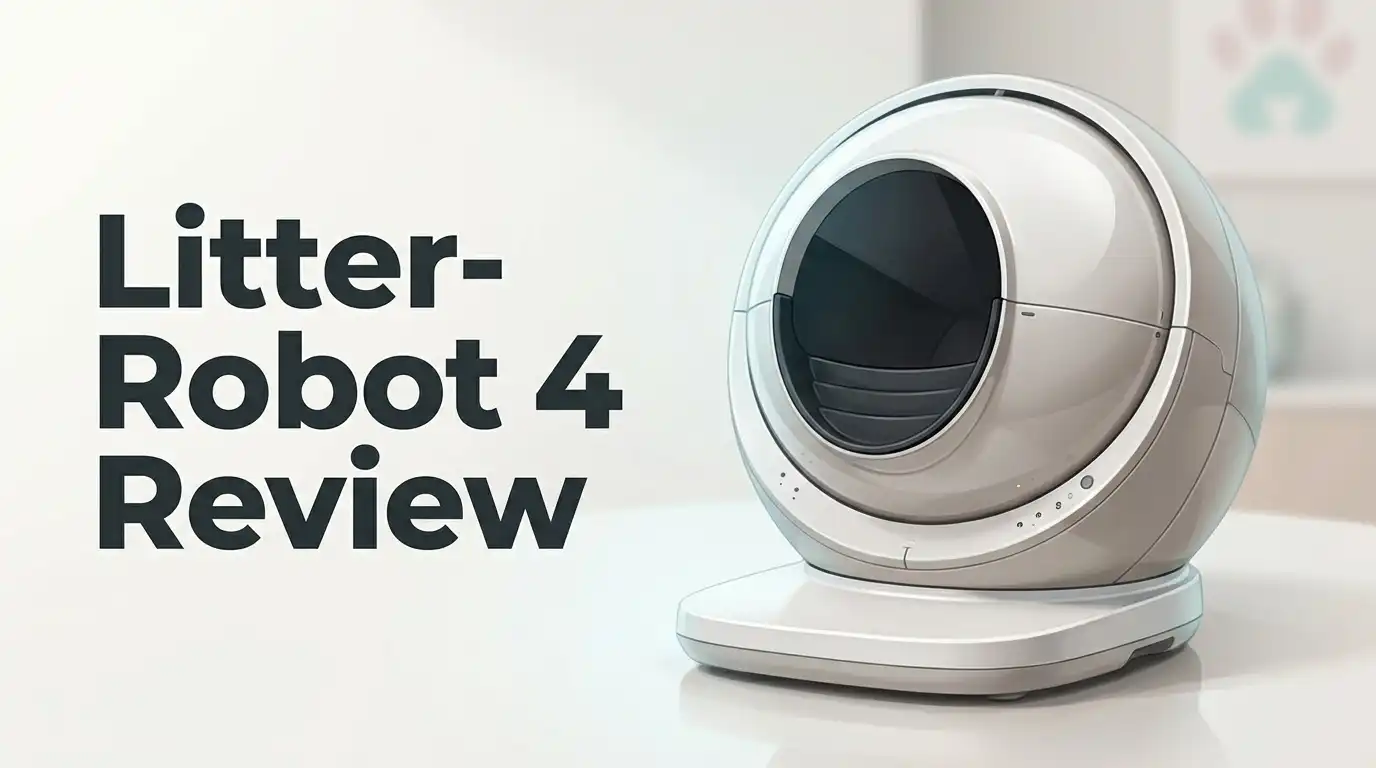
Litter-Robot 4 Review 2026: Still Worth It?
Cat owners ask one question before spending $700 on a litter box. Does it actually stop the scooping forever? The Litter-Robot 4 promises exactly that.
It rotates, sifts, seals the waste away, and sends a message to your phone. Thousands of owners swear by it. Others return it within a month.
This review covers both sides. I looked at long term owner reports, sensor complaints, odor results, noise levels, and the real cost of ownership in 2026.
In a Nutshell:
- The Litter-Robot 4 removes daily scooping completely. The globe rotates, sifts clumps into a sealed drawer below, and resets itself. Most owners empty the drawer once per week for one cat, or every three days for three cats.
- Odor control is the strongest feature. A carbon filter, a rubber sealed drawer, and optional OdorTrap packs keep smells locked inside. Guests usually cannot tell a litter box sits in the room.
- The size shocks first time buyers. It stands close to 30 inches tall with a 22 by 27 inch footprint. It will not slide under a sink or inside a standard cabinet.
- Sensor problems are the top complaint. The OmniSense laser system sometimes misreads the drawer level or triggers false errors. Cleaning the sensors fixes most cases, but it adds a chore.
- Weight tracking struggles with similar cats. If two cats weigh within one pound of each other, the app often credits every visit to the same cat.
- Value depends on your budget. The price sits near $699 with a one year warranty, and WhiskerCare adds two more years for $129.
What Is the Litter-Robot 4?

Last update on 2026-10-31 / Affiliate links / Images from Amazon Product Advertising API
The Litter-Robot 4 is an automatic self cleaning litter box made by Whisker, a company based in Michigan. It uses a rotating globe instead of a rake.
Your cat enters, does its business, and leaves. A sensor starts a timer, usually seven minutes by default, which gives the litter time to clump.
The globe then turns slowly. Clean litter falls through a sieve and returns to the bed. Clumps slide down a chute into a sealed drawer underneath. The globe rotates back and closes the chute.
The whole cycle takes about two minutes. You never touch waste during normal use. You only pull out the drawer, tie the bag, and drop in a fresh liner. The unit connects to WiFi and reports every visit to the Whisker app.
Unboxing Experience
The box arrives heavy and large. The unit weighs 24 pounds empty, and the carton feels closer to 30 pounds with packaging. Two people make the carry easier, though one adult can manage it.
Inside you find the base, the globe already attached, a waste drawer, a carbon filter, a starter pack of liners, a ramp or step depending on your bundle, and a fence piece. The fence matters more than it looks. Many cats pee near the opening, and that small plastic guard prevents puddles on the floor.
The packaging is clean and foam free in most shipments. Whisker switched to molded cardboard inserts, so breakdown for recycling is quick.
One tip from owners: scan the QR code on the underside before you pour litter. Tipping a loaded unit to find that code is awkward and messy.
Setup and the First Week
Give yourself an hour. The hardware setup takes ten minutes. The app pairing takes longer than the instructions suggest.
The Litter-Robot 4 needs a 2.4 GHz WiFi network. Many modern routers combine bands into one name, which causes failed pairing. Splitting the bands or using a guest network solves it.
Pour clay clumping litter to the fill line, not above it. Overfilling causes weight errors and poor sifting. Then run one manual cycle to confirm smooth rotation.
Cat acceptance is the real hurdle. Whisker recommends keeping the old box nearby and leaving the new unit unplugged for a few days. Some cats jump in on day one. Others need six weeks of patience. Never remove the old box suddenly, because stressed cats will choose your carpet instead.
Top 3 Alternative for Litter-Robot 4


Last update on 2026-10-31 / Affiliate links / Images from Amazon Product Advertising API
PetSafe ScoopFree SmartSpin Self Cleaning Litter Box

Last update on 2026-10-31 / Affiliate links / Images from Amazon Product Advertising API
Casa Leo Leo’s Loo Too Automatic Self Cleaning Cat Litter Box

Last update on 2026-10-31 / Affiliate links / Images from Amazon Product Advertising API
PETLIBRO Luma Automatic Cat Litter Box with AI Camera
How the Cleaning Cycle Works
The cycle logic is smarter than it first appears. A weight sensor in the base detects entry. The laser sensors confirm the cat has left. The timer then counts down before rotation begins.
If your cat returns mid cycle, the globe stops and reverses. This safety feature works reliably and is one reason the model earns trust from owners of curious kittens.
You can change the wait time to three, seven, or fifteen minutes through the app. Short delays suit soft clumping litters. Longer delays suit cats that scratch for a long time.
The sieve design is the quiet hero. Clean litter passes through while clumps travel to the chute. Owners describe the sound as a rain stick. It is not silent, but it rarely wakes anyone.
Odor Control Performance
Odor control is where the Litter-Robot 4 beats almost every rival. Waste leaves the open bed within minutes, so ammonia never builds up in the litter bed.
The drawer uses a rubber gasket and a carbon filter. Optional OdorTrap packs sit in a small slot and release a light scent. Many owners skip them and still report no smell.
Guests usually cannot locate the litter box by smell. That matters in apartments and small homes where the box shares space with the living room.
The weak point appears if you delay emptying. A full drawer in a warm room will eventually leak odor when you open it. Weekly emptying keeps the system odor free. Multi cat homes may need a twice weekly schedule to stay comfortable.
Noise Levels in a Real Home
Independent noise tests place the Litter-Robot 4 around the low to mid 30 decibel range during most of its cycle. That sits near the volume of a quiet library.
The motor hum is low and steady. The loudest moment comes when clumps drop into the drawer, which creates a brief shuffle sound.
Bedroom placement works for most households. Light sleepers sometimes notice the night cycles, especially with a cat that visits at 3 a.m.
The app offers a sleep mode schedule. You set a window, and the unit waits until morning to clean. This feature is useful but imperfect, because waste then sits longer and odor control drops slightly overnight. Owners in studio apartments often accept that trade. Hard floors amplify the sound more than carpet or a thick mat.
Size and Space Requirements
This machine is big. The height reaches nearly 30 inches, the footprint measures 22 by 27 inches, and the unit needs clearance behind it for the drawer and power cord.
The entryway measures 15.75 by 15.75 inches, which fits almost every domestic breed, including Maine Coons. Interior globe height runs around 16.5 inches.
Measure your space before ordering. The unit will not fit under a bathroom sink, inside most cabinets, or in a narrow hallway nook.
A litter mat in front is essential. Cats track granules down the step, and the surrounding floor collects dust. Plan for a two foot clear zone in front of the opening. Placing it against a wall with an outlet nearby saves cable clutter and keeps the drawer accessible.
Whisker App and Health Tracking
The app is polished and quick. It shows litter level, waste drawer level, cycle history, and the number of scoops you have avoided.
Health tracking is the headline feature. The unit logs visit frequency, duration, and cat weight over time. Sudden changes in bathroom habits often signal kidney issues, diabetes, or urinary blockage.
Single cat households get the most accurate data. The system identifies cats by weight alone.
Here is the honest limitation. If two cats weigh within about one pound of each other, the app merges them. Owners report every visit logged under one name. Multi cat tracking is unreliable unless your cats differ clearly in size. The app also sends notifications when the drawer fills, which prevents overflow and keeps the routine simple.
Litter Choice and Litter Savings
The Litter-Robot 4 requires premium clay clumping litter. Crystal litter, paper pellets, and most plant based litters fail because urine does not form a liftable clump.
Hard clumping formulas such as Tidy Cats, Scoop Away, and Arm and Hammer work well. Whisker now sells a litter tuned for the machine.
Litter consumption drops compared with a manual box. The sieve returns clean granules instead of letting you scoop them away by accident. Owners commonly report topping off every two weeks instead of weekly.
Low dust formulas protect the sensors. Dusty litter is the leading cause of laser sensor errors. A full change of litter every four to six weeks keeps the globe fresh, even though the daily sifting does most of the work for you.
Maintenance Routine
Automatic does not mean maintenance free. Expect three recurring tasks.
First, empty the waste drawer and replace the liner. Press the bag flat against the sides, because a stretched or bunched bag confuses the drawer sensor.
Second, wipe the OmniSense laser sensors. Dust settles on them over weeks and causes false full alerts or interrupted cycles. A dry cloth takes thirty seconds.
Third, perform a deep clean every one to three months. You remove the globe, wash it with mild soap, dry it completely, and refill.
Total time is roughly fifteen minutes per month. That beats daily scooping by a wide margin. Owners who skip sensor cleaning report the most problems, which explains much of the gap between glowing reviews and angry ones.
What the Litter-Robot 4 Does Not Do Well
Honest reviews list the failures. Here are the real ones.
Sensor reliability is inconsistent across units. Some owners run four years without a fault. Others see blinking error lights within months. Dust, humidity, and bag placement all contribute.
Cat identification fails with similar sized cats. The weight only system simply cannot tell them apart.
The price feels high against rivals that now offer cameras and AI waste analysis for less money.
Repairs require part swaps rather than local service. Shipping a 24 pound unit back is inconvenient without the extended warranty.
It also cannot handle non clumping litter, which frustrates owners committed to eco friendly options. Very large cats may find the globe interior snug during turning, though the entryway itself is generous.
Pros and Cons
Pros
- Removes daily scooping and saves roughly fifteen minutes of chores each week
- Strongest odor control in its class thanks to the sealed drawer and carbon filter
- Quiet cycle that works in bedrooms and small apartments
- Wide 15.75 inch entryway that fits large breeds comfortably
- Reliable safety sensors that stop and reverse the globe when a cat returns
- Useful health data including visit frequency, duration, and weight trends
- Lower litter consumption compared with a manual box
- Mature app with WiFi alerts, sleep mode, and multi unit support
Cons
- High price near $699 before accessories or extended coverage
- Large footprint that will not fit in cabinets or under sinks
- OmniSense laser sensors need regular cleaning to avoid false alerts
- Cannot distinguish cats with similar weights
- Works only with clay clumping litter
- One year standard warranty, with extra coverage sold separately
- Replacement parts and repairs can be slow without WhiskerCare
Litter-Robot 4 vs Litter-Robot 5
Whisker released the Litter-Robot 5 and the 5 Pro, which raises an obvious question. Should you pay more?
The newer models add camera based cat recognition, which solves the weight confusion problem. They also record short clips of each visit and offer slightly better odor sealing.
The core cleaning performance is nearly identical. Both sift the same way, with the same globe design and the same safety sensors.
The Litter-Robot 4 now sells at a lower price, and discounts appear often. If you own one cat, the 4 delivers the same daily result for less money. If you own two or three cats and want accurate individual health data, the camera upgrade earns its cost. Multi cat homes benefit most from the newer system.
Price, Warranty and Long Term Value
Last update on 2026-10-31 / Affiliate links / Images from Amazon Product Advertising API
The Litter-Robot 4 typically lists near $699, with bundles that add liners, filters, a mat, and wipes. Sales during holiday events push the price lower.
The standard warranty covers one year. WhiskerCare extends that to three years for $129, with free shipping both directions on claims.
Running costs stay modest. You buy liners, carbon filters, and litter. Many owners use grocery bags instead of branded liners to cut spending.
Long term value depends on lifespan. Plenty of units run four to six years with basic care. Spread across five years, the cost works out to roughly $12 per month, which compares reasonably with premium litter subscriptions. Buy the extended warranty if your budget allows, since motor and sensor repairs land outside year one.
Who Should Buy It and Final Verdict
The Litter-Robot 4 suits households with one to three cats, enough floor space, and a tolerance for occasional sensor maintenance. It suits travelers, busy professionals, people with mobility limits, and anyone tired of the daily scoop.
It does not suit tiny apartments with no spare corner, owners committed to natural litter, or buyers on a tight budget.
Verdict: the Litter-Robot 4 remains the safest buy in automatic litter boxes in 2026. The cleaning works, the odor control is excellent, and the build quality holds up over years.
It is not flawless. The sensors demand attention, the cat identification disappoints, and the price stings. Accept those three facts and you will likely love it. Expect perfection and you will feel let down.
Frequently Asked Questions
Does the Litter-Robot 4 have a cat weight limit?
No official limit exists. The entryway measures 15.75 by 15.75 inches and the interior height reaches about 16.5 inches, so most large breeds fit. Very large Maine Coons usually enter without trouble.
How often do you empty the waste drawer?
One cat usually needs emptying once a week. Two cats need it every four or five days. Three or four cats need it every two or three days.
Can the Litter-Robot 4 use natural or crystal litter?
No. It requires premium clay clumping litter. Crystal, paper, pine, and most plant based litters do not clump firmly enough for the sieve to separate them.
Is the Litter-Robot 4 safe for kittens?
Whisker recommends waiting until kittens reach about three pounds. Lighter kittens may not trigger the weight sensor, which affects cycle timing and safety detection.
Why does my Litter-Robot 4 say the drawer is full when it is not?
The OmniSense laser sensors are likely dusty, or the liner bag is bunched. Wipe the sensors with a dry cloth and press the bag flat against the drawer walls.
How loud is the cleaning cycle?
Measurements place it in the low to mid 30 decibel range for most of the cycle. That is quieter than a refrigerator hum, though the clump drop creates a brief louder moment.
Is the Litter-Robot 4 worth it over the Litter-Robot 5?
For single cat homes, yes. The cleaning is the same and the price is lower. Multi cat homes gain real value from the camera based cat recognition in the newer model.

Hi, I’m Liza — pet lover, lifelong animal enthusiast, and the voice behind Liza4Pets. I created this space to share honest, practical pet care advice for fellow pet parents who want the best for their furry (and not-so-furry) companions.