
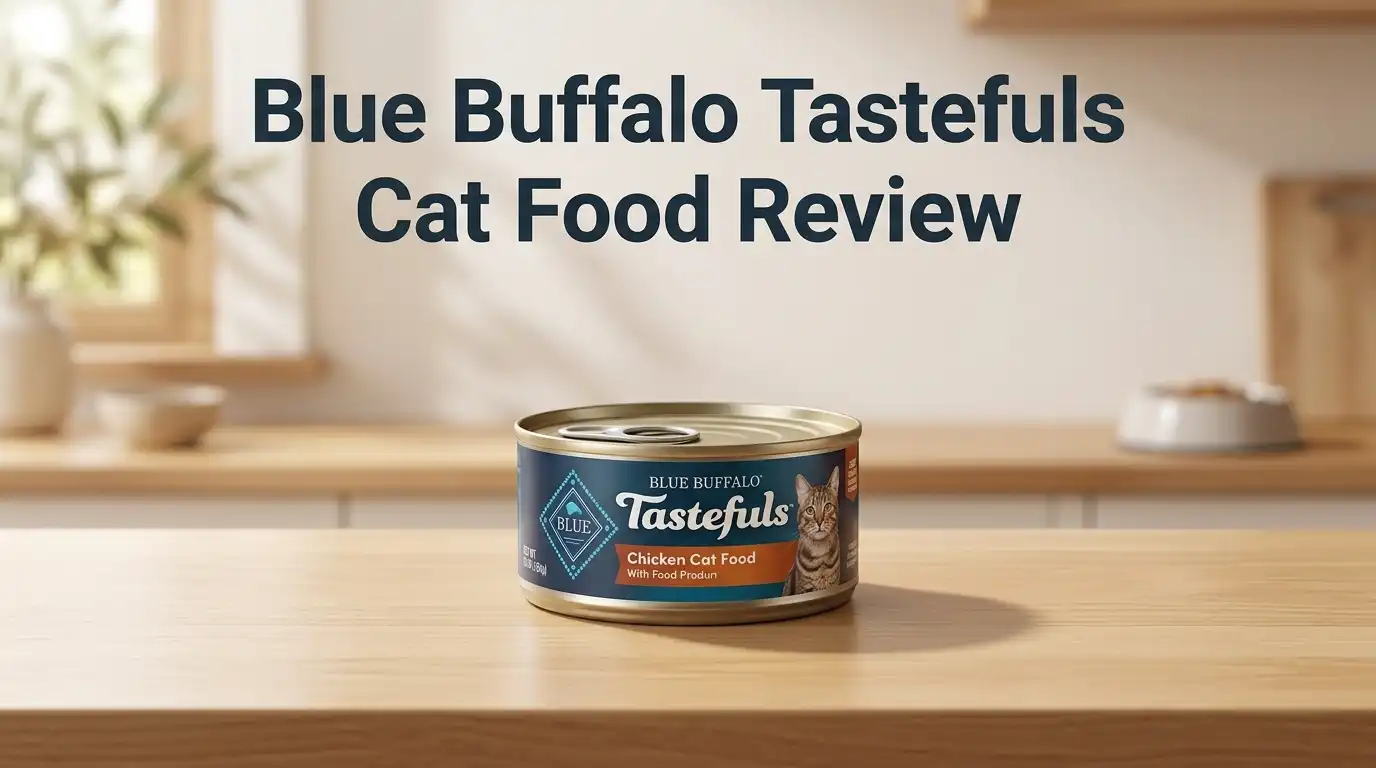
Blue Buffalo Tastefuls Cat Food Review 2026: Worth It?
Your cat stares at a full bowl and walks away. You bought the bag two days ago. That sting feels familiar to almost every cat owner.
Blue Buffalo Tastefuls promises to fix that moment with real meat, simple grains, and recipes built around flavor. The line sits at a friendly price, which makes it one of the most searched cat foods in 2026.
This review covers the good parts, the weak parts, and the honest moments nobody puts on the bag.
In A Nutshell:
- Real chicken sits first on the label. The dry indoor recipe starts with deboned chicken, then brown rice, chicken meal, and barley. No corn, no wheat, no soy, and no poultry byproduct meals.
- Protein lands at a moderate level for dry food. The indoor chicken formula delivers roughly 32 percent crude protein and 15 percent crude fat, which suits adult house cats more than young athletes.
- The wet recipes score much better on paper. Dry matter protein for Tastefuls pates and morsels sits near 48 to 50 percent, with carbs well below the wet food average.
- LifeSource Bits divide cats sharply. These dark antioxidant pieces carry the vitamin blend. Some cats eat around them and leave a bowl of tiny dark dots behind.
- Price is the strongest selling point. Tastefuls costs noticeably less than Blue Wilderness while keeping the same ingredient promises, making it a solid middle tier pick.
- It is not a perfect food. Carb levels in the dry formula stay high, carrageenan appears in several wet recipes, and recipe tweaks have upset picky cats in recent batches.
What Is Blue Buffalo Tastefuls?


Last update on 2026-10-31 / Affiliate links / Images from Amazon Product Advertising API
Tastefuls is Blue Buffalo’s flavor focused line for cats. The company rebranded its older Indoor Health and Healthy Living cat recipes under this single name a few years back. The idea was simple. Put taste first, keep the natural ingredient story, and price it below the premium Wilderness range.
The line covers dry kibble, pates, flaked recipes, tender morsels in gravy, and spoonless trays. Recipes exist for kittens, adults, indoor cats, weight control, hairball control, and sensitive stomachs. Every formula skips corn, wheat, soy, and artificial flavors or preservatives.
Think of Tastefuls as the everyday option, while Wilderness plays the role of the high protein, grain free upgrade. For most indoor cats with normal activity levels, the everyday option covers the basics well.
Blue Buffalo Tastefuls Chicken Adult Indoor Dry Cat Food
This is the flagship bag and the one most people mean when they search for Tastefuls. It comes in 3, 7, and 15 pound sizes. Deboned chicken leads the ingredient list, followed by brown rice, chicken meal, barley, and oatmeal.
The recipe targets indoor life. Fiber climbs to around 6 percent to help move hair through the gut, and calorie density stays moderate so less active cats do not pack on weight. Taurine appears as a guaranteed nutrient, which matters for heart and eye health.
My cats ate it steadily for six weeks. Stools stayed firm. Coat condition improved slightly after the first month. The kibble is small and crescent shaped, which worked fine for both my senior and my two year old.
Unboxing And First Impressions
The 7 pound bag arrived in a plain Amazon box with no inner padding. The bag itself is thick, matte, and resealable along the top strip. That reseal works better than the fold and clip bags from cheaper brands.
Cut it open and the smell hits first. It is a mild roasted poultry scent, not the sharp fishy punch some dry foods carry. My cats showed up within ten seconds of the bag opening, which counts as real feedback.
Pour a cup out and you notice the color difference right away. Tan kibble pieces mix with dark, almost black LifeSource Bits. They look like burnt pieces at first glance. They are not. They hold the vitamin, mineral, and antioxidant blend that Blue Buffalo adds cold to protect potency.
Blue Buffalo Tastefuls Chicken Pate Wet Cat Food

Last update on 2026-10-31 / Affiliate links / Images from Amazon Product Advertising API
The 5.5 ounce chicken pate cans tell a better nutrition story than the kibble. Chicken, chicken broth, water, and chicken liver fill the top of the list. Dried egg product adds easy to digest protein with high biological value.
The pate texture is smooth and firm. It slides out of the can in one piece and holds its shape, which makes portioning simple. It mashes easily with a fork if your cat prefers a looser texture, and a splash of warm water turns it into gravy.
Moisture content near 78 percent helps cats who never drink enough water. That matters for urinary health. My pickier cat licked the plate clean, which she rarely does with pates from other budget brands.
Top 3 Alternative for Blue Buffalo Tastefuls

Last update on 2026-10-31 / Affiliate links / Images from Amazon Product Advertising API
Blue Buffalo Wilderness Chicken Adult Indoor Dry Cat Food

Last update on 2026-10-31 / Affiliate links / Images from Amazon Product Advertising API
Hill’s Science Diet Adult Indoor Dry Cat Food

Last update on 2026-10-31 / Affiliate links / Images from Amazon Product Advertising API
IAMS Proactive Health Indoor Dry Cat Food
Ingredients Breakdown
Real chicken first is a genuine plus, but position on a label does not tell the whole story. Fresh chicken carries a lot of water, so its dry contribution shrinks after cooking. Chicken meal, sitting third, likely supplies more finished protein than the headline ingredient.
Brown rice, barley, and oatmeal fill the carbohydrate role. These are whole grains rather than cheap fillers, and they bring B vitamins plus soluble fiber. Cats still have little biological need for grain, so this is a cost choice as much as a health choice.
The supporting cast reads well. Flaxseed adds omega 3 fats. Cranberries and carrots bring antioxidants. Menhaden fish meal boosts protein and marine fats. Nothing here looks cheap or alarming, but nothing looks exceptional either.
Guaranteed Analysis And Nutrition Numbers
Numbers cut through marketing. The indoor chicken dry recipe guarantees roughly 32 percent crude protein, 15 percent crude fat, 6 percent crude fiber, and 9 percent maximum moisture. Taurine comes in at 0.15 percent minimum.
Once you strip the moisture out, estimated carbohydrates land somewhere near the mid thirties. That is slightly below average for dry cat food but still far above what a cat would eat in the wild. Dry food simply cannot escape starch, since starch holds the kibble together.
The wet side flips the script. Dry matter protein reaches about 50 percent in the tender morsels recipe, with fat near 22 percent and carbs under 20 percent. If nutrition density is your priority, lean toward the cans and trays.
What LifeSource Bits Actually Do
LifeSource Bits are the signature Blue Buffalo feature, and they deserve a fair explanation. Heat destroys delicate vitamins. So the company cold forms these bits separately and blends them into finished kibble, which protects the nutrient load.
The theory is sound. The practice gets messy. A real share of cats pick out the tan kibble and leave the dark bits untouched at the bottom of the bowl. When that happens, your cat skips part of the vitamin and antioxidant package you paid for.
My senior cat ate everything. My younger one sorted them out for the first week, then gave up and ate the whole mix. Expect a possible adjustment period, and check the bowl for leftover dark pieces.
How Cats Respond To The Taste
Palatability is the single most important test, and Tastefuls generally passes. The wet recipes win faster than the dry. Both of my cats came running for the pate, while the kibble took two days of mixing with their old food before full acceptance.
Owner reports in 2026 show a split pattern worth knowing. Many cats stay loyal for years. Others suddenly refuse the food after a formula or production change, and those complaints cluster around the variety packs more than the single flavor cans.
That inconsistency is the real risk here. Buy the smallest size first. A 3 pound bag or a single can costs little and saves you from a full bag your cat rejects.
Pros And Cons of Blue Buffalo Tastefuls
Every honest review needs both columns. Here is where this food earns points and where it loses them.
Pros
- Real chicken leads the ingredient list in the main recipes, with no poultry byproduct meals anywhere in the line.
- No corn, wheat, soy, artificial flavors, or artificial preservatives, which helps cats with common grain sensitivities.
- Wet recipes deliver strong protein and low carbs, competing with foods that cost far more per ounce.
- Fiber and calorie levels suit indoor cats who nap more than they hunt.
- Wide recipe selection covers kittens, seniors, hairballs, weight control, and sensitive stomachs.
- Price sits well below Wilderness and most boutique brands with similar ingredient claims.
Cons
- Carbohydrate content in the dry food stays high, since grains do real work in the recipe.
- LifeSource Bits get rejected by some cats, wasting part of the nutrient blend.
- Several wet recipes contain carrageenan, a thickener with ongoing safety debate.
- Recipe consistency has frustrated long term buyers, with reports of cats refusing newer batches.
- Chicken meal placement suggests the fresh chicken contributes less finished protein than the label implies.
- Blue Buffalo has a recall history, though no cat food recall since 2015.
What Tastefuls Does Not Do Well
Let me be blunt about the gaps. This food is not a high protein formula in dry form. If you want 40 percent plus protein from kibble, Tastefuls will disappoint you. Wilderness or a freeze dried raw topper serves that goal better.
It also does not solve medical problems. Cats with diabetes need far lower carbs than the dry recipes provide. Cats with diagnosed kidney disease need controlled phosphorus, which this line does not offer. Those cases need a veterinary diet.
Finally, it does not guarantee a happy cat. Palatability claims mean nothing to a cat who has decided otherwise. My neighbor’s tabby walked away from three different Tastefuls flavors and happily ate a cheaper store brand instead.
Price And Value In 2026
Tastefuls lands in the middle of the shelf. The 7 pound indoor chicken bag usually runs in the low twenties, and the 15 pound bag drops the cost per pound meaningfully. Wet cans cost roughly a dollar fifty each in multipacks.
Compare that to Blue Wilderness, which charges a clear premium for grain free, higher protein kibble. Compare it also to supermarket brands, which cost half as much but lean on corn and byproduct meals.
The value case is real if you buy the large bag and the single flavor cans. Variety packs carry a premium and a higher rejection risk. Subscription discounts on Amazon shave another chunk off, which makes the long term cost reasonable for a multi cat home.
Who Should Buy Blue Buffalo Tastefuls
This food fits a clear profile. You have a healthy adult indoor cat with no diagnosed conditions. You want cleaner ingredients than the supermarket shelf offers. You do not want to pay boutique prices every month.
It also suits owners moving up from a cheap grocery food. The jump in ingredient quality is noticeable, and the price jump is manageable. Cats with mild hairball trouble often do well on the indoor recipe thanks to the added fiber.
Mixed feeders get the best outcome. Use the dry food for daytime grazing and add a can of the pate once or twice daily. That combination raises total protein, raises water intake, and keeps the monthly bill sensible.
Who Should Skip It
Skip this line if your cat has diabetes, chronic kidney disease, urinary crystals, or a confirmed chicken allergy. Those conditions need targeted formulas, and a general purpose food cannot substitute for veterinary nutrition.
Skip it also if you follow a strict low carbohydrate philosophy. The dry recipes rely on grains, and no amount of marketing changes that math. A canned only or raw feeding plan will serve that goal better.
Cats who have already rejected other foods with mixed kibble textures may reject this one too. The LifeSource Bits are a known sticking point for texture sensitive cats. If that describes your cat, buy the smallest bag or start with the wet recipes instead.
Feeding Tips And Transition Advice
Switch slowly. Mix one quarter new food with three quarters old food for three days. Move to half and half for three more days. Then shift to three quarters new before going fully over. Rushing this step causes most of the digestive upset blamed on new foods.
Follow the bag chart as a starting point, then adjust by body condition. An average 10 pound indoor cat needs roughly 200 to 250 calories daily. Feel the ribs weekly. You want to feel them under a thin fat layer, not see them.
Store the bag sealed in a cool, dry spot. Keep the food in its original bag inside any container, since the bag liner blocks fat oxidation. Refrigerate opened cans and use them within two days.
Final Verdict: Is It Worth Buying?
Blue Buffalo Tastefuls earns a solid recommendation with honest limits. The ingredient quality beats anything at the grocery store price point. The wet recipes genuinely impress on protein and carb numbers. The dry food does its job for ordinary indoor cats without draining your wallet.
It is not the best cat food on the market, and it does not pretend to be. The dry recipes carry real carbohydrate load. LifeSource Bits annoy a meaningful number of cats. Batch consistency has slipped for some long term buyers.
My rating sits at 4 out of 5 for the wet food and 3.5 out of 5 for the dry. Buy small first, watch your cat’s response, then scale up if the bowl comes back empty.
Frequently Asked Questions
Is Blue Buffalo Tastefuls good for cats?
Yes, for healthy adult cats. It uses real meat first, skips corn, wheat, and soy, and includes taurine plus antioxidants. The wet recipes rate higher nutritionally than the dry ones because of their protein and moisture levels.
Has Blue Buffalo Tastefuls been recalled?
No. The Tastefuls line has not been recalled. Blue Buffalo’s most recent cat product recall happened in 2015 and involved a cat treat, not this food line. Always check the lot code on your bag against the company’s recall page.
Why does my cat leave the dark pieces in the bowl?
Those are LifeSource Bits, which hold the cold formed vitamin and antioxidant blend. Some cats dislike their firmer texture. Mixing a spoon of warm water or wet food into the kibble usually solves the sorting habit.
Is Tastefuls better than Blue Wilderness?
They serve different cats. Wilderness offers grain free recipes with higher protein at a higher price. Tastefuls offers moderate protein with whole grains at a lower price. Active young cats suit Wilderness. Calm indoor adults do fine on Tastefuls.
Can kittens eat Blue Buffalo Tastefuls?
Only the kitten recipes. Those formulas add DHA and ARA to support brain and eye development and meet growth nutrient profiles. Adult recipes do not supply enough calories or nutrients for a growing kitten.
How long does a 7 pound bag last?
One average adult cat eating about half a cup daily will finish a 7 pound bag in roughly seven to eight weeks. Two cats will empty it in about three and a half weeks. Free feeding shortens that timeline considerably.

Hi, I’m Liza — pet lover, lifelong animal enthusiast, and the voice behind Liza4Pets. I created this space to share honest, practical pet care advice for fellow pet parents who want the best for their furry (and not-so-furry) companions.


