
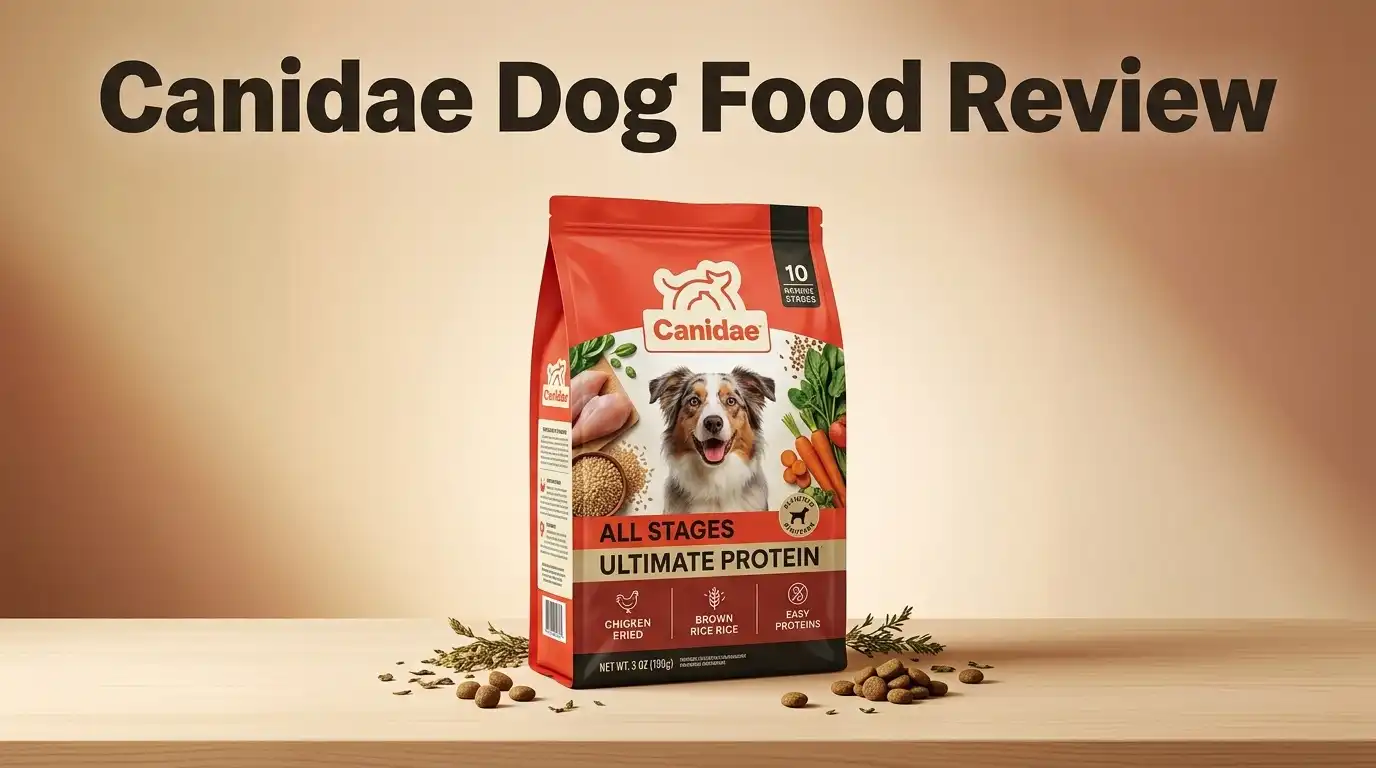
Canidae Dog Food Review 2026: Worth Buying?
Your dog stares at you while you read the back of a kibble bag. You want real meat, no junk, and a price that does not wreck your monthly budget. Canidae keeps showing up in that search.
It has been around since 1996, it runs its own plant in Texas, and it talks a lot about regenerative farming. But marketing is cheap. Food that actually sits well in a dog’s stomach is the hard part.
I fed Canidae to two dogs across several months, tracked stool quality, coat changes, and bowl enthusiasm, then compared notes with long term owners and ingredient panels.
In A Nutshell:
- Canidae sits in the premium tier. Real meat leads every ingredient list. You will pay roughly two to three times what a grocery store brand costs, and that gap is the single biggest reason people walk away.
- The All Life Stages line is the workhorse. One bag feeds puppies, adults, and seniors. Multi dog households save real money and shelf space with this formula.
- The Pure line targets sensitive dogs. Recipes run eight to ten main ingredients with proteins like salmon, lamb, and bison. Dogs with chicken sensitivities often do well here.
- Only one recall in nearly 30 years. That happened in May 2012 and traced back to a Diamond Pet Foods plant, not a Canidae facility. Safety record is strong.
- Kibble dust is a genuine complaint. Several formulas crumble and leave powder at the bottom of the bag. The salmon recipes also smell strongly fishy.
- Grain free recipes lean on peas and lentils. The FDA has looked into a possible link between legume heavy diets and heart issues. Ask your vet before choosing grain free.


Last update on 2026-10-30 / Affiliate links / Images from Amazon Product Advertising API
What Is Canidae Dog Food?
Canidae launched in 1996 in Southern California as a small operation built around one idea. Dogs should eat food made from ingredients you can pronounce. The brand grew, and today it manufactures dog and cat food in its own facility in Brownwood, Texas.
That detail matters more than most shoppers realize. Plenty of pet food brands rent space at shared plants and never touch the production line. Canidae controls its own cooking, which gives it tighter grip on quality checks and recipe consistency.
The company also runs a farm in Kansas and buys from local growers who use regenerative practices. In plain language, those farms work to rebuild soil health instead of stripping it.
Packaging uses recycled material. Canidae even set up the first kibble refill stations, currently inside a handful of Petco stores in Los Angeles and San Diego, where you refill a reusable 25 pound bag.
Is any of that going to change your dog’s digestion? No. But it tells you the brand invests past the label. Six formula families now sit under the Canidae name, covering every size, age, and sensitivity level. Prices reflect all of it. This is not budget food and never pretends to be.
Canidae All Life Stages Multi Protein Dry Dog Food
This is the recipe I would hand to most dog owners first. Chicken, turkey, lamb, and fish supply the protein, so your dog gets a broader amino acid spread than a single meat formula delivers.
The “all life stages” part is not a marketing trick. The formula meets nutrient levels for growth and for adult maintenance, which means one bag feeds your ten week old puppy and your eleven year old senior. If you own three dogs at different ages, that simplicity is worth real money.
Canidae builds in what it calls HealthPLUS Solutions. That blend includes probiotics for gut support, antioxidants for immune function, and omega fatty acids for skin and coat. No corn, no wheat, no soy, no artificial colors or flavors.
Bag sizes run from 5 pounds up to 44 pounds. The 40 pound bag drops the cost per pound noticeably, so buy big if you have storage space and a fast eating household.
Now the honest part. This kibble is dusty. Pour a bowl and you will see fine powder settle at the bottom. Picky dogs sometimes leave that dust behind. The recipe also includes legumes, which some owners avoid on principle.
Canidae Pure Farm To Bowl Wild Caught Salmon And Sweet Potato

Last update on 2026-10-30 / Affiliate links / Images from Amazon Product Advertising API
This one exists for itchy dogs. Chicken and beef sit at the top of the canine food sensitivity list, so Canidae built this recipe around wild caught salmon instead.
The ingredient panel stays short. Salmon leads, sweet potato supplies carbohydrates, and the full list of main ingredients stops around eight.
Fewer ingredients means fewer suspects when you are trying to figure out what makes your dog scratch. Vets often suggest exactly this kind of simple recipe during an elimination trial.
Salmon brings a bonus. Fish oil is loaded with omega 3 fatty acids, and that shows up in the coat. I saw visible improvement in shine within about five weeks, and the flaking behind one dog’s ears calmed down considerably.
Protein runs around 25 percent with fat near 14.5 percent on comparable Pure recipes. Those are solid numbers for an adult dog with moderate activity.
Here is what nobody puts on the bag. The smell is aggressive. Open the bag in a small kitchen and you will know it. Some dogs love that fishy punch and some refuse it outright. This recipe is also grain free, so it relies on legumes for carbohydrates. Discuss that with your vet if heart health worries you.
Top 3 Alternative for Canidae Pure Farm To Bowl

Last update on 2026-10-30 / Affiliate links / Images from Amazon Product Advertising API
Taste of the Wild Pacific Stream Adult Dry Dog Food

Last update on 2026-10-30 / Affiliate links / Images from Amazon Product Advertising API
Wellness Complete Health Adult Dry Dog Food

Last update on 2026-10-30 / Affiliate links / Images from Amazon Product Advertising API
Merrick Grain Free Real Texas Beef and Sweet Potato Dry Dog Food
The Unboxing Experience
The bag arrived in a plain shipping box with no extra padding, which is standard for kibble. No damage, no split seams, no leaking corners. The 40 pound bag weighs exactly what you expect and needs two hands and a bent knee.
Canidae uses a paper style bag made with recycled material and a plastic lining inside. The top edge tears open with a pull strip rather than requiring scissors, which sounds minor until you have wrestled a sealed bag at 6 a.m. with a barking dog behind you.
There is no resealable zipper. That is a miss at this price point. I moved the kibble into an airtight container the same day, and I recommend you do the same. Fat in the kibble oxidizes once air hits it, and stale food loses both nutrition and flavor.
First impression on the kibble itself: pieces are small to medium, roughly triangular, and dry to the touch. The dust hits you right away. Tip the bag and a light brown powder rises. My Labrador did not care. My smaller dog sniffed, sneezed, then ate.
The feeding chart printed on the back is clear and organized by weight. No decoder ring required.
Ingredient Quality Breakdown
Real meat sits first on every Canidae ingredient list. That is the baseline you want, and plenty of brands at similar prices fail it.
Fruits and vegetables follow. Depending on the recipe you will find sweet potato, peas, lentils, pumpkin, blueberries, or alfalfa. These add fiber, vitamins, minerals, and antioxidants rather than just bulking out the bag. Canidae skips artificial colors, artificial flavors, and artificial preservatives entirely.
Now the ingredients that draw criticism. Some formulas list protein “meal” alongside whole meat. Meal is a concentrated rendered product, and it is not automatically bad, but it is more processed than fresh muscle meat.
Legumes appear heavily in the grain free recipes. Peas and lentils deliver fiber and plant protein. They also sit at the center of an ongoing FDA review into whether legume heavy grain free diets connect to dilated cardiomyopathy in dogs. Nothing is proven, but the question is still open.
Canola oil shows up in a few recipes. Evidence against it in dog food is thin, and most of the pushback comes from owner preference rather than research.
Canidae offers grain inclusive versions of most popular recipes. If legumes worry you, those oatmeal and barley formulas solve the problem cleanly.
Protein, Fat, And Calorie Numbers
Numbers tell you more than any front of bag claim. Here is what the guaranteed analysis looks like across the main lines.
Pure adult recipes typically land near 25 percent crude protein and 14.5 percent crude fat, with crude fiber capped around 4 percent. That is a balanced profile for an average adult dog who walks daily and plays in the yard.
Some Pure recipes push much higher. The lamb and pea formula hits 32 percent protein and 18 percent fat. That suits working dogs, sport dogs, and hard keepers who burn calories faster than they gain weight.
All Life Stages recipes sit in the middle and include the higher calcium and phosphorus levels growing puppies require. This is why one bag can legitimately feed a puppy and a senior.
Calorie density across dry Canidae recipes generally runs in the 350 to 450 kilocalorie per cup range. Check the specific bag, because the spread matters. Feed a calorie dense food by old habit and your dog gains weight quietly.
One practical warning. High fat recipes near 18 percent can trigger loose stool in dogs with sensitive digestion. Start with a lower fat formula if your dog has a history of stomach trouble, then move up only if needed.
Canidae Product Lines Explained
Six lines sound confusing. It is simpler than it looks once you match each one to a dog.
All Life Stages is the multi dog solution. One formula, every age, several protein flavors. Veterinarian formulated and the easiest starting point.
Goodness focuses on whole body support using HealthPLUS Solutions. Think digestion, immune function, skin, coat, and joints in one recipe.
Pure is the sensitivity line. Short ingredient lists and less common proteins including salmon, lamb, bison, and wild boar. Available wet or dry, grain free or grain inclusive, with puppy options.
Pure Petite takes the same limited ingredient idea and shrinks it for small breeds. Smaller kibble, nutrient levels set for little bodies. Currently grain free only, which limits your choices.
Sustain pushes the environmental angle furthest with responsibly sourced ingredients across food and treats.
CA Label lets you dial protein levels up or down while staying inside a formula family you already trust.
My advice is boring but effective. Start with All Life Stages unless your dog has a known sensitivity. Move to Pure only if itching, ear infections, or digestive problems point at an ingredient. Most dogs do not need a limited ingredient diet at all.
What Canidae Does Not Do Well
Every review that only lists positives is selling you something. Here is the other side.
The kibble dust problem is real and repeated. Multiple formulas, including All Life Stages and the salmon puppy recipe, crumble during shipping and handling. You end up with powder in the bowl. Dogs who eat carefully often leave it.
The salmon smell is polarizing. It clings to your hands, the scoop, and the storage bin. Fine for some households, unbearable for others.
No resealable closure on the bags. At premium pricing, a zipper should be standard.
Recipe changes catch owners off guard. Canidae has reformulated over the years, and longtime buyers occasionally report their dog rejecting a bag that used to disappear in seconds. Always check the ingredient panel on a new bag.
Price is the dealbreaker for many. Feeding a large breed dog gets expensive fast, and Canidae does not run deep discounts often.
Grain free legume content requires a conversation with your vet, not a shrug.
Some formulas note shared facility processing with chicken, soy, and wheat, meaning trace amounts are possible. Dogs with severe allergies may still react.
Pros And Cons Of Canidae Dog Food
Here is the quick scan version.
Pros
- Real meat is the first ingredient in every recipe, with no artificial colors, flavors, or preservatives anywhere in the lineup.
- Only one recall since 1996, and that recall traced to an outside manufacturing partner rather than a Canidae plant.
- Manufactured in the brand’s own Texas facility, which means tighter control over quality checks.
- Six formula lines cover puppies, seniors, small breeds, sensitive stomachs, and multi dog homes.
- Limited ingredient Pure recipes genuinely help dogs with chicken and beef sensitivities.
- Grain inclusive versions exist for owners avoiding legumes.
- Probiotics, antioxidants, and omega fatty acids are built into recipes instead of sold separately.
- Real commitment to sustainable sourcing and recycled packaging.
Cons
- Costs two to three times more than grocery store brands, which puts it out of reach for tight budgets.
- Kibble dust and crumbling affect several popular recipes.
- Salmon formulas carry a strong fishy odor that some dogs and most humans dislike.
- Bags lack a resealable closure, so you need your own airtight container.
- Grain free recipes depend heavily on peas and lentils, an ingredient group still under FDA review.
- Occasional reformulations frustrate loyal buyers.
- Pure Petite offers no grain inclusive option yet.
Canidae Recall History
Recall history is the fastest honesty test for a pet food brand, and Canidae passes it well.
In nearly three decades of business, Canidae has issued one voluntary recall. That happened in May 2012 and covered four dry dog food products.
The cause sat outside Canidae’s own walls. Diamond Pet Foods manufactured some Canidae formulas at the time, and Diamond reported potential salmonella contamination at its plant in Gaston, South Carolina. Canidae pulled every formula made at that facility as a precaution.
No dogs were confirmed sick from Canidae product in that event. The company acted on risk rather than waiting for illness reports, which is the behavior you want.
Since then Canidae has moved production into its own Brownwood, Texas facility. That vertical control is the direct answer to the 2012 problem. When you own the plant, you own the testing schedule, the sanitation protocol, and the ingredient intake checks.
For context, several major pet food brands have logged multiple recalls in the same period, some involving vitamin D toxicity or aflatoxin. One recall in 30 years, caused by a third party, puts Canidae near the top of the safety rankings.
Keep checking FDA recall notices anyway. That habit protects your dog regardless of brand loyalty.
Price And Value For Money
Let me be direct about the money, because this is where most people decide.
Canidae sits firmly in premium pricing. A 40 pound bag of All Life Stages typically costs several times what a comparable weight of budget kibble costs. Feeding a 70 pound dog, expect a meaningful monthly line item in your household budget.
Buying the largest bag size always lowers cost per pound. Subscribe and save programs on Amazon knock the price down further, and Canidae runs coupon promotions reasonably often. Stacking those two moves saves the most.
Is the price justified? Partly. You are paying for real meat first, no artificial additives, brand owned manufacturing, and a strong safety record. Those are genuine value.
You are also paying for regenerative farming and recycled packaging. Those are good things that deliver zero measurable benefit to your individual dog. If your budget is tight, that portion of the price is worth questioning honestly.
Better food can reduce vet visits for skin and digestive issues, and that offsets some cost. But no kibble prevents illness, and premium food is not insurance.
My practical read: Canidae delivers fair value at its price, though several competitors match the ingredient quality for slightly less.
Real Owner Feedback And How Dogs Respond
Owner reports cluster into clear patterns, and those patterns are more useful than star ratings.
The most common positive is coat improvement. Owners who switch from budget kibble to Canidae Pure salmon recipes frequently describe a shinier coat and less scratching within four to eight weeks. Omega 3 content explains this, and it is the most reliable benefit reported.
Stool quality is the second frequent win. Firmer, smaller, less frequent. The probiotic inclusion likely helps.
Palatability splits the crowd. Most dogs eat Canidae eagerly. A visible minority, especially small breeds and known picky eaters, turn away from the salmon recipes. A 4 pound test bag costs far less than a wasted 40 pound bag.
Negative reports focus on three things. Dust in the bowl. Price increases over time. Digestive upset when owners switch too fast.
That last one is usually operator error, not a product flaw. Rapid diet changes cause loose stool with almost any food.
Long term owners who stay with the brand tend to cite consistency and the clean recall record. Owners who leave almost always cite cost.
How To Switch Your Dog To Canidae Safely
Switching food fast causes diarrhea. Switching slowly usually does not. Here is the schedule that works.
Days one through three, mix 25 percent Canidae with 75 percent of your dog’s current food. Watch the stool. Firm is good. Soft means slow down.
Days four through six, move to a half and half mix. Keep meal times consistent and avoid introducing new treats during this window. You want one variable at a time.
Days seven through nine, shift to 75 percent Canidae. Most dogs sail through this stage without any trouble.
Day ten onward, feed 100 percent Canidae. Some sensitive dogs need a full two weeks or even three, so stretch the timeline if needed.
Two extra tips. Add a spoonful of plain canned pumpkin if stool loosens, since the fiber helps firm things up. And measure portions with an actual cup rather than eyeballing, because Canidae runs calorie dense and overfeeding sneaks up quietly.
Expect visible coat and energy changes around week four to six, not week one. Nutritional changes show up in new hair growth, and hair grows slowly.
Contact your vet if vomiting, lethargy, or persistent diarrhea appears at any stage.
Who Should Buy Canidae And Who Should Skip It
Clear recommendation time.
Buy Canidae if you own multiple dogs at different ages and want one bag for all of them. All Life Stages genuinely solves that problem.
Buy it if your dog scratches, has recurring ear infections, or reacts to chicken. The Pure line gives you a short ingredient list and less common proteins to test against.
Buy it if brand safety record ranks high on your list. One recall in 30 years, caused by an outside plant, is an excellent record.
Buy it if you care about sourcing practices and want your money supporting regenerative farming.
Skip Canidae if your budget is stretched. Feeding a premium brand you cannot sustain, then switching back suddenly, serves your dog worse than staying on a decent midrange food consistently.
Skip it if your dog has a diagnosed medical condition requiring a prescription diet. No retail kibble replaces veterinary therapeutic food.
Skip the salmon recipes if strong food odors bother you or your dog is a confirmed picky eater.
Skip grain free versions if your vet has raised concerns about legume heavy diets. Choose the grain inclusive oatmeal or barley recipes instead.
Final Verdict On Canidae Dog Food In 2026
Canidae earns a recommendation with clear conditions attached.
The fundamentals are strong. Real meat leads every recipe. No artificial additives anywhere. Own manufacturing facility. One recall in nearly three decades. Six formula lines that actually cover different dogs rather than repackaging the same food six ways.
The All Life Stages multi protein recipe is the best entry point for most households, and the Pure salmon recipe is a legitimately useful tool for dogs with chicken sensitivities.
The flaws are equally clear. Kibble dust shows up too often for a premium product. Bags need a zipper. Salmon formulas smell strong enough to bother sensitive households. Grain free recipes lean hard on legumes while the FDA question stays unresolved. And the price keeps plenty of good dog owners out.
My honest scoring: quality of ingredients earns high marks, safety record earns high marks, value for money earns a solid but unremarkable grade.
If Canidae fits your budget without strain, your dog will likely thrive on it. If the price forces you to cut corners elsewhere, a consistent midrange food serves your dog better than an inconsistent premium one.
Buy a small bag first. Let your dog vote.
Frequently Asked Questions
Is Canidae a good dog food brand?
Yes. Canidae uses real meat as the first ingredient in every recipe, avoids artificial colors, flavors, and preservatives, and manufactures in its own Texas facility. It has issued only one recall since 1996. The main drawbacks are premium pricing and legume content in grain free recipes.
Has Canidae ever been recalled?
Once. In May 2012, Canidae voluntarily recalled four dry dog food products after Diamond Pet Foods reported potential salmonella contamination at a South Carolina plant that produced some Canidae formulas. No confirmed dog illnesses resulted, and Canidae now produces in its own facility.
Is Canidae good for dogs with allergies?
The Pure line suits many dogs with food sensitivities. Recipes contain eight to ten main ingredients and use proteins like salmon, lamb, and bison instead of chicken or beef. Note that some bags mention shared facility processing with chicken, soy, and wheat, so trace amounts are possible.
How much protein is in Canidae dog food?
Most Pure adult dry recipes provide around 25 percent crude protein and 14.5 percent crude fat. Higher protein options exist, including a lamb and pea recipe at 32 percent protein and 18 percent fat. Always check the guaranteed analysis on your specific bag.
Is Canidae grain free food safe?
Canidae grain free recipes use peas and lentils for carbohydrates. The FDA has investigated a possible link between legume heavy grain free diets and dilated cardiomyopathy in dogs, and no conclusion has been finalized. Canidae offers grain inclusive recipes with oatmeal or barley if you prefer to avoid that question entirely. Speak with your veterinarian.
Why does my Canidae bag have so much dust?
Several Canidae recipes have a crumbly kibble texture that produces fine powder during shipping and handling. It does not indicate spoilage. Storing kibble in an airtight container and avoiding rough handling reduces it, though the dust will not disappear completely.
Can puppies eat Canidae All Life Stages?
Yes. All Life Stages formulas meet nutrient requirements for growth as well as adult maintenance, which makes them appropriate for puppies, adults, and seniors. Large breed puppies need careful calcium management, so confirm the specific recipe with your veterinarian before feeding.
How long does it take to switch to Canidae?
Plan on seven to ten days for most dogs, increasing the Canidae portion gradually while decreasing the old food. Sensitive dogs may need two to three weeks. Visible coat and energy improvements typically appear around week four to six rather than immediately.

Hi, I’m Liza — pet lover, lifelong animal enthusiast, and the voice behind Liza4Pets. I created this space to share honest, practical pet care advice for fellow pet parents who want the best for their furry (and not-so-furry) companions.