
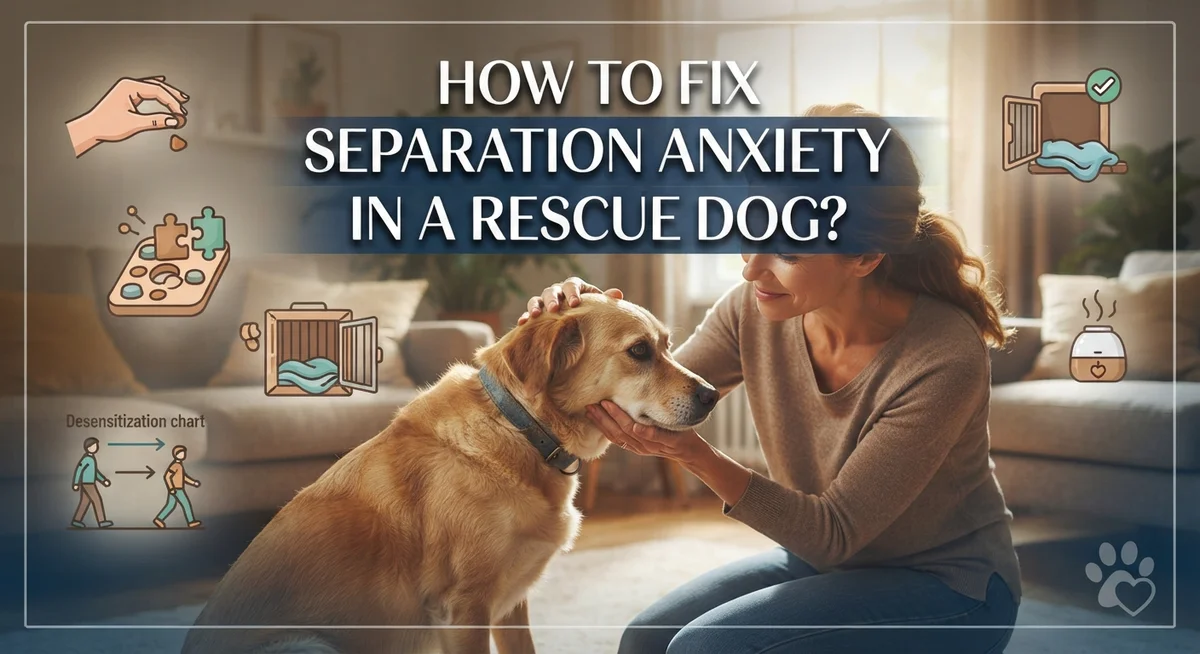
How To Fix Separation Anxiety In A Rescue Dog?
You just adopted a rescue dog, and your heart is full. But then you leave for work, and the howling starts. The chewed doorframes and puddles on the floor tell a story of pure panic.
This is separation anxiety, and it is incredibly common in rescue dogs. Many of these dogs have faced abandonment or unstable homes before finding you. Their fear of being left alone again is real and valid.
The good news? You can fix this. Separation anxiety is not a life sentence for your dog or your furniture.
In a Nutshell
- Build a daily routine. Dogs feel safe with structure. Add regular walks, crate time, and short training sessions to your day.
- Break the trigger pattern. Your dog links certain cues, like grabbing keys, to your departure. Randomize these actions so they no longer signal panic.
- Increase alone time slowly. Start small and build up. Most dogs handle 30+ minutes alone within six weeks, and many reach six or more hours over time.
- Use calming tools. Chew items, like marrow bones, keep your dog busy. Soft music can also help ease their nerves.
- Skip punishment completely. Avoid scolding or spray collars. These tools make anxiety worse, not better.
- Stay patient and consistent. Progress takes weeks, not days. Small, steady steps lead to lasting results for your rescue dog.
Understanding Separation Anxiety in Rescue Dogs
Rescue dogs often struggle when left alone because of their past experiences. Many came from uncertain or unstable environments. They may have lost multiple homes or spent time in shelters. This history makes them vulnerable to separation anxiety, a real condition where your dog feels genuine panic when you leave.
Separation anxiety is not about stubbornness or bad behavior. Your dog is not trying to destroy your home or annoy neighbors. Instead, your dog experiences fear and stress when separated from you. The anxiety triggers physical responses like rapid breathing, pacing, and excessive barking.
Dogs are creatures of habit and routine. They notice patterns in your behavior. When you pick up your keys, put on shoes, or grab your bag, your dog learns that departure is coming. These trigger cues build anxiety before you even leave. Your dog’s brain links these actions to abandonment.
The good news is that separation anxiety responds well to treatment. Most dogs show noticeable improvement within six weeks. The key is understanding that your dog needs time to rewire their thinking about alone time.
Rescue dogs with separation anxiety are not broken or unfixable. They simply need patience and a structured approach. Your dog’s past does not have to define their future. With consistent effort, your rescue dog can learn that you always return and that being alone is safe.
The following sections break down exactly how to help your dog overcome this challenge. You will learn specific techniques that work with your dog’s natural psychology. Progress takes time, but the results are absolutely worth the effort.
Recognizing the Signs and Triggers
Your rescue dog shows separation anxiety through specific behaviors and physical signs. Learning to spot these clues helps you understand what triggers the fear and when it happens most.
Destructive behavior is one of the most obvious signs. Your dog may chew furniture, dig at doors, or scratch walls when you leave. This is not misbehavior or spite. Your dog is trying to escape or self soothe during panic.
Excessive vocalization includes howling, barking, or whining that starts right after you leave. Some dogs only make noise for a few minutes. Others continue for hours. The intensity often increases if neighbors or family members respond to the noise.
Bathroom accidents happen even with house trained dogs. Your rescue may urinate or defecate inside, even immediately after a potty break. Anxiety triggers the bladder and bowel muscles.
Physical signs appear before you even leave. Watch for panting, drooling, pacing, or trembling. Your dog may follow you from room to room or refuse to eat. Some dogs vomit or lose appetite entirely.
Escape attempts show how desperate your dog feels. Your rescue may try jumping through windows, breaking through gates, or squeezing under doors. This behavior is dangerous and signals serious anxiety.
Departure cues trigger the anxiety response. Your dog learns that picking up keys, putting on shoes, or grabbing a bag means you are leaving. Some dogs panic 15 minutes before you actually depart. Others react instantly to these signals.
Timing matters too. Anxiety often peaks within the first 30 minutes after you leave. Some rescue dogs settle down after this window passes. Others remain anxious throughout your absence.
Building a Foundation: Daily Structure and Routine
A solid daily routine gives your rescue dog predictability and safety. Dogs thrive when they know what comes next. Structure reduces anxiety because your dog stops wondering when things will happen.
Start your day with a morning walk. Physical activity burns nervous energy and tires your dog out. A tired dog is a calm dog. After the walk, give your dog breakfast and some quiet time.
Next, introduce short crate sessions during the day. Your dog should see the crate as a safe space, not a punishment. Practice closing the door for just a few minutes while you stay home. This teaches your dog that the crate is normal and temporary.
Add obedience training to your routine. Simple commands like “sit” and “down” give your dog a job to focus on. Training also strengthens your bond and builds confidence. Spend 10 to 15 minutes on this daily.
Schedule regular alone time throughout the day. Don’t wait until you leave for work to practice separation. Leave your dog alone for short periods while you’re still home. Go to another room and stay there quietly. This breaks the link between alone time and panic.
Feed your dog at consistent times. Predictable meal schedules help regulate your dog’s mood and bathroom habits. Avoid feeding right before you leave, as this can upset your dog’s stomach.
End your day with an evening walk and calm time together. Consistency matters more than perfection. Stick to the same times each day. Your rescue dog will learn to expect this pattern and feel more secure. A structured day is your first tool against separation anxiety.
Step-By-Step Desensitization Training Plan
A desensitization training plan works by slowly teaching your dog that departures are not scary. This process breaks the anxiety cycle through repeated, calm exposure to being alone.
Start by identifying your dog’s specific departure cues. These are the actions that trigger anxiety before you even leave. Common cues include picking up keys, putting on shoes, grabbing your wallet, or walking toward the door. Your dog has learned to connect these actions with your absence.
Randomize these cues throughout the day. Pick up your keys but sit back down. Put on your shoes and stay home. Walk to the door and return to the couch. Do this several times daily. Your dog learns that these signals do not always mean you are leaving.
Next, practice very short absences. Leave for 30 seconds. Return before your dog shows any anxiety. Repeat this 5 to 10 times in one session. Gradually extend the time to 1 minute, then 2 minutes, then 5 minutes.
Space your training sessions across the day. Do not do all practice at once. Three short sessions work better than one long session.
Track your dog’s progress weekly. Most dogs show noticeable improvement within 6 weeks. Some need 8 to 12 weeks for significant change.
Stay consistent with timing. Practice at the same times each day when possible. Your dog’s brain learns through repetition and predictability.
Reward calm behavior heavily. When your dog stays relaxed during your absence, give high value treats upon your return. This teaches your dog that your departure leads to something positive, not something scary.
Progress slowly. Rushing this process backfires. Your dog’s nervous system needs time to rewire its response to alone time.
Helpful Tools and Techniques to Ease Anxiety
Your rescue dog responds well to specific tools and techniques that reduce anxiety during alone time. The key is choosing methods that calm your dog’s nervous system without creating new stress.
Calming music works because it masks outside sounds that trigger panic. Dogs hear frequencies differently than humans do, so specialized music designed for canine ears proves more effective than regular music. Play these recordings during practice sessions and actual departures to create a soothing environment.
Chew items give your dog a positive focus while you’re away. Offering safe chewing options redirects anxious energy into something constructive. Your dog stays mentally occupied instead of spiraling into worry about your absence.
Counterconditioning is one of the most powerful techniques for mild cases. This method teaches your dog that your departure actually means something good happens. Practice leaving for short periods, then return before anxiety peaks. Reward calm behavior when you come back. Over time, your dog learns that departures lead to positive outcomes, not abandonment.
Establishing a calm pre departure routine helps break the trigger cycle. Dogs notice every small cue you make before leaving, like picking up keys or putting on shoes. Randomize these actions throughout the day when you’re not actually leaving. This breaks the pattern your dog’s brain has created.
Gradual progression matters tremendously. Most dogs need six weeks to show noticeable improvement. You can typically extend alone time from 30 minutes to 6+ hours with patience and consistency. Never rush this timeline.
Avoid punishment based approaches completely. Vibrating collars, spray bottles, or scolding make anxiety worse by adding fear. Your dog already feels scared. Additional punishment only deepens the problem and damages your bond.
Common Mistakes That Slow Down Progress
Many people unknowingly slow their rescue dog’s progress with common mistakes. Understanding these errors helps you avoid setbacks.
Punishment is the biggest mistake. Using vibrating collars, spray bottles, or scolding teaches your dog to fear you more than the departure itself. Your dog doesn’t understand why you’re angry. They only learn that leaving triggers punishment, which increases anxiety rather than reducing it.
Reinforcing anxious behavior as “wrong” backfires too. When your dog shows anxiety signs, avoid comforting them intensely or showing frustration. Your dog reads this as confirmation that something is actually scary. Instead, stay calm and neutral during transitions.
Moving too fast derails everything. Some people jump from 5 minute absences to 2 hours overnight. Your dog’s brain needs time to rewire. The typical timeline is 6 weeks to reach noticeable improvement, with gradual progression toward 30 minutes or longer.
Inconsistent routines sabotage your efforts. If you randomize your pre departure cues one day and stick to a pattern the next, your dog stays confused. Consistency builds the foundation your dog needs to feel safe.
Skipping the daily structure creates problems. Without regular walks, crate time, and training sessions, your dog lacks the stability required for anxiety work. A solid routine gives your rescue dog predictability.
Doing all practice sessions at once exhausts progress. Space your training throughout the day instead. Multiple short sessions work better than one long session.
Giving up too early stops results. Progress looks slow in weeks 1 and 2. Trust the process and stay patient. Your rescue dog is rewiring their brain, and that takes consistent time.
Troubleshooting Setbacks and Slow Progress
When your rescue dog hits a plateau or seems to regress, this is completely normal. Progress isn’t always linear. Your dog may improve for two weeks, then have a setback. This doesn’t mean your training failed.
Setbacks often happen when life changes. A new person moves in, your schedule shifts, or a loud noise frightens your dog during alone time. These events can temporarily reset your progress. The good news is your dog already learned the skills. You simply need to reinforce them.
If your dog seems stuck at the same duration, slow your timeline even more. Instead of jumping from 10 minutes to 20 minutes, try adding just 2 to 3 minutes per session. This smaller increment feels less overwhelming. Some dogs need 8 to 10 weeks rather than 6 weeks to reach 30 minutes alone comfortably.
Patience during slow progress is your greatest tool. Your rescue dog may have experienced trauma, abandonment, or multiple home changes. Their nervous system needs extra time to trust that you’ll return. Rushing this process backfires.
Track what happens before setbacks occur. Did you skip a day of practice? Did your dog experience a scary event? Did your departure routine change? Identifying the trigger helps you address it directly.
Keep a simple log of each training session. Write down the duration, your dog’s behavior, and any changes you noticed. After two weeks, you’ll see patterns. These patterns show you exactly where your dog needs more support.
Remember that every small improvement counts. Your dog’s ability to stay calm for even one extra minute is progress worth celebrating.
What to Expect: Realistic Timeline for Improvement
Your rescue dog won’t improve overnight, and that’s completely normal. Most dogs show noticeable improvement within 6 weeks of consistent training. This timeline assumes you practice daily and follow the techniques without skipping days.
Here’s what realistic progress looks like. Your dog might handle 5 minutes alone comfortably in week one. By week three, they could manage 15 to 20 minutes without panic. Around week six, many dogs reach 30+ minutes of calm alone time.
Reaching longer durations takes more time. Getting your dog comfortable for 6+ hours alone typically requires several months of gradual practice. This isn’t a race. Pushing too fast causes setbacks that set you back weeks.
Progression isn’t always linear. Some days your dog will surprise you with calm behavior. Other days they’ll regress slightly. Weather changes, schedule shifts, or new people in your home can trigger temporary setbacks. This happens to most rescue dogs.
Track your dog’s actual progress in a simple log. Write down how long they stayed calm and what happened before the session. This helps you spot patterns and celebrate small wins you might otherwise miss.
Patience matters more than speed here. Your rescue dog may carry past trauma or abandonment fears. Their nervous system needs time to learn that you always come back. Every single session builds that trust slowly.
Don’t compare your dog to others. Some rescue dogs progress faster while others need more time. Both are normal. Focus on your individual dog’s improvements, no matter how small they seem. Consistency beats perfection every single time.
Final Thoughts
Fixing separation anxiety in a rescue dog takes real commitment. Your dog needs time to feel safe again. This process rewards patience over speed.
Remember that your dog’s past shapes their present fears. Many rescue dogs carry invisible scars from abandonment or trauma. Your calm presence helps heal those wounds slowly.
Stick to the basics that actually work. Daily structure, gradual alone time, and randomized departure cues form your foundation. These simple tools create lasting change.
Avoid shortcuts that promise quick fixes. Punishment based methods and rushed timelines only set your dog back. Trust the six week process instead.
Celebrate small wins along the way. Five extra minutes alone matters. A calmer goodbye routine matters too. These moments add up to real progress.
Your dog is watching how you respond to their fear. When you stay calm and consistent, they learn to trust the process. This trust becomes the base for lasting confidence.
Some days will feel harder than others. Your dog might regress after a stressful week. This is normal and doesn’t mean you’re failing.
Keep showing up with the same steady approach. Your rescue dog didn’t choose their difficult past. But you can choose to help them build a better future.
With consistent effort, most dogs show real improvement within weeks. Some reach full comfort with hours alone. Others need more time and that’s okay too.
Every dog heals at their own pace. Your patience and consistency give them the best chance to overcome this fear. Stay committed, and trust the process you’ve built together.
Frequently Asked Questions
How long does it take to fix separation anxiety in a rescue dog?
Most rescue dogs show noticeable improvement within 6 weeks of consistent training. However, every dog moves at their own pace. Some dogs reach 30 minutes alone quickly, while others need more time to feel safe.
The full progression can take several months. Your goal is to gradually work up from a few minutes alone to 6 or more hours. This slow approach helps your dog build real confidence instead of just tolerating your absence.
Why does my rescue dog have separation anxiety?
Rescue dogs often experienced trauma, abandonment, or multiple home changes before you adopted them. Their brain learned that being alone means bad things happen. This isn’t your fault, and it’s not a character flaw in your dog.
Departure cues trigger their anxiety. Your dog notices small signals like you grabbing your keys or putting on shoes. These triggers remind them of past losses. Understanding this helps you approach training with compassion instead of frustration.
Can punishment stop separation anxiety?
No. Punishment makes anxiety worse, not better. Vibrating collars, spray bottles, or scolding teach your dog to fear you, not to feel safer alone.
Your rescue dog isn’t misbehaving on purpose. They’re experiencing genuine fear. Counterconditioning works much better. This means teaching your dog that your departure actually predicts good things like treats or special toys.
What should I give my dog when I leave?
Chew items work wonderfully. Bone marrow soup bones keep dogs occupied and calm. Long lasting chews redirect their focus away from anxiety.
You can also try calming music made for dogs. Some people explore CBD supplements, though results vary. The key is creating positive associations with your absence.

Hi, I’m Liza — pet lover, lifelong animal enthusiast, and the voice behind Liza4Pets. I created this space to share honest, practical pet care advice for fellow pet parents who want the best for their furry (and not-so-furry) companions.