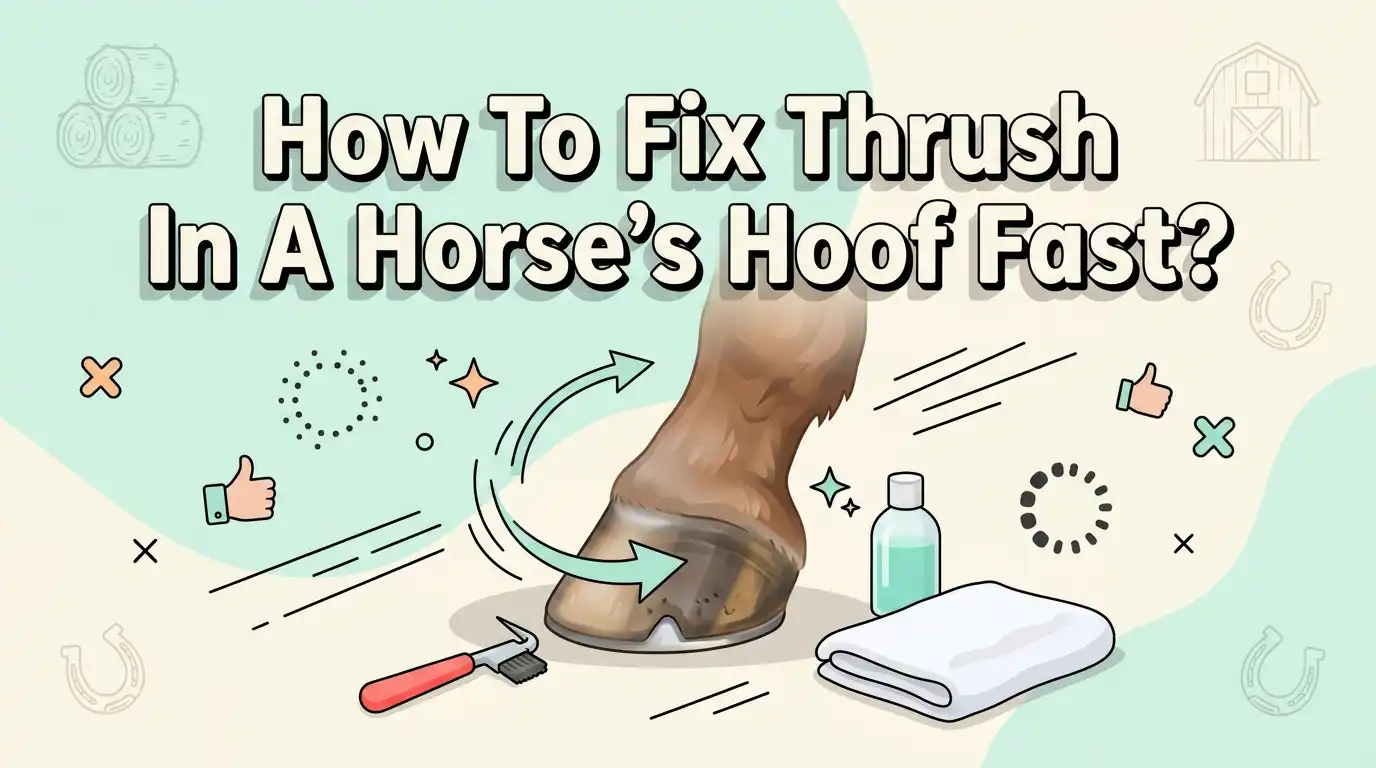
How To Fix Thrush In A Horse’s Hoof Fast?
Thrush in a horse’s hoof can sneak up on any owner. One day the foot looks fine. The next day you pick it out and a black, smelly goo greets you. That foul smell is the first clue.
Thrush is a bacterial infection that attacks the frog of the hoof. It loves wet, dirty, and dark places. The good news is simple. You can treat thrush fast at home with the right steps. You do not always need to panic.
This guide gives you clear, practical steps. You will learn how to spot thrush early, clean the hoof, pick the best treatment, and stop it from coming back.
In a Nutshell:
- Thrush is a bacterial infection that targets the frog and the deep grooves of the hoof. The bacterium Fusobacterium necrophorum is the most common cause. You will notice a black, tar like discharge and a strong foul smell.
- Wet and dirty conditions cause thrush. Muddy paddocks, soiled bedding, and standing water create the perfect home for the bacteria. Keeping the environment clean and dry is your best defense.
- Daily hoof picking is the fastest fix and the best prevention. Removing mud, manure, and debris stops bacteria from settling deep in the frog grooves.
- Most mild cases heal in 7 to 14 days with daily cleaning and a good antiseptic. Severe cases need a farrier or vet to trim away dead tissue.
- Disinfectants like diluted iodine work well. Harsh products can burn healthy tissue, so use them with care. Always treat a clean, dry frog for the best results.
- Call your farrier or vet if you see lameness, swelling, or no improvement after a week. Deep infections need professional help.
What Thrush In A Horse’s Hoof Actually Is
Thrush is a bacterial infection of the frog. The frog is the soft, triangular pad on the bottom of the hoof. Thrush settles into the central groove and the side grooves, which are called the sulci. These grooves are deep and dark. They trap moisture and dirt easily.
The main culprit is a bacterium named Fusobacterium necrophorum. This germ thrives without oxygen. It also feeds on dead tissue in the hoof.
Sometimes fungi join the infection too. Over time, the bacteria break down the frog. The tissue softens and rots. This is why owners often call thrush “frog rot.”
Thrush is common across all breeds and all ages. One large study in the Netherlands found that nearly half of the horses checked had some form of thrush. So if your horse has it, you are not alone. Most cases stay mild when you catch them early.
How To Spot The Early Signs Of Thrush
Catching thrush early makes the fix much faster. The first sign is almost always the smell. When you pick the hoof, a sharp, foul, rotten odor hits your nose. Healthy hooves smell earthy, not putrid. Trust your nose here.
Next, look at the color. Thrush leaves a black, sticky, tar like discharge in the frog grooves. You may see this goo stick to your hoof pick. The frog itself may feel soft, mushy, or ragged instead of firm. In some cases, the central groove looks deep and narrow, almost like a slit.
Watch your horse’s behavior too. A horse with thrush may flinch when you press the frog. Advanced cases can cause tenderness, swelling in the lower leg, or even mild lameness.
Pain grows as the infection digs deeper. Check all four feet, because thrush can hit more than one hoof at a time.
Why Horses Get Thrush In The First Place
Understanding the cause helps you stop the problem at the root. Thrush almost always starts with a wet, dirty environment. The bacteria need moisture and a lack of oxygen to grow. Muddy paddocks, soaked bedding, and manure buildup give them exactly that.
Poor hoof care plays a big role too. When you skip daily hoof picking, mud and manure pack into the frog grooves. This trapped gunk seals out air and traps bacteria inside. Overgrown or unbalanced hooves make this worse because they collect more debris.
Hoof shape matters as well. Horses with long heels and deep, narrow frog grooves trap more moisture. Contracted heels often link to other pain in the back of the foot.
These horses land toe first, so the foot cannot clean itself naturally. Continuous use of hoof pads can also trap moisture against the sole. Each of these factors invites thrush to settle in.
Step One: Clean The Hoof Thoroughly
Cleaning is the first and most important step. You cannot treat thrush through a layer of mud. Start by lifting the foot and using a hoof pick. Dig out all the mud, manure, and debris from the frog grooves. Work the pick deep into the central and side sulci. Be gentle but firm.
Next, scrub the frog with a stiff hoof brush. Use warm water and a little mild soap. This removes the loose, dead, black tissue that bacteria feed on. The cleaner the hoof, the faster the treatment works. Rinse well and check that no goo remains hidden in the grooves.
After scrubbing, dry the hoof completely. Bacteria love moisture, so a dry frog slows them down. Use clean rags, cotton, or paper towels. Pat the grooves dry. Do this cleaning step every single day during treatment. Consistency here beats any fancy product you can buy.
Pros: Cleaning is free, safe, and works for every horse. It also lets you inspect the hoof daily. Cons: It takes time and patience each day. Some horses fidget when you reach the deep grooves.
Step Two: Remove The Dead And Damaged Tissue
Once the hoof is clean, you may see loose, ragged frog tissue. This dead tissue feeds the bacteria. Removing it speeds up healing. For mild cases, you can trim away small loose flaps yourself. Use clean, sharp hoof nippers or a hoof knife. Only cut tissue that is clearly loose and dead.
Stop the moment you reach firm, healthy tissue. Never cut into living tissue, because it can bleed and cause pain. If you feel unsure, do not guess. This is where many owners go wrong and hurt the horse.
For deep or severe cases, call your farrier or vet. They can safely cut away rotten tissue and reach the infection at its core. Sometimes the horse needs sedation or a numbing agent for this. Professional trimming often clears stubborn thrush that home care cannot.
Pros: Removing dead tissue exposes the infection so treatment reaches it. It cuts healing time. Cons: Cutting too much causes pain and bleeding. Severe cases need a professional, which costs money.
Step Three: Disinfect With Iodine Or A Diluted Solution
Now you treat the clean, dry hoof. Disinfecting kills the bacteria directly. Diluted iodine is one of the most trusted options. Soak a cotton swab or soft brush in the solution. Then work it deep into the frog grooves. Reach every crack where bacteria hide.
A bleach and water mix at a 50/50 ratio is another common choice. Apply it the same careful way. Some owners use copper sulfate based products too. Whatever you pick, apply it only to a clean and dry frog. A dirty hoof blocks the product from working.
Repeat this step once a day. Most mild infections clear within 7 to 14 days of daily treatment. Be patient and stay consistent. Stopping early lets the bacteria bounce back. Pack the deep central groove with treated cotton if it is hard to reach.
Pros: Iodine and bleach are cheap, easy to find, and kill bacteria fast. Cons: Strong solutions can burn or dry out healthy tissue if overused. Bleach must be measured carefully to avoid harm.
Gentle Natural Remedies That Help
Some owners prefer softer options, especially for sensitive horses. Natural remedies can work well for mild thrush. A 50/50 mix of white vinegar and water is a popular choice. Vinegar neutralizes ammonia and fights bacteria without harsh burning. Spray or dab it onto the clean frog daily.
Tea tree oil and oregano oil also have antibacterial power. Mix a few drops with a carrier oil like coconut oil before you apply them. This prevents irritation to the tender frog. Apply gently with a cotton swab into the grooves.
These natural methods are kinder to healthy tissue. They suit horses with sensitive feet or early stage thrush. Still, they may work slower than iodine on deep infections. Watch the hoof closely, and switch to a stronger method if you see no progress within a week.
Pros: Natural remedies are gentle, low cost, and rarely burn tissue. They are easy to make at home. Cons: They often act slower than chemical disinfectants. They may not clear severe or deep seated infections.
How To Keep The Hoof Dry During Healing
Moisture is the enemy of healing. Thrush bacteria need wet, dark spaces to survive. So keeping the hoof dry is half the battle. Move your horse off muddy ground. Bring it to a dry stall, a clean paddock, or a well drained area while it heals.
Pick and inspect the hoof every day. A dry frog gives bacteria nowhere to grow. If the weather is wet, you can use a clean hoof boot to keep the foot dry between treatments. Some owners pack the grooves with dry cotton too.
After every soak or treatment, dry the hoof fully. Pat each groove with a clean cloth or cotton. Never leave a damp hoof wrapped up, because that traps moisture inside. Good airflow around the foot speeds recovery. Exercise also helps. Movement pumps blood to the hoof and cleans the grooves naturally.
Pros: A dry environment heals thrush fast and prevents return. It costs little to set up. Cons: Wet seasons make this hard. You may need extra bedding or a dry lot, which takes effort.
When To Call A Farrier Or Vet
Home care fixes most mild thrush. But some cases need a professional. Call your farrier or vet if the thrush does not improve after a week of daily treatment. Stubborn infections often hide deep in the tissue where home products cannot reach.
Seek help right away if you notice warning signs. Lameness, swelling in the lower leg, or bleeding from the frog all signal a deeper problem.
These point to an infection that has reached sensitive tissue. A vet can check whether the issue is thrush or something more serious, like canker or an abscess.
A farrier can trim and balance the hoof correctly. Proper trimming opens up the grooves and removes rotten tissue safely. This often clears chronic thrush that keeps coming back.
Make sure your horse is also up to date on its tetanus vaccine, since the bacteria that cause tetanus live in soil and can enter through damaged hoof tissue.
Daily Hoof Care To Speed Up Recovery
A solid daily routine fixes thrush faster than any single product. The habit is simple but powerful. Pick out all four hooves every single day. Remove mud, manure, and debris before bacteria can settle in. This one task does more than anything else.
After picking, run through a quick check. Look at the frog color, smell for odor, and press for tenderness. Catching changes early stops thrush from growing back. Then apply your chosen treatment to the clean, dry frog.
Keep your tools clean too. Wash your hoof pick and brush after each use so you do not spread bacteria between feet. Track your progress over the days. A healing frog turns firmer, drier, and loses its smell. Stay consistent, even after the thrush looks gone, because bacteria can linger in the deep grooves.
Pros: A daily routine is free and prevents future thrush. It builds a strong bond with your horse. Cons: It demands daily commitment. Busy owners may find it hard to keep up every day.
How To Prevent Thrush From Coming Back
Treating thrush is only half the job. Stopping it from returning is the real win. Start with the environment. Keep stalls and paddocks clean and dry. Remove wet spots and manure daily. Fix muddy, low spots with sand, gravel, or wood chips to drain water away.
Good drainage matters a lot. Standing water and deep mud invite thrush back fast. Improve airflow in the barn to keep bedding dry. Change feeding spots in the turnout so high traffic areas do not turn to mud.
Stay on top of hoof care too. Schedule farrier visits every four to six weeks. Regular trimming keeps the frog healthy and the grooves shallow. Feed a balanced diet with key nutrients like biotin, zinc, copper, and methionine.
Strong, healthy hooves resist infection far better than weak ones. Combine clean living, daily picking, and good nutrition, and thrush rarely returns.
Common Mistakes To Avoid When Treating Thrush
Many owners slow their own progress with simple mistakes. Knowing them helps you heal faster. The biggest error is treating a dirty hoof. Products cannot kill bacteria buried under mud. Always clean and dry the frog first, every time.
Another mistake is using harsh chemicals too often. Strong bleach or undiluted iodine can burn healthy tissue. This damages the frog and slows healing. Use the right dilution and apply with care. More is not better here.
Some owners quit too early. The thrush looks gone, so they stop treatment. The bacteria then bounce back from the deep grooves. Keep treating for a few extra days to be safe.
Finally, do not ignore the environment. Treating the hoof while leaving the horse in mud is a losing battle. Fix the wet ground, or the thrush will return again and again.
Frequently Asked Questions
How fast can thrush in a horse’s hoof heal?
Most mild to moderate cases heal within 7 to 14 days. The key is daily cleaning and consistent treatment. You must keep the hoof clean and dry the whole time. Severe infections that reach deep tissue take longer and often need a farrier or vet. The faster you start treatment, the faster the recovery.
Can I treat thrush at home without a vet?
Yes, you can treat most mild thrush at home. Clean the hoof, remove loose dead tissue, dry it, and apply a disinfectant like diluted iodine. Do this daily. Call a vet or farrier only if you see lameness, swelling, bleeding, or no improvement after a week. Deep cases need professional trimming.
Does thrush make a horse lame?
Thrush can cause lameness, but it is not common in mild cases. Most horses feel only mild tenderness when you press the frog. Lameness happens when the infection digs deep into sensitive tissue. If your horse limps or shows swelling, call a vet quickly. Permanent lameness from thrush alone is rare.
What is the best product to kill thrush fast?
Diluted iodine is a trusted and fast acting choice. A 50/50 bleach and water mix also works well. Both kill the bacteria directly. Apply them only to a clean, dry frog for the best result. Natural options like vinegar or tea tree oil work too, but they act slower on deep infections.
Why does my horse keep getting thrush?
Repeat thrush usually points to a wet or dirty environment. Muddy paddocks, soiled bedding, and standing water bring it back. Skipping daily hoof picking lets debris pack the frog grooves. Poor hoof balance and long heels also trap moisture. Fix the environment, pick hooves daily, and keep up with farrier visits to break the cycle.
Is thrush contagious to other horses?
Thrush itself does not spread easily from horse to horse like a cold. It develops when each horse stands in the same wet, dirty conditions. So if several horses share a muddy paddock, many can get thrush at once. The shared environment is the cause, not direct contact. Clean tools between feet to stay safe.

Hi, I’m Liza — pet lover, lifelong animal enthusiast, and the voice behind Liza4Pets. I created this space to share honest, practical pet care advice for fellow pet parents who want the best for their furry (and not-so-furry) companions.