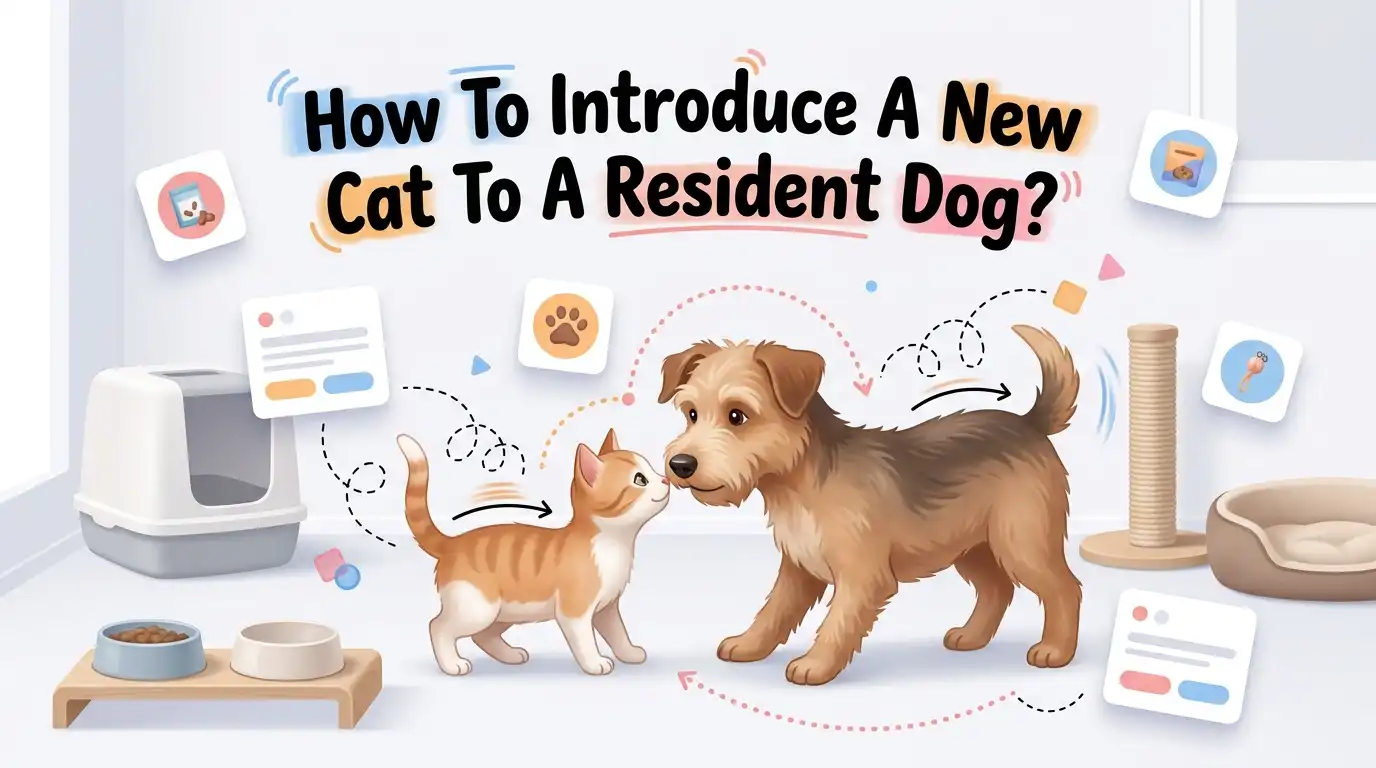
How To Introduce A New Cat To A Resident Dog?
Bringing a new cat home feels exciting. You picture cozy naps, playful moments, and a happy pet family. But your resident dog may not share that vision right away. Dogs and cats speak different languages.
A wagging tail can scare a cat. A hiss can confuse a dog. The good news is simple. Cats and dogs can become friends, or at least calm roommates, when you introduce them the right way.
This guide walks you through each stage, from setup to full contact. You will learn what to do, what to avoid, and how to read your pets. Let us build a peaceful home together, one step at a time.
In A Nutshell:
- Go slow and split the home first. Keep your new cat and resident dog in separate areas. Rushing face to face meetings is the biggest mistake people make.
- Start with scent, not sight. Swap blankets and towels so each pet learns the other’s smell before they ever meet. Scent is how animals gather trust.
- Give your cat a safe room. Your new cat needs one quiet room with food, water, a litter box, and hiding spots. This becomes their base camp.
- Train your dog before the meeting. A dog who knows “sit,” “stay,” and “leave it” is much easier to manage. Calm commands prevent chasing.
- Use a barrier for first sightings. A baby gate or cracked door lets them see each other without risk. Keep sessions short and positive.
- Never punish either pet. Rewards work. Punishment creates fear and links the other animal to something bad. Patience wins every time.
Understand Why The Slow Approach Matters
Many people want their pets to bond fast. That wish is natural, but speed causes problems. Dogs and cats read the world through instinct. A dog may see a running cat as prey.
A cat may see a big, loud dog as a threat. One bad first meeting can shape their whole relationship. Fear sticks. A scared cat may hide for weeks. A frustrated dog may fixate on the cat.
The slow method protects both animals from a bad start. You control the pace, the distance, and the mood. You build good feelings before they ever touch noses.
This takes days or weeks, not minutes. That may feel long, but it saves months of trouble. A calm start builds a calm future. Think of it as an investment in years of peace at home.
Prepare Your Home Before The New Cat Arrives
Good setup makes the whole process smoother. Prepare your space before the cat comes through your door. Pick a quiet room to be the cat’s safe zone.
A spare bedroom or bathroom works well. This room must have a door that closes fully. Add food, water, a litter box, a bed, toys, and hiding spots like a covered box.
Keep your dog’s normal areas the same. Your resident dog should feel that life goes on as usual. Set up baby gates in hallways or on stairs. These gates let you split the home into dog space and cat space. Place the cat’s bowls and litter far from any door the dog might sniff at.
Pros: A prepared home lowers stress for both pets and gives you control from day one. Cons: It takes planning and may limit your dog’s access to some rooms for a while.
Set Up A Safe Room For Your New Cat
The safe room is the heart of a smooth introduction. Your new cat needs one spot where they feel secure. This room becomes their whole world at first. Cats settle faster when they have a small, calm space to explore. A big open house overwhelms a nervous cat.
Fill the room with everything the cat needs. Add vertical space like a shelf or a tall scratching post. Cats feel safer when they can climb and watch from above.
Include a hiding place at floor level too. Keep the door shut so the dog cannot barge in. Let your cat rest here for several days before any dog contact.
Pros: The safe room gives your cat confidence and a retreat they can always return to. Cons: You must keep the door closed at all times, and a curious dog may scratch or whine at it early on.
Keep Your Resident Dog’s Routine Steady
Your dog notices change fast. A new smell, new sounds, and less attention can unsettle them. Keep your dog’s daily routine as normal as possible.
Feed them at the same times. Walk them on the same schedule. Play the games they love. This tells your dog that they are still safe and valued.
Spend extra one on one time with your resident dog during this period. It is easy to pour all your focus onto the cute new cat. That shift can make your dog jealous or anxious.
Balance your attention. Give your dog treats, walks, and calm praise. A relaxed dog handles introductions much better than a stressed one.
Pros: A steady routine reduces jealousy and keeps your dog calm and cooperative. Cons: It takes extra effort and time management, especially in the first busy days with a new pet.
Start With Scent Swapping First
Scent is the first real introduction, long before sight. Dogs and cats both rely on smell to understand the world. Let them learn each other’s scent while safely apart.
Take a soft blanket or towel and let your dog sleep on it for a few days. Then place that item in the cat’s room, away from the food bowls.
Do the same the other way around. Rub a cloth on your cat and set it near your dog’s bed. Watch how each pet reacts to the new smell. Relaxed sniffing is a great sign.
Hissing or backing away means you should slow down. Repeat this for several days until both pets stay calm around the scent.
Pros: Scent swapping builds familiarity with zero risk of a fight or a chase. Cons: It works slowly, and some pets ignore the scent, so you cannot always judge their true feelings yet.
Feed Both Pets On Opposite Sides Of A Door
Food creates happy feelings. You can use meals to build good links between your pets. Feed your cat and dog on opposite sides of the closed safe room door.
Each pet smells the other while eating something they love. Over time, they connect the other animal’s scent with a pleasant meal.
Start with the bowls far from the door. Move them a little closer each day, only if both pets stay calm and eat well. If either pet refuses to eat or seems tense, move the bowls back. Go at the slower animal’s pace. This step turns the door into a good place, not a scary one.
Pros: This method builds positive feelings through food and is easy to do daily. Cons: A very nervous pet may refuse to eat near the door, which slows the whole process down.
Train Your Dog With Basic Commands
A trained dog makes introductions far safer. Your dog should know “sit,” “stay,” “come,” and “leave it” before meeting the cat.
These commands let you manage your dog’s excitement in the moment. A solid “leave it” can stop a chase before it starts. A firm “look at me” pulls your dog’s focus off the cat.
Practice these commands in a calm room first. Reward your dog with treats every time they obey. Build up until your dog responds even with distractions around.
When your dog stays calm on cue, you gain real control during the first meetings. This training is the single best tool for a dog with a strong urge to chase.
Pros: Strong commands prevent chasing and give you instant control during tense moments. Cons: Training takes time and patience, and some dogs need weeks of practice before they respond reliably.
Let Them Explore Each Other’s Spaces
Before they meet, let each pet explore where the other lives. This deepens their scent knowledge in a safe way.
Take your dog for a walk, then let your cat roam the dog’s usual space. Your cat gathers the dog’s scent while feeling safe and alone. Later, let your dog sniff the hallway outside the cat’s room.
Never let both pets swap spaces at the same time. Keep them fully separated during these sessions. Watch your cat closely.
A relaxed cat will sniff and walk freely. A scared cat will freeze or hide. Give the cat more time if needed. This step helps each pet feel the other belongs in the home.
Pros: Space swapping builds comfort and familiarity without any face to face risk. Cons: It needs careful timing and supervision to make sure the pets never cross paths by accident.
Begin Short Visual Introductions Through A Barrier
Now the pets can see each other, but safely. Use a baby gate or a cracked door for the first sightings. Drape a towel over part of the gate at first, so they only glimpse each other.
Keep both pets busy with treats or a favorite toy during these moments. This links the sight of the other pet with good things.
Keep the first sessions very short, just a minute or two. End every session while both pets are still calm. Slowly uncover more of the gate over several days.
Keep your dog in a “sit” or “stay” so they do not lunge. If either pet growls, hisses, or stiffens, calmly end the session and try again later with more distance.
Pros: A barrier lets them meet visually with a safe wall between them, greatly lowering the chance of harm. Cons: Progress can feel slow, and you must watch body language closely the entire time.
Read Your Pets’ Body Language Closely
Your pets tell you how they feel through their bodies. Learning these signals keeps everyone safe. A relaxed dog has a loose body, soft eyes, and a natural tail.
A tense dog stiffens, stares hard, whines, or raises the fur on their back. A stiff, staring dog is a warning sign. Step in and redirect them at once.
Watch your cat just as closely. A calm cat moves freely with a relaxed tail. A stressed cat flattens their ears, crouches low, hisses, or puffs up.
A tucked tail on a dog or a swishing tail on a cat both mean discomfort. When you see these signs, slow down. Ending a session early is always better than pushing too far.
Pros: Reading body language helps you stop trouble before it happens and protects both pets. Cons: It takes practice to spot subtle signals, and beginners may miss early warning signs at first.
Allow Supervised Face To Face Meetings
Once both pets stay calm through the gate, you can try direct contact. Keep your dog on a loose leash or harness for the first real meetings.
The leash is a safety backup, not a tool to drag your dog around. If the leash goes tight, the moment is too much, so end it and add more space.
Give your cat full freedom to move and escape. Never hold or trap your cat during these meetings. Let the cat approach or retreat on their own terms.
Reward your dog for calm behavior with treats. Keep the first meetings short and sweet. If it helps, have two people present, one to watch each pet.
Pros: Supervised meetings let the pets build a real relationship at their own pace with a safety net. Cons: They demand full attention, and one bad moment can set progress back, so timing must be right.
Know When To Slow Down Or Get Help
Progress is not always a straight line. Some days go well, and some do not. If either pet shows fear or aggression, take a step back. Return to an earlier stage, like scent swapping or barrier meetings. There is no shame in slowing down. A calm reset often fixes a rough patch.
Some pairings need extra support, and that is okay. A dog with a very strong chase drive or a deeply fearful cat may need professional help.
Contact your vet if things break down after a good start. Your vet can suggest advice or refer you to a qualified animal behaviorist. Asking for help is a smart move, not a failure.
Pros: Knowing when to pause or seek help prevents lasting fear and keeps both pets safe. Cons: Professional help costs money, and finding a qualified behaviorist may take some searching.
Build Long Term Harmony Between Your Pets
The introduction is just the start. Real harmony grows over the weeks that follow. Keep giving your cat safe spaces and escape routes forever.
High perches and quiet rooms let your cat get away from the dog whenever they want. This choice keeps your cat feeling secure long term.
Feed your pets in separate spots to avoid food guarding. Give each pet their own beds, bowls, and toys. Keep rewarding calm behavior when they share a room.
Do not force them to interact. The goal is peaceful coexistence, not constant play. Many cats and dogs simply learn to ignore each other, and that is a wonderful result.
Pros: Long term structure keeps the peace and lets a real bond form naturally over time. Cons: It requires ongoing effort and space, which can be tricky in small homes with limited rooms.
Frequently Asked Questions
How long does it take for a cat and dog to get along?
Every pair is different. Some pets accept each other in a week. Others need several weeks or a few months. Go at the pace of your slower, more nervous pet. Never rush the timeline. A calm, patient approach almost always leads to a peaceful result in the end.
Should I let my dog sniff the new cat right away?
No. Skip the direct sniff at first. Start with scent swapping through blankets and towels. Then move to barrier meetings. A face to face sniff too soon can scare the cat and trigger a chase. Build up to real contact slowly over many small, positive steps.
What if my dog has a strong urge to chase?
Focus hard on training first. Teach a rock solid “leave it” and “stay” before any meeting. Keep your dog on a leash during introductions. If the chase drive stays very high, ask a vet or a qualified animal behaviorist for help. Safety always comes first for both pets.
Can an older dog learn to accept a new cat?
Yes. Age is not a barrier. Older dogs are often calmer than young ones, which can help. Use the same slow steps you would use for any dog. Keep sessions short and reward calm behavior. Older dogs may need a little more rest between meetings, so watch their energy.
Where should the new cat sleep during the introduction?
Your new cat should sleep in their safe room. This quiet space has their bed, food, water, litter box, and hiding spots. Keep the door closed at night so the cat rests without stress. The safe room stays their home base until both pets are fully comfortable together.
Is it normal for my resident dog to seem stressed at first?
Yes, some stress is normal. A new smell and new sounds can unsettle any dog. Keep your dog’s routine steady and give them extra attention. Watch for signs like pacing, whining, or hiding. If the stress stays high for a long time, slow the process down and speak with your vet.

Hi, I’m Liza — pet lover, lifelong animal enthusiast, and the voice behind Liza4Pets. I created this space to share honest, practical pet care advice for fellow pet parents who want the best for their furry (and not-so-furry) companions.