Why Is My Bearded Dragon Keeping One Eye Closed?
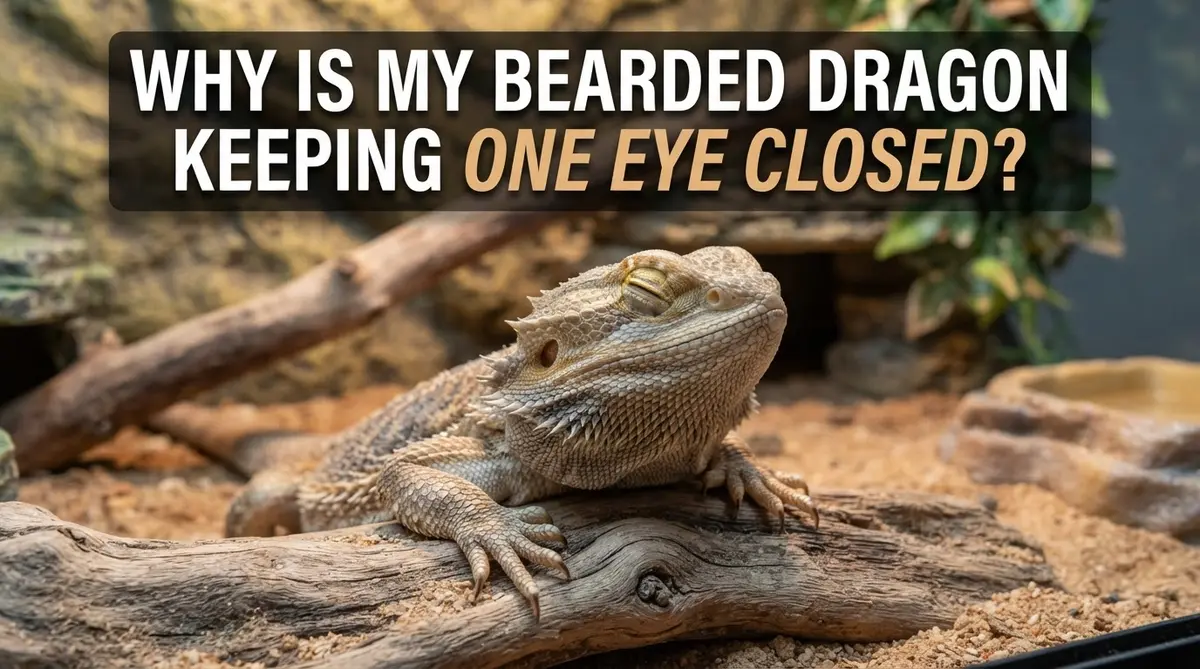
Have you noticed your bearded dragon squinting or keeping one eye shut? This can look strange and worry any pet owner.
The good news is that this behavior often has a simple explanation. Sometimes it means nothing serious at all.
Bright basking lights can cause your dragon to blink or squint one eye. This is a normal reaction to glare.
In a Nutshell
- Bright light or glare often causes one eye to close. This is usually harmless and goes away once your dragon moves to a shadier spot.
- Injury or infection can also make an eye stay shut. Look closely for swelling, redness, or discharge around the area.
- Vitamin A deficiency sometimes leads to eye problems. A balanced diet with proper supplements helps prevent this issue.
- Shedding or stress can trigger temporary eye closure too. Your dragon should return to normal once shedding finishes or stress passes.
- Occasional squinting is normal and nothing to worry about. But constant or frequent closure is a sign you need to pay attention.
- Watch for extra symptoms like poor appetite, lethargy, or swelling. These signs mean it’s time to book a vet visit.
Is One Eye Closed Normal or a Warning Sign?
One eye closure in bearded dragons falls into two categories: normal behavior and warning signs. Understanding the difference keeps your pet healthy.
Occasional closure is usually harmless. Your dragon might squint one eye when focusing on food, adjusting to bright light, or during moments of concentration. This is similar to how humans blink or narrow their eyes. It typically lasts seconds and happens randomly throughout the day.
Constant or frequent closure is different. If your dragon keeps one eye shut for extended periods or does this repeatedly, something needs attention. This behavior suggests discomfort, pain, or an underlying health issue.
Several factors determine if closure is normal. Watch how often it happens. Does your dragon close one eye once or twice daily, or constantly? Also notice the timing. Does it occur near the basking area under bright lights, or happens everywhere in the enclosure?
Pay attention to accompanying signs. A healthy dragon with normal eye closure shows normal appetite, active movement, and alert behavior otherwise. If your dragon has a closed eye plus reduced eating, lethargy, or visible swelling around the eye, this indicates a problem.
The context matters too. Is your dragon shedding? Eye closure during shedding periods is common as skin flakes irritate the eye area. Does your dragon seem stressed from recent changes to its environment? Stress can trigger temporary eye closure.
Monitor your lighting setup carefully. Excessive UV exposure or overly bright basking bulbs cause photo-kerato-conjunctivitis, which makes dragons squint or close their eyes. Check if your basking light intensity matches your dragon’s needs.
Track patterns over several days. Keep notes on when closure happens and what else occurs. This information helps your vet identify problems quickly if needed. Most occasional eye closure resolves on its own, but persistent closure always warrants professional evaluation.
Common Causes Behind a Closed Eye
Eye infections rank among the most common reasons your bearded dragon keeps one eye closed. These infections develop when bacteria or fungi enter the eye area, often due to unclean tank conditions or contaminated water bowls.
Vitamin A deficiency is another frequent culprit. Your dragon’s body needs vitamin A to maintain healthy eye tissue and function. Without enough of this nutrient, the eyes become dry, irritated, and prone to problems.
Injury or trauma can also cause eye closure. Your dragon might scratch its eye on rough decorations, rocks, or substrate while moving around the tank. Even minor scratches feel painful and trigger protective eye closure.
Photo-kerato-conjunctivitis happens when your dragon gets too much UV light exposure. This condition burns the eye’s surface layer, similar to sunburn on skin. The affected eye stays closed as a protective response.
Excessive brightness from basking bulbs causes temporary squinting. If your dragon’s basking light is too intense or positioned too close, one eye may close to shield itself from glare.
Shedding can make eyes feel uncomfortable. During this process, skin around the eyes becomes tight and irritated, leading to temporary closure. This usually resolves once shedding completes.
Stress also triggers eye closure in some dragons. Changes in tank setup, loud noises, or handling can make your dragon uncomfortable, and closing one eye is a stress response.
Systemic infections affect the whole body, not just the eyes. If your dragon has an internal infection, eye closure may appear alongside lethargy, poor appetite, or unusual behavior.
Pay close attention to whether closure is occasional or constant. Occasional closure during bright light or while focusing is typically normal. Constant or frequent closure paired with discharge, swelling, or behavioral changes requires veterinary attention right away.
How Lighting and Basking Setup Affect Eye Health
Your bearded dragon’s eye health depends heavily on the light and heat you provide in their enclosure. Proper lighting setup prevents many eye problems before they start.
Basking bulbs create heat and light your dragon needs to digest food and stay healthy. However, overly bright bulbs can cause glare that irritates the eyes. If your dragon closes one eye frequently near the basking spot, the light might be too intense. Move the bulb slightly farther away or reduce its wattage to see if this helps.
UVB lighting is essential for vitamin D production and calcium absorption. Without it, your dragon develops deficiencies that lead to eye problems. Yet too much UVB exposure causes photo-kerato-conjunctivitis, which damages the eye’s surface. This condition makes your dragon keep one eye shut due to pain and discomfort. Follow species-specific UVB guidelines carefully to avoid overdoing it.
Temperature also affects eye comfort. Basking areas should reach 95 to 110 degrees Fahrenheit depending on your dragon’s age. If the temperature is too high, your dragon may close one eye as a stress response. Use a temperature gun to check actual basking spot heat, not just room temperature.
Lighting duration matters too. Bearded dragons need 10 to 12 hours of light daily, followed by darkness for proper sleep. Incorrect light cycles stress your dragon and can trigger eye closure.
Misting your dragon’s enclosure helps maintain humidity levels that keep eyes moist and comfortable. Dry air irritates the eyes and makes closure more likely.
Check your entire lighting and basking setup if eye closure persists. Assess bulb distance, brightness level, UVB exposure time, and temperature readings. Often, adjusting these factors alone resolves the issue without veterinary intervention. If closure continues after setup improvements, schedule a vet visit to rule out infection or injury.
Step-by-Step: How to Check Your Bearded Dragon’s Eye
Start by observing your bearded dragon in a calm, quiet environment. Watch whether the eye closes occasionally or stays shut most of the time. This distinction helps you understand if the issue is serious or normal behavior.
Gently look at the closed eye from different angles. Check for swelling around the eyelid or under the eye. Swelling suggests infection, injury, or inflammation that needs attention.
Look for discharge around the eye area. Clear fluid is different from thick, colored discharge. Thick discharge often indicates infection and requires veterinary care soon.
Examine the eye itself when your dragon opens it. A healthy eye appears clear and bright. Cloudiness, redness, or visible injury means something is wrong.
Test your dragon’s reaction to light. Shine a gentle light source near the eye from a safe distance. Your dragon should blink and respond normally. If the eye doesn’t respond to light, this is concerning.
Check the surrounding skin for signs of injury. Look for scratches, cuts, or stuck shed skin around the eyelid. These physical problems can cause temporary closure.
Assess your dragon’s overall behavior during the inspection. Is your dragon eating normally? Does your dragon move around actively? Healthy behavior alongside eye closure suggests a minor issue. Lethargy or appetite loss alongside eye closure indicates something more serious.
Feel the temperature around your basking area with your hand. Excessive heat can cause discomfort and eye closure. The basking spot should feel warm but not painfully hot.
Record what you observe. Note when the eye closes, how long it stays closed, and what your dragon is doing. This information helps your veterinarian understand the problem better.
If you notice constant closure, swelling, discharge, or behavioral changes, schedule a vet visit promptly. Your veterinarian can examine your dragon thoroughly and provide proper treatment.
Symptoms That Signal a More Serious Problem
When your bearded dragon keeps one eye closed, it’s important to recognize which signs point to serious health issues. Constant or frequent eye closure is different from occasional squinting, and this distinction matters greatly.
Watch for swelling around the eye area. Puffy, inflamed tissue suggests infection or injury rather than simple discomfort. Swelling combined with eye closure means your dragon needs veterinary attention soon.
Discharge from the eye is another red flag. Clear, cloudy, or colored liquid oozing from the eye indicates infection. Your dragon’s eye should stay dry and clear when open.
Look at your dragon’s overall behavior alongside the eye closure. A dragon that eats normally, basks actively, and moves around typically has a minor issue. A dragon that stops eating, hides constantly, or moves slowly may have a systemic infection affecting multiple body systems.
Half-closed eyes with fatigue differ from painful eye closure. If your dragon seems tired, rests more than usual, and closes both eyes partially, this suggests exhaustion or stress. True eye problems usually affect one eye more noticeably.
Check for visible injury or scratches on the eye itself. Cuts, cloudiness, or obvious damage require immediate vet care. These injuries worsen quickly without treatment.
Pay attention to temperature and lighting changes you made recently. If you added a new basking bulb or moved it closer, temporary eye closure may result from adjustment. However, if closure continues after one week, something else is wrong.
Behavioral changes matter too. Does your dragon seem irritable, aggressive, or unusually withdrawn? These signs combined with eye closure suggest pain or illness beyond simple environmental stress.
When eye closure becomes constant rather than occasional, or when swelling and discharge appear, schedule a veterinary appointment. Early intervention prevents serious complications and keeps your dragon healthy long term.
Mistakes Owners Make When Handling Eye Issues
Many owners accidentally make their bearded dragon’s eye problem worse by responding incorrectly. Understanding these mistakes helps you protect your pet’s vision and health.
Ignoring the problem is the biggest mistake. Some owners assume one eye closure is normal behavior and wait too long before taking action. If your dragon keeps one eye shut for hours or days, this signals discomfort or illness. Early attention prevents minor issues from becoming serious infections.
Overexposing your dragon to UV light causes significant damage. Owners sometimes think more UV light means healthier bones and better calcium absorption. Too much UV actually burns the eye surface and causes pain. Your bearded dragon needs 10 to 12 hours of proper UVB lighting daily, not constant exposure. Keep the basking bulb at the correct distance from your pet.
Adjusting lighting too suddenly stresses your dragon’s eyes. If you change from dim to very bright lighting quickly, your pet closes one eye to protect itself. Make lighting changes gradually over several days instead.
Missing signs of infection is another common error. Owners sometimes focus only on the closed eye and ignore discharge, swelling, or foul smells. These symptoms indicate bacterial or fungal infections that need veterinary treatment immediately.
Skipping temperature checks leaves problems hidden. Eye closure often connects to improper basking temperatures. An owner might not realize the basking spot is too hot or cold, causing discomfort.
Delaying a vet visit when symptoms persist puts your dragon at risk. If the eye stays closed constantly, shows swelling, or your dragon stops eating, schedule an appointment right away. A veterinarian can diagnose the real cause and prescribe proper treatment.
The key is acting quickly and observing your dragon carefully. Don’t wait and hope the problem disappears on its own.
When to See a Reptile Vet
Your bearded dragon’s eye closure needs a vet visit in specific situations. Knowing when to call your reptile veterinarian prevents serious complications.
Schedule a vet appointment if your dragon keeps one eye closed constantly or very frequently. Occasional closure during bright light or focus is normal behavior. However, persistent closure signals an underlying problem that requires professional evaluation.
Visible swelling around the eye area demands immediate attention. This indicates infection, injury, or inflammation. Your vet can diagnose the exact cause and prescribe appropriate treatment.
Discharge from the eye is another reason to seek veterinary care. Clear, cloudy, or colored discharge all suggest infection or injury. Do not attempt to treat this yourself with home remedies.
Behavioral changes accompanying eye closure warrant a vet visit. If your dragon stops eating, becomes lethargic, or hides more than usual, something is wrong. These signs suggest systemic infection or serious pain.
Visible scratches or injuries on the eye surface need professional assessment. Even small scratches can become infected quickly in reptiles. Your vet will examine the damage and prevent complications.
If you recently changed lighting or increased UV exposure and your dragon developed eye closure, mention this to your vet. Photo-kerato-conjunctivitis from excessive UV light requires specific treatment and environmental adjustments.
Temperature problems also warrant veterinary consultation. If your basking area became too hot or too cold, this stress can cause eye issues. Your vet will help you establish proper temperature ranges.
Do not wait and hope the problem resolves itself. Bearded dragons hide pain and illness well. By the time symptoms become obvious, the condition may have progressed significantly. Early intervention prevents permanent eye damage and systemic infection.
Your reptile veterinarian has specialized knowledge about bearded dragon health. They can perform proper eye examinations, take cultures if needed, and recommend treatment. Trust their expertise when your dragon shows concerning eye symptoms.
Final Thoughts
Your bearded dragon’s closed eye tells a story. Sometimes it means nothing serious. Other times it signals real trouble.
Trust your instincts as an owner. You know your dragon’s normal habits better than anyone else. Something feels off when their behavior changes suddenly.
Quick action prevents bigger problems. Eye issues rarely improve on their own without attention. Waiting too long turns minor irritation into serious infection.
Remember that lighting and temperature play huge roles in eye health. Check your basking bulb distance regularly. Confirm your UV setup matches your dragon’s actual needs.
Simple observation goes a long way. Watch how your dragon eats, moves, and interacts daily. These small details reveal a lot about their comfort level.
Vitamin A deficiency remains a hidden culprit many owners overlook. Proper diet supports healthy eyes and prevents future issues. Fresh vegetables and appropriate supplements make a real difference.
Stress affects bearded dragons more than people realize. New environments, handling changes, or tank rearrangements can trigger eye closure too. Give your dragon time to adjust after any changes.
Never hesitate to call your vet when something feels wrong. Professional guidance beats guessing every single time. Reptile vets understand these specific issues well.
Your dragon depends on you completely for their wellbeing. Careful attention today prevents painful complications tomorrow. This responsibility comes with the joy of ownership.
Most cases of one eye closure resolve with simple adjustments. Fixing lighting, checking temperature, and monitoring behavior often solves the problem. Serious cases need professional treatment though.
Stay observant, stay calm, and act when needed. Your bearded dragon relies on your careful eye just as much as you rely on theirs. Healthy habits and quick responses keep your scaly friend happy and comfortable for years to come.
Frequently Asked Questions
Is one eye closure always a sign of a problem?
Not always. Bearded dragons occasionally close one eye during bright light or when focusing on something. This normal behavior happens to healthy dragons too. However, constant or frequent closure is different and needs attention. If your dragon closes one eye only now and then, monitor the situation. Watch for other signs like swelling, discharge, or behavior changes. Keep notes on when it happens and what your dragon was doing.
What does swelling around the eye mean?
Swelling indicates inflammation or infection. This requires a vet visit soon. Your dragon’s eye area may look puffy or feel warm to the touch. Discharge or crusty material around the eye also signals trouble. These symptoms point to infection, injury, or vitamin A deficiency. Don’t wait to see if it improves on its own.
Can lighting cause eye closure?
Yes. Excessive light or overly bright basking bulbs stress your dragon’s eyes. Too much UV exposure damages the eye surface. This condition is called photo-kerato-conjunctivitis. Adjust your lighting setup by moving the bulb farther away or reducing exposure time. Let your dragon have shaded areas to rest. Proper lighting prevents many eye problems.
What role does temperature play?
Temperature affects overall health, including eye function. Cool environments stress bearded dragons and weaken their immune system. Maintain proper basking temperatures (95 to 110 degrees Fahrenheit for adults). A stressed dragon with low immunity develops infections more easily. Check your enclosure thermometer regularly.
Should I try home treatments first?
Misting your dragon gently helps maintain hydration around the eyes. However, persistent eye closure needs professional help. Home care alone won’t treat infections or deficiencies. A vet can identify the exact cause and recommend proper treatment.

Hi, I’m Liza — pet lover, lifelong animal enthusiast, and the voice behind Liza4Pets. I created this space to share honest, practical pet care advice for fellow pet parents who want the best for their furry (and not-so-furry) companions.