
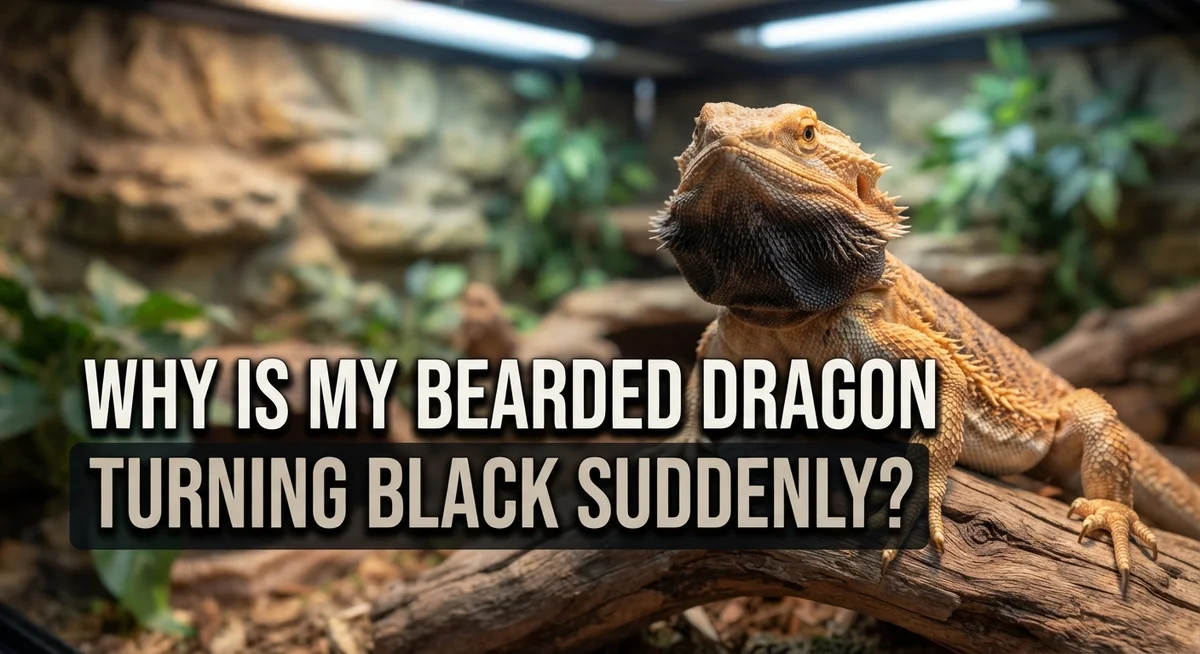
Why Is My Bearded Dragon Turning Black Suddenly?
Did you just notice your bearded dragon turning black out of nowhere? Don’t panic. This color change happens more often than you think.
Bearded dragons communicate through their skin. A black beard or dark patches can mean many things.
Your dragon might feel threatened. It could be stressed, cold, or even sick. Sometimes it simply signals a mood shift.
In a Nutshell
- Beard darkening is a normal way for your dragon to communicate. It shows feelings like stress, fear, or a threat response.
- Temperature problems often trigger this change. Check your tank’s heat levels and lighting setup right away.
- Health issues can also cause a black beard. Watch for changes in appetite, activity, or droppings too.
- Hormonal shifts play a role sometimes. This happens more during breeding season or high arousal states.
- Most cases are not dangerous on their own. But you should still investigate the real cause behind it.
- Watch closely if the color change lasts a long time. Lethargy or loss of appetite alongside darkening means you need a vet visit.
What Does It Mean When a Bearded Dragon Turns Black?
Your bearded dragon’s sudden black coloring is a communication signal. It tells you something is happening in your pet’s body or mind right now. Understanding this message helps you respond correctly.
When your dragon darkens, the beard and sometimes the entire body turn black or very dark gray. This happens because special cells in the skin called chromatophores change pigment. Your dragon controls this process on purpose.
Threat response is the most common reason your dragon turns black. When your pet feels scared or defensive, darkening the body makes it look bigger and more intimidating. This is a survival instinct. Your dragon wants to warn other animals or people to back away.
Aggression also triggers this color change. If your dragon feels territorial or protective, it may display a black beard. This often happens during breeding season or when males sense competition nearby.
Stress and anxiety cause darkening too. A new tank, loud noises, too much handling, or sudden changes in routine can stress your dragon. The black color shows your pet is uncomfortable or worried.
Environmental problems link directly to this behavior. If your tank is too cold or too hot, your dragon may turn black as a stress response. Poor lighting or lack of hiding spaces also create anxiety.
Health issues sometimes show up as color changes. When your dragon gets sick, it may darken as part of a stress reaction. Nutritional deficiencies can also affect skin pigmentation over time.
The key point is this: a black beard is not the problem itself. It’s your dragon’s way of telling you something needs attention. Your job is to figure out what that something is. Look at the environment, behavior, and health together. This approach helps you find the real cause and fix it properly.
Behavioral and Emotional Triggers Behind Beard Darkening
Your bearded dragon’s black beard reveals what your pet is feeling right now. Think of it like an emotional display. When your dragon feels threatened, the beard darkens instantly as a defense signal.
Aggression triggers this color change too. If your dragon sees another animal, a reflection, or even a hand moving too fast, the beard goes black. Your dragon is saying “stay back” or “I’m ready to fight.” This is normal territorial behavior.
Stress and anxiety cause the same response. Your dragon might feel overwhelmed by loud noises, sudden movements, or too much handling. A new environment, unfamiliar people, or changes to the tank setup all create stress. The black beard appears as your dragon tries to look bigger and scarier.
Fear is another major trigger. Some bearded dragons naturally feel anxious in certain situations. A young dragon might be more nervous than an adult. If your dragon hides and darkens the beard, fear is likely the cause.
Pay attention to what happens right before the color change. Does your dragon puff up? Does the beard stay black for hours or minutes? Does your dragon hiss or open its mouth wide? These behaviors tell you exactly what emotion your dragon experiences.
Environmental pressure also plays a role here. If your tank feels too small or too crowded, your dragon may darken as a stress response. Bright lights without hiding spots make dragons feel exposed and threatened.
The important thing is this: your dragon uses color to communicate. A black beard is not an illness or emergency on its own. It’s your dragon’s way of expressing feelings. By watching your dragon’s behavior and surroundings, you can figure out what triggered the change and help your pet feel safe again.
Environmental Causes: Temperature, Lighting, and Tank Setup
Your bearded dragon’s tank environment directly affects whether the beard turns black. Temperature is the biggest factor here. Bearded dragons need a warm basking spot and a cooler area to regulate their body heat. If your tank is too cold, your dragon may darken as a stress response.
Check your basking spot temperature first. It should reach the right warmth level for your dragon’s age and size. A temperature that’s too low causes stress, which triggers the black coloring. Use a reliable thermometer to measure the actual heat, not just the dial on the heat source.
Lighting matters just as much as temperature. Your dragon needs proper UVB lighting to process calcium and stay healthy. Poor lighting causes stress and can lead to darkening. Make sure the light is positioned correctly and hasn’t burned out. Replace UVB bulbs regularly since they lose effectiveness over time.
Tank size and setup also play a role. A space that feels too cramped makes your dragon anxious. Your pet needs room to move, climb, and retreat to hiding spots. Overcrowding or a cluttered setup increases stress levels and can cause the beard to turn black.
Look at your tank layout too. Your dragon should have a warm basking area, a cooler zone, and places to hide. This setup lets your pet feel secure and control their temperature. Without these zones, your dragon stays stressed.
Check humidity levels as well. Improper moisture in the air creates discomfort. Your dragon may darken when the environment feels wrong overall.
Start by measuring temperature and lighting in your tank. Adjust anything that seems off. Watch if the black coloring improves within a few days. Often, fixing environmental issues stops the darkening quickly. If the problem continues after you fix temperature and lighting, investigate other causes like health or behavior.
Health and Nutritional Factors That Can Cause Sudden Darkening
Health problems and nutritional gaps often show up as sudden darkening in bearded dragons. Your pet’s body uses color changes to signal that something is wrong internally.
Vitamin A deficiency stands out as a common nutritional issue. This deficiency weakens your dragon’s immune system and causes stress responses. Your dragon may darken as their body reacts to feeling unwell. Poor diet lacking variety in greens and insects creates this problem.
Calcium and phosphorus imbalances affect your dragon’s overall health too. These minerals support bone strength and proper body function. When levels drop, your dragon experiences stress and may turn black. Gut health also suffers, making your pet feel uncomfortable.
Respiratory infections cause darkening as a stress response. Your dragon feels ill and anxious, triggering the black coloration. Listen for wheezing or watch for mucus around the nose and mouth. These signs mean a vet visit is urgent.
Parasites drain your dragon’s energy and nutrients. Internal parasites especially cause weakness and stress. Your pet may darken while fighting off infection. Appetite loss and unusual droppings often accompany this problem.
Metabolic bone disease develops slowly but causes serious stress. Your dragon’s bones weaken, creating discomfort and anxiety. Darkening becomes more frequent as the condition progresses.
Monitor your dragon’s eating habits closely. A healthy appetite means good nutrition. If your dragon stops eating or eats less, darkening may signal illness.
Check your dragon’s activity level too. Lethargy combined with black coloring suggests health problems. Active dragons that occasionally darken are usually responding to emotions or environment.
Droppings tell you a lot about internal health. Normal droppings are firm with white urate. Runny or discolored droppings paired with darkening warrant a veterinary check.
Start by reviewing your feeding routine and variety. Then schedule a vet appointment if darkening persists or worsens. Your vet can test for parasites and nutritional deficiencies quickly.
Step-by-Step Guide: How to Assess Why Your Bearded Dragon Is Black
Start by observing your bearded dragon’s behavior when the blackening happens. Notice what triggers the color change. Does your dragon puff up the beard? Does it hiss or bob its head? These signs tell you whether your pet feels threatened or stressed.
Next, check the timing of the darkening. Does it happen during specific times of day? Does it occur when you handle your dragon or when other pets come near? Timing reveals whether the cause is behavioral or environmental.
Look at your dragon’s body language too. A relaxed posture with a black beard differs greatly from a tense, puffed up stance. Relaxed dragons may simply be communicating mood. Tense dragons signal distress or aggression.
Monitor your dragon’s appetite and activity level closely. Eat your dragon’s eating patterns. A healthy appetite paired with occasional blackening usually means stress, not illness. Loss of appetite combined with darkening suggests a health problem.
Check your dragon’s droppings and skin condition. Normal droppings indicate good digestion. Unusual droppings or dull skin alongside blackening point toward nutritional or health issues.
Examine your dragon’s eyes and nostrils. Clear eyes and nostrils mean good health. Cloudy eyes or crusty nostrils combined with darkening suggest respiratory problems or other illness.
Record when the blackening occurs and what happens before it. Keep notes about temperature, recent changes to the tank, new pets in your home, or changes in handling. This information helps you identify patterns.
Pay attention to how long the beard stays black. Brief darkening during stress is normal. Persistent blackening warrants closer investigation or a veterinary visit.
Finally, assess whether the blackening happens in response to specific situations or appears randomly. Situational darkening points to behavioral causes. Random or constant darkening suggests environmental or health problems need attention.
Common Mistakes Owners Make When Interpreting Color Changes
Many owners jump to conclusions when they see a black beard. The biggest mistake is assuming one single cause without investigating further. Your dragon might be darkening for emotional reasons, environmental problems, or health issues. Rushing to judgment wastes valuable time.
Another common error is ignoring the color change entirely. Some owners think “it’s just what they do” and move on. While occasional darkening is normal communication, sudden or persistent blackening always deserves attention. Don’t dismiss it as harmless behavior.
Owners often skip environmental checks completely. They assume the tank is fine without actually measuring temperature or checking lighting. Your basking spot might be too cold, or your UVB bulb could be failing. Always verify conditions with a thermometer and timer before investigating other causes.
Many people also overlook behavioral context. They see a black beard and panic about illness when the dragon is simply being territorial or defensive. Pay attention to what happens before the darkening. Is your dragon puffing up? Hissing? Displaying aggression? These signs point to emotion, not sickness.
A serious mistake is waiting too long to contact a veterinarian. If your dragon’s beard stays black for days, loses appetite, or becomes lethargic, you need professional help. Don’t assume it will pass on its own.
Some owners also make the error of changing everything at once. If you adjust temperature, lighting, and handling all in one day, you won’t know what actually helped. Make one change at a time and observe for several days.
Finally, many owners forget to document patterns. Keep notes about when darkening happens, what your dragon was doing, and how long it lasted. This information helps you spot real problems versus normal communication. Documentation also gives your vet valuable details if a visit becomes necessary.
Troubleshooting: When to Worry and When to Call the Vet
Your bearded dragon’s sudden blackening might be normal communication or a sign something needs attention. Here’s how to decide if you should worry or call your vet.
Start with the basics first. Check if your dragon’s beard turned black during a specific event. Did another pet approach the tank? Did you handle your dragon roughly? Did the temperature drop? These situations trigger temporary darkening, and your dragon should return to normal color within minutes or hours.
Watch for warning signs that demand veterinary care. If your dragon stays black for extended periods, something is wrong. Combine blackening with lethargy, loss of appetite, or unusual behavior? That’s your signal to call the vet. Your dragon might be fighting an infection, parasite problem, or metabolic issue.
Pay close attention to your dragon’s overall activity level. A black beard paired with a dragon that refuses food, hides constantly, or moves slowly indicates illness. These symptoms together suggest your pet needs professional help soon.
Document what you observe. Write down when the blackening happens and what your dragon does before it occurs. Does it happen every time you approach the tank? Every morning? Only after feeding? Patterns help your vet understand what’s happening.
Check your dragon’s physical condition too. Look at the skin, eyes, and nostrils for discharge or swelling. Examine the droppings for unusual texture or color. These details matter when you contact your veterinarian.
The key rule is simple. Brief, occasional blackening during stress or territorial displays is normal. Persistent blackening combined with behavior changes or physical symptoms requires immediate veterinary attention. When in doubt, contact your vet. They can examine your dragon and rule out serious health problems quickly.
Final Thoughts
A black beard on your bearded dragon is not always a bad sign. Most of the time, it is simply a way for your pet to communicate.
Your dragon might feel stressed, threatened, or even excited. Sometimes the temperature in the tank is off. Sometimes your dragon just wants space.
The key is to stay observant. Watch your dragon’s behavior closely. Check the tank setup regularly. Notice when the blackening starts and stops.
If the color change happens quickly and fades, your dragon is likely fine. This is normal communication, not an emergency.
But if the black beard stays for a long time, take it seriously. Combine this with other symptoms like poor appetite or low energy. These signs together often point to a real health problem.
Never ignore sudden changes in your dragon’s behavior. Never assume you know the cause without checking properly.
Small adjustments can make a big difference. Fix the temperature. Reduce stress. Give your dragon quiet time when needed.
If you are ever unsure, contact a vet who treats reptiles. They can rule out illness and give you peace of mind.
Your dragon depends on you to notice these changes. Bearded dragons cannot tell you when something feels wrong. Their body language is their only voice.
Learn to read that language. Watch patterns over time. Keep track of what triggers the color change.
This simple habit helps you catch problems early. It also helps you understand your pet better.
A black beard is just one clue. Combine it with other observations to get the full picture. Trust your instincts, but also trust the facts.
With patience and attention, you can keep your bearded dragon happy and healthy for years to come.
Frequently Asked Questions
Is a black beard always a sign of illness?
No. A black beard is usually a communication tool, not automatically a medical emergency. Your bearded dragon darkens its beard to express emotions like fear, aggression, or territorial behavior. However, you should investigate the cause to rule out stress or environmental problems.
What’s the difference between normal blackening and concerning blackening?
Normal blackening happens briefly and fades quickly. Your dragon’s beard returns to its regular color within minutes. Concerning blackening persists for hours or days, especially if paired with lethargy, loss of appetite, or unusual behavior. Persistent color changes suggest something needs attention.
Should I be worried if my bearded dragon’s beard turns black during handling?
Not necessarily. Many bearded dragons darken their beards when they feel threatened or uncomfortable. This is a defensive response. However, if your dragon consistently blacks out during handling, it may experience stress from interaction. Try shorter, gentler sessions and give your dragon more time to adjust to your touch.
What environmental factors cause sudden blackening?
Temperature drops are a common culprit. Bearded dragons need proper heat gradients in their tanks. If the warm side falls below 95°F, your dragon may darken its beard as a stress response. Inadequate lighting, overcrowding, or sudden changes to the tank setup can also trigger blackening. Check these conditions first before assuming illness.
When should I call a veterinarian about the color change?
Contact a reptile vet if blackening persists beyond a few hours, or if it appears alongside other symptoms like refusing food, reduced movement, or abnormal droppings. A vet can rule out nutritional deficiencies or underlying health issues.

Hi, I’m Liza — pet lover, lifelong animal enthusiast, and the voice behind Liza4Pets. I created this space to share honest, practical pet care advice for fellow pet parents who want the best for their furry (and not-so-furry) companions.