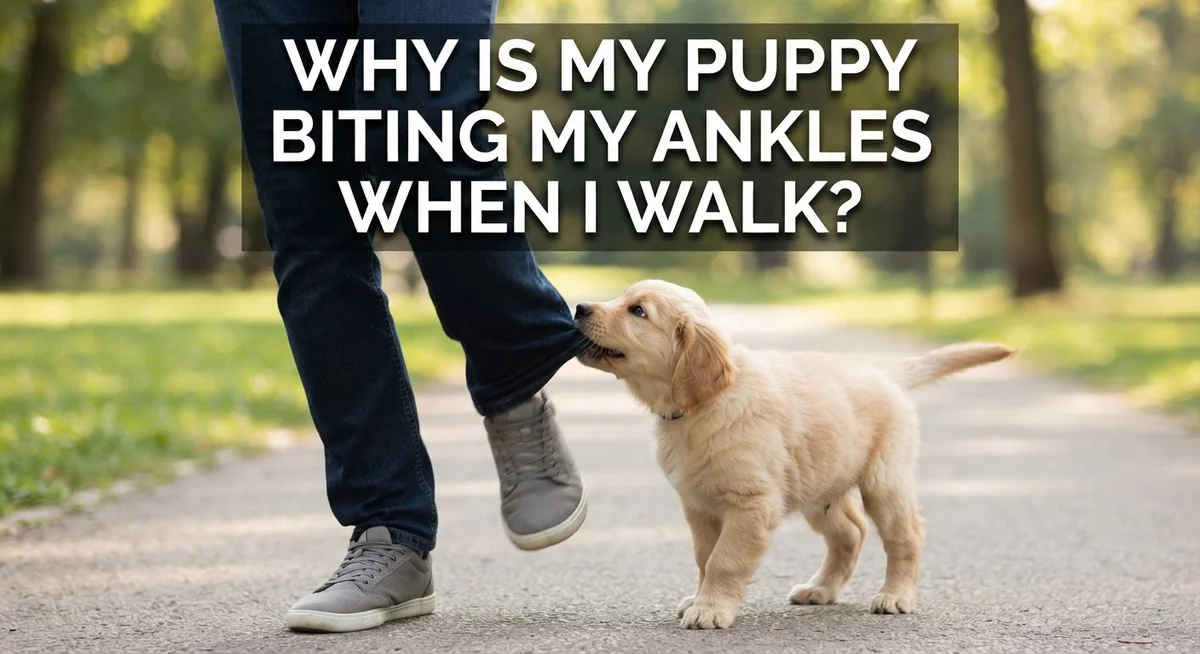
Why Is My Puppy Biting My Ankles When I Walk?
Does your puppy turn your morning walk into an ankle attack? You take a step, and tiny teeth latch onto your pants or skin. It hurts, and it feels confusing.
Take a breath first. This behavior is more common than you think, and it does not mean your puppy is aggressive.
Most puppies bite ankles because movement excites them. Your feet look like fun, bouncy toys. Add teething pain, extra energy, or feelings of fear, and the biting habit grows fast.
In a Nutshell
- Ankle biting is normal. Most puppies mouth and nip as part of growing up. It is not a sign of aggression.
- Movement is the trigger. Your legs moving while you walk look like fun prey to your puppy. This makes ankle biting exciting for them.
- Stopping movement helps most. Freeze in place the moment biting starts. This removes the reward your puppy is chasing.
- Your reaction matters. Stay calm and avoid laughing or playing along. Excited reactions can make the behavior worse.
- Check for unmet needs first. Hunger, tiredness, or boredom often causes this behavior. A quick nap, snack, or bathroom break can solve it fast.
- Consistency wins over time. Use the same response every time your puppy bites. Your puppy will learn calm behavior gets attention, not biting.
Is Ankle Biting Normal Puppy Behavior?
Yes, ankle biting is completely normal puppy behavior. Your puppy is not being naughty or aggressive. This is how puppies explore the world and communicate with you.
Puppies use their mouths the way human babies use their hands. They chew, nibble, and bite to learn about their environment. Mouthing is a natural part of growing up.
The movement of your legs triggers this behavior. When you walk, your ankles and feet move in ways that catch your puppy’s attention. Your puppy sees this motion as an invitation to play or interact. The faster you move, the more exciting the game becomes to your puppy.
Timing plays a big role too. Ankle biting happens more often when your puppy is tired, overstimulated, or has unmet needs. A hungry puppy might bite your ankles. A puppy that needs a bathroom break might do the same. An overtired puppy can become extra mouthy as well.
Your puppy might also bite your ankles because they want attention from you. Even negative attention counts as interaction in your puppy’s mind. If you react with excitement or play, your puppy learns that biting gets results.
Understanding the cause helps you fix the problem. Most ankle biting stops once you address the underlying trigger and teach your puppy what behavior you want instead.
This behavior is temporary. As your puppy grows older and learns house rules, ankle biting naturally decreases. With consistent training and patience, you can guide your puppy toward better habits right now. The key is staying calm and responding the same way every single time.
Common Reasons Puppies Bite at Ankles During Walks
Puppies bite ankles for several clear reasons. Understanding what drives this behavior helps you respond the right way.
Movement triggers the response. Your legs moving while you walk look like a game to your puppy. The motion excites them, and they want to chase and bite. This is why ankle attacks happen most during walks or when you’re moving around the house.
Teething causes discomfort. Between 3 and 6 months old, puppies experience sore gums. Biting helps them feel better. Your ankles are at mouth level, making them an easy target. This phase passes as adult teeth come in.
Your puppy needs something. Hunger, a bathroom break, or tiredness can trigger ankle biting. A puppy might bite to tell you they need attention or playtime. Before assuming it’s a behavior problem, check if basic needs are met.
Overstimulation builds frustration. A tired or overexcited puppy loses control. Too much activity without rest makes them bite more. Their brain gets overwhelmed, and biting becomes their outlet.
Playfulness drives the behavior. Puppies don’t know their teeth hurt. They think ankle biting is a fun game. They haven’t learned that humans find this painful or annoying. To them, it’s just play.
Communication matters too. Puppies use mouthing to interact with their world. Biting your ankles is one way they try to connect with you. They’re learning how to behave around people.
The key is recognizing which reason applies to your puppy. Is your pup tired? Hungry? Teething? Overstimulated? Once you identify the trigger, you can address the real problem and teach better habits.
How to Read Your Puppy’s Triggers and Body Language
Your puppy’s body language tells you exactly what triggers the ankle biting. Learning to read these signals helps you stop the behavior before it starts.
Watch for tired signs. Yawning, slow movements, and droopy eyes mean your puppy needs rest, not a walk. A sleepy puppy often bites more because they lose impulse control. If you see these signals, head home and offer a nap instead.
Notice excitement levels. Stiff body posture, rapid tail wagging, and intense focus on your feet signal overstimulation. Your puppy’s nervous system is overloaded. Slow your pace or take a break to calm them down.
Check ear and tail position. Pinned back ears sometimes mean fear or stress, not just playfulness. A tucked tail suggests anxiety. These puppies bite ankles as a way to communicate discomfort, not aggression.
Look at mouth tension. Soft, relaxed mouthing feels different from hard, frantic biting. Hard biting often means frustration or unmet needs like hunger or bathroom breaks.
Observe focus patterns. Does your puppy target your ankles only during certain times? Morning biting might mean they need food. Evening biting could signal overtiredness. Afternoon nipping might mean they need bathroom access.
Read the whole picture. Combine multiple signals together. A tired puppy with pinned ears and hard biting needs rest and a calm environment, not correction.
Track patterns over days. Keep mental notes about when biting happens most. You’ll spot connections to hunger, bathroom schedules, or activity levels.
Understanding these body language cues removes guesswork from your training approach.
Step-by-Step: Stopping Ankle Biting in the Moment
When your puppy bites your ankles mid walk, your immediate response matters most. The key is to stop moving right away. Movement rewards the biting because your puppy finds your moving legs fun and engaging.
Freeze in place when the biting starts. Don’t shake your leg, jump, or run away. Your puppy will quickly learn that biting makes the game stop. This removes the reward they’re seeking.
Use a calm, firm “no” without yelling or playing along. Keep your voice level and serious. Your puppy needs to understand this isn’t playtime. Avoid any reaction that seems exciting or fun to them.
If the biting continues after you stop moving, leave the room or situation. Close a door behind you and wait about 10 seconds. Come back out and resume your walk. If biting happens again, repeat the process and increase the wait time to 15 or 20 seconds.
Watch for signs your puppy is overtired or overstimulated. If you notice excessive biting, consider taking a break. Place your puppy in their crate or pen for a short rest period. A tired puppy often bites more frequently because they’ve lost impulse control.
Consistency is essential here. Every family member must respond the same way every single time. If one person moves and another freezes, your puppy gets confused messages.
Redirect their energy after the moment passes. Once they’ve calmed down, offer a chew toy or appropriate outlet for their mouthing instinct. This teaches them what they can bite instead of your ankles.
Long-Term Training Techniques to Curb the Habit
Building lasting habits takes time and repetition. Your puppy won’t stop ankle biting overnight, but consistent training creates real change over weeks and months.
Start by establishing a clear routine. Walk your puppy at the same times each day. Puppies learn patterns quickly when their schedule stays predictable. Feed them before walks, give bathroom breaks beforehand, and ensure they get enough rest between outings.
Use the stopping and walking away method regularly. Each time biting happens, freeze completely. Wait about 10 seconds in silence. Then calmly walk into another room or close a door between you and your puppy. Return after a brief pause and resume your walk. Repeat this cycle consistently. Your puppy learns that biting ends the fun activity every single time.
Gradually increase the waiting period. Start with 10 seconds apart. After a week, try 15 seconds. Then move to 20 seconds. This teaches your puppy that the consequence grows stronger when they keep testing boundaries.
Reward calm walking behavior actively. When your puppy walks beside you without biting, offer praise and treats. Make good behavior feel rewarding and exciting. This positive reinforcement works alongside the negative consequence of stopping movement.
Watch for patterns in when biting peaks. Does it happen at specific times? After certain activities? When your puppy hasn’t eaten? Adjust your routine based on these patterns. A well rested, properly fed puppy has fewer urges to bite.
Stay patient throughout this process. Some puppies respond within two weeks. Others need a full month or longer. Consistency matters far more than speed. Every single response to biting teaches your puppy what works and what doesn’t.
Redirecting Energy: Better Outlets for Mouthy Behavior
Your puppy has energy that needs somewhere to go. When you stop the biting and walk away, you remove the fun. Now you need to fill that gap with better outlets for their mouth and energy.
Chew toys work well for this. Offer a toy right before walks start, so your puppy learns that chewing happens instead of biting. Puppies need something to do with their mouth. Give them that choice first. Rope toys, rubber toys, and soft toys all serve different purposes. Rotate them to keep interest high.
Play sessions matter too. A 10 minute game of fetch or tug before your walk burns mental and physical energy. A tired puppy bites less. This doesn’t mean exhaustion. It means your puppy feels satisfied, not frustrated.
Sniffing games redirect focus away from your ankles. Let your puppy explore during walks. Sniffing engages their brain and tires them out faster than running. Hide treats in grass or under blankets at home. This keeps their nose busy and their mouth off your legs.
Puzzle toys and treat dispensers work for indoor time. These toys make your puppy think and chew at the same time. They serve double duty by keeping your puppy occupied while you handle other tasks.
Interactive play with you matters most. Puppies often bite ankles because they want your attention. Scheduled play sessions tell your puppy when interaction happens. This reduces random ankle attacks throughout the day.
Consistency is key here. Offer these outlets every single day. Your puppy learns that appropriate chewing and play replace ankle biting. Over time, the behavior fades because your puppy finds better ways to spend energy.
Mistakes That Make Ankle Biting Worse
Many owners accidentally make ankle biting worse without realizing it. Your reactions and habits during these moments matter far more than you might think.
Continuing to move your legs is the biggest mistake you can make. When you walk, run, or shuffle your feet away from your puppy, you’re actually rewarding the biting. Movement looks like play to your puppy. Your legs become an exciting game. The more you move, the more your puppy bites. Stop moving completely instead.
Reacting with excitement or playfulness also strengthens the behavior. Laughing, squealing, or saying things in a high pitched voice seems fun to your puppy. Your puppy thinks you’re playing along. This encourages more biting, not less. Keep your response calm and boring.
Ignoring your puppy’s actual needs makes things worse too. If your puppy is hungry, needs a bathroom break, or hasn’t napped, ankle biting will happen. Your puppy communicates through biting when other signals don’t work. Check these basics first before assuming it’s just a behavior problem.
Punishing your puppy harshly backfires completely. Yelling, hitting, or scolding creates fear and confusion. Your puppy doesn’t understand why you’re upset. Fear can actually increase biting as your puppy gets stressed.
Inconsistent responses confuse your puppy about what’s acceptable. If you sometimes laugh at ankle biting and sometimes don’t, your puppy never learns the rule. Everyone in your home needs the same approach.
Finally, leaving your puppy under stimulated all day causes evening ankle biting sessions. A tired puppy from exercise and mental activity bites less. Boredom builds frustration that comes out through your ankles.
Troubleshooting: When Ankle Biting Persists or Escalates
When ankle biting continues despite your efforts, something deeper is happening. Your puppy may need professional guidance or there could be an underlying issue you haven’t identified yet.
Watch for escalation patterns. If biting becomes more intense, frequent, or aggressive over weeks, this signals a problem. Your puppy might be developing a habit that reinforces itself. Each time they bite and you react, they learn the behavior works.
Identify what you might be missing. Some puppies bite ankles because they’re genuinely uncomfortable. Teething pain can be severe. Others bite because they’re anxious or fearful of something specific about walking. A few puppies bite due to lack of proper socialization or past experiences.
Try the isolation method more strictly. When biting persists, remove your puppy from the situation immediately. Go into another room. Close the door. Wait until they’re calm before returning. Do this every single time without exception. Consistency matters more than you think.
Consider your puppy’s daily schedule. Persistent ankle biting often means your puppy isn’t getting enough physical activity or mental stimulation. A tired puppy is a well behaved puppy. Increase playtime, training sessions, and outdoor exploration.
Document the behavior carefully. Write down when biting happens, what your puppy was doing before, and how long it lasted. This information helps you spot triggers you might otherwise miss.
Know when to seek help. If biting persists beyond six months, becomes aggressive, or causes injury, contact a professional dog trainer or veterinary behaviorist. They can assess your individual puppy and create a specific plan. Some puppies need expert intervention to break the cycle.
Final Thoughts
Ankle biting feels frustrating, but it’s a normal part of puppy life. Your puppy isn’t being bad. They’re communicating something through the only tools they have: their mouth and teeth.
Most puppies grow out of this stage with consistent guidance. Teething ends. Training sinks in. Energy finds better outlets. Patience makes a real difference here.
Stopping your movement remains your strongest tool. Freezing removes the reward your puppy seeks. No motion means no fun for them.
Stay calm during each interaction. Puppies pick up on your energy fast. A calm response teaches them that biting doesn’t lead to excitement or attention.
Watch your puppy’s daily needs closely. Hunger, tiredness, and boredom often drive this behavior. Meeting these needs prevents many biting episodes before they start.
Give your puppy plenty of appropriate outlets. Chew toys, play sessions, and sniffing games all help. A tired, satisfied puppy bites ankles less often.
Consistency matters more than perfection. Some days will feel harder than others. Stick with your approach even when progress feels slow.
If biting escalates or feels aggressive, don’t wait. Talk to your vet or a trainer sooner rather than later. Early help prevents bigger problems down the road.
Most importantly, remember this phase passes. Your puppy is learning how to interact with the world. Your job is guiding them gently toward better habits.
With time, structure, and patience, ankle biting fades. Your puppy grows into a calmer, more confident companion. Trust the process, and celebrate small wins along the way.
Frequently Asked Questions
Is ankle biting normal puppy behavior?
Yes, ankle biting is completely normal. Most puppies mouth and bite as they explore the world. This is a developmentally typical stage, not a sign of aggression or a bad puppy. Puppies use their mouths to learn, play, and communicate just like human toddlers use their hands.
The behavior usually peaks between 8 weeks and 6 months old. It tends to fade naturally as puppies mature and learn better ways to interact.
What actually causes my puppy to bite my ankles?
Several triggers create ankle biting. Your puppy might be teething and seeking relief through chewing. Moving legs and feet provide exciting motion that catches your puppy’s attention.
Tiredness and overstimulation are huge culprits. An overtired puppy often bites more frantically. Your puppy might also bite because they need something: a bathroom break, food, water, or attention.
Sometimes your puppy bites simply to communicate or play. The movement rewards the behavior, so it repeats.
Why does my puppy bite more when I’m walking?
Walking triggers the biting because movement is rewarding. Your puppy finds moving legs interesting and engaging. When you walk faster or shuffle away, you accidentally make the game more fun.
Your puppy learns that ankle biting gets a reaction. Even negative reactions feel like engagement to them.
Should I use a crate if ankle biting won’t stop?
A crate or pen becomes useful when your puppy is overtired or overstimulated. Brief, calm rest periods help reset their nervous system.
Use the crate as a positive space, never as punishment. Place your puppy inside for 10 to 15 minutes of quiet time. This interrupts the biting cycle and gives both of you a break.
When should I worry that ankle biting means something serious?
Watch for escalation patterns. If biting becomes more intense, frequent, or aggressive over several weeks, contact a professional trainer or veterinarian.
Most ankle biting is harmless and resolves with consistency. Trust your instincts if something feels genuinely concerning.

Hi, I’m Liza — pet lover, lifelong animal enthusiast, and the voice behind Liza4Pets. I created this space to share honest, practical pet care advice for fellow pet parents who want the best for their furry (and not-so-furry) companions.