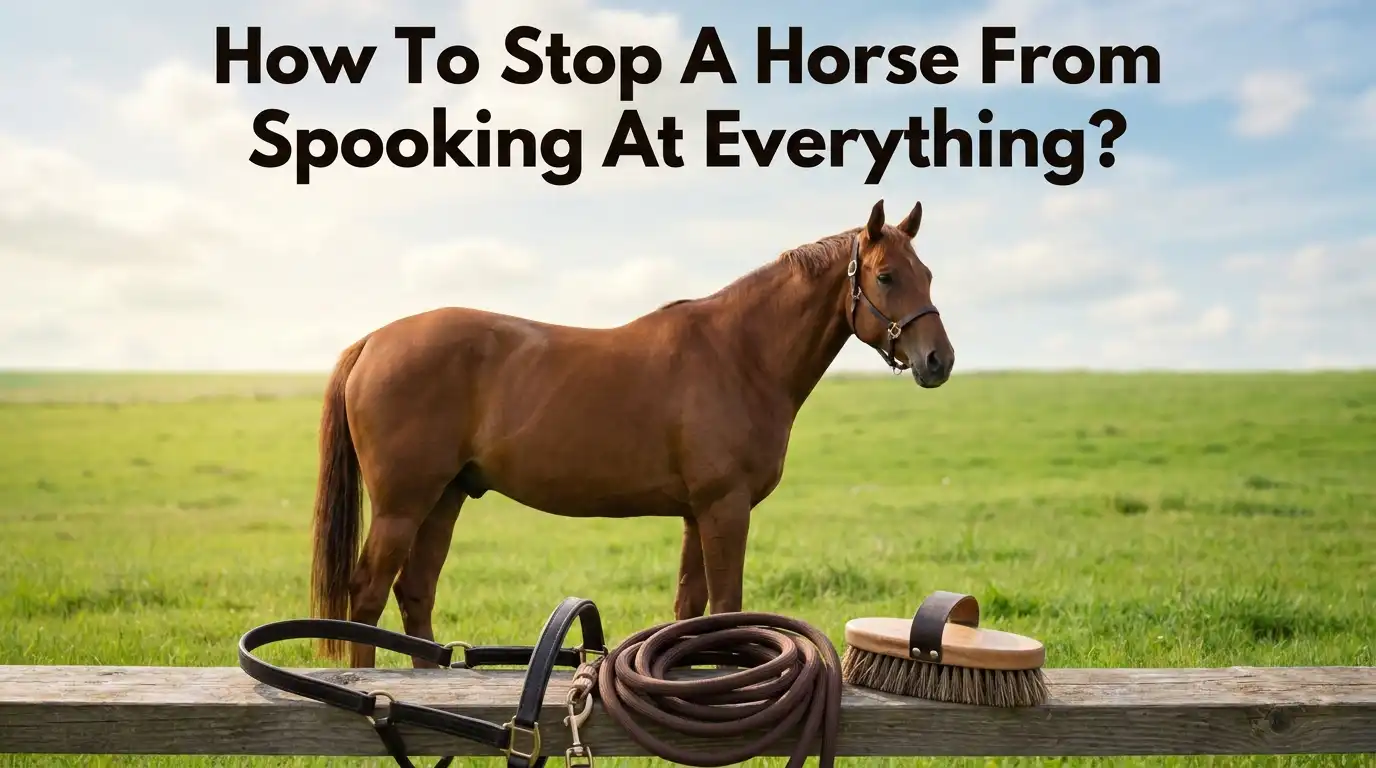
How To Stop A Horse From Spooking At Everything?
Your horse jumps at a plastic bag. He bolts from a shadow. He freezes at a rock he has passed a hundred times. Sound familiar?
A spooky horse can turn a peaceful ride into a scary moment in seconds. You feel your heart race. You lose trust. You start to dread the ride instead of loving it.
This guide gives you clear steps, real methods, and honest pros and cons for each one. You will learn why your horse reacts, how to build his confidence, and what to do the moment he spooks.
Key Takeaways
- Spooking is instinct, not disobedience. Your horse reacts from fear because he is a prey animal. Punishment makes it worse. Patience and leadership make it better.
- Move the feet, not the emotions. When a horse spooks, put his feet to work. Circling and changing direction switch on the thinking side of his brain and pull his focus back to you.
- Groundwork builds the foundation. A calm horse on the ground is a calm horse under saddle. Never skip groundwork before a ride, especially with a fresh or anxious horse.
- Desensitize slowly and consistently. Short, positive sessions beat long, stressful ones. Reward every moment of relaxation. Trust grows one small win at a time.
- Your calm creates his calm. Horses read your body and breath. If you tense up, he tenses up. Stay relaxed, breathe deep, and lead with confidence.
- Rule out pain and diet first. Ulcers, poor vision, too much energy feed, and lack of turnout all cause spooking. Fix the physical problem before you blame behavior.
Understand Why Your Horse Spooks In The First Place
You cannot fix a problem you do not understand. Horses spook because they are prey animals. In the wild, the ones who ran fast survived. So your horse is built to react first and think second.
His eyes sit on the sides of his head. This gives him wide vision to spot danger, but poor depth perception and two blind spots. He cannot always tell how far away an object is. That shadow really might look like a hole to him.
His hearing is far sharper than yours too. He hears sounds you miss and reacts before you notice a thing. Add a fresh, under exercised horse with too much energy, and you get a spook waiting to happen. Knowing this helps you respond with patience instead of anger.
Rule Out Pain, Diet, And Health Problems
Before you label your horse as “just spooky,” check his body. Pain and discomfort make horses reactive and nervous. A horse in pain has a short fuse. Small things set him off.
Ulcers are a very common hidden cause. So are dental problems, sore backs, and ill fitting saddles. Have your vet and an equine dentist check him. A saddle fitter can rule out tack that pinches.
Diet matters a lot too. High grain and high sugar feeds create excess energy that comes out as spooky, jumpy behavior. Too little turnout does the same thing. A horse stuck in a stall all day has energy with nowhere to go.
Pros: Fixing a physical problem often solves spooking fast, with no long training needed.
Cons: Vet, dental, and saddle checks cost money and take time to arrange.
Start With Solid Groundwork Every Single Time
Groundwork is the foundation of a calm horse. A horse who respects you on the ground will trust you in the saddle. This is where you build the relationship before you ever climb on.
Never pull your horse from the pasture and ride straight out. A fresh horse is full of energy and looking for something to spook at. Warm him up first. Move his feet forward, back, left, and right.
Practice lunging, yielding the hindquarters, backing up, and sidepassing. The more you ask him to change direction, the more he tunes in to you. You want him calm, soft, and focused before you mount up. This simple habit prevents many spooks before they start.
Pros: Builds trust, burns fresh energy, and works for every horse and rider level.
Cons: Takes daily time and effort, and results build slowly over weeks.
Move The Feet When Your Horse Spooks
This is the single most useful skill you can learn. When your horse spooks at an object, do not stop and beg him to relax. Instead, put his feet to work right away.
Trot him in a circle around the object, or in front of it if you cannot circle it. Every one and a half circles, turn him in toward the scary thing. Each turn brings him a step closer to it.
Here is why this works. A horse can only think about one thing at a time. When his feet are busy, he switches from the reactive brain to the thinking brain. He stops focusing on fear and starts focusing on you.
Pros: Works in real time, keeps you safe, and trains the horse in the same moment.
Cons: Needs practice to do smoothly, and rushing or forcing it can backfire.
Teach The One Rein Stop As Your Emergency Brake
Every rider needs a reliable way to stop a bolting horse. The one rein stop is your emergency brake. You slide one hand down the rein and bring it up to your hip. Your horse bends and stops.
This only works if you practice it a lot in a calm setting first. Knowing the theory does not help you on the trail. It must become a habit for both of you.
Teach it at a walk in a safe arena. Then practice at a trot. When your horse stops softly from one rein every time, you have a tool you can trust. In a scary moment, this gives you control and stops panic from turning into a wreck.
Pros: Gives you a safe way to shut down dangerous behavior instantly.
Cons: Requires steady practice, and pulling too hard can unbalance the horse.
Desensitize Your Horse The Right Way
Desensitizing means helping your horse get used to scary objects and sounds. The goal is calm, not surprise. You want him to think, not to flee.
Start on the ground in a safe, enclosed space like a round pen. Introduce one object at a time. Let him look, sniff, and investigate at his own pace. Begin with almost no movement.
Slowly add motion. Wave a flag gently. Drag a tarp a little. Only increase the activity when he stays relaxed. Never flood him with too much at once. When he responds calmly, stop the movement and praise him. Release of pressure is his reward.
Pros: Builds lasting confidence and works for many objects and situations.
Cons: Slow process that needs patience, and forcing it too fast creates more fear.
Introduce Scary Objects On A Regular Basis
The more strange things your horse sees, the less he fears the unknown. Confidence grows through exposure. A horse who has met tarps, umbrellas, balloons, and machines is far less jumpy than one who has met nothing.
Set up a small collection of odd objects in a safe area. Old barrels, pool noodles, flapping flags, empty feed bags, and traffic cones all work well. Introduce them one at a time.
You cannot show your horse every object he will ever meet. But you can teach him a habit of thinking through fear instead of running from it. Over time, even brand new objects will not shake him. He learns that strange things do not hurt him and that you keep him safe.
Pros: Prepares your horse for the real world and builds deep confidence.
Cons: Needs space, equipment, and regular sessions to keep working.
Become A Confident Leader Your Horse Can Trust
Horses look to a leader for safety. If you are not leading, your horse feels alone and scans for danger. Many riders let the horse go on autopilot and chat with friends. That is when spooking happens.
Stay engaged on every ride. Give your horse a job. Bend him around trees. Sidepass over a log. Ask for transitions. Keep his mind on you.
Here is the key idea. If you do not give your horse something positive to think about, he will find something negative on his own. When you lead well, he trusts you to handle scary moments. He checks in with you instead of reacting. Your leadership becomes his safety net.
Pros: Strengthens the bond and gives your horse a reason to focus on you.
Cons: Demands your full attention, which can feel tiring on long rides.
Control Your Own Body And Emotions
Your horse feels everything you feel. A tense rider creates a tense horse. When you clamp your legs, grip the reins, and hold your breath, your horse senses danger even when none exists.
Breathe deep and slow. Drop your shoulders. Soften your hands. When you stay loose, you send a message that everything is fine. Your calm becomes his calm.
A helpful trick is to hum or sing softly. This forces you to breathe and keeps your body relaxed. Some riders count strides or focus on a steady rhythm. Whatever keeps you present and calm will help your horse. Fear travels down the reins, but so does confidence.
Pros: Costs nothing, works instantly, and improves every ride you take.
Cons: Hard to master when you feel real fear, and takes practice to control nerves.
Use Consistent, Short Training Sessions
Consistency beats intensity every time. Short, positive sessions repeated often work better than long, stressful ones. Your horse learns best in small, calm doses.
Aim for regular practice rather than one big session now and then. Fifteen focused minutes a few times a week builds more trust than one exhausting hour.
Always end on a good note. Find a small win and stop there. Never drill until your horse is frustrated or scared. If a session goes badly, back up to something easy he can do well, then quit. This keeps his mind open and willing. Over weeks and months, these small wins add up to a calm, brave horse.
Pros: Prevents burnout, builds steady progress, and keeps training positive.
Cons: Requires a regular schedule and patience to see the full results.
Know What To Avoid When Training A Spooky Horse
Some common mistakes make spooking much worse. The biggest one is punishment. If you jerk the reins or kick hard when your horse spooks, you add fear on top of fear. He learns that scary objects mean pain.
Never force your horse to face fear too fast. Flooding him with too much at once can create panic and lasting trauma. Go at his pace, not yours.
Watch for stress signals. Pinned ears, wide eyes, tight muscles, and fast breathing mean slow down. Do not get frustrated when progress feels slow. Every horse learns differently. Comforting him with soft pats the second he spooks can also reward the fear. Instead, stay neutral and redirect his feet.
Pros: Avoiding these mistakes protects trust and speeds up real progress.
Cons: Requires you to control your own frustration, which is not always easy.
Consider Professional Help When You Need It
Sometimes you need an expert. If your horse is dangerous or you feel unsafe, do not push through alone. A skilled trainer can spot problems you miss and keep you safe.
Look for a trainer who uses calm, patient methods. Avoid anyone who relies on force or fear. Watch them work before you commit. A good trainer teaches you, not just the horse.
An equine behavior expert or vet can also help rule out deeper issues. Some spooking comes from anxiety, poor early handling, or past trauma. These cases need a careful, informed plan. There is no shame in asking for help. The goal is a safe, happy partnership, and skilled guidance often gets you there faster.
Pros: Speeds progress, improves safety, and teaches you valuable skills.
Cons: Costs money, and quality trainers can be hard to find in some areas.
Build Trust Over Time For Lasting Results
Fixing spooking is not a quick fix. It is a relationship built one ride at a time. The more good experiences you share, the more your horse trusts you to keep him safe.
Spend time with your horse outside of training too. Grooming, hand grazing, and quiet moments all build the bond. A horse who feels safe with you spooks far less.
Remember that setbacks are normal. A bad day does not erase your progress. Some days he will be brave, and some days he will be silly. Stay patient and consistent. Over the months, you will notice fewer spooks, faster recovery, and a calmer horse. That steady trust is the true cure for spooking.
Pros: Creates a deep, lasting partnership and a genuinely confident horse.
Cons: Takes months of steady effort with no instant results.
Frequently Asked Questions
Why does my horse suddenly spook at things he used to ignore?
Sudden spooking often points to a physical problem. Check for pain, ulcers, dental issues, or a poor fitting saddle. Diet changes, less turnout, or cold weather can also add energy and nerves. If the vet clears him, look at your own routine and stress levels.
Can you completely stop a horse from ever spooking?
No, and that is not the goal. Spooking is a natural survival instinct you cannot erase. What you can do is teach your horse to recover fast and think instead of bolt. A well trained horse still notices scary things, but he checks in with you instead of running.
How long does it take to fix a spooky horse?
There is no fixed answer. Some horses improve in weeks, others take many months. It depends on the cause, the horse’s history, and how consistent you are. Short, regular sessions bring faster results than occasional long ones. Focus on steady progress, not speed.
Is it safe to ride a spooky horse on the trail?
It can be, with the right skills. Master the one rein stop and groundwork first. Ride with a calm, experienced horse for company. Stay engaged and give your horse a job. If he is truly dangerous, work with a trainer before you hit the trail.
Should I comfort my horse when he spooks?
Soft pats and soothing words right after a spook can accidentally reward the fear. Instead, stay calm and put his feet to work. Redirect his focus to you through movement. Once he is thinking again and standing quietly by the object, then you can rub him and praise the calm.
Does feeding affect how much my horse spooks?
Yes, quite a lot. High grain and high sugar feeds create excess energy that often shows up as spooky, jumpy behavior. More forage, more turnout, and less concentrated feed usually help. Talk to your vet about a diet that matches your horse’s workload.

Hi, I’m Liza — pet lover, lifelong animal enthusiast, and the voice behind Liza4Pets. I created this space to share honest, practical pet care advice for fellow pet parents who want the best for their furry (and not-so-furry) companions.