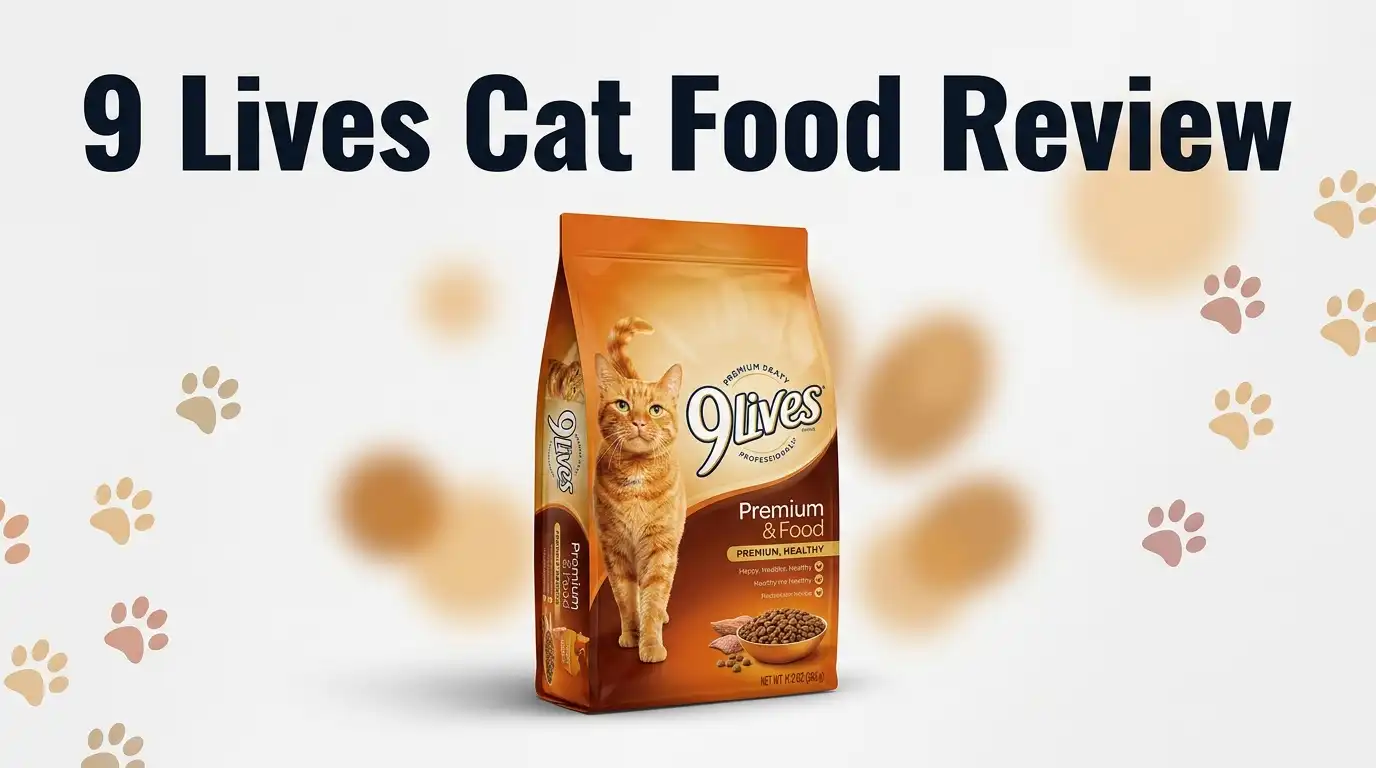
9 Lives Cat Food Review 2026: Still Worth It?
Cat food prices climbed again this year, and 9Lives still sits on the shelf at under a dollar per can. That price tag raises an obvious question. Is this food a smart budget pick, or is it cheap for a reason?
I bought three 9Lives products in 2026 and fed them to two adult cats for six weeks. I read the labels line by line. I checked the recall records. I compared the numbers against Friskies, Fancy Feast, and Purina Cat Chow.
This review gives you the honest result. You will see what 9Lives gets right, where it falls short, and which cats should eat something else. No sugar coating, no brand worship.
Key Takeaways:
- 9Lives is one of the cheapest complete cat foods in America. A 12 pound bag of Daily Essentials often costs less than a 6 pound bag of premium kibble. Budget is the single strongest reason people buy it.
- Corn is the first ingredient in most dry recipes. Chicken byproduct meal, soybean meal, and corn gluten meal follow. Cats are obligate carnivores, so this plant heavy formula sits far below what a wild feline diet looks like.
- The food meets AAFCO minimum standards. It is labeled 100% complete and balanced, which means your cat will not develop a textbook nutrient deficiency on it. Meeting a minimum and being excellent are two different things.
- Cats usually love the taste. Palatability is high across the pate and gravy lines. Picky eaters who reject expensive food often clean the 9Lives bowl.
- There was a real recall in December 2018. J.M. Smucker pulled specific lots of 9Lives Protein Plus canned food for low thiamine levels. No recalls have followed since, but the history matters.
- Artificial colors appear in several dry recipes. Those red and green kibble bits exist for humans, not cats.
What Is 9Lives Cat Food?

Last update on 2026-10-30 / Affiliate links / Images from Amazon Product Advertising API
9Lives launched in 1959 and became famous through Morris the Cat, the orange tabby mascot who starred in decades of television ads. The brand built its reputation on one promise: affordable food that cats will actually eat.
Ownership changed hands several times. J.M. Smucker held the brand for years. Post Holdings acquired it in 2023 along with Kibbles ‘n Bits and Nature’s Recipe. The recipes stayed largely the same through that transition.
The current lineup covers dry kibble, canned pate, canned morsels in sauce, and a high protein line. You will find it in grocery stores, dollar stores, Walmart, and on Amazon. Distribution is the brand’s superpower. Almost every American shopper lives within a few miles of a bag.
9Lives targets one customer clearly. That customer wants complete nutrition at the lowest possible price per meal. The brand does not chase the grain free crowd or the fresh food crowd. It plays a volume game, and it plays it well.
9Lives Daily Essentials Dry Cat Food Review
Daily Essentials is the flagship kibble and the product most people mean when they say “9 Lives.” It comes in chicken, beef, and salmon flavors mixed into one bag.
The guaranteed analysis lists 28% minimum crude protein, 9% minimum crude fat, and 3% maximum fiber. On a dry matter basis, that works out to roughly 32% protein and 10% fat, with an estimated carbohydrate load near 50%.
That carb number is the headline problem. Half the bag is essentially starch. Cats digest protein and fat efficiently. They handle large carbohydrate loads poorly.
My cats ate it without hesitation. Stool quality stayed normal for one cat and turned softer for the other during week two. Coat condition did not change either way over six weeks.
The kibble is small, dry, and dyed in three colors. It pours cleanly and does not crumble. For a food priced near fifty cents per pound, the physical quality is better than expected. The ingredient panel is where it loses ground.
9Lives Paté Favorites Wet Cat Food Variety Pack Review

Last update on 2026-10-30 / Affiliate links / Images from Amazon Product Advertising API
The Paté Favorites pack ships twelve 5.5 ounce cans across three recipes: chicken dinner, ocean whitefish, and super supper. Each can holds a smooth, firm loaf.
Wet food is where 9Lives performs better. Moisture content sits around 78%, which supports urinary health far more than any kibble can. Cats evolved to get water from prey, not from a bowl.
Protein on a dry matter basis lands in a respectable range for the pate recipes, and the carbohydrate load drops well below the kibble. If you buy only one 9Lives product, make it the canned food.
The pate slides out of the can in one piece with a firm shake. It mashes easily with a fork. The smell is strong and fishy, stronger than Fancy Feast, which some owners will notice across the room.
Both of my cats finished every can of chicken and super supper. The ocean whitefish got a slower response. Flavor preference varies, so a variety pack is the sensible first purchase.
Top 3 Alternative for 9Lives Cat Food


Last update on 2026-10-30 / Affiliate links / Images from Amazon Product Advertising API
Purina Fancy Feast Classic Pate Wet Cat Food Variety Pack

Last update on 2026-10-30 / Affiliate links / Images from Amazon Product Advertising API
Purina Friskies Seafood Sensations Dry Cat Food

Last update on 2026-10-30 / Affiliate links / Images from Amazon Product Advertising API
Purina Cat Chow Complete High Protein Dry Cat Food
The Unboxing Experience: What Actually Arrives
The 12 pound Daily Essentials bag arrived in a plain Amazon box with no extra padding. The bag itself is thick paper with a plastic liner and no resealable zipper. You will need a clip or a storage bin, because the bag does not close on its own.
The top seam tears open with a pull tab that worked on my first try. Inside, the kibble smelled strongly of grain and rendered fat. It is not a pleasant smell to a human nose. Cats do not share our opinion.
The canned variety pack shipped in a shrink wrapped tray inside a shipping box. Two cans had small dents on the rim. Neither was punctured, and no swelling appeared.
All twelve cans had pull tabs. Every tab opened cleanly without a can opener. The date codes were stamped clearly on the lid with more than a year of shelf life remaining.
Nothing about the packaging feels premium. It is functional, it protects the food, and it keeps the price down.
Ingredient Breakdown: What Is Really Inside
Here is the opening of the Daily Essentials panel: whole ground corn, chicken byproduct meal, soybean meal, corn gluten meal, beef fat preserved with mixed tocopherols, whole wheat, and meat and bone meal.
Corn leads. That single fact tells you the brand’s cost strategy. Corn is cheap, shelf stable, and adds bulk protein numbers without animal muscle meat.
Chicken byproduct meal is not garbage, despite the internet’s reputation for it. It is rendered organ and tissue material, and it carries real nutrition. It is simply less consistent and less digestible than named muscle meat.
Corn gluten meal and soybean meal inflate the protein percentage on the label using plant sources. Cats use animal protein more efficiently, so the printed 28% does not deliver 28% worth of usable feline nutrition.
Several recipes include artificial coloring and BHA as a preservative. Neither ingredient benefits your cat. Taurine is added, which is the one non negotiable nutrient, and 9Lives does include it in every formula.
Nutrition Numbers Compared to Rivals
Numbers cut through marketing. Daily Essentials offers 28% protein and 9% fat as fed. The 9Lives Plus High Protein line raises that to 35% protein and 10% fat, which is genuinely competitive for a budget kibble.
Friskies Seafood Sensations sits near 30% protein. Purina Cat Chow Complete runs around 32%. Fancy Feast Classic Pate delivers the highest dry matter protein of the group with almost no carbohydrate.
The gap is not really about protein percentage. It is about protein source and carbohydrate load. 9Lives hits its numbers with corn and soy. Fancy Feast hits its numbers with meat and fish.
Calorie density for Daily Essentials sits in a normal range for dry food, so portion control follows standard guidance. Most adult cats need roughly 20 calories per pound of body weight daily.
If you want the best nutritional value inside the 9Lives brand, choose the Plus High Protein kibble or the canned pate. Skip the basic colored kibble if your budget allows even a small step up.
Palatability: Do Cats Actually Eat It?
This is 9Lives’ strongest category. Acceptance rates are high, and owner reviews confirm it across thousands of ratings. Cats that snub expensive food often devour this.
The reason is straightforward. Budget manufacturers spray palatants, rendered fat, and flavor digest onto the kibble surface. That coating is engineered to be irresistible. It works.
My older cat, who rejected two premium dry foods last year, ate Daily Essentials immediately and kept eating it. My younger cat preferred the canned pate and picked around the kibble when both were available.
There is a downside to extreme palatability. Cats who love this food may resist switching later. Owners frequently report that transitioning off 9Lives takes longer than transitioning onto it.
Free feeding also becomes risky. The high carbohydrate content plus high palatability is a weight gain combination. Measure portions instead of filling the bowl.
Price and Value: The Real Math
Cost per meal is why this brand survives. A 12 pound bag of Daily Essentials typically feeds an average adult cat for roughly two months. That can work out to under fifteen cents per day.
Canned 9Lives usually lands well below a dollar per 5.5 ounce can. Fancy Feast pate at 3 ounces per can costs more per ounce almost everywhere.
Amazon pricing fluctuates, and grocery store sales sometimes beat it. Subscribe and save options reduce the cost further on bulk bags.
Value is not the same as price, though. A cheaper food that contributes to obesity or urinary issues costs more at the vet. That risk is real with any high carbohydrate dry diet.
Here is my honest value read. 9Lives canned food offers strong value. 9Lives basic kibble offers acceptable value only when the alternative is no food at all or a food you cannot afford consistently. Consistent feeding beats occasional premium feeding every time.
Recall History You Should Know
In December 2018, J.M. Smucker issued a voluntary recall of specific lots of 9Lives Protein Plus wet canned cat food. The reason was potentially low levels of thiamine, which is vitamin B1.
Thiamine deficiency is serious in cats. Early signs include appetite loss and vomiting. Advanced cases cause neurological symptoms. The recall expanded to additional lots before the FDA terminated it.
No illnesses were widely confirmed in that event, and the recall was completed. No 9Lives recalls have been issued since.
Context matters here. Purina, Hill’s, Blue Buffalo, and nearly every major brand have faced recalls. A single recall seven years ago does not make a brand dangerous.
What it does mean is simple. Check lot codes when news breaks, and register for FDA pet food alerts. That habit protects your cat regardless of which brand you feed.
What 9Lives Does Not Do Well
Authentic reviews name the flaws, so here they are plainly.
It does not deliver meat first nutrition. Corn leads most dry recipes, and no amount of marketing changes that ordering.
It does not suit cats with weight problems. The carbohydrate level works against feline metabolism, and free feeding this kibble tends to add pounds.
It does not serve cats with diabetes, chronic kidney disease, or urinary crystals. Those cats need therapeutic or low carbohydrate diets prescribed by a veterinarian.
It does not avoid artificial additives. Colors and BHA appear in multiple formulas, and neither serves your cat’s health.
It does not offer resealable packaging on bulk bags. Storage requires a container you supply yourself.
It does not provide ingredient sourcing transparency. You will not find detailed origin information the way you will with premium brands.
It also does not smell good. The fishy canned recipes linger in a small apartment for a while.
Pros and Cons of 9Lives Cat Food
Pros
- Extremely low cost per meal, which keeps cats fed in tight budgets and multi cat homes.
- Very high palatability, so picky eaters usually accept it without a fight.
- Available almost everywhere, including grocery stores, dollar stores, and Amazon.
- Taurine is added to every formula, covering the most critical feline nutrient.
- The canned pate recipes deliver strong moisture content near 78%, supporting hydration.
- The Plus High Protein line reaches 35% protein, which competes with mainstream kibble.
- Meets AAFCO complete and balanced standards for the stated life stages.
Cons
- Corn is the first ingredient in most dry recipes, not meat.
- Estimated carbohydrate content near 50% in kibble is high for obligate carnivores.
- Plant proteins from corn gluten and soybean inflate label protein numbers.
- Artificial colors and BHA appear in several formulas.
- A 2018 thiamine recall affected the Protein Plus canned line.
- No resealable bag on large kibble sizes.
- Not appropriate for diabetic, kidney, or urinary condition cats.
- Strong odor from canned seafood recipes.
Who Should Buy 9Lives and Who Should Skip It
Buy it if your budget is genuinely tight and the realistic alternative is inconsistent feeding. A cat fed reliably on 9Lives is healthier than a cat fed irregularly on premium food. That is the honest comparison.
Buy it if you run a multi cat household or care for a colony. Volume feeding at premium prices is not sustainable for most people.
Buy the canned pate if you want the brand’s best nutritional profile. Wet food is the smart choice within this lineup.
Skip it if your cat is overweight, diabetic, or has any urinary history. Those cats need lower carbohydrate diets, and this is the wrong tool.
Skip it if you can afford Fancy Feast Classic Pate. The protein quality gap is meaningful, and the price gap is smaller than people assume.
Skip the artificially colored kibble specifically. If you stay with the brand, move to the Plus High Protein bag instead.
How to Switch Foods Safely
Sudden diet changes cause vomiting and diarrhea in cats. Transition over seven to ten days.
Days one through three, mix 25% new food with 75% current food. Days four through six, move to a 50/50 blend. Days seven through nine, shift to 75% new food. Day ten, serve the new food alone.
Watch stool quality at every stage. If loose stool appears, hold at the current ratio for two extra days before advancing.
Cats coming off 9Lives often resist bland premium food. Warming wet food slightly releases aroma and improves acceptance. A sprinkle of freeze dried meat topper also helps.
Never starve a cat into eating a new food. Cats that stop eating for even two days risk hepatic lipidosis, a serious liver condition. Slow and patient always wins.
Talk to your veterinarian before switching any cat with a diagnosed medical condition. This article shares general information and does not replace veterinary advice for your specific animal.
Final Verdict: Is 9Lives Worth Buying in 2026?
9Lives earns a qualified yes, with clear limits. It is a legitimate emergency and budget option, not a food I would recommend as a lifelong first choice.
The canned pate is the standout. Moisture content is good, cats love it, and the price beats most competitors per ounce. That product deserves a spot on a budget shopping list.
The basic dry food is harder to defend. Corn first, half carbohydrate, artificial colors. It keeps cats alive and it keeps them full, but it does not help them thrive.
If you can spend a small amount more, Fancy Feast Classic Pate delivers noticeably better ingredients for a modest premium. Purina Cat Chow Complete offers a stronger dry option.
If you cannot spend more, feed 9Lives without guilt. Measure portions, prioritize the wet food, keep fresh water available, and see your vet annually. Those four habits matter more than any brand logo on the bag.
Frequently Asked Questions
Is 9Lives cat food safe for cats?
Yes, 9Lives meets AAFCO complete and balanced standards and includes added taurine. The brand had one voluntary recall in December 2018 for low thiamine in specific Protein Plus canned lots, and that recall was completed. Current products carry no active safety warnings. Safe and optimal are different standards, though, and this food sits at the basic end of the quality range.
Why does 9Lives cat food get bad reviews?
Most criticism targets the ingredient panel. Corn appears first in the majority of dry recipes, plant proteins boost the label numbers, and artificial colors add nothing nutritionally. Cats are obligate carnivores, so reviewers judge these formulas harshly. Palatability and price ratings, by contrast, are consistently strong.
Is 9Lives better than Friskies?
The two brands are close competitors with similar pricing and similar quality tiers. Friskies dry recipes often list a meat or fish ingredient higher in the panel. Friskies holds a slight ingredient edge in most head to head comparisons. Taste preference varies by individual cat, so trial both if you are undecided.
Can kittens eat 9Lives cat food?
Some 9Lives formulas are labeled for all life stages, which includes growth. The Paté Favorites pack states complete nutrition for kittens and adult maintenance. Always read the specific bag or can, because not every recipe covers kittens. Growing kittens benefit most from higher protein wet food.
Does 9Lives cause urinary problems?
No food directly causes urinary problems in a healthy cat, but dry food diets in general reduce total water intake, which is a recognized risk factor for urinary issues. Feeding wet food, providing multiple water sources, and maintaining a healthy weight all lower that risk. Cats with a urinary history need a veterinary diet, not a budget grocery food.
How much 9Lives should I feed my cat?
Follow the feeding chart on the package as a starting point, then adjust based on body condition. Most adult cats need roughly 20 calories per pound of body weight per day. Avoid free feeding this kibble, because the high palatability and carbohydrate content encourage weight gain. Your veterinarian can set an exact target for your cat.

Hi, I’m Liza — pet lover, lifelong animal enthusiast, and the voice behind Liza4Pets. I created this space to share honest, practical pet care advice for fellow pet parents who want the best for their furry (and not-so-furry) companions.