Why Is My Axolotl Frantically Swimming Around?
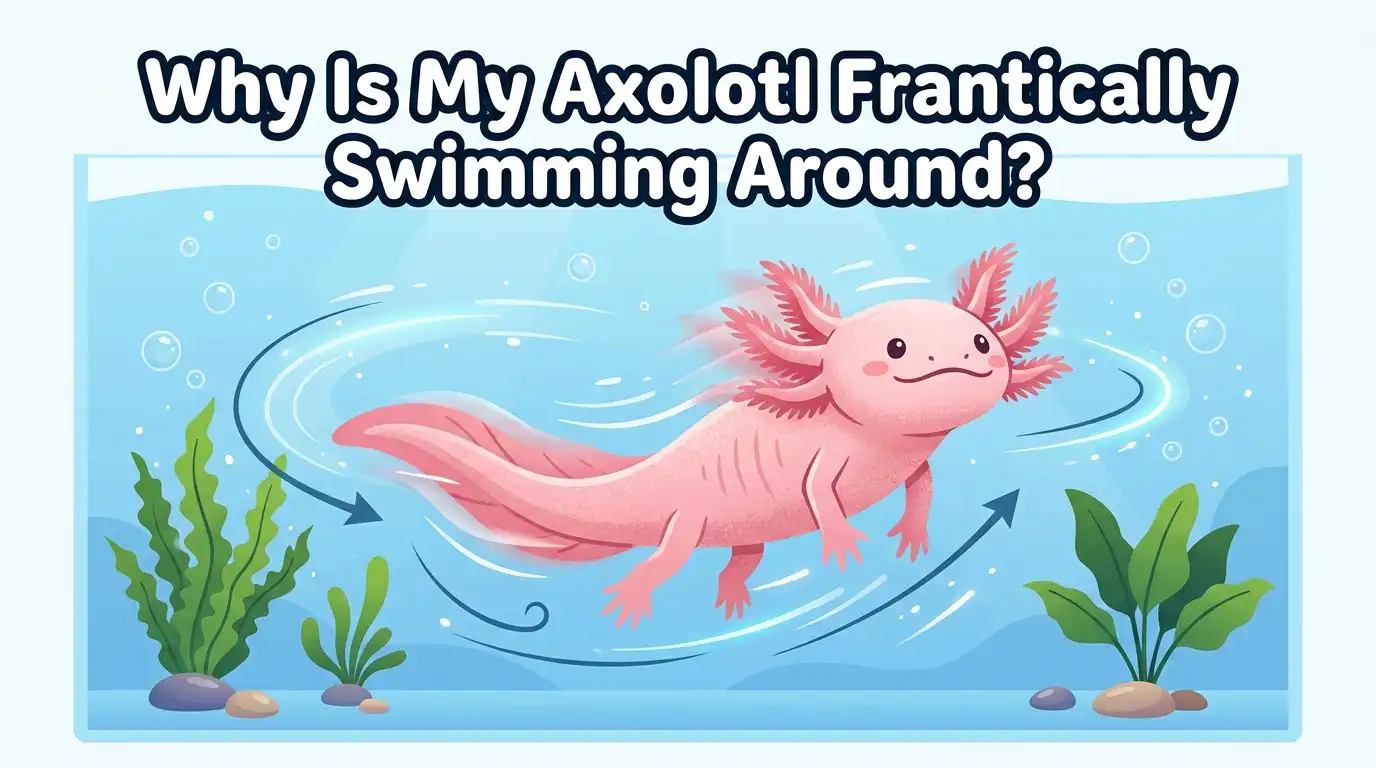
Your axolotl normally rests on the bottom and barely moves. So when it suddenly zooms around the tank like a tiny aquatic rocket, you notice fast.
This behavior worries most owners, and it should get your attention. Frantic swimming is rarely random. It is your axolotl telling you that something in its world feels wrong.
The good news is that almost every cause has a clear fix. This guide walks you through each reason and shows you exactly what to do.
Key Takeaways
- Water quality is the top suspect. High ammonia, nitrite, or nitrate stresses axolotls fast. Test your water first before changing anything else. Safe levels are 0 ppm ammonia, 0 ppm nitrite, and under 20 ppm nitrate.
- Warm water causes panic. Axolotls are cold water animals. Keep the tank below 68°F (20°C). Heat stress makes them swim wildly and refuse food.
- Strong filter flow turns a calm pet frantic. Axolotls hate fighting current. Add a sponge or baffle to slow the output.
- New tanks confuse them. A fresh home, no hiding spots, or an uncycled tank often triggers pacing and glass surfing. Give your axolotl time and cover.
- Tubbing is your emergency tool. When water is the problem, move your axolotl to clean dechlorinated water in a tub. This buys you safe time to fix the tank.
- Watch for sickness signs too. Curled gills, loss of appetite, and floating point to deeper issues. A vet who treats exotics can help.
What Frantic Swimming Looks Like in Axolotls
First, let us define the behavior so you know what you are seeing. Axolotls are slow, calm creatures by nature. They spend most of the day sitting still on the tank floor. A healthy axolotl moves slowly and walks along the bottom with its little legs.
So frantic swimming stands out clearly. You might see your axolotl dart up and down the glass. It may swim laps around the tank without stopping. Some race to the surface again and again.
Others zoom in tight circles or thrash side to side. This is not normal exploring. It is a stress response. When you spot this pattern, treat it as a signal that you need to investigate the tank conditions right away.
Poor Water Quality Is the Number One Cause
Most frantic swimming traces back to bad water. Axolotls produce a lot of ammonia as waste. Ammonia is a strong poison. It burns their skin and gills and damages their nervous system.
High levels make them restless and panicked. Nitrite and nitrate cause similar stress at high amounts. Buy a liquid test kit and check your water today. Aim for 0 ppm ammonia, 0 ppm nitrite, and nitrate under 20 ppm.
If any reading is high, do a partial water change of 20 to 30 percent with dechlorinated water. Repeat daily until levels drop. Clean water fixes more axolotl problems than anything else. Test before you assume any other cause.
Pros and cons of this approach: The pro is that water testing and changes are cheap, fast, and solve the most common cause directly. The con is that frequent water changes take daily effort, and you may need to test repeatedly for a week or more to confirm stable results.
Warm Water Triggers Heat Stress and Panic
Temperature matters just as much as cleanliness. Axolotls are cold water animals. They thrive between 60°F and 64°F (16°C to 18°C). Once water climbs to 68°F (20°C) or higher, they suffer.
Heat stress makes them swim frantically, gulp at the surface, and stop eating. You may also see pale, slimy patches on their skin. Check your tank with a reliable thermometer.
If the water is too warm, cool it slowly. Float a bag of ice or a frozen water bottle in the tank. Aim a small fan across the water surface to boost evaporation cooling.
Never use an aquarium heater for axolotls. Sudden temperature drops also shock them, so cool the water gradually over hours, not minutes.
Pros and cons: Fans and ice bottles are cheap and work for short heat spikes. The downside is that they need constant refilling and watching. A proper aquarium chiller costs more upfront but holds a steady temperature without daily babysitting.
Strong Filter Flow Stresses Your Axolotl
Axolotls live in still ponds in the wild. They hate strong current. A powerful filter pushes water across the tank and forces your axolotl to fight the flow all day. This exhausts and stresses them.
You may see them swimming hard, getting pushed around, or hiding from the current. Watch the water surface for heavy ripples or rapid movement. If the flow looks strong, slow it down. Attach a sponge over the filter output to break the force.
Use a spray bar to spread the water wide and gentle. You can also point the output at the glass to soften it. A calm, low flow tank helps your axolotl relax and return to its normal resting habits on the bottom.
Pros and cons: Sponges and baffles cost almost nothing and reduce flow fast. The con is that a sponge can clog and needs regular cleaning. A spray bar spreads flow evenly but takes a bit of setup and the right fit for your filter.
A New Tank Often Causes Pacing and Glass Surfing
A brand new home can confuse your axolotl. Moving is stressful for these sensitive animals. When you first bring your axolotl home, it may pace the tank edges, stare into corners, or surf along the glass.
This is common in the first days. The water feels new, the smells are different, and the space is unfamiliar. Give your axolotl time to settle. Most adjust within one to two weeks. Keep the lights low and avoid tapping the glass.
Limit handling and let the tank stay quiet. Make sure you acclimated your axolotl slowly when you added it. Patience usually solves new tank nerves as long as your water parameters and temperature are correct.
Pros and cons: Simply waiting costs nothing and works for normal acclimation stress. The risk is that you might wait too long while a real problem like bad water goes unchecked. Always test your water during this period so you do not confuse adjustment with distress.
An Uncycled Tank Poisons the Water Fast
If your tank is new, it may not be cycled. Cycling builds good bacteria that turn toxic ammonia into safer nitrate. Without this cycle, ammonia builds up fast and harms your axolotl.
This is one of the most common beginner mistakes. A frantic axolotl in a new setup often points straight to an uncycled tank. Test your water to confirm. If you see ammonia or nitrite above 0, your tank is still cycling.
The safest move is to remove your axolotl and tub it in clean water while the tank finishes. Add a bottled bacteria starter and test daily. A fully cycled tank reads 0 ammonia, 0 nitrite, and low nitrate. Never rush this step.
Pros and cons: Fishless cycling done before adding your axolotl is safest and avoids harm, but it takes four to six weeks of patience. Tubbing your axolotl during a cycle protects it but adds daily water change work until the tank is ready.
Low Oxygen Levels Make Them Surface Constantly
Axolotls breathe through gills, skin, and lungs. They sometimes gulp air at the surface, and that is normal in small amounts. But if your axolotl races to the top every minute, oxygen may be low.
Warm water holds less oxygen, so heat often makes this worse. A still tank with no surface movement can also run low. Watch how often your axolotl surfaces. Once in a while is fine. Every minute is a warning.
Add an air stone to boost oxygen and create gentle surface ripples. Keep the water cool, since cold water holds more oxygen. Live plants also help raise oxygen levels during the day. Good airflow keeps your axolotl calm and breathing easily.
Pros and cons: An air stone is cheap and lifts oxygen quickly. The con is that it adds some water movement, which you must keep gentle. Live plants help oxygen and look natural, but they need light and care to thrive.
No Hiding Spots Leave Them Feeling Exposed
Axolotls feel safe when they can hide. A bare tank with bright light makes them anxious. When they have nowhere to retreat, they may swim around looking for cover or pace the glass. Adding shelter calms them fast.
Place a few hides in the tank, like a cave, a clay pot turned on its side, or a PVC pipe. Use smooth items with no sharp edges. Add some live or silk plants to break up the open space and soften the light.
Keep the tank lighting dim, since axolotls have no eyelids and dislike bright light. A tank with safe hiding spots feels secure and helps your axolotl rest instead of frantically searching for shelter.
Pros and cons: Hides and plants are inexpensive and improve comfort right away. The con is that too much clutter can trap waste and make cleaning harder. Choose a few quality hides and leave open floor space so you can siphon debris easily.
Wrong Substrate Can Cause Stress and Danger
The bottom of your tank affects your axolotl more than you might think. Gravel is dangerous for axolotls. They suck up food and can swallow small stones, which causes blockages called impaction. A struggling, impacted axolotl may swim oddly or act distressed.
The safest options are bare bottom or fine aquarium sand. Sand passes safely if swallowed, while gravel does not. If you currently use gravel, plan to remove it. A bare bottom is easiest to clean and very safe.
Sand gives a natural look and lets your axolotl grip the floor with its feet. The right substrate prevents a serious health problem and removes one possible reason for unusual swimming behavior in your tank.
Pros and cons: A bare bottom is the safest and simplest to keep clean, but some axolotls slip on smooth glass. Fine sand looks natural and gives good grip, yet it needs gentle cleaning and the correct fine grain size to stay safe.
Tubbing Your Axolotl as an Emergency Fix
When water problems strike, tubbing saves lives. Tubbing means moving your axolotl into a clean container of dechlorinated water. It gives your pet a safe, toxin free space while you fix the tank. Use a clean tub large enough for your axolotl to turn around.
Fill it with dechlorinated water at the same temperature as the tank. Change 100 percent of the water at least once a day. Change it sooner if your axolotl poops or after feeding.
Keep the tub cool and in a quiet, shaded spot. Tubbing is the go to rescue method for high ammonia, sickness, or a tank that is still cycling. It is simple, effective, and easy to maintain daily.
Pros and cons: Tubbing is cheap, fast, and gives full control over clean water. The con is the daily commitment, since you must do a complete water change every day. It is a short term fix, not a permanent home, so you still need to repair the main tank.
When to Try Fridging Your Axolotl
For some health issues, the fridge method helps. Fridging means keeping your tubbed axolotl in a refrigerator at around 41°F to 46°F (5°C to 8°C). The cold slows their metabolism and gives the body time to heal.
Keepers use this for ammonia burns, stubborn floating, or infection while waiting for vet advice. Place your axolotl in a tub of dechlorinated water and set it in the fridge. Change the water daily, just like normal tubbing.
Many axolotls stay in the fridge for up to one to two weeks. Fridging is a recovery tool, not a daily care method. Only use it when an axolotl is unwell, and ideally with guidance from someone experienced or an exotic vet.
Pros and cons: Fridging slows illness and reduces stress on a sick axolotl, which can speed healing. The downside is that it removes your pet from view, requires daily fridge water changes, and is not suitable for a healthy animal that just needs a tank fix.
Sickness and Other Health Issues to Rule Out
Sometimes frantic swimming points to illness. Health problems can change how your axolotl moves. Watch for warning signs alongside the swimming. Curled or forward gills suggest stress or irritation.
Floating that they cannot control may signal a digestive or buoyancy issue. Loss of appetite, pale skin, or frayed gills also point to trouble. Note any symptom you see and how long it lasts. If clean water, cool temperature, and low flow do not help within a few days, seek a vet who treats exotic animals.
An exotics vet can diagnose infections and other conditions that home care cannot fix. Do not wait too long if your axolotl looks sick and behaves strangely at the same time.
Pros and cons: A vet visit gives an accurate diagnosis and proper medicine, which home fixes cannot match. The con is the cost and the challenge of finding a vet who treats axolotls, since not all clinics see exotic amphibians.
A Simple Step by Step Action Plan
Let us put everything together into one clear plan. Follow these steps in order when your axolotl swims frantically. First, test your water for ammonia, nitrite, and nitrate. Second, check the temperature and cool it if it sits above 68°F.
Third, look at your filter flow and add a sponge or baffle if it is strong. Fourth, do a 20 to 30 percent water change with dechlorinated water. Fifth, if ammonia is high or the tank is uncycled, tub your axolotl in clean water.
Sixth, add hides and dim the lights for comfort. Finally, watch for health symptoms and call an exotics vet if needed. Work through this list and you will catch most causes quickly.
Pros and cons: A step by step plan keeps you calm and organized in a stressful moment, and it targets the most likely causes first. The only drawback is that it takes a little time and the right tools, like a test kit, which every axolotl owner should already own.
Frequently Asked Questions
Is it normal for my axolotl to swim to the surface sometimes?
Yes, occasional trips to the surface are normal. Axolotls gulp air now and then to help with buoyancy and oxygen. This is healthy behavior. The concern starts when your axolotl surfaces every minute or swims up frantically again and again. Frequent gulping often points to low oxygen or warm water, so check your temperature and add gentle aeration if you see it.
How long does it take for a new axolotl to calm down?
Most axolotls settle into a new tank within one to two weeks. Give your pet a quiet space, dim lighting, and minimal handling during this time. Make sure your water parameters and temperature stay correct while it adjusts. If frantic swimming continues past two weeks, stop assuming it is just nerves. Test your water and check for other causes right away.
What water temperature is best for an axolotl?
Aim for water between 60°F and 64°F (16°C to 18°C). Axolotls are cold water animals and dislike heat. Anything above 68°F (20°C) causes stress and frantic swimming. Never use a heater. If your room gets warm, use fans, ice bottles, or a chiller to keep the water cool and steady. Sudden temperature swings also harm them, so make changes slowly.
Can frantic swimming mean my axolotl is dying?
Not always, but you should take it seriously. Frantic swimming is a stress signal, and most causes are fixable. Bad water, heat, and strong flow are the usual culprits, and these respond well to quick action. However, if you see frantic swimming with floating, curled gills, or loss of appetite, your axolotl may be sick. Tub it in clean water and contact an exotics vet.
Do I need to test my water even if it looks clean?
Yes, always test your water. Ammonia and nitrite are invisible and have no color. Water can look perfectly clear while holding toxic levels that harm your axolotl. A liquid test kit is the only reliable way to know your true parameters. Test weekly during normal care and daily when your axolotl shows stress. This single habit prevents most axolotl problems.

Hi, I’m Liza — pet lover, lifelong animal enthusiast, and the voice behind Liza4Pets. I created this space to share honest, practical pet care advice for fellow pet parents who want the best for their furry (and not-so-furry) companions.