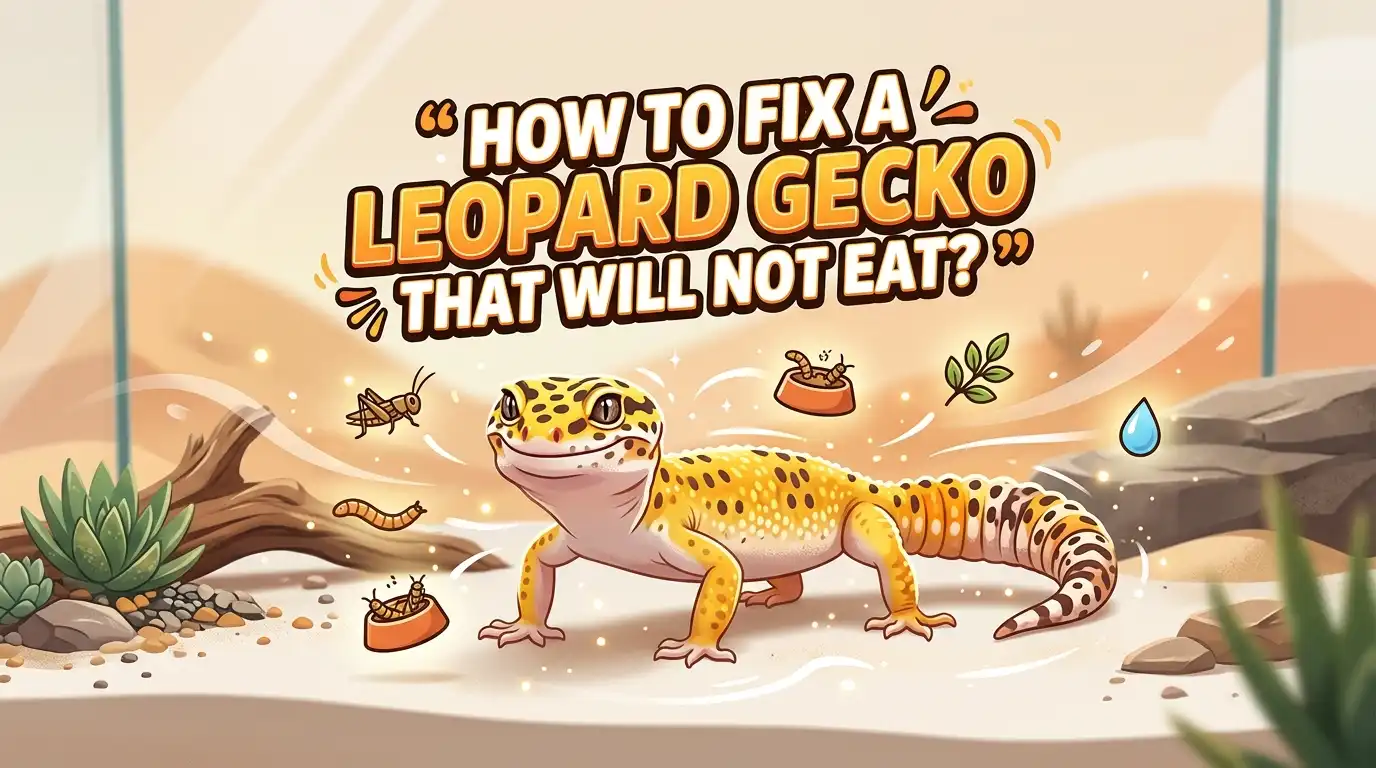
How To Fix A Leopard Gecko That Will Not Eat?
Your leopard gecko stares at a wiggling mealworm and turns away. You feel worried. You wonder if something is wrong.
This moment scares many gecko owners, both new and experienced. The good news is simple. A leopard gecko that will not eat is often easy to fix once you know the cause.
Leopard geckos refuse food for many reasons. Some reasons are harmless. Others need quick action. This guide breaks down each cause in plain language.
In a Nutshell:
- Cold temperatures are the number one cause. A leopard gecko needs a warm side near 90F to digest food. If the tank is too cold, the gecko stops eating. Always check your heat source first.
- Geckos can survive a long time without food. A healthy adult can go two weeks to a month without eating and lose little weight. This means you have time to solve the problem calmly.
- Stress and new homes affect appetite. A newly bought gecko may refuse food for one to two weeks. Give it space and quiet to settle in.
- Shedding and brumation are natural causes. Geckos often skip meals before a shed and during winter cooling. These pauses are normal and not a sign of illness.
- Health issues need a reptile vet. Mouth rot, impaction, and parasites all stop eating. If your gecko looks sick or loses tail fat fast, call a vet.
- Variety and feeding tricks help fussy eaters. Switching insects, feeding at night, and trying tong feeding can spark interest again.
Check The Tank Temperature First
Temperature is the most common reason your leopard gecko will not eat. These reptiles are cold blooded. They depend on heat to digest their meals. If the warm side of the tank drops below 70F, your gecko’s body slows down. It simply cannot process food in a cold space.
Use a digital thermometer with a probe to check the tank. The warm side should reach around 90F. The cool side should stay near 75F. A humid hide in the middle can sit around 80F. Never rely on the round stick on thermometers, because they give wrong readings.
Pros of fixing temperature first: It is free, fast, and solves most feeding problems instantly. Cons: You may need to buy a better thermostat or heat source, which costs money. Still, this step fixes the issue for the majority of geckos, so always start here.
Make Sure Your Heat Source Works Correctly
A burned out bulb or a broken heat mat can stop your gecko cold. Many owners do not notice the failure until their pet refuses food. Check your heat equipment every single day. Place your hand on the warm side and feel for steady heat.
Leopard geckos do best with belly heat from an under tank heat mat, paired with an overhead heat source. Always connect heat mats and bulbs to a thermostat. A thermostat keeps the heat steady and prevents dangerous spikes that can burn your gecko.
Pros of using a thermostat: It protects your pet, keeps temperatures stable, and removes daily guesswork. Cons: Good thermostats cost more upfront.
That cost is worth it. A reliable heat setup means a gecko that digests well, stays healthy, and keeps eating without trouble through every season.
Give A New Gecko Time To Settle In
A gecko that just moved into your home is under stress. New sights, smells, and sounds make it nervous. A scared gecko hides and skips meals. This is normal. Most new geckos refuse food for one to two weeks while they adjust to their new space.
Resist the urge to handle your new pet during this time. Do not pick it up. Do not move the tank. Keep the room quiet and calm. Place the enclosure away from loud TVs, busy doorways, and bright windows.
Pros of waiting patiently: It costs nothing and lets your gecko relax on its own terms. Cons: The waiting feels stressful for you, the owner. Trust the process. Once your gecko feels safe in its territory, its appetite usually returns on its own without any extra effort from you.
Watch For Signs Of Shedding
Leopard geckos often stop eating right before they shed their skin. This is a normal part of their life cycle. Look for clues. The skin turns dull and grayish. The colors fade. Your gecko may hide more and act uncomfortable for a day or two.
During this time, your pet feels too busy and edgy to bother with food. Do not force feeding during a shed. Instead, make sure the humid hide stays moist. Good humidity helps the old skin come off cleanly and quickly.
Pros of recognizing a shed: You avoid worry and stress over a natural event. Cons: None, really. Shedding is healthy. Within a few days after the shed finishes, your gecko will usually eat the shed skin and then return to its normal feeding routine with a strong appetite.
Understand Brumation During Cooler Months
Brumation is the reptile version of hibernation. It happens mostly in winter. Geckos over one year old may slow down, hide more, and refuse food for weeks. This natural rhythm follows the drop in light and temperature during colder seasons.
A brumating gecko stays alive and well but barely moves. This is not an illness. It is a built in survival behavior. Your gecko lives off the fat stored in its tail during this quiet period. Keep fresh water available at all times.
Pros of allowing brumation: It follows your gecko’s natural cycle and causes no harm to a healthy animal. Cons: A sick or underweight gecko should not brumate, because it lacks the reserves. Weigh your gecko weekly. If it loses weight fast during this time, contact a reptile vet right away.
Offer A Variety Of Feeder Insects
Sometimes your gecko is just bored with its food. Imagine eating the same meal every day for months. Geckos feel the same way. A picky gecko may ignore mealworms but pounce on a cricket or a dubia roach with excitement.
Try switching up the menu. Good staple insects include crickets, dubia roaches, and mealworms. You can offer treats like waxworms or hornworms now and then. Waxworms are fatty, so use them only as an occasional snack, not a daily meal.
Pros of feeding variety: It tempts fussy eaters and gives better nutrition. Cons: Keeping several insect types costs more and takes effort. Variety pays off. A mixed diet keeps your gecko interested at mealtime and supplies the range of nutrients it needs to stay strong and active.
Try Different Feeding Methods And Times
How and when you feed matters a lot. Leopard geckos are most active at night. Feeding them after dark, when their instincts wake up, often gets a better response. A daytime offering may be ignored simply because your gecko feels sleepy.
The movement of prey triggers their hunting drive. Try tong feeding to make the insect wiggle in front of your gecko’s nose. This motion can spark an instant strike. You can also place feeders in a shallow dish so they cannot escape into the substrate.
Pros of changing methods: These tricks are free and often work fast on fussy eaters. Cons: Tong feeding takes patience and a steady hand. Keep trying. Test feeding at different evening hours to learn your gecko’s favorite mealtime, then stick with that routine for steady results.
Look For Signs Of Impaction
Impaction is a serious blockage in your gecko’s gut. It happens when a gecko swallows loose substrate like sand, or eats prey that is too large. A blocked gecko cannot pass waste, so it stops eating. This problem needs quick attention.
Watch for warning signs. A bloated belly, no bowel movements, lethargy, and weak back legs all point to impaction. You may also see a dark spot on the belly. Feed prey no larger than the space between your gecko’s eyes.
Pros of acting early: Catching impaction fast can save your gecko’s life with a vet’s help. Cons: Severe impaction may need professional treatment. To prevent it, switch loose sand for safe substrate like paper towels or tile, and always offer correctly sized insects.
Rule Out Mouth Rot And Other Infections
Mouth rot, also called stomatitis, is a painful infection that stops geckos from eating. The mouth hurts too much to chew. Look closely at your gecko’s mouth. Signs include swelling, redness, drooling, and a yellow or cheesy looking substance around the lips.
This condition will not heal on its own. A reptile vet must prescribe antibiotics. Do not try to treat a serious infection at home alone. Mouth rot often appears when a gecko is stressed or kept in poor tank conditions, so good husbandry helps prevent it.
Pros of seeing a vet: Proper medicine clears the infection and ends your gecko’s pain. Cons: Vet visits cost money and take time. Do not delay. Early treatment means a faster recovery, while waiting allows the infection to spread and become much harder to cure.
Consider Internal Parasites
Internal parasites can drain your gecko’s appetite and energy. They live in the gut and steal nutrients. A gecko with parasites may refuse food, lose weight, and pass runny or smelly droppings. The tail may also shrink as the gecko burns through its fat reserves.
You cannot diagnose parasites by looking. A reptile vet checks a fresh fecal sample under a microscope. This simple test finds the exact problem. The vet then gives the right medication to clear the parasites and restore your gecko’s health.
Pros of testing for parasites: A fecal exam is cheap, fast, and gives clear answers. Cons: It requires a vet trip and a fresh stool sample. This step is worth it. Treating parasites quickly lets your gecko absorb nutrients again and rebuild its strength and appetite.
Monitor Weight And Tail Thickness
The tail tells you almost everything about a gecko’s health. A healthy leopard gecko has a plump, full tail. That tail stores fat and water. When your gecko skips meals, it lives off this reserve, so a thinning tail is a clear warning sign.
Weigh your gecko once a week using a small kitchen scale in grams. Write the numbers down. This habit helps you spot trouble early. A slow, steady weight is fine during a normal feeding pause, but rapid loss signals a real problem.
Pros of tracking weight: It gives you hard data instead of guesswork and catches issues fast. Cons: It takes a little time each week. Make it a routine. A clear record helps both you and your vet understand what is happening with your gecko.
Reduce Stress In The Enclosure
Stress is a hidden appetite killer. A gecko that feels unsafe will hide and refuse food. Many small things cause stress. A tank that is too big or too small, too many tankmates, constant handling, or a busy location can all make your gecko anxious.
Give your gecko at least three hides, one on the warm side, one on the cool side, and one humid hide. Never house two males together. They fight and stress each other badly. Place the tank in a calm, quiet part of your home.
Pros of reducing stress: A calm gecko eats well and stays healthy with no extra cost. Cons: You may need to rearrange the tank or move it. Comfort comes first. A secure gecko trusts its space and returns to confident, regular feeding.
Know When To Call A Reptile Vet
Most feeding problems fix at home. But some need a professional. Trust your instincts. If your gecko looks ill, you should not wait. Call a reptile vet if you see rapid weight loss, a shrinking tail, mouth swelling, or strange droppings.
Also call if your gecko refuses food for more than two to three weeks with no clear reason like shedding or brumation. A vet can run tests, find hidden problems, and give the right treatment. Reptile vets understand these animals far better than general clinics.
Pros of seeing a vet: You get an expert diagnosis and proper care that can save your pet. Cons: Vet visits cost money and may need travel. Your gecko’s life matters more. Early help leads to the best outcome and a full recovery.
Frequently Asked Questions
How long can a leopard gecko go without eating?
A healthy adult leopard gecko can go two weeks to a month without food and lose little weight. Some geckos with full, fat tails have lasted even longer. They store energy in their tails. Still, watch for weight loss. If a young gecko stops eating, act faster, because babies have smaller reserves and need food more often.
Why won’t my leopard gecko eat but seems active and healthy?
An active gecko that skips meals is usually fine. The cause is often normal. It may be shedding soon, entering brumation in winter, or simply bored with its food. Try offering a different insect or feeding at night. Check your tank temperature too, since even an active gecko digests poorly in a cool space.
Should I force feed my leopard gecko?
Force feeding is a last resort only. Never do it just because your gecko skipped a few meals. It causes great stress and can injure your pet. Only a reptile vet should guide force feeding when a gecko is truly weak or sick. First, fix the simple causes like heat, stress, and food variety, which solve most cases.
What temperature stops a leopard gecko from eating?
A leopard gecko usually stops eating when the warm side drops below 70F. These reptiles need belly heat to digest. The warm side should reach about 90F. Use a digital thermometer with a probe for accurate readings. Fixing a cold tank is the fastest way to bring back a lost appetite in most cases.
Is it normal for a new leopard gecko to not eat?
Yes, this is very common and normal. A new gecko often refuses food for one to two weeks. Moving to a new home is stressful. Give your pet space. Avoid handling, keep the area quiet, and make sure the temperatures are correct. Once your gecko feels safe in its new territory, its appetite returns on its own.

Hi, I’m Liza — pet lover, lifelong animal enthusiast, and the voice behind Liza4Pets. I created this space to share honest, practical pet care advice for fellow pet parents who want the best for their furry (and not-so-furry) companions.