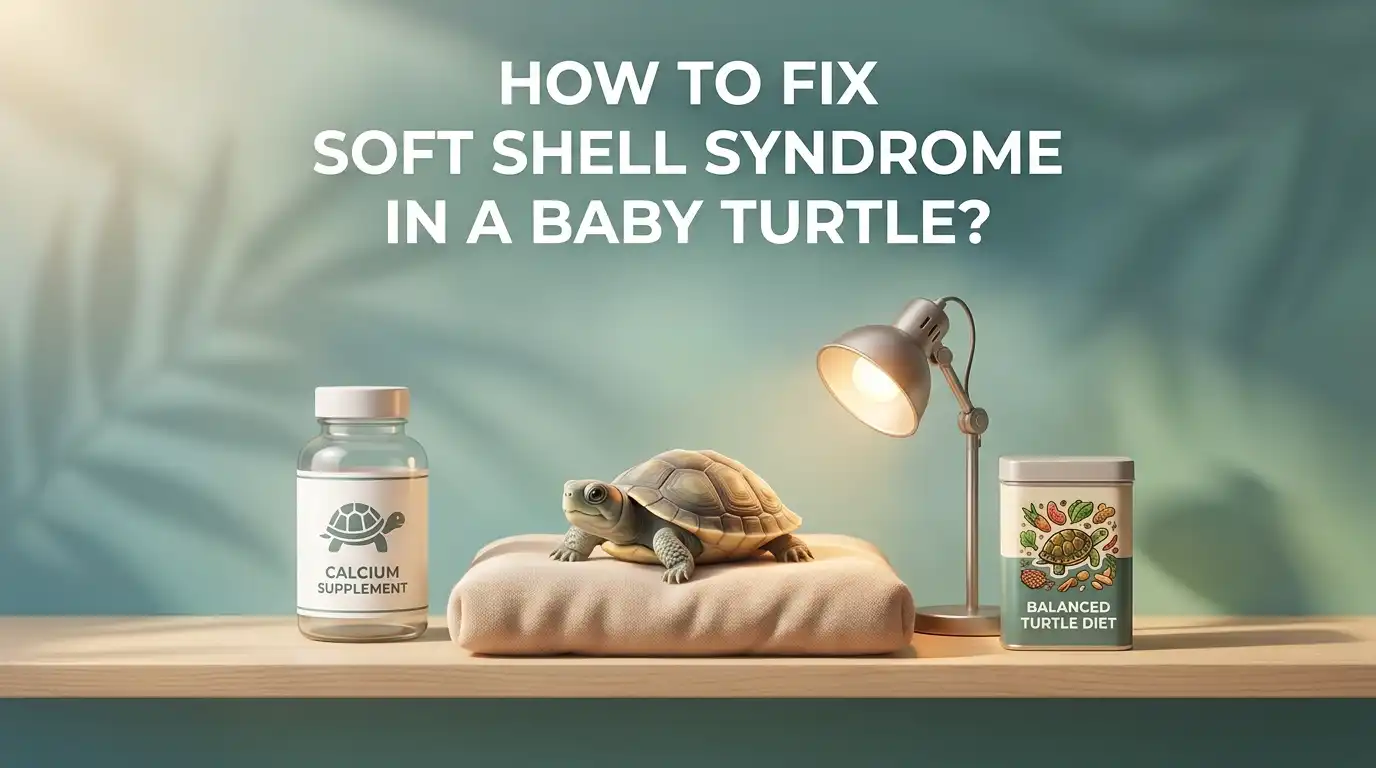
How To Fix Soft Shell Syndrome In A Baby Turtle?
A soft shell in a baby turtle scares many pet owners. You touch the shell and it feels squishy instead of firm. Your heart sinks. You worry your little turtle is in pain.
The good news is simple. You can often fix a soft shell if you catch it early. This condition has clear causes and clear solutions. Most of them start right inside your turtle tank.
This guide walks you through every fix step by step. You will learn what causes the problem. You will learn how to correct diet, lighting, and habitat.
Key Takeaways
- Soft shell syndrome usually means metabolic bone disease. This happens when your turtle lacks calcium, vitamin D3, or proper UVB light. The shell cannot harden without these three things working together.
- Early action saves lives. A mild soft shell often reverses fully with better diet and lighting. A severe, advanced case can become fatal if you wait too long.
- UVB light is not optional. Your turtle needs strong UVB rays to make vitamin D3. Without vitamin D3, the body cannot absorb calcium, even from good food.
- Calcium rich foods and supplements rebuild the shell. Cuttlebone, calcium powder, and dark leafy greens all help your turtle store the minerals it needs.
- A vet is your best friend in serious cases. A reptile vet can give calcium injections and check for other damage that home care cannot fix.
- Prevention beats treatment every time. A correct tank setup stops soft shell from ever returning. Fix the root cause, not just the symptom.
What Soft Shell Syndrome Actually Means
Soft shell syndrome is not a random illness. It is a visible sign of a deeper health problem. In most baby turtles, a soft shell points to metabolic bone disease, often called MBD. This condition happens when the body cannot balance calcium, phosphorus, and vitamin D3.
A healthy turtle shell feels hard like bone. A sick turtle shell feels rubbery, soft, or bendy. You might notice the shell curving oddly or pressing inward. The turtle bones become weak too, not just the shell.
The shell is part of the skeleton. So a soft shell means the whole body lacks minerals. This is why fast action matters so much. Understanding this root cause helps you treat the real problem instead of guessing.
Spotting The Early Warning Signs
Catching soft shell early gives your turtle the best chance. You must watch your baby turtle closely for small changes. The first sign is usually a shell that feels soft when you gently press it. A healthy shell should not give under light pressure.
Other signs appear too. Look for a lumpy or uneven shell surface. Watch for swollen or puffy legs. Notice if your turtle struggles to walk or lift its body. Some turtles stop eating or move less than normal.
A curved or pyramid shaped shell also signals trouble. Weak jaws and trouble biting food are red flags as well. The sooner you spot these signs, the faster you can act. Do not wait for the shell to get worse before you start treatment.
Understanding The Main Causes Behind Soft Shells
You cannot fix a problem without knowing its cause. Soft shell syndrome comes from a few clear sources. The biggest cause is a lack of UVB light. Without UVB, your turtle cannot make vitamin D3 in its skin.
The second cause is poor diet. A diet low in calcium starves the shell of building blocks. Feeding only meat or pellets without variety creates this gap. Too much phosphorus in food blocks calcium too.
Bad husbandry ties it all together. Cold water, dirty tanks, and no basking area all harm shell health. A turtle that cannot dry off and warm up cannot process nutrients well. Most soft shell cases come from a mix of these three problems, not just one.
Step One: Get A Reptile Vet Involved
Home care helps a lot, but a vet check comes first for serious cases. A reptile vet can confirm if your turtle has metabolic bone disease or shell rot. These two problems look similar but need different treatment.
A vet can give a calcium gluconate injection to fix low calcium fast. This works quicker than food alone in severe cases. The vet may also give fluids and a vitamin D3 boost. Some cases need a hormone called calcitonin to speed healing.
Pros of a vet visit: fast diagnosis, strong treatment, and expert advice for your exact turtle. Cons: it costs money, and not every area has a reptile vet nearby. Still, for a badly soft shell, a vet visit is often the difference between life and death.
Step Two: Fix The UVB Lighting Immediately
UVB light is the foundation of shell health. Your baby turtle cannot survive long without it. UVB rays let your turtle make vitamin D3, which unlocks calcium absorption. No UVB means no calcium use, even with a perfect diet.
Buy a proper reptile UVB bulb rated for turtles. A 5.0 or 10.0 UVB tube works well for most aquatic turtles. Place the bulb about 6 to 12 inches above the basking spot. Do not put glass or plastic between the bulb and turtle, since these block UVB.
Replace the bulb every six to twelve months. UVB output fades long before the light stops glowing. Pros of good UVB: natural vitamin D3 production and steady shell growth. Cons: bulbs cost money and need regular replacement. This step alone reverses many mild soft shell cases.
Step Three: Add A Proper Basking Area
Turtles need to leave the water and warm up. A dry basking area makes this possible. Your baby turtle must fully dry its shell every day. This drying stops bacteria and helps the shell stay firm.
Set up a flat, sturdy platform above the waterline. Place your heat lamp and UVB lamp over this spot. Keep the basking surface warm, around 88 to 95 degrees Fahrenheit. The water should stay cooler, around 75 to 80 degrees.
A warm basking spot boosts digestion and calcium use. A turtle that basks well processes nutrients better. Pros: it dries the shell, aids healing, and mimics nature. Cons: it takes tank space and needs the right heat balance. A good basking area supports every other treatment you try.
Step Four: Overhaul Your Turtle’s Diet
Food gives your turtle the raw material to rebuild its shell. A poor diet is a common cause of soft shell. You must feed a mix of protein, greens, and calcium rich foods. Variety keeps the calcium and phosphorus balance correct.
Offer dark leafy greens like collard greens, dandelion greens, and mustard greens. Add small feeder fish, which bring calcium through their bones. Use a quality commercial turtle pellet as the base of the diet. Avoid feeding too much lean meat, since it lacks calcium.
Cut back on foods high in phosphorus, which blocks calcium uptake. Feed baby turtles once a day in small portions. Pros of a varied diet: natural nutrients and steady shell repair. Cons: it takes more effort and shopping than a single pellet. Good food powers the whole recovery.
Step Five: Use Calcium Supplements The Right Way
Diet alone may not deliver enough calcium during recovery. Supplements fill the gap fast. Cuttlebone is one of the easiest calcium sources for turtles. You float a piece in the tank, and your turtle bites it when needed.
You can also dust food with a reptile calcium powder. Choose a powder without phosphorus for the best effect.
Some owners crush plain calcium tablets and mix them into food under vet advice. Offer cuttlebone once or twice a week, or keep a piece available all the time.
Do not overdo supplements, since too much can cause other issues. Balance is the goal, not excess. Pros: quick calcium boost and simple to use.
Cons: some turtles ignore cuttlebone, and overdosing powder can harm them. Used correctly, supplements speed shell hardening a lot.
Step Six: Improve Water Quality And Tank Hygiene
Dirty water damages a weak shell fast. A soft shell is more open to infection. Clean water protects your turtle while its shell heals. Bacteria in dirty tanks can turn a soft shell into shell rot.
Install a strong filter rated for more than your tank size. Change part of the water every week to keep it fresh. Test the water for ammonia and nitrites, and keep both near zero. Remove leftover food quickly so it does not rot.
A clean tank lowers the risk of a second illness during recovery. Your turtle can focus its energy on shell repair, not fighting germs. Pros: fewer infections and a healthier turtle overall. Cons: filters and cleaning take time and money. Never skip this step while treating a soft shell.
Step Seven: Separate Soft Shell From Shell Rot
Soft shell and shell rot look alike but are different problems. Mixing them up leads to wrong treatment. Soft shell comes from lacking calcium and vitamin D3. Shell rot comes from bacteria or fungus attacking the shell.
Shell rot often shows pits, foul smells, discharge, or flaking patches. Soft shell shows a bendy, rubbery texture across the whole shell. You can have both problems at once, which makes things tricky. A vet can tell them apart with a close look.
Shell rot needs cleaning, antiseptics, and sometimes topical antibiotics. Soft shell needs calcium, UVB, and diet fixes. Pros of correct diagnosis: you treat the real issue and save time. Cons: telling them apart at home is hard without experience. When in doubt, ask a reptile vet to check.
Tracking Recovery And Knowing What Progress Looks Like
Recovery takes patience, not days. You must track small changes over weeks. A hardening shell is the clearest sign your treatment is working. Gently test the shell every week or two to feel for firmness.
Watch for better appetite and more active behavior. A turtle that basks more and moves easily is healing well. Keep a simple log of diet, lighting, and shell feel. This log helps you and your vet see the trend.
Mild cases can improve in a few weeks with steady care. Severe cases may take months and may leave some permanent shell shape changes. Pros of tracking: you catch setbacks early and stay motivated. Cons: it needs consistency and patience. Slow, steady progress is normal, so do not lose hope.
Preventing Soft Shell From Coming Back
Fixing the shell is only half the job. Stopping it from returning is the other half. A correct tank setup prevents almost every case of soft shell. Once you build good habits, your turtle stays strong.
Keep UVB and heat lamps running on a daily schedule. Feed a varied, calcium rich diet every single day. Offer cuttlebone as a steady calcium backup. Replace UVB bulbs on time before they weaken.
Regular health checks catch problems before they grow serious. Feel the shell often so you notice any softening right away. Pros of prevention: a healthy turtle and lower vet bills over time. Cons: it takes daily attention and steady effort. A little care each day keeps your baby turtle thriving for years.
When To Worry And Seek Emergency Help
Some situations cannot wait for slow home treatment. You must know these warning signs. A turtle that stops eating completely needs urgent vet care. Refusing food during illness drains the strength it needs to heal.
Watch for swelling, bleeding, or a strong bad smell from the shell. Trouble breathing, lethargy, or an inability to move are serious. A shell that keeps getting softer despite your care also signals danger. These signs mean the disease may be advanced.
Do not delay if your turtle seems weak or in pain. Advanced metabolic bone disease can turn fatal quickly in babies. Pros of fast action: you give your turtle its best survival chance. Cons: emergency vet visits cost more and cause stress. Trust your gut, since acting early is always safer than waiting.
Frequently Asked Questions
How long does it take to fix a soft shell in a baby turtle?
Mild cases often improve within a few weeks with better UVB, diet, and calcium. Severe cases can take several months and may leave lasting shell shape changes. Consistent daily care speeds up the process.
Can a soft turtle shell become hard again?
Yes, in many cases the shell hardens again with proper treatment. You need to fix calcium levels, UVB light, and diet together. Early cases have the best chance of full recovery.
Is soft shell syndrome painful for my turtle?
Soft shell and metabolic bone disease can cause weakness and discomfort. Bone and shell softening makes movement harder and may cause pain. Prompt treatment reduces suffering and improves comfort.
Can I fix a soft shell without a vet?
Mild cases sometimes improve with home fixes like UVB, diet, and calcium. Serious cases need a vet for calcium injections and proper diagnosis. A vet also rules out shell rot and other damage.
What foods help harden a turtle’s shell fastest?
Dark leafy greens, feeder fish with bones, and quality turtle pellets all help. Cuttlebone and calcium powder add extra minerals for faster shell repair. Avoid foods high in phosphorus that block calcium.
How often should baby turtles get calcium?
Offer cuttlebone once or twice a week, or leave a piece in the tank always. Dust food with calcium powder as directed during recovery. Do not give too much, since balance matters more than excess.

Hi, I’m Liza — pet lover, lifelong animal enthusiast, and the voice behind Liza4Pets. I created this space to share honest, practical pet care advice for fellow pet parents who want the best for their furry (and not-so-furry) companions.