
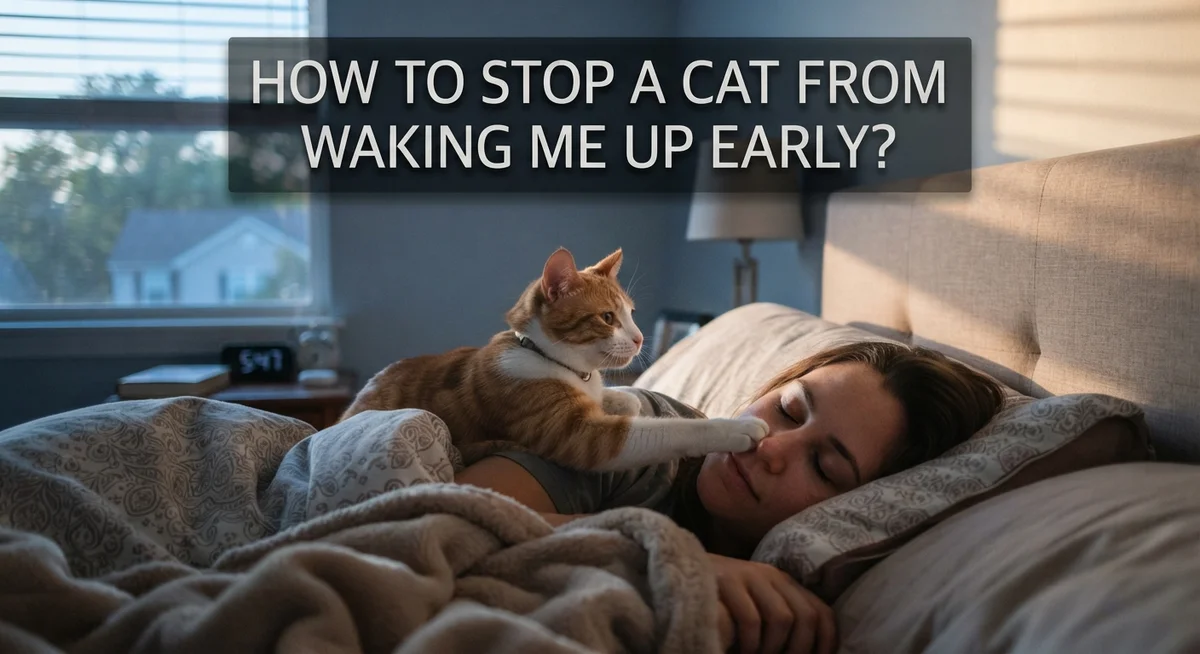
How To Stop A Cat From Waking You Up Early?
Does your cat wake you up at 5 AM every single day? You are not alone. Many cat owners deal with early morning meowing, door pawing, and lost sleep.
Cats are not actually nocturnal. That is a common myth. Your cat wakes you up because it wants something. It could be food, playtime, or simple attention.
The good news is you can fix this. This article covers simple, proven strategies to stop early wake up calls. You will learn why cats wake early in the first place.
In a Nutshell
- Play with your cat before bed. A tired cat sleeps longer and wakes up later.
- Feed your cat a small meal close to bedtime. A full belly often leads to a long nap.
- Set up enrichment activities like puzzle feeders. These keep your cat busy during early morning hours.
- Close your bedroom door at night. This creates a simple barrier your cat cannot cross.
- Never respond to early meowing or pawing. Getting up only teaches your cat that noise works.
- Build a consistent evening routine. Cats thrive on repeated patterns, and this signals bedtime clearly.
- Look for the root cause behind the waking. Hunger, boredom, and excess energy all play a part.
Why Cats Wake You Up Early: Understanding the Root Causes
Your cat wakes you up early for specific reasons. Understanding these causes helps you fix the problem at its source.
Hunger is one of the top reasons cats meow and paw at your door before dawn. Cats have fast metabolisms and their stomachs empty quickly. Your cat may genuinely feel hungry after sleeping through the night. This is especially true for younger cats and active breeds.
Excess energy drives many early morning wake ups. Cats are crepuscular animals, meaning they naturally become active during dawn and dusk. If your cat hasn’t burned off energy during the day, she will do it at 4 AM in your bedroom. This is normal cat behavior, not a sign of a problem.
Boredom and loneliness also trigger early waking. Cats need mental and physical stimulation throughout the day. Without enough activity, they seek your attention at odd hours. Your cat may meow or paw because she is lonely or wants interaction.
Learned behavior is another critical cause. If you have responded to your cat’s early morning cries by getting up, feeding her, or playing with her, you have taught her that waking you works. Cats repeat actions that get results. This becomes a hard habit to break.
Medical issues sometimes cause early waking too. Hyperthyroidism, pain, or urinary tract infections can make cats restless and vocal. If your cat’s behavior changed suddenly, a vet visit is wise.
Environmental factors matter as well. Outdoor noises, light coming through windows, or temperature changes can wake your cat early. She then wakes you because she wants company or attention.
Identifying which cause applies to your cat lets you choose the right solution.
Debunking the Nocturnal Cat Myth
Many cat owners believe their pets are nocturnal animals. This idea is actually false. Cats are not truly nocturnal creatures. Instead, they are crepuscular, which means they are most active during dawn and dusk hours.
Understanding this difference changes everything about solving your early morning problem. Your cat wakes you at 4:30 or 5:00 AM because this is their natural active time. This is not a behavior problem. This is biology. Your cat is simply following its instincts.
Nocturnal animals sleep during the day and hunt at night. Cats do not follow this pattern. They hunt when prey is most active, which happens in low light conditions. Dawn and dusk are when mice and birds move around the most.
Your cat is not trying to ruin your sleep schedule. Your cat is responding to millions of years of evolution. When you understand this, you stop blaming your pet for waking you. Instead, you can work with your cat’s natural rhythms.
The key insight here is simple: you cannot fight your cat’s biology. You can only redirect it. This means giving your cat appropriate outlets during these active hours. You provide activities and stimulation when your cat naturally wants to be awake.
Many owners make the mistake of trying to force their cats into human sleep schedules. This rarely works. Your cat will still wake up at dawn. The question becomes how to manage those waking hours.
Once you accept that cats are crepuscular, solutions become clear. You can tire your cat out before your own bedtime. You can provide enrichment that keeps your cat occupied during early morning hours. You can close your bedroom door to create a physical barrier. These strategies work because they respect your cat’s nature instead of fighting against it.
Building an Evening Routine That Tires Your Cat Out
Your evening routine is the foundation for better sleep. A tired cat sleeps through the night instead of waking you at dawn. Start by playing with your cat 1 to 2 hours before bedtime.
Use interactive toys that get your cat moving and jumping. Wand toys, balls, and laser pointers work well. Play until your cat shows signs of fatigue, like slower movements or loss of interest. This burns off excess energy that would otherwise keep them alert at 4:30 AM.
Feed your cat a small meal right before you go to bed. A satisfied cat is less likely to wake you demanding food. Combine this with playtime for maximum effect. The combination of exercise plus a full belly creates the perfect conditions for sleep.
Add enrichment activities that occupy your cat through the night. Puzzle feeders, treat-dispensing toys, and window perches give your cat something to do while you sleep. These activities replace the stimulation your cat would normally seek from you.
Set up these activities in a room away from your bedroom. Your cat stays entertained without disturbing your rest. Rotate toys every few days to keep things interesting and prevent boredom from returning.
Timing matters here. Start your evening routine at the same time each night. Consistency trains your cat’s body clock. Your cat learns that evening means playtime, then dinner, then quiet activities, then sleep.
This routine takes 30 to 45 minutes total. Do this every single night without skipping. Most cats respond within 1 to 2 weeks. Your cat’s internal schedule shifts toward yours naturally when you follow this system.
Adjusting Feeding Schedules to Curb Dawn Demands
Your cat’s feeding schedule directly impacts when they wake you up. Cats have natural hunger cycles, and adjusting meal timing can eliminate dawn demands before they start.
The key is feeding your cat at the right time. Most cats eat 2 to 3 times daily. If you feed them in the morning after they wake you up, you’re actually rewarding the behavior. Your cat learns that meowing and pawing gets food delivered.
Instead, shift your feeding schedule earlier. Give your cat their largest meal about 1 to 2 hours before your bedtime. A full, satisfied stomach makes your cat less likely to demand breakfast at 4:30 AM. This meal should contain enough protein and calories to keep them satisfied through the night.
Consider splitting meals strategically. You might feed your cat their dinner at 6 PM and a small snack at 9 PM, right before you sleep. This pattern mimics natural hunting and eating cycles without syncing to your wake up time.
Monitor portion sizes carefully. Your cat shouldn’t feel hungry, but shouldn’t overeat either. Work with what works for your specific cat’s metabolism and age.
The timing adjustment works best when combined with other strategies. Add overnight enrichment activities in a separate room so your cat stays occupied after eating. This prevents boredom from triggering early morning wake up calls.
Consistency matters tremendously here. Feed your cat at the exact same times every single day. Cats thrive on predictable schedules. Once your cat’s body adjusts to the new feeding rhythm, early morning demands naturally decrease.
This feeding adjustment alone won’t solve everything, but it removes hunger as a reason for those 5 AM wake ups.
Overnight Enrichment: Keeping Your Cat Occupied While You Sleep
Overnight enrichment keeps your cat busy while you sleep. This strategy works because it gives your cat something to do instead of waking you up.
Start by setting up activities in a room away from your bedroom. Your cat needs access to these items throughout the night. This physical separation also helps reduce noise and disturbances.
Interactive toys work well for overnight enrichment. Puzzle feeders make your cat work for treats. Your cat spends time solving the puzzle instead of meowing at your door. Rotate different toys every few nights so your cat stays interested.
Foraging activities tap into your cat’s natural hunting instincts. Hide small treats around the room before bed. Your cat will search and hunt during the early morning hours. This mimics what cats would do in nature.
Consider leaving out a few toys your cat can bat around safely. Balls, toy mice, and crinkly toys keep cats entertained. Make sure these toys are safe to play with unsupervised.
Automatic toys provide hours of entertainment. Some toys move on timers or respond to your cat’s touch. These keep your cat engaged without your involvement.
Window perches offer free enrichment too. Cats love watching birds and outdoor activity. Place a perch near a window in your cat’s overnight space. Early morning is peak bird activity time.
Combine overnight enrichment with your evening routine and feeding schedule. This three part approach addresses the root problem. Your cat gets mental and physical stimulation all night long. The result is a tired, content cat that lets you sleep.
Using Barriers and Environmental Changes to Block Early Wake-Ups
Your bedroom door is your first line of defense against early morning interruptions. A closed door creates a physical barrier that stops your cat from accessing you during those sensitive pre dawn hours. This simple change prevents your cat from jumping on the bed, meowing in your face, or pawing at your body at 4:30 AM.
Keep the door closed consistently every single night. Your cat learns quickly when rules stay the same. If you leave it open sometimes and closed other times, your cat gets confused and tries harder to wake you on open door nights.
You might worry your cat will scratch at the door or meow loudly outside. This behavior will happen initially, but do not open the door to stop it. Opening the door rewards the noise and teaches your cat that persistence works. The meowing and scratching will fade within one to two weeks if you stay firm.
Make sure your cat has everything needed outside your bedroom. Set up a litter box, water bowl, and food bowl in another area. Leave some toys and a comfortable sleeping spot available too. Your cat should never feel trapped or desperate.
Consider using a white noise machine or fan in your bedroom. These devices mask the sound of your cat’s activities outside the door. You sleep better when you cannot hear every scratch and meow.
Environmental changes work best when combined with evening routines and feeding adjustments. The door alone might not solve everything, but it removes the temptation for your cat to disturb you directly. This barrier gives your other strategies time to take effect while protecting your sleep quality immediately.
Common Mistakes That Reinforce Early Waking Behavior
When your cat wakes you at dawn, your reaction matters more than you realize. Responding to early morning meowing actually teaches your cat that waking you works. Every time you get up, pet your cat, or give attention, you reinforce the behavior. Your cat learns a simple lesson: make noise, get results.
Many people accidentally reward their cats by opening the bedroom door. Your cat meows, and you let them in for cuddles. This feels like you’re being kind, but it’s actually training your cat to keep meowing. The behavior gets stronger each time you respond.
Feeding your cat when they cry also creates problems. Your cat learns that persistent meowing leads to breakfast. Even if you think you’re just being practical, you’re actually teaching them that early morning noise gets them food.
The biggest mistake is inconsistency. One day you ignore the meowing, and the next day you don’t. Your cat becomes confused about the rules. Confused cats try harder to get your attention because sometimes it works.
Some people try to tire out their cats during the day but then stay up late playing with them. This keeps your cat’s energy high and their sleep schedule unpredictable. Your cat stays alert at night instead of resting.
Punishment also backfires. Yelling at your cat or spraying water teaches them to fear you, not to stop the behavior. Your cat might wake you up even more because they’re anxious.
The solution requires patience and consistency. Stop responding to early morning demands completely. Ignore the meowing, the pawing, and the crying. Your cat will eventually stop trying this strategy when they learn it never works.
Troubleshooting: What to Do When Nothing Seems to Work
When you’ve tried everything and your cat still wakes you at dawn, the problem often runs deeper than simple hunger or boredom. Your cat may have an underlying medical issue. Cats sometimes wake early due to pain, hyperthyroidism, or cognitive dysfunction. Schedule a vet visit to rule out health problems before assuming behavioral issues.
Consistency is your biggest challenge at this stage. You might follow your evening routine perfectly for five days, then slip back into old habits on day six. Your cat remembers every exception. If you respond to meowing once after ignoring it for weeks, you’ve reset your progress completely. This sends confusing signals that make early waking worse, not better.
Consider whether you’re actually implementing all strategies together. Playing with your cat, feeding them, closing the door, and providing overnight enrichment work best as a complete package. Doing only one or two methods rarely produces results. Your cat needs the full approach to understand that early morning is not playtime or feeding time.
The timeline matters too. Behavior change takes two to four weeks minimum. Your cat has woken you early for months or years. Expecting results in three days sets you up for frustration. Many people give up right when the strategy would have worked.
If nothing changes after four weeks of consistent effort and a vet has cleared medical issues, consult a cat behaviorist. Some cats have anxiety or other behavioral conditions requiring professional guidance. A specialist can assess your specific situation and recommend targeted solutions beyond standard approaches.
Final Thoughts
Stopping early morning wake ups takes time and patience. Your cat learned this habit over weeks or months. It won’t disappear overnight.
The good news is simple. Cats respond well to consistent routines. Small changes add up fast when you stick with them.
Start with the basics first. Feed your cat before bed. Play with them until they feel tired. These two steps solve many problems alone.
Add enrichment activities for overnight hours. Puzzle feeders and treat balls keep your cat busy. This fills the gap when you’re asleep.
Close your bedroom door every night. This creates a clear boundary your cat understands. Never make exceptions, even on hard mornings.
Watch your own reactions closely. Getting up to feed or comfort your cat rewards the behavior. This mistake keeps the cycle going.
Give your plan real time to work. Most cats need two to four weeks to change habits. Don’t quit after a few rough nights.
Some cats need extra help beyond routine changes. Medical issues sometimes cause unusual sleep patterns. A vet visit rules out health problems first.
If basic strategies don’t work, look deeper. Anxiety, boredom, or stress might drive the waking behavior. A cat behaviorist can spot issues you might miss.
Remember why this matters. Better sleep helps you function well each day. Your cat benefits too from healthy routines and mental stimulation.
Stay calm through setbacks. Progress isn’t always straight line. Some nights will be harder than others.
With patience and the right approach, most cats learn new patterns. Your mornings can feel peaceful again soon.
Frequently Asked Questions
Why does my cat wake me up so early in the morning?
Your cat wakes you early for specific reasons. Hunger is the most common cause. Cats have small stomachs and need food multiple times daily. Your cat may also want attention or playtime. Boredom during nighttime hours drives many cats to wake their owners. Some cats simply have natural energy surges at dawn. Understanding the root cause helps you fix the problem faster.
Is my cat nocturnal?
No, this is a common myth. Cats are actually crepuscular, meaning they’re most active during dawn and dusk hours. This is why your cat wakes you at 4:30 or 5:00 AM. Your cat isn’t broken. Your cat follows natural instincts. However, you can shift your cat’s activity patterns through consistent routines and proper evening enrichment.
What’s the fastest way to stop early morning meowing?
Stop responding to the meowing. This is critical. Every time you get up, pet your cat, or open the door, you reward the behavior. Your cat learns that meowing works. Instead, keep your bedroom door closed and ignore all noise. Combine this with a solid evening routine. Feed your cat before bed. Play with your cat to tire them out. Provide overnight activities like puzzle feeders or toys. These steps work together, not separately.
How long will it take to see results?
Expect two to four weeks minimum. Behavior change takes time. Stay consistent every single night. One night of giving in undoes days of progress. Your cat tests boundaries repeatedly before accepting new rules. Mark improvements on a calendar. Small changes appear before major ones do.

Hi, I’m Liza — pet lover, lifelong animal enthusiast, and the voice behind Liza4Pets. I created this space to share honest, practical pet care advice for fellow pet parents who want the best for their furry (and not-so-furry) companions.