How To Fix A Cat Scratching The Couch Effectively
Does your cat treat your couch like a giant scratching post? You are not alone.
Many cat owners face this exact problem. Your furniture gets shredded, and you feel frustrated every time you see new claw marks.
Here is the good news. Scratching is a natural behavior for cats. They do it to mark territory, stretch their muscles, and keep their claws healthy.
The real goal is not to stop scratching completely. Instead, you need to redirect this instinct toward better options.
This article will show you simple, effective ways to protect your couch. You will learn how to choose the right scratching posts and place them in smart spots.
We will also cover deterrent methods, like double sided tape, that keep cats away from furniture. You will discover how positive reinforcement encourages your cat to use posts instead of your sofa.
If you have multiple cats, we have tips for that too. And if damage has already happened, we will explain repair options to fix your couch.
By the end, you will have a complete plan to stop the scratching and save your furniture.
In a Nutshell
Cats scratch for natural reasons. Your goal is to guide this behavior, not stop it completely.
Here is a quick summary of the best ways to protect your couch:
- Offer variety. Give your cat different scratching surfaces. Try cardboard, sisal, carpet, and wood options.
- Make posts more appealing. Place scratching posts near the couch. They should be easier to reach than your furniture.
- Use deterrents wisely. Double sided tape on furniture edges works well. Cats dislike the sticky feeling on their paws.
- Reward good behavior. Praise or pet your cat when they use a scratching post. Positive reinforcement builds lasting habits.
- Keep things clean. A tidy space with less cat hair can lower scratching urges. Clean surfaces feel less inviting to claws.
- Add cat trees. These give cats a fun outlet for climbing and scratching. They work great in multi-cat homes too.
Small daily habits add up fast. Stick with these steps and your couch will thank you.
Why Cats Scratch Furniture in the First Place
Cats scratch furniture because scratching is a natural instinct they cannot ignore. This behavior serves several important purposes for your cat’s physical and mental health.
First, scratching helps cats maintain their claws. As cats scratch, they shed the outer layer of their claws. This keeps their nails sharp and healthy. Without this action, dead claw sheaths build up and cause discomfort.
Second, scratching marks territory. Cats have scent glands in their paws. When they scratch, they leave both visual marks and scent signals that say “this is my space.” This behavior is especially common in multi cat households where cats need to establish their boundaries.
Third, scratching provides a physical workout. Cats stretch their entire body when they scratch. This keeps their muscles strong and flexible. It also helps them release tension and stress.
Fourth, scratching satisfies emotional needs. Cats scratch when they feel anxious, excited, or bored. It acts as a calming activity. Think of it like how humans might pace or fidget when stressed.
Your couch becomes a target because it offers the perfect scratching surface. Fabric is easy on their claws. The couch is often located in central areas where your cat spends time. Plus, your scent is already on the furniture, which makes it even more appealing to scratch.
Understanding these reasons is crucial. You cannot stop your cat from scratching entirely. Instead, you need to redirect this behavior to appropriate surfaces. Your job is to make scratching posts more attractive than your couch. This approach respects your cat’s natural needs while protecting your furniture.
Choosing the Right Scratching Posts and Surfaces
Scratching posts come in many forms, and your cat may prefer one type over another. The key is offering variety so your cat finds something they love more than your couch.
Cardboard scratching surfaces are affordable and satisfy many cats. They allow cats to shred and dig, which feels natural to them. Cats often enjoy the texture and the satisfying feeling of pulling cardboard apart.
Carpet covered posts appeal to cats who like a familiar texture. These posts mimic the couch material itself, so they redirect your cat’s scratching instinct away from furniture. Make sure the carpet is tightly secured so it does not unravel.
Sisal rope wrapped around posts offers a different texture that many cats find irresistible. Sisal is rough and durable, perfect for cats who scratch hard. The rope texture engages their claws in a way that feels rewarding.
Wood scratching posts work well for cats who like to dig into softer materials. Natural wood grain appeals to many cats and feels authentic to their instincts.
Upholstery covered posts might seem counterintuitive, but they can actually work. They give your cat a designated spot to scratch fabric without damaging your real furniture.
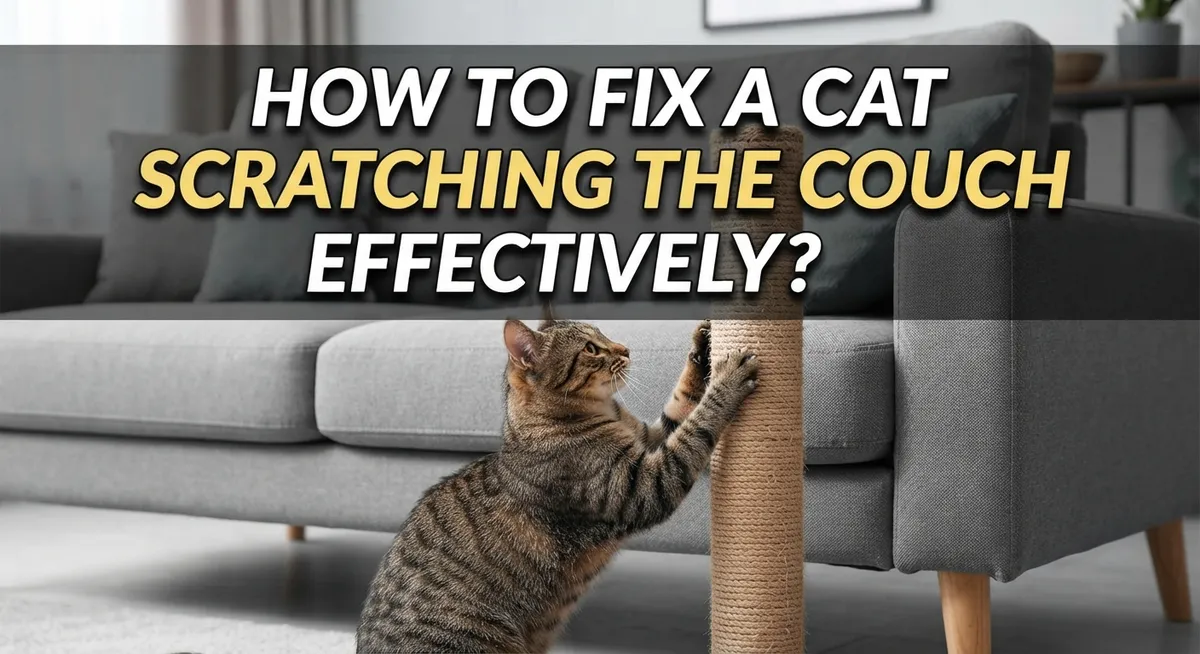
Position these posts strategically near the couch or in areas where your cat already scratches. Cats are more likely to use posts that are convenient and visible. Place multiple posts around your home, especially in rooms where your cat spends the most time.
The height matters too. Cats like to stretch fully when they scratch, so taller posts work better than short ones. Watch your cat’s scratching habits and choose posts that match their preferred angle and intensity. Your cat’s individual preferences will guide which surfaces work best for your household.
Step-by-Step: Redirecting Your Cat Away From the Couch
Start by identifying where your cat scratches most on the couch. Watch your cat’s behavior for a few days. You will notice patterns about timing and location. This information helps you place solutions exactly where you need them.
Next, position scratching posts within three feet of the couch. Your cat is more likely to use a nearby post than one across the room. Place posts at angles that match how your cat currently scratches. If your cat scratches vertically, use tall posts. If your cat scratches horizontally, use low surfaces.
Apply double sided tape to the couch arms and edges. Cats dislike the sticky feeling on their paws. They will avoid taped areas naturally. Replace the tape every two weeks or when it loses stickiness.
Cover your couch with blankets when you cannot supervise your cat. This removes the appealing texture temporarily. Wash the blankets regularly to remove cat hair and scent.
Reward your cat immediately when they use a scratching post instead of furniture. Use treats, praise, or gentle petting within seconds of the behavior. Cats connect rewards to actions only when timing is immediate.
Clean your couch thoroughly with enzymatic cleaners. Cat scratching leaves scent marks that attract repeated scratching. Removing these scents reduces the urge to scratch the same spot.
Create a routine where you encourage post usage several times daily. Gently guide your cat’s paws onto the post. Let them scratch naturally while you praise them. Consistency matters more than intensity.
Monitor progress weekly. Some cats respond within days. Others need two to three weeks. Stay patient and adjust your strategy based on what works for your individual cat.
Using Deterrents Like Tape and Covers Correctly
Double sided tape works because cats hate the sticky sensation on their paws. When you apply it to couch edges and armrests, your cat learns that scratching there feels unpleasant. This discourages them without causing harm.
Start by cleaning your couch completely. Remove all cat hair and debris first. Cats are more likely to scratch dirty areas, so a clean surface reduces their urge to dig in.
Apply the tape in horizontal strips along the edges where your cat scratches most. Cover the armrests, corners, and any exposed fabric your cat targets. Press the tape firmly so it stays in place during normal use.
Blanket covers offer another simple solution. Drape a thick blanket or furniture cover over your couch when you cannot watch your cat. This protects the fabric underneath and creates a less appealing scratching surface. Secure the blanket so it does not slip off easily.
Combine both methods for better results. Use tape on exposed areas and covers when you leave home. This two layer approach works faster than using just one deterrent.
Replace tape every two to three weeks. Over time, tape loses its stickiness and becomes less effective. Fresh tape maintains the deterrent effect.
Important: Never punish your cat for scratching. Punishment creates fear and stress. Instead, focus on making the couch unappealing while making scratching posts more attractive.
Keep the area around your couch clean daily. Sweep up loose hair and debris. A tidy space naturally discourages scratching behavior.
These deterrents work best when combined with positive reinforcement. Praise your cat when they use scratching posts instead. This teaches them where scratching is welcome and encouraged.
Training Tips: Reinforcing Good Scratching Habits
Reinforcing good scratching habits works better than fighting your cat’s natural instincts. Your goal is to make scratching posts more rewarding than your couch.
Start by praising your cat enthusiastically when they use a scratching post. Cats respond well to verbal praise and gentle petting. Give treats immediately after they scratch in the right spot. This creates a positive connection between the post and rewards.
Timing matters greatly here. Catch your cat in the act of using the post correctly. Reward them within seconds so they understand exactly what behavior you’re praising. Delayed rewards confuse cats and weaken the training effect.
Make scratching posts more accessible than furniture. Position them in high traffic areas where your cat naturally spends time. Place posts near windows, sleeping areas, and the couch itself. Accessibility encourages your cat to choose the post over the sofa.
Vary your reward methods to keep things interesting. Sometimes offer treats, sometimes offer playtime, and sometimes offer petting. This unpredictability keeps your cat engaged and motivated.
Establish a daily routine where you actively encourage post usage. Gently guide your cat’s paws toward the post several times each day. Make this a fun bonding activity rather than a forced exercise.
In multi cat households, provide multiple posts of different materials. Each cat may prefer different textures and styles. Some cats like vertical scratching while others prefer horizontal surfaces. Offering variety ensures every cat finds an acceptable outlet.
Track your progress weekly. Note how often your cat uses posts versus the couch. Most cats show improvement within two to three weeks of consistent positive reinforcement. Stay patient and celebrate small victories along the way.
Solving Scratching Problems in Multi-Cat Households
Multi-cat households present unique scratching challenges. When you have several cats, one scratching solution simply won’t work. Each cat has different preferences for scratching surfaces and locations.
Start by offering variety in scratching materials. Some cats prefer cardboard, while others like carpet, wood, or sisal rope. Provide at least two or three different types in your home. This approach increases the chances that each cat finds something they love.
The key rule is simple: you need multiple scratching posts. One post per cat is the minimum standard. In reality, having one extra post helps prevent competition and territorial issues. Space these posts throughout your home, not just near the couch.
Keep your couch area scrupulously clean. Cat hair and dander on furniture actually encourage more scratching. When you remove these scents regularly, cats feel less drawn to that spot. Vacuum and wipe down your couch several times weekly.
Make scratching posts more appealing than your furniture. Position them in high-traffic areas where your cats naturally gather. Cats are more likely to use posts that are convenient and visible.
Watch for individual scratching patterns. Some cats scratch in the morning, others in the evening. When you notice these habits, that’s your opportunity to redirect them to a post and reward the behavior.
Never compete with your cats’ instincts. Instead, channel those instincts toward appropriate surfaces. Each cat in your household will respond better to this approach than to punishment or restriction.
Consistency matters most in multi-cat environments. Apply deterrents uniformly, reward good behavior every single time you see it, and maintain clean furniture surfaces. Your patience now prevents years of damaged couches.
Common Mistakes That Undermine Your Efforts
Many cat owners make critical errors that actually make scratching worse instead of better. Understanding these mistakes helps you succeed faster.
The first major mistake is providing only one scratching surface type. Your cat may prefer cardboard over carpet, or sisal over wood. If you only offer one option and it’s not their preference, they’ll ignore it and return to your couch. Different cats have different tastes, so variety matters.
Another common error is failing to reward when your cat uses posts correctly. Your cat doesn’t understand that the post is “good” unless you show enthusiasm. When you see them scratching the post, praise them immediately. This connection between action and reward teaches them faster than any deterrent can.
Many people also neglect environmental management around the couch. A clean couch actually discourages scratching. Cat hair and dander buildup on furniture triggers more scratching behavior. Vacuum regularly and wipe down surfaces to reduce this urge.
Some owners make posts too hard to access. Your scratching posts should be easier to reach than your furniture. If the post is in a corner of a spare room and your couch is in the main living area, your cat will choose convenience.
Timing is another overlooked factor. Consistency matters more than intensity. One strong correction won’t work, but daily positive reinforcement does. Your cat needs repeated, gentle guidance toward correct behavior.
Finally, people sometimes expect instant results. Behavior change takes weeks, not days. Track your progress weekly and adjust your approach if needed. Patience combined with these corrected strategies produces real success.
Repairing Existing Couch Damage
Your couch already has damage from scratching. The good news is you can repair it yourself without professional help.
Assess the damage first. Look closely at the scratches. Are they surface level or deep? Do they go through the fabric or leather? Minor scratches look different from major gouges. This determines which repair method works best.
For fabric couches, several DIY options exist. Small tears can be stitched closed using a needle and thread that matches your fabric color. Apply fabric glue around the edges first. Let it dry completely before stitching. For larger damaged areas, fabric patch kits work well. These kits include adhesive backing that bonds the patch to your couch permanently.
Leather couches need different treatment. Leather repair kits contain filler and color compound. Clean the scratched area with a soft cloth first. Apply the filler into deep scratches using a small applicator. Once dry, sand it smooth with fine grit sandpaper. Then apply the color compound to match your leather shade. Multiple thin coats work better than one thick coat.
Cover visible damage temporarily while repairs cure. Use throw blankets or decorative pillows to hide problem areas. This also prevents your cat from scratching the exact same spot again.
After repairs finish, focus on prevention. Apply double sided tape to the repaired areas. Cats dislike the sticky feeling and will avoid those spots. Position scratching posts nearby as alternatives.
Keep the couch area clean and free of cat hair. Hair buildup actually encourages more scratching behavior. Vacuum weekly around your couch.
Combine repairs with prevention strategies for lasting results. One approach alone rarely stops the problem completely.
Final Thoughts
Fixing couch scratching takes patience and consistency. Your cat is not being naughty. It is simply following a natural instinct.
The good news is you can redirect this behavior successfully. Most cats respond well when given better options than the couch.
Consistency matters more than perfection. You might see progress one week and setbacks the next. This is normal for most cats.
Keep offering scratching posts in different materials. Keep rewarding good behavior every single time you see it. Small efforts add up over time.
Remember that every cat is different. What works for your friend’s cat might not work for yours right away. Stay flexible and adjust your approach as needed.
If your couch already has damage, do not panic. Repairs are possible for both fabric and leather surfaces. Many owners fix their furniture successfully at home.
Focus on prevention once repairs are done. This stops new damage from happening again. Your couch deserves protection going forward.
Multi-cat homes need extra attention and more scratching stations. Each cat has unique preferences worth exploring. Give them options and watch what they choose naturally.
Cleanliness plays a bigger role than most people realize. A tidy scratching area reduces urges significantly. This simple step often gets overlooked by owners.
Combining several strategies works better than relying on just one method. Posts, rewards, cleanliness, and deterrents all work together. This creates a complete solution for your home.
Your cat wants to scratch somewhere. Your job is showing them the right place. With time and effort, your couch can stay safe and your cat can stay happy too.
Frequently Asked Questions
Why does my cat scratch the couch in the first place?
Cats scratch furniture because it’s a natural instinct. They mark territory, stretch muscles, and shed old claw sheaths. Your couch smells like your family and feels satisfying to scratch. This behavior is normal and healthy. You cannot stop cats from scratching altogether. Instead, you guide them toward better surfaces.
How many scratching posts do I actually need?
The answer depends on your cat count. One post is rarely enough. Most experts suggest at least two or three posts in different locations. Multi-cat households need even more options. Variety matters too. Offer cardboard, sisal rope, carpet, and wood surfaces. Cats have preferences just like people do. Some prefer vertical posts while others like horizontal scratchers.
Will deterrents like double-sided tape really work?
Double-sided tape can help, but it works best combined with other methods. Cats dislike the sticky feeling on their paws. Apply tape to couch edges and corners where your cat scratches most. However, tape alone will not solve the problem. You must also provide appealing scratching posts nearby. Reward your cat when they use the posts instead.
What’s the fastest way to stop couch scratching?
There is no instant fix, but combining strategies works well. Clean the couch area regularly to remove cat hair. Position scratching posts closer than your furniture. Use deterrent tape on exposed areas. Praise your cat when they scratch posts. Consistency matters more than speed. Most cats respond within two to four weeks when you apply multiple methods together.

Hi, I’m Liza — pet lover, lifelong animal enthusiast, and the voice behind Liza4Pets. I created this space to share honest, practical pet care advice for fellow pet parents who want the best for their furry (and not-so-furry) companions.