
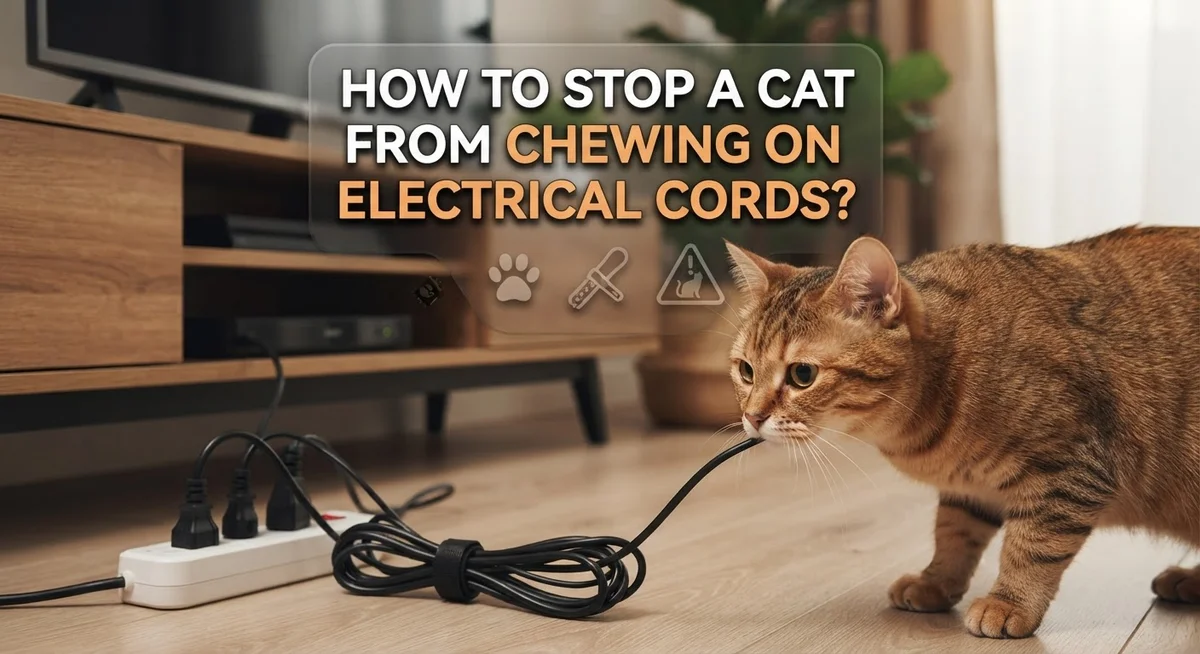
How To Stop A Cat From Chewing On Electrical Cords?
Does your cat treat every cord like a chew toy? You are not alone.
Many cats find electrical cords fun to bite. But this habit can lead to serious dangers. Electric shocks, burns, and even choking are real risks.
The good news? You can fix this problem quickly. Cats chew cords for a few simple reasons. Boredom, teething, and curiosity top the list.
Kittens often chew cords while their teeth grow in. Adult cats may chew cords when they feel bored or understimulated. Some cats simply like the texture or movement of a dangling wire.
In a Nutshell
- Block access first. Move cords behind furniture or unplug items you rarely use. This removes temptation right away.
- Cover exposed wires. Wire loom or PVC tubing makes cords hard to bite through. Cats lose interest fast.
- Add taste deterrents. Bitter sprays or diluted apple vinegar make cords taste awful. Most cats avoid them after one try.
- Give your cat something better to chew. Boredom drives this habit. Toys and playtime redirect that energy.
- Skip risky hacks. Tinfoil might scare cats away, but it can also become a choking hazard. Stick to safer barriers instead.
- Combine methods for best results. Barriers alone or sprays alone often fail. Using both together stops the habit for good.
Why Cats Chew On Electrical Cords
Cats chew electrical cords for several clear reasons. Understanding these causes helps you fix the problem at its source.
Boredom is a major driver. Indoor cats need mental stimulation and physical activity. When they lack both, they turn to cords as entertainment. A bored cat will bite anything within reach, and cords are easy targets.
Teething in kittens causes cord chewing too. Young cats experience sore gums as their adult teeth grow in. Chewing on cool, textured objects like cords provides relief. This behavior is natural but dangerous.
Curiosity plays a role as well. Cats investigate their environment by touching and tasting things. Cords move, make sounds, and feel different from other household items. This makes them irresistible to curious felines.
Texture and sensation matter. The rubber or plastic coating on cords feels interesting to a cat’s mouth. The slight give when they bite appeals to their natural instincts. Some cats simply enjoy the texture more than other materials.
Stress and anxiety can trigger cord chewing. Cats under stress may chew cords as a self soothing behavior. Changes in their home, new pets, or loud noises create anxiety. Anxious cats seek comfort through repetitive behaviors like chewing.
Medical issues sometimes cause this habit. Cats with dental problems or mouth pain may chew cords. Nutritional deficiencies can also lead to abnormal chewing. If your cat suddenly starts chewing cords, a vet visit makes sense.
Knowing why your cat chews helps you choose the right solution. Most cases involve boredom, teething, or curiosity. The good news? You can address all these causes with the right approach.
Safety Risks Of Cord Chewing
Electrical cords pose serious dangers to your cat. Understanding these risks helps you take action fast.
Electrocution is the most immediate threat. When a cat bites through a cord’s outer coating, they expose live wires. Direct contact with electricity can cause severe burns inside the mouth, throat, and esophagus. In worst cases, electrocution leads to cardiac arrest or death. Even non-fatal shocks cause painful burns and long term damage to your cat’s mouth and organs.
Thermal burns happen from cord heat. Damaged cords can overheat or spark. Your cat’s mouth, tongue, and paws suffer burns from contact with hot wires or melting insulation. These burns are extremely painful and often require emergency veterinary care.
Mouth and throat injuries create lasting problems. Puncture wounds from chewing create openings for infection. Swelling in the throat can block your cat’s airway, making breathing difficult. Some injuries don’t show symptoms immediately, so delayed complications develop days later.
Fire hazards endanger your entire home. Damaged cords can trigger electrical fires. A small bite might cause a spark that ignites nearby materials like curtains, bedding, or furniture. Your cat’s safety depends on preventing fires before they start.
Organ damage occurs from internal burns. Electricity travels through your cat’s body, potentially damaging the heart, lungs, and nervous system. Some damage isn’t visible at first but causes problems weeks or months later.
Behavioral complications follow trauma. Cats who survive electrocution often develop anxiety around cords and electrical items. This stress affects their overall wellbeing and behavior.
These risks make cord protection essential. Acting now prevents emergencies and keeps your cat safe.
Step-By-Step: Restricting Access To Cords
Restricting access to electrical cords is your first line of defense. This method stops the problem before your cat even gets near the danger.
Start by identifying where cords live in your home. Trace the path of every power cable from outlets to devices. Look behind entertainment centers, near computer setups, and under desks where cords cluster together.
Move cords behind heavy furniture whenever possible. A couch or bookshelf creates a physical barrier between your cat and temptation. If moving furniture isn’t an option, use cord covers or tubing to bundle wires together. This makes cords harder to access and less interesting to chew.
Bundle multiple cords into one protected unit. Group cables from your TV, lamp, and phone charger together. Wrap them with wire loom or flexible tubing. This single action removes several chewing targets at once.
Unplug devices you don’t use regularly. A dormant phone charger or unused lamp cord poses zero risk when it’s disconnected. Store unplugged cords in a drawer or cabinet away from curious paws.
Use outlet covers on exposed plugs. These simple plastic shields prevent your cat from investigating the source of the cords.
Rearrange your room layout to hide cord runs. Move your desk to a different corner. Position your pet’s bed away from wall outlets. Small changes in furniture placement create distance between your cat and electrical hazards.
Combine access restriction with other methods. Barriers alone work best, but adding taste deterrents gives extra protection. This two step approach catches determined chewers who find gaps in your physical barriers.
Check your work weekly. New cords appear, furniture shifts, and barriers loosen over time. Regular inspections catch problems before they become dangerous.
Using Physical Barriers And Cord Covers
Physical barriers create a strong line of defense between your cat and dangerous cords. These tools work by making cords unappealing or impossible to reach.
Wire loom tubing is a flexible plastic sleeve that slides over cords. You can find this material at hardware stores in various sizes. The smooth, hard surface makes it difficult for cats to grip and chew through. Simply thread your cords through the tubing and secure it with tape at intervals.
PVC tubing offers another durable option for cord protection. This rigid plastic pipe comes in different diameters to fit various cord sizes. Split PVC tubing opens along one side, making installation quick and easy. Your cat cannot easily puncture or chew through this thick material.
Cord covers designed specifically for cables provide both protection and organization. These covers bundle multiple wires together while shielding them from teeth and claws. They also reduce the visual clutter of exposed cables in your home.
Double sided sticky tape creates an uncomfortable texture cats dislike. Apply this tape directly to cord surfaces where your cat has shown interest. The sticky feeling discourages most cats from returning to that spot. Replace the tape every few weeks as it loses effectiveness.
Combination approaches work best for stubborn chewers. Use physical barriers on high risk cords, then add sticky tape or deterrent sprays for extra protection. This layered strategy addresses the problem from multiple angles.
Check your barriers weekly to ensure they remain secure and undamaged. Cats may work persistently to find weak spots. Reapply tape or tighten tubing as needed. This consistent maintenance keeps your cat safe from electrical hazards long term.
Applying Taste And Scent Deterrents
Taste and scent deterrents work by making cords unappealing to your cat. Cats have strong taste buds and sensitive noses, so these products can effectively discourage chewing behavior.
Bitter taste sprays are the most popular deterrent option. You apply these liquids directly to cord surfaces or nearby areas. The bitter flavor makes your cat avoid the cord without causing harm. Reapply these sprays every few days or after your cat gets wet, since moisture reduces effectiveness.
Apple vinegar solutions offer a natural alternative. Mix equal parts water and apple vinegar in a spray bottle. Spray this mixture on cords and nearby surfaces. Many cats dislike the strong smell and acidic taste. This option costs less than commercial sprays.
Menthol based products work well for some cats. These create a sharp sensation that cats find unpleasant. Apply them around cord areas where your cat tends to chew most.
Citrus scents also deter many cats effectively. Cats generally dislike orange, lemon, and grapefruit smells. You can use citrus sprays or place citrus peels near problem areas.
Important tips for success: Test any deterrent on a small cord section first to ensure it won’t damage the coating. Reapply deterrents consistently since they fade over time. Combine taste deterrents with physical barriers for best results.
Track what works for your specific cat. Every cat has different preferences. Your cat might hate bitter tastes but ignore citrus scents. Experiment with different options to find the most effective combination for your home.
Redirecting Chewing Behavior With Enrichment
Enrichment is one of the most powerful ways to stop your cat from chewing electrical cords. When cats have engaging activities, they focus their energy elsewhere instead of on dangerous wires.
Interactive toys keep your cat mentally active. Puzzle feeders make your cat work for treats and occupy their mind. Wand toys with feathers or strings let you play together for 10 to 15 minutes daily. Laser pointers provide quick bursts of activity that tire out your cat’s hunting instincts.
Climbing structures give cats vertical space to explore. Cat trees and wall mounted shelves let your cat climb, perch, and observe their territory. These items satisfy your cat’s natural urge to be up high and survey their surroundings.
Rotate toys regularly to maintain interest. Cats get bored with the same toys after a few weeks. Put some toys away and bring them back later. Your cat will treat old toys like new discoveries.
Scratching posts redirect destructive energy into appropriate behaviors. Vertical scratchers, horizontal scratchers, and angled scratchers all appeal to different preferences. Place scratchers near where your cat hangs out most.
Playtime before bedtime helps your cat relax and sleep through the night. A tired cat is less likely to seek out cord chewing as entertainment. Aim for two or three play sessions daily.
Window perches give your cat entertainment for free. Birds, squirrels, and outdoor activity keep your cat engaged for hours. This passive enrichment requires no effort from you but keeps your cat occupied.
Combine enrichment with your access restriction and deterrent strategies. A well stimulated cat plus protected cords equals a safe home. Your cat will chew toys instead of wires when given proper outlets for their natural behaviors.
Common Mistakes To Avoid
Many cat owners make mistakes that allow cord chewing to continue. Understanding these errors helps you protect your pet more effectively.
Relying only on deterrents is the biggest mistake. Many people spray bitter taste products on cords and expect the problem to disappear. This approach fails because your cat can still access the cords. Deterrents work best when combined with physical barriers that prevent access in the first place. Think of deterrents as a backup plan, not the main solution.
Another common error is using tinfoil to wrap cords. While tinfoil does deter some cats, it creates a choking hazard if your cat tears pieces off and swallows them. The risk outweighs the benefit here.
People also forget to check their barriers regularly. Wire loom tubing can crack or split over time. PVC tubing may develop gaps where curious cats can still reach the cord underneath. Weekly inspections catch these problems before your cat gets hurt.
Some owners assume one deterrent works for all cats. Your cat might hate citrus scents but love menthol products. Testing different options on small cord sections first saves you money and time.
Ignoring the root cause is another trap. If your cat chews cords because of boredom, no barrier or spray will fully solve the problem. You must provide enough mental stimulation and play opportunities.
Finally, many people fail to restrict access to all problem areas. They protect cords in the living room but leave phone chargers exposed in the bedroom. Cord chewing happens wherever your cat finds unsecured cables.
Success requires a complete approach. Combine physical barriers, test deterrents for your specific cat, and provide plenty of enrichment activities.
Troubleshooting Persistent Chewing Habits
When your cat keeps chewing on electrical cords despite your efforts, you need a troubleshooting strategy. The issue usually means your current approach is incomplete or your cat needs more stimulation.
First, assess what you’re currently doing. Are you using only one deterrent? Cats adapt quickly to single solutions. Switch between different deterrent types every few weeks. If you used bitter spray last month, try a menthol based option this week. Rotation prevents your cat from getting used to one scent or taste.
Check your physical barriers carefully. Loose cord covers or wire loom that’s come undone won’t stop determined chewers. Walk through your home and inspect every protected cord. Look for gaps, peeling edges, or areas where your cat can still access the wires underneath.
Consider your cat’s activity level too. A bored cat will work harder to find forbidden entertainment. Increase playtime to at least two sessions daily. Add new climbing structures or window perches to give your cat more to do.
Timing matters for success. Observe when your cat chews most. Is it early morning, late night, or when you’re away? Increase enrichment during those specific times. Leave interactive toys or puzzle feeders out before you leave the house.
Some cats chew cords because they’re teething or seeking oral stimulation. Provide appropriate chewing alternatives like soft toys or rubber textures designed for cats. Place these near problem cords so your cat has an acceptable outlet.
Finally, eliminate access whenever possible. Use cordless devices, move cords behind furniture, or keep problem areas closed off. The fewer cords your cat can reach, the fewer opportunities exist for this dangerous behavior to continue.
Final Thoughts
Stopping your cat from chewing electrical cords takes patience and consistency. There’s no single trick that works overnight. You need a combination of strategies to see real change.
Start with the basics. Restrict access to cords whenever you can. Cover the ones you cannot hide completely.
Add taste deterrents on top of physical barriers. This double layer approach catches your cat from multiple angles. Cats rarely push through both a bad taste and a physical block.
Remember why cats chew in the first place. Boredom and teething drive most of this behavior. Address these root causes and you solve the problem at its source.
Enrichment plays a huge role here. A cat with enough toys and stimulation has less reason to chew cords. Keep your cat’s mind and body busy throughout the day.
Watch your cat closely during the first few weeks. Note which deterrents work and which ones your cat ignores. Every cat responds differently to different methods.
Stay consistent with your approach. Do not give up after one setback. Cats take time to break old habits and build new ones.
Check your barriers and deterrents regularly. Loose cord covers or faded sprays lose their effectiveness fast. Refresh your methods as needed to keep cords protected.
Safety always comes first. Electrical cords pose real danger to curious cats. Take the time to protect both your cords and your cat.
With patience and the right combination of tools, most cats stop this dangerous habit. Your home becomes safer and your cords stay intact. Small daily efforts lead to lasting results.
Frequently Asked Questions
Why does my cat chew on electrical cords in the first place?
Cats chew cords for several reasons. Boredom is the most common cause. Your cat may also be teething, especially if they’re young. Curiosity drives many cats to explore wires as toys. Some cats seek oral stimulation when they feel understimulated or anxious.
Understanding the root cause helps you fix the problem faster. A bored cat needs more playtime and enrichment. A teething kitten needs appropriate chewing toys instead.
Can I use just one deterrent to stop the behavior?
No, relying on a single deterrent rarely works long term. Cats adapt quickly to taste sprays or other single solutions. Your cat may simply avoid the deterrent for a few days, then return to chewing.
The most effective approach combines multiple methods. Use physical barriers like cord covers or wire loom. Add taste deterrents on top of those barriers. Remove access to cords whenever possible. This three part strategy gives you the best results.
What’s the safest way to protect cords?
Physical barriers are your safest option. Wire loom tubing wraps around cords and prevents direct contact. Cord covers designed for this purpose work well too. These options eliminate the chewing hazard entirely.
You can also hide wires behind furniture or use cordless electronics when possible. This reduces temptation significantly. Check your barriers regularly to ensure they stay secure and effective.
How long does it take to stop this behavior?
Most cats respond within a few weeks with consistent effort. Some determined chewers may take longer. Your results depend on how thoroughly you implement all three strategies: barriers, deterrents, and enrichment.
Stay patient and consistent throughout the process. Watch your cat closely during the first few weeks. Adjust your approach if needed.

Hi, I’m Liza — pet lover, lifelong animal enthusiast, and the voice behind Liza4Pets. I created this space to share honest, practical pet care advice for fellow pet parents who want the best for their furry (and not-so-furry) companions.