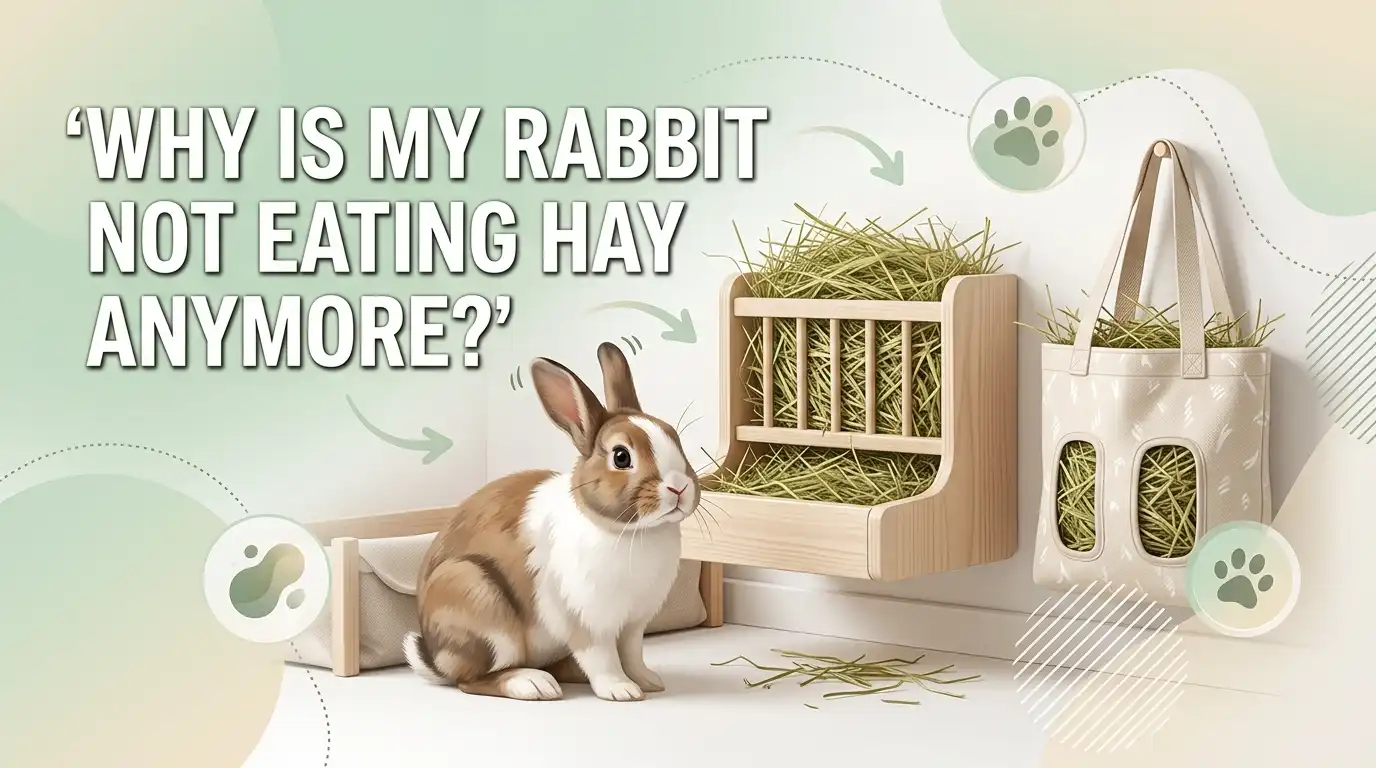
Why Is My Rabbit Not Eating Hay Anymore?
Your rabbit used to munch hay all day. Now the pile sits untouched. You feel worried, and that worry is fair. Hay is the most important part of a rabbit’s diet.
It keeps the gut moving and wears down teeth that never stop growing. When a rabbit stops eating hay, something has changed. It could be a simple matter of taste. It could also be a sign of pain or illness.
This post walks you through every common reason. You will learn how to spot the cause and what to do next. You will also learn when this becomes an emergency. Let us help your bunny get back to happy, healthy chewing.
Key Takeaways
- Hay should make up about 80 percent of your rabbit’s diet. When your rabbit refuses it, treat the change as a real warning sign, not a small habit.
- Dental problems are one of the top causes. Sharp tooth spurs and overgrown molars make chewing hay painful, so your rabbit picks softer foods instead.
- A rabbit that eats nothing at all for 6 to 12 hours needs a vet fast. This can mean GI stasis, a serious gut condition that turns deadly within a day.
- Too many pellets and treats spoil the appetite. A spoiled rabbit waits for the tasty stuff and ignores plain hay, just like a child skipping dinner for dessert.
- Hay quality matters more than you think. Dusty, stale, or musty hay smells wrong to your rabbit, and a fresh, sweet batch often fixes the problem on its own.
- Stress, age, and water access all affect hay eating. Small changes in the home, a new pet, or a dirty water bowl can quietly lower how much your bunny chews.
Why Hay Matters So Much for Rabbits
Let us start with the why. Hay is not just filler food. It does two big jobs that keep your rabbit alive and well. First, the long fibers push food through the gut.
A rabbit’s digestive system must keep moving every hour of the day. Hay keeps that motion going. Second, hay grinds down teeth. Rabbit teeth grow all through their life.
Chewing tough hay files them down naturally. Without enough hay, teeth overgrow and the gut slows. So when your rabbit skips hay, both systems are at risk. This is why a hay strike is never something to ignore. It is your first clue that you need to act.
First Step: Watch and Track Your Rabbit
Before you panic, take a few minutes to observe. Good information helps your vet and helps you. Check the litter box first. Count the droppings. Are they fewer, smaller, or gone?
Note if your rabbit eats pellets and veggies but skips only hay. That points to a different cause than a full food refusal. Watch your rabbit’s posture.
A hunched, still rabbit that grinds its teeth loudly is in pain. Look for drooling, a wet chin, or weepy eyes. Write down what you see and when it started. This simple log turns a vague worry into clear facts.
Pros: Tracking costs nothing and gives you fast answers. Cons: It takes patience, and waiting too long can be risky if your rabbit is truly sick.
Dental Problems: The Hidden Pain Behind Hay Refusal
This is one of the most common reasons, so read closely. Sharp points called spurs can form on the molars. These spurs cut into the cheek or tongue. Eating hay then hurts, because hay is spiky and tough.
Your rabbit may switch to soft pellets or mushy veggies instead. Watch for drooling, a damp chin, weight loss, or dropping food while chewing. Some rabbits paw at their mouth or eat slowly. You cannot see back molars at home.
A vet must check them with a special tool, often under light sedation. Treatment usually means filing the spurs down. After that, most rabbits eat hay again within days.
Pros of a vet dental check: It finds the real cause and ends the pain. Cons: Sedation carries small risks, and overgrown teeth can come back, so repeat visits may be needed.
GI Stasis: When a Hay Strike Becomes an Emergency
Now for the scary one. GI stasis means the gut slows down or stops. It is life threatening and moves fast. A rabbit that stops eating may stop pooping too. The gut fills with gas, the rabbit feels sick, and it eats even less.
This becomes a deadly loop. Signs include no droppings, a hunched body, loud tooth grinding, and a hard or bloated belly. If your rabbit eats nothing for 6 to 12 hours, call a vet right away.
Do not wait until morning. GI stasis can kill within 24 hours. Quick care saves lives. Vets give fluids, pain relief, gut motility drugs, and syringe feeding.
Pros of fast vet care: It can fully reverse stasis when caught early. Cons: Emergency visits cost more, and severe cases may not recover even with treatment.
Check Your Hay: Is It Fresh and Good Quality?
Sometimes the fix is simple. Rabbits have a sharp sense of smell. They reject hay that has gone stale. Pick up the hay and inspect it. Good hay smells sweet and grassy.
It looks green and feels soft but springy. Bad hay smells musty or dusty. It looks brown, dull, and brittle. Old hay can also hold mold, which makes rabbits sick. Hay that sat in a damp shed loses its appeal too.
Try opening a brand new bag from a fresh batch. Many rabbits start eating again at once. Store hay in a dry, airy spot, not a sealed plastic bin. This keeps it fresh longer.
Pros of swapping to fresh hay: It is cheap and often works instantly. Cons: Buying small bags often costs more per pound, and finding farm fresh hay can take effort.
Try a Different Type of Hay
Variety can spark interest. Not every rabbit loves the same hay. Timothy hay is the classic choice. It has high fiber and low calories, which suits most adult rabbits. But your bunny may simply dislike it.
Orchard grass is softer and a little sweeter. Many picky rabbits prefer it. Oat hay has crunchy seed heads that rabbits enjoy nibbling. Meadow hay offers a mix of grasses and textures.
Try offering two or three types side by side. Watch which one your rabbit picks. Mixing hays also adds nutrients and keeps meals fun. Just avoid alfalfa for adult rabbits, since it is too rich in calcium and protein.
Pros of mixing hay types: It boosts appetite and adds variety. Cons: Buying several kinds costs more, and a fussy rabbit may still hold out for the sweetest one.
Cut Back on Pellets and Treats
Here is a tough love truth. Too many pellets ruin the hay habit. Pellets are tasty and easy to eat. If the bowl is always full, your rabbit fills up on them. Then it has no room or reason for hay.
The same goes for sugary treats and too much fruit. A spoiled rabbit waits for the good stuff and snubs plain hay. Limit pellets to a small daily portion, about one tablespoon per two pounds of body weight.
Offer pellets once a day, not all day. Cut treats down to tiny amounts. When hay becomes the main food on offer, most rabbits go back to eating it. Hunger is a strong teacher, but never starve your rabbit fully.
Pros of limiting pellets: It restores natural hay eating and improves gut health. Cons: Your rabbit may protest at first, and you must watch closely so it does not refuse all food.
Make Hay More Fun and Easy to Reach
Presentation changes everything. Rabbits love to forage and explore. A boring pile of hay is easy to ignore. Stuff hay into cardboard tubes or paper bags. Your rabbit will dig and pull to get it out.
Hide small handfuls around the play area for a treasure hunt. Place hay next to the litter box, since rabbits like to eat and poop at the same time. Keep the hay clean and topped up often.
Sprinkle a few dried herbs or edible flowers on top to add scent. Chamomile, dandelion, and a little dried mint work well. These tricks turn eating into play, and play makes hay exciting again.
Pros of foraging setups: They boost interest and give mental exercise. Cons: They take time to prepare daily, and some shy rabbits ignore new setups at first.
Look at Water Access and Hydration
This step is quick but important. A thirsty rabbit eats less hay. Hay is dry, so rabbits need plenty of water to chew and swallow it. Check the water source right now.
Is the bottle clogged? Is the bowl dirty or empty? Many rabbits drink more from an open bowl than a bottle. Try offering fresh water in a heavy ceramic bowl. Wash it daily so it stays clean and appealing.
Some rabbits drink more if the water is changed twice a day. Dehydration is a common and easy to fix cause of low appetite. You can also offer washed, wet leafy greens. The extra moisture helps the gut and tempts your rabbit to eat.
Pros of a clean water bowl: It is simple, cheap, and helps the whole digestive system. Cons: Bowls tip over and need daily cleaning, and some rabbits still prefer a bottle.
Consider Stress and Changes in the Home
Rabbits are sensitive creatures. Stress can stop a rabbit from eating. Think about what changed recently. A new pet, a loud noise, a house move, or new furniture can upset a bunny.
Even a change in your schedule can throw them off. A stressed rabbit hides, freezes, or thumps its back feet. It may also stop eating hay first, since hay takes effort to chew. Give your rabbit a calm, quiet space.
Keep its routine steady. Place a cardboard hideout in its area so it feels safe. Lower loud sounds and bright lights. When the rabbit feels secure again, its appetite usually returns. A bonded rabbit friend can also lower stress over time.
Pros of reducing stress: It helps eating and overall happiness. Cons: It can be hard to spot the exact cause, and some changes, like a move, cannot be undone.
Age, Illness, and Other Health Issues
Sometimes the problem runs deeper. Older rabbits often eat less hay. Aging teeth, arthritis, and slower digestion all play a part. A senior rabbit may need softer hay or hay cut into shorter pieces.
Pain anywhere in the body can also kill appetite. Sore joints, an ear infection, kidney trouble, or liver disease can all make a rabbit stop eating. Internal pain is hard to see from the outside.
If your rabbit seems tired, hunched, or simply off, a vet visit is wise. Bloodwork and an exam can find hidden problems. Catching illness early gives the best chance of recovery. Never assume a hay strike is just stubbornness when other signs appear.
Pros of a full vet check: It uncovers hidden disease and guides treatment. Cons: Tests cost money, and results sometimes take time to come back.
How to Syringe Feed a Rabbit That Will Not Eat
This is your emergency backup. A rabbit must never go long without food. If yours refuses everything, you may need to syringe feed while you reach a vet. Use a recovery food made for herbivores, often called critical care.
Mix it with warm water into a smooth paste. Draw it into a syringe with the tip cut off, so the paste flows. Gently place the syringe at the side of the mouth, behind the front teeth.
Give small amounts and let your rabbit chew and swallow. Go slowly so it does not choke or inhale the food. Feed small portions every few hours. This keeps the gut moving until proper care begins. Still, syringe feeding is a stopgap, not a cure.
Pros of syringe feeding: It buys time and supports the gut in a crisis. Cons: It can stress the rabbit, and it never replaces a real vet diagnosis.
When to Call the Vet Right Away
Let us make the danger signs clear. Some symptoms mean you cannot wait. Call a rabbit vet at once if your rabbit eats nothing for 6 to 12 hours. The same is true if it makes no droppings in that time.
A bloated, hard belly is a red flag. Loud, constant tooth grinding signals deep pain. A cold body temperature, a limp posture, or labored breathing are all emergencies.
Drooling and a wet chin point to a serious dental issue. Trust your gut. You know your rabbit best. A rabbit can decline very fast, so quick action saves lives. It is always better to call and be reassured than to wait and lose precious time.
Pros of calling early: It catches deadly problems in time. Cons: After hours visits are pricey, and not every area has a rabbit savvy vet nearby.
Frequently Asked Questions
How long can a rabbit safely go without eating hay?
Not long at all. A rabbit should eat throughout the day. If yours eats no food for 6 to 12 hours, treat it as an emergency. The gut can slow and stop, which is dangerous. Even a short hay strike with no droppings needs quick attention.
My rabbit eats pellets and veggies but not hay. Is that a problem?
Yes, this needs a closer look. Skipping only hay often points to dental pain, since hay is the toughest food. It can also mean too many pellets fill your rabbit up. Try cutting pellets and checking the teeth with a vet.
Can old or stale hay make my rabbit refuse it?
Absolutely. Rabbits smell stale, dusty, or musty hay and turn away. Old hay can also grow mold that makes them sick. Always offer fresh, green, sweet smelling hay. A new bag from a fresh batch often fixes the problem fast.
Will starving my rabbit force it to eat hay?
No, never fully starve a rabbit. A rabbit that stops eating completely can develop deadly GI stasis. You can limit pellets and treats to encourage hay, but food must always be available. Hunger should guide, not harm, your bunny.
What hay is best for a picky rabbit?
Try orchard grass first, since it is softer and sweeter. Oat hay with seed heads also tempts many rabbits. Offer two or three types at once and watch which one your rabbit prefers. Avoid alfalfa for adult rabbits, as it is too rich.
Could stress be the reason my rabbit stopped eating hay?
Yes, stress is a real cause. New pets, loud noises, moving home, or schedule changes can upset a rabbit. A stressed bunny eats less and hides more. Give it a calm, quiet space with a hideout and a steady routine to help it recover.

Hi, I’m Liza — pet lover, lifelong animal enthusiast, and the voice behind Liza4Pets. I created this space to share honest, practical pet care advice for fellow pet parents who want the best for their furry (and not-so-furry) companions.