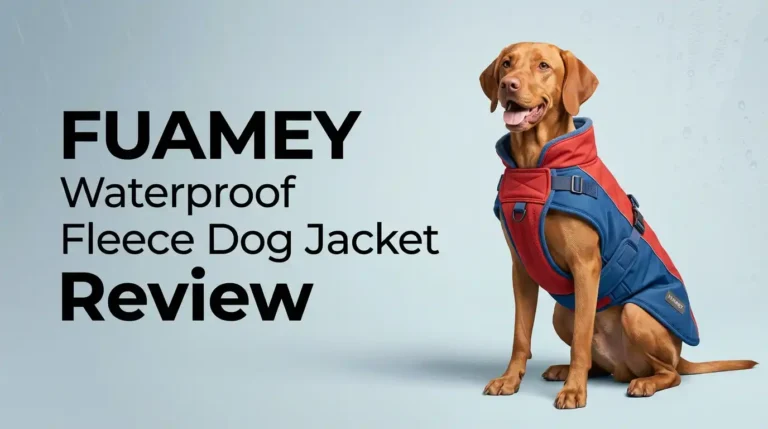

Dog Snowsuit with Attached Boots review 2026: Worth It?
Winter walks get complicated fast. Your dog steps outside, hits wet snow, and comes back with icy fur, salty paws, and a muddy belly.
Regular dog coats cover the back and stop there. Boots fall off within one block. A dog snowsuit with attached boots promises to fix both problems in one piece.
Then something changed. This review covers the real fit, the real warmth, and the parts that frustrated me. You get the honest version, including what broke and what never worked right.
In a Nutshell:
- Full coverage is the main selling point. The suit wraps the back, belly, chest, and all four legs. Snow cannot reach the skin. My dog came home dry while other dogs at the park came home soaked and shivering.
- The attached boots solve the lost boot problem. Traditional dog boots slide off constantly. These boots connect to the legs, so they stay put. They still twist sideways on loose snow, but they do not vanish into a snowbank.
- Sizing runs small and tight through the chest. Measure your dog before ordering. Chest girth matters more than weight. Many returns happen because owners guess instead of measure.
- Waterproofing holds up in snow but weakens in heavy rain. The outer shell sheds powder and slush well. Long rain exposure soaks through the seams after roughly thirty minutes.
- Dressing takes practice. Your first attempt will take five minutes and test your patience. By day four, you will manage it in under a minute.
- Price sits around $23 to $40 depending on size and color. That is cheap for what it replaces: a coat, four boots, and a belly band.
What Is a Dog Snowsuit with Attached Boots?

Last update on 2026-10-30 / Affiliate links / Images from Amazon Product Advertising API
A dog snowsuit with attached boots is a one piece winter garment. It covers the torso and extends into four fabric legs. Each leg ends in a sealed boot with a grippy sole. Your dog wears one item instead of five.
Standard dog jackets protect the spine and ribs. They leave the belly, legs, and paws exposed. Short legged breeds drag their stomachs through snow. Long haired dogs collect ice balls between their toes. This design closes those gaps.
The concept comes from working dog gear and arctic sled teams. Manufacturers scaled it down for pet owners. The 2026 versions add reflective trim, leash ports, and side closures instead of back zippers. The result is a product that looks odd and works surprisingly well.
2027 New Dog Snowsuit with Attached Boots, Winter Dog Full Body Suit
This is the model I tested. The listing calls it a waterproof insulated full coverage suit with attached boots and paw protection. It ships in sizes S through XXL. Mine arrived in XXL for a 70 pound dog.
The specs list a polyester outer shell with a water repellent coating. Inside sits a thin layer of synthetic insulation and a soft lining. A side closure runs along the body instead of a back zipper. Reflective strips sit on both flanks and across the shoulders.
The suit includes a leash opening above the shoulders. That detail matters. You can clip a harness underneath and feed the leash through without unzipping anything. The boots have textured rubber soles with raised tread. Price hovered near $23.88 during my test period, which beats buying separate gear.
Unboxing Experience: First Impressions Out of the Bag
The package arrived flat in a poly mailer. No fancy box, no tissue paper, no branded insert. The suit came folded inside a clear plastic sleeve with a small size tag stapled to the corner.
My first reaction was mild confusion. Folded flat, the suit looks like a deflated animal costume. Four empty legs dangle from the body. I held it up and genuinely could not tell front from back for about ten seconds.
The fabric felt thinner than I expected. It has a slight crinkle, similar to a human rain shell. The lining felt soft and fleecy. Stitching looked tidy, though the seam tape on two leg joints showed a small bubble. There was a faint plastic smell that faded after a day of airing out. No instructions were included, which is a miss for a product this confusing.
Top 3 Alternative for Dog Snowsuit with Attached Boots
No products found.
FUAMEY Full Body Dog Coat with Harness Built In

Last update on 2026-10-30 / Affiliate links / Images from Amazon Product Advertising API
Waterproof Dog Boots Rain Boots with Suspender

Last update on 2026-10-30 / Affiliate links / Images from Amazon Product Advertising API
Dog Suspender Boots with Legging Pants
Fit and Sizing: Measure Twice, Order Once
Sizing is the single biggest reason people return this product. The brand charts list weight ranges. Weight is a poor guide for dog clothing. A 50 pound barrel chested bulldog and a 50 pound lean greyhound need completely different suits.
Measure three things: chest girth behind the front legs, back length from collar to tail base, and leg length from shoulder to paw. Compare those numbers to the chart. Order up if your dog sits between two sizes.
My dog measured 32 inches around the chest. The XXL chart listed 31 to 34 inches. The fit was snug but workable. The leg length ran about an inch short, which pulled the boots slightly upward during long strides. Deep chested breeds will struggle most. Dogs with thick double coats need extra room, since fur compresses and springs back.
Warmth and Insulation in Real Cold
I tested the suit from 28 degrees down to 9 degrees Fahrenheit. At 28 degrees, my dog stayed comfortable for an hour of walking. No shivering, no lifted paws, no rushing toward the door.
At 15 degrees, the suit held up for about forty minutes. After that, I noticed slower movement and a tucked tail. This is a three season shell, not an arctic expedition parka. The insulation is thin by design, because thick padding would restrict leg movement.
Short coated dogs benefit most. My neighbor’s whippet wore one and stopped doing the frozen paw dance within a minute. Double coated breeds like huskies may overheat in anything above 35 degrees while wearing it. Watch for heavy panting. Thick fur plus a sealed shell traps body heat fast.
Waterproofing Performance in Snow and Slush
Dry powder snow slides right off. I shook the suit after a twenty minute walk and the snow fell away in clumps. The fur underneath stayed completely dry.
Wet slush performed almost as well. Road spray beaded on the surface and rolled off. The belly panel, which takes the worst abuse, resisted soaking for the full walk. That belly coverage is the feature I now refuse to live without.
Heavy rain is where it fails. After roughly thirty minutes in steady rain, moisture seeped through the shoulder seams. The coating repels water; it does not form a sealed membrane like a technical rain jacket. Salt and grime wash off easily with a damp cloth. The fabric does not stain, which surprised me after a walk through brown street slush.
The Attached Boots: Do They Actually Stay On?
This is the question everyone asks. The honest answer is mostly yes, with conditions.
The boots cannot fall off and disappear, because they are sewn to the legs. That alone beats every separate bootie I have owned. No more hunting through snowbanks for a single lost shoe.
What does happen is rotation. On deep powder, the boot would twist so the sole faced sideways. My dog kept walking without noticing, but traction dropped. I fixed this by tightening the leg straps above each boot. That reduced twisting to maybe one incident per walk.
Grip on packed snow is decent. Grip on sheet ice is poor. The rubber tread is too shallow for real ice. On wet tile and hardwood indoors, the boots slide badly. Take the suit off before your dog comes inside.
Walking Comfort and How My Dog Reacted
Dogs hate leg coverage. That is just true. My dog froze completely the first time I put it on. He stood like a statue for a full minute, then high stepped across the yard like a show pony.
Day two was better. Day three he walked normally. By day five he came to the door when he saw the suit. Treats during dressing sped this up enormously.
Gait looked slightly stiff at first. Once the legs loosened from wear, movement looked natural. He ran, jumped, and dug in snow without trouble. Some dogs never accept it. My friend’s terrier refused to move at all after three weeks of patient training. Know your dog. If yours panics in a harness, this will be a harder sell.
Putting It On and Taking It Off
The side closure design helps a lot. You lay the suit open, position your dog, and guide each paw into its leg. The back legs are easy. The front legs require you to bend a leg at the elbow and push.
My first attempt took almost six minutes and ended with both of us annoyed. Current time is about forty seconds. The trick is doing the two front legs first, then closing the body, then the back legs.
Removal is faster. Open the side, pull the front legs free, and the rest slides off. The inside gets damp from body heat, so it needs hanging time between walks. Owners with arthritis or back problems should know this involves kneeling and some wrestling. It is not a slip over the head jacket.
Pros and Cons
Pros
- Complete coverage protects the belly, legs, and paws in one piece, which no standard dog coat does.
- The attached boots cannot get lost, ending the common frustration of one missing bootie per walk.
- Snow and slush shed off the shell easily, so your dog returns dry instead of soaked.
- Salt and ice melt chemicals never touch the paw pads, reducing cracking and licking.
- Reflective strips improve visibility during dark winter mornings and evenings.
- The leash port lets you use a harness underneath without removing the suit.
- Price sits well below the combined cost of a coat plus four separate boots.
Cons
- Sizing runs small, especially through the chest, and the weight based chart misleads buyers.
- Boots rotate sideways on deep snow unless you tighten the leg straps carefully.
- Traction on sheet ice and indoor floors is genuinely poor and slightly unsafe.
- Rain protection fails after about thirty minutes of steady exposure.
- Dressing takes practice and some dogs never accept leg coverage at all.
- No instructions ship with the product, and the folded suit confuses first time users.
- Bathroom breaks require full removal, which is awkward in a snowstorm.
What This Snowsuit Does Not Do Well
Honesty matters more than enthusiasm, so here are the real weak points.
Potty breaks are a problem. The suit covers everything, so your dog cannot relieve himself while wearing it. Plan quick walks only, or accept that you will remove the suit outdoors in the cold. Male dogs with a forward lift may still mark the fabric. Mine did. Once.
Durability is average. After six weeks, one boot sole showed edge separation. The stitching held, but the glue line lifted. This is a budget product, not a lifetime purchase.
Sizing consistency varies between color runs. Two owners in my circle received the same listed size with visibly different leg lengths. Quality control is loose. Finally, the suit offers no neck or head protection at all.
Cleaning, Care, and Storage
Maintenance is simple. Wipe the outer shell with a damp cloth after salty walks. Salt degrades the water repellent coating over time, so do not skip this.
Machine washing is possible on cold and gentle inside a mesh bag. Never put it in the dryer. Heat damages both the coating and the boot adhesive. Hang it upside down so water drains out of the legs.
The lining holds moisture longer than you expect. Give it four to six hours of air drying before the next walk. A damp lining against fur causes chills, which defeats the purpose.
For summer storage, wash it, dry it fully, and store it loose rather than compressed. Folding the boots tightly creates permanent creases in the sole. A reproofing spray each autumn restores water beading.
Who Should Buy It and Who Should Skip It
Buy this if you live somewhere with real snow and walk your dog daily. Short coated breeds, senior dogs, and small dogs who sink into snow benefit the most. Owners of long bodied breeds like dachshunds and corgis will see immediate value, since those bellies drag through everything.
It also suits dogs with paw allergies or chronic licking. Blocking salt contact reduces irritation noticeably.
Skip it if your dog lives in a mild climate. A simple vest handles 45 degree mornings fine. Skip it if your dog refuses any clothing after patient training. Skip it if you need long rain protection or if ice covers your sidewalks most of the winter. Working dogs in extreme cold need heavier insulated gear from a specialist brand instead.
Final Verdict on the Dog Snowsuit with Attached Boots

Last update on 2026-10-30 / Affiliate links / Images from Amazon Product Advertising API
After a full winter season, I keep using it. That is the strongest endorsement I can give. The suit does one thing no other product does at this price: it keeps an entire dog dry and salt free in one piece.
My overall rating sits at 4 out of 5. Points come off for the weak ice traction, the loose quality control, and the potty break problem.
The value math works. One suit replaces a coat, four boots, and a belly guard. Expect one or two seasons of use rather than five. Measure your dog properly, order the larger size if you are unsure, and give your dog a week to adjust. Do those three things and you will probably like it as much as I do.
Frequently Asked Questions
Will the attached boots really stay on?
Yes. The boots are sewn to the leg fabric, so they cannot fall off or get lost. They can rotate sideways on loose snow, which reduces grip. Tightening the straps above each boot mostly solves this.
How do I pick the right size?
Measure chest girth behind the front legs, back length from collar to tail, and leg length from shoulder to paw. Ignore the weight guide. Order the larger size if your dog measures between two options.
Can my dog pee while wearing the snowsuit?
No. The suit covers the entire underside. You must remove it for bathroom breaks. Take your dog out first, then dress for the walk.
Is it warm enough for very cold weather?
It handles roughly 15 to 35 degrees Fahrenheit well for walks under an hour. Below 10 degrees, your dog needs heavier insulation. The shell is thin so the legs can move freely.
Will my dog hate wearing it?
Probably at first. Most dogs adjust within three to seven days with treats and short sessions. A small number never accept leg coverage and will refuse to walk.
Can I use it indoors or on tile floors?
Do not. The rubber soles slide badly on tile, hardwood, and laminate. Remove the suit at the door to prevent falls.
How do I wash it?
Wipe it down after salty walks. Machine wash cold and gentle inside a mesh bag when needed. Hang it to dry and never use a dryer, since heat ruins the coating and the boot glue.

Hi, I’m Liza — pet lover, lifelong animal enthusiast, and the voice behind Liza4Pets. I created this space to share honest, practical pet care advice for fellow pet parents who want the best for their furry (and not-so-furry) companions.