Queenmore Small Winter Dog Coat with Harness Review 2026
Winter mornings test every dog owner. You stand at the door with a leash in one hand, a harness in the other, and a shivering dog who wants none of it.
The Queenmore Small Winter Dog Coat with Harness Built In promises to cut that routine down to one garment and one clip.
It skips the back zipper that most rivals use, closing instead with hook and loop panels plus buckles, which makes it one of the few harness coats that can wrap around odd body shapes.
In a Nutshell:
- The adjustability is the headline feature. Hook and loop at the neck and belly plus harness buckles mean you can fit long backed, deep chested, and short legged dogs that zipper coats never suit. Dachshunds, Corgis, and barrel shaped Pugs benefit most.
- Warmth is genuinely good for the price. A thick fleece lining with cotton padding sits inside a waterproof shell, placing it among the warmer coats in this category rather than the thin water resistant vests.
- The harness has real structure. Buckles and a metal D ring give the harness its own backbone, so load does not rest purely on shell fabric. That said, it is still not a replacement for a dedicated harness on a strong puller.
- Hook and loop is the biggest weakness. It catches fur, clogs during shedding season, and loses grip over months of use. You will clean the strips often.
- Sizing runs by chest girth, not breed. Queenmore offers XS to XXXL, and the size label tells you almost nothing. Measure your dog or expect a return.
- Dressing takes more steps than a zipper coat. Three stages, roughly forty seconds once practiced, which feels long with a wriggling puppy.
Queenmore Small Winter Dog Coat with Harness Built In

Last update on 2026-10-30 / Affiliate links / Images from Amazon Product Advertising API
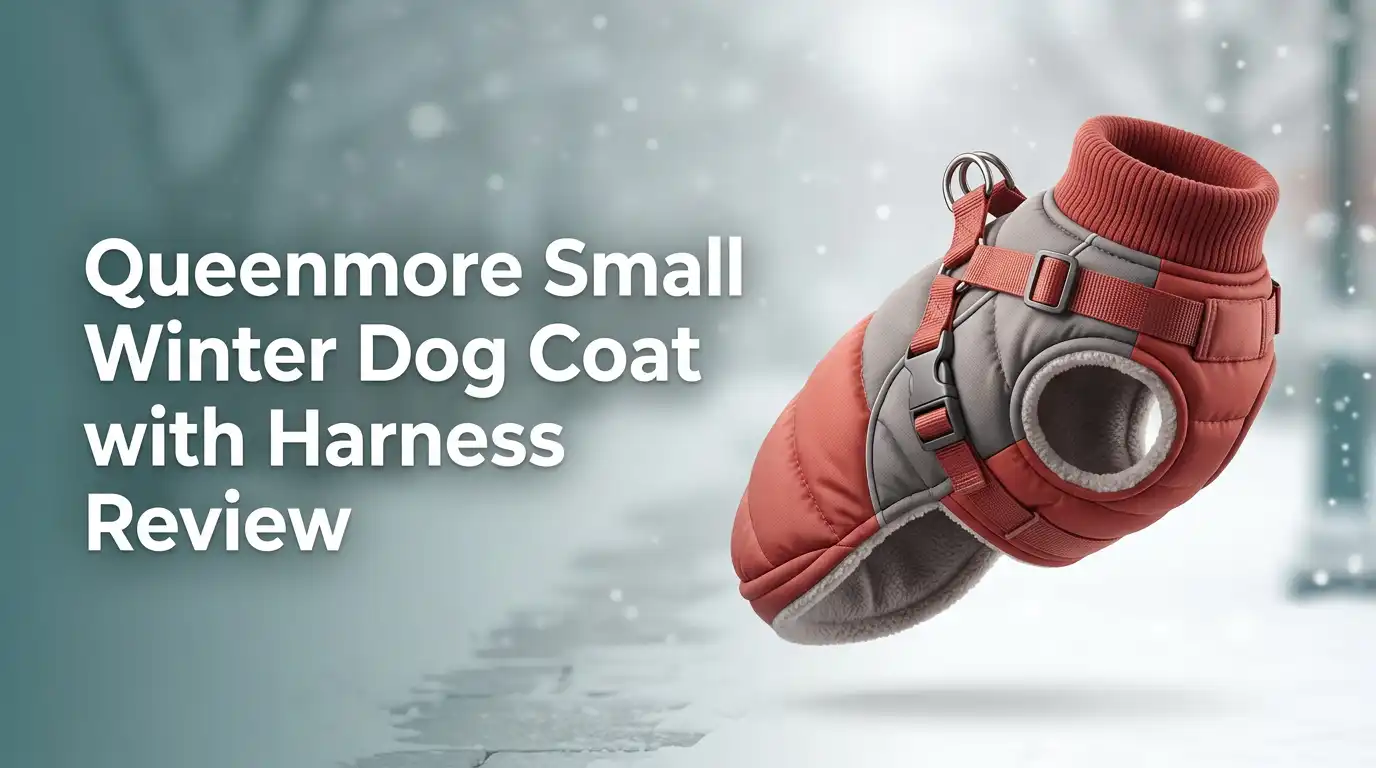
This is a padded winter coat with a harness stitched inside it. The shell is a waterproof polyester fabric. The lining combines thick fleece with cotton padding, which is why it feels heavier in the hand than a typical fleece vest.
A turn down collar covers the neck, and reflective straps run across the body for dark walks. The metal D ring sits on the back, anchored to the harness straps rather than floating on the shell.
What separates it from almost every competitor is the closure system. There is no back zipper. The neck fastens with hook and loop, the belly fastens with hook and loop, and buckles secure the harness portion.
Queenmore markets this directly at dogs with big heads, deep bellies, long backs, and short legs. Sizes run from XS through XXXL, so the word “small” in the product name refers to the sizing start point, not a limit.
Unboxing Experience: What Arrives in the Bag
There is no fancy presentation here, and that is fine at this price. The coat arrives folded inside a clear poly bag with a small cardboard hang tag.
No box, no tissue paper, no printed care booklet. The tag carries a basic size chart in inches and centimeters, though the chart on the Amazon listing is more complete, so keep the page open while you measure.
My first impression out of the bag was weight. It feels substantially padded, closer to a child’s puffer than the flimsy vests I have tested before.
There was a faint synthetic smell on day one that aired out overnight. The folds left creases in the shell that relaxed after a few hours hanging up.
The buckles clicked firmly straight away. The hook and loop strips were aggressively sticky when new, which is a good sign for longevity, though it also meant my first fitting attempt grabbed a tuft of fur immediately.
Build Quality and Materials Up Close
I inspected the stitching carefully, because the D ring anchor point is where a harness coat lives or dies. On my sample the ring attaches to the webbing straps with a reinforced stitch block, not a single line through shell fabric.
That is the construction you want. The webbing itself feels like standard nylon strapping, similar to budget standalone harnesses.
The shell repelled water beads on contact during my first rain test. Seams are not taped, so prolonged soaking will eventually wick through the needle holes. Treat the waterproof claim as strong water resistance rather than true rain gear.
Interior fleece is soft and dense, with no scratchy edges around the leg openings. The cotton padding is distributed evenly, though I found slightly thinner coverage near the rear hem. Buckle housings are plastic, and while they held up fine for me, plastic buckles are the part I would watch over several seasons of freezing temperatures.
Top 3 Alternative for Queenmore Small Winter Dog Coat with Harness

Last update on 2026-10-30 / Affiliate links / Images from Amazon Product Advertising API
JoyDaog Fleece Dog Jacket with Harness

Last update on 2026-10-30 / Affiliate links / Images from Amazon Product Advertising API
BRKURLEG Small Dog Coat with Harness, Full Body Dog Winter Jacket

Last update on 2026-10-30 / Affiliate links / Images from Amazon Product Advertising API
FUAMEY Dog Coat for Medium Dogs, Fleece Dog Winter Jacket with Harness
How the Built In Harness Actually Works
The harness is not a decorative ring. Straps wrap the chest and secure behind the front legs, then buckle closed, giving the assembly its own load path independent of the coat panels. I tugged the leash firmly from behind while my dog stood still, and the coat shifted slightly but did not slide up toward the throat or peel at the belly.
That is better behaviour than many harness coats manage. Still, honesty matters here. A coat harness clipped at the back is not a no pull system. A dog that lunges hard at squirrels will put force through plastic buckles and a fabric sandwich, not through a dedicated chest plate.
My recommendation stays simple. Calm walkers, puppies, seniors, and polite leash dogs are well served. Reactive dogs, strong pullers, and anyone walking near heavy traffic should use a separate harness under a coat with a leash slot instead.
Sizing Guide: Getting the Fit Right First Time
Sizing is where most negative reviews of this coat come from, and most of those are avoidable. Queenmore’s chart is driven by chest girth. The letters on the label do not map cleanly to breed or weight, so a medium dog may well need a Large.
Take three measurements with a soft tape while your dog stands on level ground. Chest girth goes around the widest point of the ribcage just behind the front legs. Back length runs from the collar line to the base of the tail. Neck is measured loosely where a collar sits.
When the numbers disagree, let the chest decide. The harness is built around the chest, so a slightly short back is tolerable while a loose chest is not. If you land between two sizes, size up, because the hook and loop panels let you cinch excess in but cannot create fabric you do not have.
Warmth Test: Cold Weather Performance
This is the coat’s strongest area. The fleece and cotton padding combination handled temperatures around freezing comfortably on thirty to forty minute walks. My short coated test dog stopped doing the tucked tail shuffle that usually appears within five minutes outdoors.
The turn down collar helps more than I expected on windy days. It covers the vulnerable neck area where thin coated dogs lose heat fast, and it does not flap in gusts the way loose collars do.
Belly coverage is moderate rather than full. The padding wraps the ribs and chest well, leaving the lower abdomen partly exposed. That is intentional and sensible, because a full belly panel on a short legged dog drags through wet snow and ends up freezing against the skin.
One caution for double coated breeds. Huskies, Samoyeds, and similar dogs will likely overheat in this much padding. Watch for panting and slowing down.
Waterproofing in Rain and Wet Snow
Light rain, drizzle, and dry snow pose no problem. Water beaded on the shell and rolled off during a twenty minute drizzle, and the fleece underneath stayed dry. Wet slush kicked up from the pavement also wiped away without soaking in.
Sustained heavy rain is a different story. After roughly thirty five minutes in steady rainfall, I found dampness creeping in along the shoulder seams. The fabric itself held, but the untaped stitching let moisture through.
Set expectations accordingly. This is a winter coat with weather protection, not a dedicated raincoat. For regions where winter means constant rain rather than cold, a purpose built shell will serve better.
Drying time is slow, which is the tradeoff for all that padding. Allow several hours of air drying before the next walk, and avoid radiators, which can stiffen the shell fabric over time.
Putting It On: The Three Step Routine
Queenmore spells out the process, and it genuinely takes three stages. First, fasten the hook and loop at the neck and ease the head through. Second, connect the buckles and secure the belly panel. Third, adjust the straps for snugness and clip the leash to the metal D ring.
Once practiced, this takes me around forty seconds. On the first few attempts it took closer to two minutes, with a confused dog standing mid room wondering what was happening.
Compared with a zipper coat, this is undeniably slower. A back zipper is one motion. Three fastening points are three motions, each requiring a dog to hold still.
The payoff is fit. My long bodied test subject has never worn a zipper coat that fit both chest and back properly. This one does, because every panel adjusts independently. Whether that trade feels worthwhile depends entirely on your dog’s shape and patience.
Reflective Strips and Night Visibility
Reflective straps run across the back and sides, and they do their job. Under car headlights at roughly thirty meters, the strips lit up clearly in my driveway test. For anyone walking before sunrise or after sunset through winter, that visibility matters as much as warmth does.
The coverage is decent rather than exceptional. Reflective material sits on the coat body, and I would have preferred strips directly on the harness straps too, since that puts brightness exactly where a leash attaches.
Colour choice affects visibility more than people realise. The darker navy and black versions rely entirely on the reflective strips, while brighter shades stay visible in dusk light before headlights are involved.
If your walks happen on unlit roads, add a clip on light to the D ring. The coat improves your dog’s visibility meaningfully, but no reflective strip replaces an active light source near traffic.
What This Coat Does Not Do Well
Real reviews name faults, so here are mine after extended use.
The hook and loop is the recurring irritation. It grabs fur every single time on a fluffy dog, and shedding season clogs the strips with hair that reduces grip. I cleaned the panels weekly with a comb to keep them holding properly.
Dressing speed loses to any zipper coat, full stop. On a cold morning with a squirming puppy, those extra steps feel long.
Waterproofing underperforms the marketing in sustained rain, as covered above. The plastic buckles are a long term question mark in deep cold. Drying time is slow.
Stock levels fluctuate, and certain colour and size combinations disappear for weeks at a time, which is frustrating if you need a replacement mid winter. Finally, the harness, while structurally sound, should not be trusted with a dog that pulls hard.
Pros and Cons
Pros
- Fits unusual body shapes that zipper coats cannot accommodate, thanks to adjustable neck, belly, and harness straps
- Thick fleece lining with cotton padding delivers real warmth for small and thin coated dogs
- Harness closes with buckles and uses a metal D ring anchored to straps, not shell fabric
- Waterproof shell handles drizzle, dry snow, and road slush confidently
- Turn down collar blocks wind around the neck without flapping
- Reflective straps improve visibility on early and late walks
- Wide size range from XS through XXXL with multiple colour options
- Belly cut stays clear of wet snow on short legged breeds
Cons
- Hook and loop closures catch fur and clog during shedding season
- Dressing takes three steps instead of one zipper pull
- Seams are not taped, so heavy sustained rain eventually gets through
- Plastic buckles may become brittle over several freezing winters
- Padding is too warm for most double coated breeds
- Size labels do not match breed expectations, so measuring is mandatory
- Slow to dry after a soaking
- Not suitable as the only restraint for strong pullers or reactive dogs
Washing and Daily Care
Road salt is brutal on winter dog gear, and this coat collects it along the belly edge. My routine was simple. After salty walks I wiped the shell with a damp cloth and let the coat hang dry fully before the next outing.
For deeper cleaning, close all the hook and loop panels before washing. Open strips act like magnets for lint and will emerge from the machine covered in fuzz. A gentle cold cycle inside a mesh laundry bag protects the buckles.
Air drying is essential. Machine heat risks damaging both the waterproof coating and the plastic hardware.
Inspect the stitching around the D ring every few weeks. Fraying threads or pulled seams mean the attachment point is weakening, and that is the moment to switch to a standalone harness until you replace the coat.
Who Should Buy It and Who Should Skip It
Buy this coat if your dog has proportions that standard coats ignore. Dachshunds, Corgis, Basset Hounds, French Bulldogs, and broad chested Pugs all fit the profile. Owners of senior dogs and thin coated small breeds also gain from the padding.
It suits calm leash walkers who want one garment instead of two, and anyone who has returned three zipper coats because the chest fit but the back did not.
Skip it if your dog pulls hard, lunges at distractions, or has any reactivity. A separate harness under a coat with a leash slot is safer.
Skip it too if your dog is heavily double coated, since the padding will cook them, and skip it if your winters are dominated by heavy rain rather than cold. Owners who prize speed over fit will prefer a simple back zipper design every time.
Price and Value in 2026
The Queenmore sits in the affordable middle of the harness coat market rather than the budget basement. You pay a little more than a plain fleece vest and considerably less than premium parkas from specialist outdoor brands.
For that money you get padding and waterproofing that genuinely outperform cheaper water resistant vests, plus a harness with buckles and a metal ring rather than a token loop of webbing. The adjustability alone saves money if you have previously bought and returned several coats.
Where the value case weakens is longevity. Hook and loop degrades, plastic buckles are a weak point, and an untaped shell will wet out eventually. I would budget for replacement after two or three heavy winters rather than expecting a decade of service.
Judged as a practical seasonal coat at a fair price, it earns its place.
Final Verdict on the Queenmore Small Winter Dog Coat
Last update on 2026-10-30 / Affiliate links / Images from Amazon Product Advertising API
After weeks of cold, damp, and slushy walks, my verdict is positive with clear limits. The Queenmore solves a genuine problem for dogs whose shape defies normal sizing, and it does so with better warmth and better harness structure than most coats at this price.
The hook and loop closures are the daily tax you pay for that adjustability. They catch fur, they need cleaning, and they add time to every outing. If your dog fits a standard zipper coat comfortably, buy the zipper coat instead and save yourself the fuss.
If your dog does not fit anything, this is one of the few coats that will. Measure the chest carefully, size up when in doubt, inspect the D ring stitching on arrival, and use a separate harness if your dog pulls. Within those boundaries, it is a solid, warm, sensibly built winter coat.
Frequently Asked Questions
Does the Queenmore coat run small or large?
Sizes follow chest girth rather than breed or weight, so the labels can feel misleading. Many owners find they need a size larger than the name suggests. Measure chest girth, back length, and neck, then compare against the listing chart. Size up when caught between two options.
Is the built in harness safe for walking?
It is safe for calm walkers. The harness uses buckles and a metal D ring anchored to straps, which gives it real structure. It is not a no pull design, and dogs that lunge or pull hard should wear a dedicated harness underneath a coat with a leash slot instead.
Can my dog pee while wearing it?
Yes. The belly panel is cut high enough that most dogs, including males, can relieve themselves without removal. Very short legged breeds may still catch the hem occasionally, so check the fit indoors first.
Is it machine washable?
Yes, on a gentle cold cycle. Close all hook and loop panels before washing to stop them collecting lint, and place the coat in a mesh bag to protect the buckles. Air dry only, since machine heat can damage the waterproof coating.
Will it keep my dog dry in heavy rain?
Partially. The shell repels drizzle, snow, and slush well, but the seams are not taped. In sustained heavy rainfall, moisture eventually works through the stitching around the shoulders. For wet climates, a dedicated raincoat performs better.
Does the hook and loop really catch fur?
Yes, and this is the coat’s main flaw. Long haired and double coated dogs lose fur to the strips at every fitting. Comb the panels clean weekly to maintain grip, especially during shedding season.
Which dogs should avoid this coat?
Heavily double coated breeds will overheat in the padding. Strong pullers and reactive dogs need a standalone harness. Owners who want the fastest possible dressing routine will find the three step closure slower than a zipper.

Hi, I’m Liza — pet lover, lifelong animal enthusiast, and the voice behind Liza4Pets. I created this space to share honest, practical pet care advice for fellow pet parents who want the best for their furry (and not-so-furry) companions.