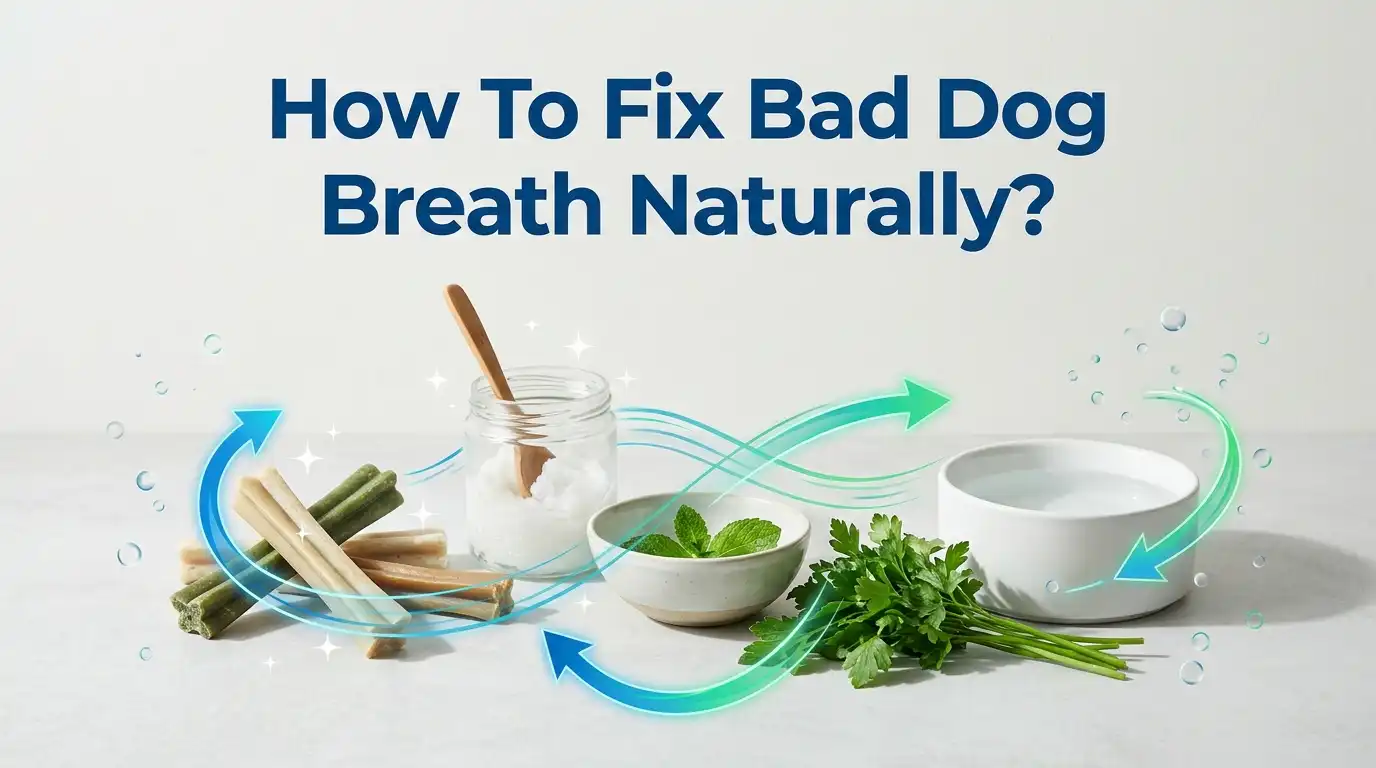
How To Fix Bad Dog Breath Naturally?
Your dog leans in for a cuddle, and you turn your face away fast. That smell hits you like a wall. Bad dog breath is more than an annoyance.
It often signals something happening inside your dog’s mouth or body. The good news is simple. You can fix bad dog breath naturally with safe steps you do at home.
Most dog owners think stinky breath is normal. It is not. Fresh breath shows good health. Foul breath usually points to plaque, gum trouble, or diet issues.
In a Nutshell:
- Plaque and tartar cause most bad breath. The bacteria in your dog’s mouth produce smelly gases. Cleaning teeth removes the source of the odor.
- Brushing your dog’s teeth is the single best natural fix. Daily brushing with dog safe toothpaste beats every other home method by a wide margin.
- Diet plays a huge role in how your dog smells. Fresh whole foods, crunchy vegetables, and clean water all help reduce mouth odor naturally.
- Simple kitchen items help freshen breath. Coconut oil, parsley, and plain yogurt offer safe, low cost support for a cleaner mouth.
- Bad breath can warn you of illness. Kidney disease, liver problems, and dental infections all change how your dog’s breath smells. Watch for sudden changes.
- Consistency wins. No single trick fixes the problem forever. A daily routine keeps your dog’s mouth fresh long term.
Why Your Dog Has Bad Breath In The First Place
Understanding the cause helps you pick the right fix. The most common reason for bad dog breath is periodontal disease. This means plaque and tartar build up along the gum line. Bacteria feed on food bits and release foul smelling gases.
Other causes exist too. Your dog may have eaten something gross, like trash or poop. Some dogs develop mouth infections, broken teeth, or even oral growths. In rarer cases, the odor comes from inside the body.
Kidney disease can make breath smell like urine or ammonia. Liver problems often create a musty, sweet smell. Diabetes sometimes gives breath a fruity scent. These signs need a vet, not a home remedy. Knowing the difference saves your dog from bigger trouble down the road.
Brush Your Dog’s Teeth Every Day
Daily brushing is the gold standard for fresh breath. Vets agree that nothing removes plaque better than a toothbrush. This single habit prevents most odor at its source.
Start slow if your dog is new to brushing. Let your dog lick the toothpaste first. Use only dog safe toothpaste, never human toothpaste, because human versions contain ingredients that harm dogs. Pick a soft toothbrush or a finger brush.
Brush in small circles along the gum line. Focus on the back teeth where tartar hides. Keep sessions short and reward your dog with praise.
Pros: It is the most effective natural method, it is cheap, and it prevents gum disease.
Cons: Some dogs resist it at first, and it takes daily commitment and patience to build the habit.
Add Coconut Oil To Your Dog’s Routine
Coconut oil is a popular natural helper for dog breath. It contains lauric acid, which has antibacterial properties. This helps reduce the bacteria that cause odor in your dog’s mouth.
You can use it two ways. Mix a small amount into your dog’s food, around half a teaspoon for small dogs and up to a teaspoon for large dogs. Or rub a little on the teeth and gums as a natural paste.
Start with a tiny amount. Too much can cause loose stools or weight gain. Choose plain, unrefined coconut oil with no added flavors.
Pros: It tastes good to dogs, it is easy to use, and it supports skin and coat too.
Cons: It adds calories, and it works best alongside brushing rather than on its own.
Feed Crunchy Vegetables Like Carrots
Crunchy foods clean teeth as your dog chews. Raw carrots act like a natural toothbrush. The hard texture scrapes away soft plaque before it hardens into tartar.
Carrots also bring extra benefits. They are low in fat and calories, so they make a guilt free treat. They contain vitamins that support eye health and digestion as well.
Cut carrots into safe sized pieces to prevent choking. Give large chunks to big dogs and smaller slices to little dogs. Always supervise your dog while chewing.
Other crunchy options include apple slices without seeds and green beans. Pros: Vegetables freshen breath, support health, and cost very little.
Cons: They cannot reach deep tartar, and some dogs may get an upset stomach from too many at once.
Sprinkle Fresh Parsley On Their Meals
Parsley is a natural breath freshener for dogs. It contains chlorophyll, which helps neutralize odors. Many natural dog treats use parsley for this exact reason.
Use fresh, curly parsley rather than the flat leaf type. Chop a small amount finely and mix it into your dog’s food. A teaspoon for small dogs and a tablespoon for larger dogs works well.
Parsley also offers vitamins and supports digestion. A cleaner gut can mean fresher breath too. Stick to small amounts only, because large quantities are not safe for dogs.
Pros: It freshens breath fast, it is cheap, and it adds nutrients.
Cons: The effect is temporary, and you must avoid spring parsley, which can be harmful in big doses.
Offer Plain Yogurt And Probiotics
Gut health affects breath more than most people think. Plain yogurt contains probiotics that balance bacteria in the body. A healthier gut can reduce the odors that travel up from digestion.
Choose plain, unsweetened yogurt with live cultures. Never give yogurt with sugar, artificial sweeteners, or xylitol, since xylitol is toxic to dogs. Add a small spoonful to your dog’s food a few times a week.
Research suggests certain probiotic strains help lower mouth odor. Some natural dog probiotic powders target oral health directly.
Pros: It supports digestion, boosts good bacteria, and most dogs love the taste.
Cons: Some dogs are sensitive to dairy, and results take time rather than working overnight.
Use Safe Water Additives
Water additives offer a hands off way to freshen breath. You simply add a measured amount to your dog’s water bowl each day. Your dog drinks it naturally with no extra effort from you.
Many additives contain ingredients that reduce plaque and bacteria. Some studies show that additives with natural extracts can lower dental buildup over a few weeks. Look for products made specifically for dogs.
Always read the label carefully. Avoid anything with alcohol, xylitol, or harsh chemicals. Follow the dosing instructions exactly.
Pros: It is easy, it requires no training, and it works on dogs that hate brushing.
Cons: It cannot replace brushing, and picky dogs may refuse water that smells or tastes different.
Try Natural Dental Chews And Toys
Chewing is a natural way for dogs to clean their teeth. Dental chews and chew toys reduce plaque through friction. The action also keeps your dog busy and happy.
Pick chews that are firm but not too hard. Very hard chews can crack teeth, so avoid bones and antlers that do not bend. Rubber chew toys with ridges work well and last a long time.
Choose chews with simple, natural ingredients. Always match the chew size to your dog’s size. Supervise chewing to prevent swallowing large pieces.
Pros: Dogs enjoy them, they clean teeth during play, and they ease boredom.
Cons: Some chews add calories, and hard ones risk tooth damage if you choose the wrong type.
Mix Apple Cider Vinegar Into Water
Apple cider vinegar is a common natural remedy for dog breath. It has mild antibacterial properties that help fight mouth bacteria. Many owners use it as a low cost daily helper.
Add a very small amount to your dog’s water bowl. Half a teaspoon for small dogs and up to one teaspoon for large dogs is plenty. Use raw, unfiltered apple cider vinegar for the best effect.
Start with even less to see how your dog reacts. Some dogs dislike the taste and may drink less water. Never use it undiluted, and stop if your dog refuses to drink.
Pros: It is cheap, it fights bacteria, and it is easy to add.
Cons: The taste puts some dogs off, and too much can upset the stomach.
Switch To A Fresh, Whole Food Diet
What your dog eats shapes how the breath smells. Highly processed foods can leave residue and feed mouth bacteria. A cleaner diet often leads to a cleaner mouth.
Whole foods digest better and create fewer odor causing compounds. Fresh proteins, vegetables, and quality ingredients support both gut and mouth health. Some owners notice fresher breath within weeks of changing food.
Talk to your vet before a big diet switch. Make changes slowly over a week to avoid stomach upset. Always keep the diet balanced and complete.
Pros: It improves overall health, supports digestion, and reduces odor at the root.
Cons: Fresh diets cost more, and they take time to prepare or source correctly.
Keep Water Bowls Clean And Fresh
Dirty bowls breed bacteria that travel into your dog’s mouth. A slimy film on the bowl is a sign of bacterial growth. Cleaning the bowl is a simple step many people forget.
Wash your dog’s water and food bowls every single day. Use hot water and dish soap, then rinse well to remove all residue. Stainless steel or ceramic bowls resist bacteria better than plastic.
Refill with fresh water often. Clean water encourages your dog to drink more, which rinses the mouth naturally. This easy habit supports every other method on this list.
Pros: It is free, fast, and prevents new bacteria from spreading.
Cons: It is easy to forget, and on its own it cannot fix existing dental problems.
Know When To See A Vet
Some bad breath needs a professional, not a home remedy. Sudden or severe odor changes are warning signs you should not ignore. Your dog cannot tell you something hurts.
Watch for these red flags. Breath that smells like urine may point to kidney disease. A sweet or musty smell can signal liver trouble. A fruity smell sometimes means diabetes.
Also see a vet if you notice bleeding gums, loose teeth, drooling, or trouble eating. Yearly dental checkups catch problems before they grow serious. A professional cleaning removes tartar that brushing cannot reach.
Pros: A vet finds hidden health issues and gives deep cleanings.
Cons: Visits cost money, and some dogs feel stress at the clinic. Still, your dog’s safety comes first.
Build A Daily Routine That Sticks
Lasting fresh breath comes from consistency, not quick fixes. A daily routine keeps plaque away and odor under control. Small steps each day add up to big results.
Pick a simple plan you can keep. Brush in the morning, add a healthy chew in the afternoon, and clean the bowl at night. Mix in coconut oil or parsley a few times a week.
Track your progress so you stay motivated. Reward your dog after each step to make the routine fun. Over time, your dog will accept the habits with ease.
Pros: A routine prevents problems and saves money on vet bills later.
Cons: It takes daily effort, and results build slowly rather than appearing instantly.
Frequently Asked Questions
How long does it take to fix bad dog breath naturally?
Most owners see improvement within two to four weeks of daily care. Brushing and diet changes work fastest. Deep tartar may need a vet cleaning before natural methods show full results.
Is it normal for puppies to have bad breath?
Mild puppy breath is usually normal during teething. Strong or foul odor is not normal, even in young dogs. If the smell stays after teething ends, check with your vet to rule out problems.
Can I use human toothpaste on my dog?
No, never use human toothpaste on dogs. It contains fluoride and sometimes xylitol, both of which are toxic to dogs. Always choose toothpaste made specifically for dogs.
What home remedy works fastest for dog breath?
Brushing the teeth gives the quickest and most reliable results. Parsley and coconut oil help freshen breath in the short term. For lasting freshness, combine brushing with a healthy diet.
When should I worry about my dog’s bad breath?
Worry when breath suddenly turns very foul or smells like urine or sweetness. These signs can point to kidney, liver, or other illness. See a vet right away if you also notice vomiting, weight loss, or trouble eating.
Do dental chews really clean a dog’s teeth?
Yes, good dental chews reduce plaque through chewing friction. They work best alongside brushing, not as a replacement. Pick the right size and avoid chews that are too hard for safety.
Final Thoughts
Fresh dog breath is within your reach. You do not need fancy treatments to fix the problem. Simple steps like brushing, smart food choices, and clean water make a real difference.
Start with one or two methods today. Build them into a daily routine your dog enjoys. Most bad breath comes from plaque, so cleaning the mouth solves most cases.
Stay alert for warning signs that need a vet. Your dog depends on you to notice changes. With patience and care, those sweet cuddles will smell sweet again.

Hi, I’m Liza — pet lover, lifelong animal enthusiast, and the voice behind Liza4Pets. I created this space to share honest, practical pet care advice for fellow pet parents who want the best for their furry (and not-so-furry) companions.