
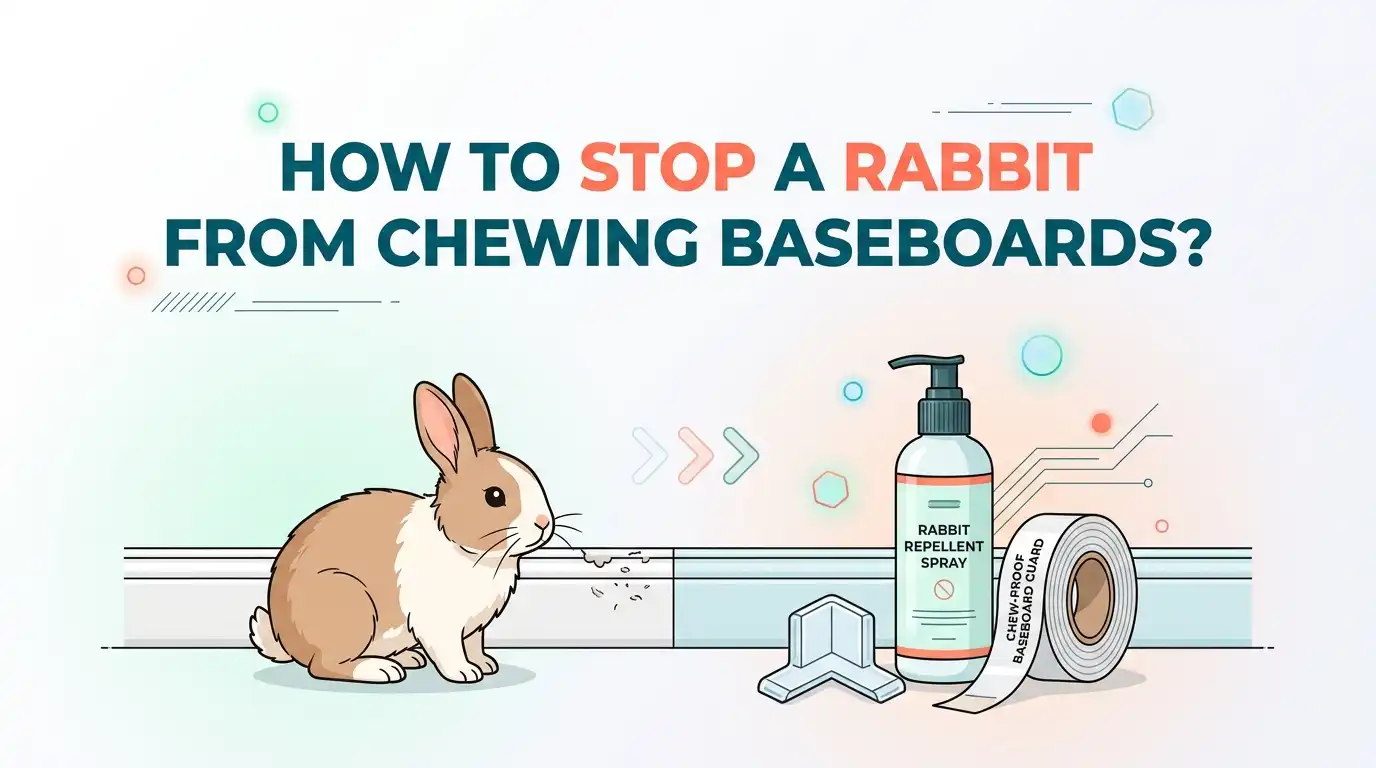
How To Stop A Rabbit From Chewing Baseboards?
Your rabbit looks sweet and innocent. Then you turn your back for five minutes. Suddenly, your baseboards have teeth marks all over them. Sound familiar? You are not alone.
Chewing is one of the most common problems rabbit owners face. Rabbits chew baseboards because their teeth never stop growing. They also chew out of boredom, stress, or simple curiosity.
The good news is that you can stop this behavior. This guide gives you simple, practical steps that work. You will learn how to protect your home and keep your bunny happy at the same time. Let us hop right into the solutions.
In a Nutshell:
- Rabbits chew because their teeth grow constantly. They need to wear them down. Chewing is natural, so you cannot stop it completely. You can only redirect it.
- Physical barriers work best. Cardboard guards, plastic sheets, and wooden bumpers give you the most reliable protection against determined chewers.
- Chew toys are your secret weapon. A bored rabbit chews everything. Give your bunny apple sticks, hay, and safe wood blocks to keep it busy.
- Deterrent sprays and Ivory soap can help. These bad-tasting options stop some rabbits. But some bunnies treat bitter spray like a tasty condiment, so results vary.
- Spaying or neutering reduces destructive habits. Fixed rabbits feel calmer and chew less. This single step can make a big difference.
- Patience and consistency matter most. No method works overnight. Combine two or three methods for the best results over time.
Why Do Rabbits Chew Baseboards In The First Place
Understanding the cause helps you solve the problem faster. Rabbits have teeth that grow all their lives. In fact, their teeth can grow up to several inches per year.
Chewing wears these teeth down and keeps them healthy. This is not bad behavior. It is survival instinct. Baseboards sit right at floor level, which makes them an easy target for a curious bunny.
Boredom is another big reason. A rabbit with nothing to do will find its own fun. Stress and anxiety also trigger chewing. Some rabbits chew to mark their territory too.
When you know the reason, you can choose the right solution. Most of the time, the answer is a mix of redirection and protection.
Give Your Rabbit Plenty Of Chew Toys
This is the first and most important step. A rabbit needs something safe to chew, or it will chew your house. Offer a variety of toys so your bunny never gets bored.
Apple wood sticks, willow balls, and untreated wood blocks are great choices. Seagrass mats and timothy hay cubes also work well.
Rotate the toys every few days to keep things fresh. Bunnies lose interest in the same old toys quickly. Stuff cardboard tubes with hay for a fun foraging treat. Make sure the wood is untreated and free of chemicals.
Pros: This method solves the root cause and keeps your rabbit healthy and happy. It is affordable and easy.
Cons: Toys alone may not stop a very determined chewer. You will need to refill and replace them often.
Block The Area With Cardboard Guards
Cardboard is a cheap and simple barrier. You can cut large sheets and lean them against your baseboards. Many rabbit owners swear by this method because it works and costs almost nothing. The cardboard takes the damage instead of your wall.
Some bunnies even enjoy chewing the cardboard, which keeps them busy. Replace the cardboard when it gets too worn. You can tape pieces together for longer coverage. Plain brown cardboard blends in better than printed boxes.
Pros: This option is free or very cheap. It is easy to set up and gives your rabbit a safe thing to chew. You can replace it anytime.
Cons: Cardboard does not look pretty in a tidy living room. It needs frequent replacement. Some rabbits push it aside to reach the wall.
Install Clear Plastic Or Plexiglas Panels
If you want protection that looks neat, plastic panels are a smart choice. Clear acrylic or Plexiglas sheets cover your baseboards while staying almost invisible. You can attach them with screws or removable adhesive strips. The smooth surface gives rabbit teeth nothing to grip.
Cut the panels to the right height to cover the chew zone. Most damage happens in the bottom few inches, so you do not need tall sheets. This method protects walls behind baseboards too.
Pros: Plastic panels look clean and barely show. They are tough and last a long time. Rabbits cannot chew through them easily.
Cons: This option costs more than cardboard. You need to cut and install the panels, which takes some effort. Drilling holes may damage walls.
Use Untreated Wooden Bumper Strips
Wooden bumpers are thin strips of untreated wood. You tack them onto your baseboards. They protect the real baseboard and double as a chew block. Your rabbit chews the cheap strip instead of your expensive trim. Furring strips from a hardware store work perfectly.
Make sure the wood has no paint, stain, or chemicals. Treated wood can make your rabbit sick. When the strip wears down, you simply swap it out. This method gives your bunny a job to do.
Pros: Wooden bumpers protect your baseboard and give your rabbit a safe chewing outlet. They look more natural than plastic or cardboard. They are easy to replace.
Cons: You must install them with nails or tacks. They do require some basic tools. The strips wear down and need replacing over time.
Apply Bitter Deterrent Sprays
Bitter apple spray is a popular rabbit repellent. You spray it on the baseboards, and the bad taste discourages chewing. Many pet stores sell sprays that are safe for animals. Always check the label to make sure it is safe to inhale and chew.
Reapply the spray often because it fades over time. Test a small spot first to check for stains. Keep in mind that results are mixed. Some rabbits hate the taste and stay away.
Pros: Spray is easy to apply and works on large areas fast. It does not change how your room looks. It is widely available.
Cons: Some bunnies actually like the taste and ignore it. You must reapply it regularly. The spray may stain or smell unpleasant to humans.
Rub Pure Ivory Soap On The Baseboards
This is a clever trick many rescue volunteers use. Pure Ivory soap tastes bad to rabbits but is safe because it has no harmful additives. You rub the bar directly onto the baseboards and other wooden surfaces. The soap leaves a thin coating that discourages chewing.
Soften the soap in the microwave for a few seconds to make it spread easier. Reapply when the taste wears off. This method costs very little and is gentle on your rabbit.
Pros: Ivory soap is cheap, safe, and easy to find. It does not harm your bunny. Many owners report good results.
Cons: The soap leaves a visible film on the surface. You must reapply it often. It does not work on every rabbit.
Spay Or Neuter Your Rabbit
Many people do not realize how much hormones affect chewing. An unfixed rabbit often chews more because of territorial and mating instincts. Spaying or neutering calms these urges. A fixed bunny tends to be more relaxed and less destructive.
This procedure also has health benefits. It lowers the risk of certain cancers and improves litter habits. Talk to a rabbit savvy vet about the right age for surgery. The change in behavior may take a few weeks after healing.
Pros: This step reduces destructive chewing at the source. It improves your rabbit’s health and lifespan. It also helps with litter training.
Cons: Surgery costs money and carries small risks. You need a vet who knows rabbits. It does not stop all chewing, since chewing is still natural.
Limit Access With A Pen Or Gates
Sometimes the easiest fix is to keep your rabbit away from the problem area. A playpen or baby gate creates a safe zone with no tempting baseboards. You give your bunny a fully bunny proofed space to enjoy. The rest of your home stays protected.
Make the pen big enough for exercise and play. Add toys, hay, and a litter box inside. You can let your rabbit roam in protected rooms under supervision.
Pros: A pen gives you total control over what your rabbit can reach. It protects your whole home. It keeps your bunny safe from cords too.
Cons: Your rabbit gets less freedom to roam. Pens take up floor space. Some bunnies dislike being confined and may act restless.
Cover Floors And Corners Too
Rabbits often chew baseboards while exploring corners. Protecting the floor near your baseboards reduces the temptation to chew nearby. Chair mats, seagrass rugs, and ceramic tiles all work well. Corner protectors stop your bunny from digging into carpet edges.
Place a digging box near these spots to redirect energy. Give your rabbit a fun place to scratch and dig instead. This keeps your bunny busy and away from the wall.
Pros: Floor protection guards against both chewing and digging. Seagrass rugs are safe to chew. This method keeps your rabbit entertained.
Cons: Rugs and mats need cleaning and replacing. They add clutter to your floor. Determined rabbits may still reach the baseboards.
Increase Exercise And Mental Stimulation
A tired rabbit is a well behaved rabbit. Boredom is a huge cause of destructive chewing. Give your bunny at least a few hours of playtime each day. Let it hop, run, and explore in a safe space. The more it moves, the less it chews out of frustration.
Add tunnels, boxes, and foraging toys to its space. Hide treats so your rabbit has to work to find them. Spend time playing and bonding with your bunny daily.
Pros: Exercise improves your rabbit’s mood and health. It cuts down on boredom chewing. Bonding time makes your bunny happier.
Cons: This takes time and daily effort from you. It does not protect baseboards on its own. You still need physical barriers for full safety.
Consider Adopting A Bonded Companion
Lonely rabbits often chew more. A single bunny has more time to feel bored and stressed. A bonded partner gives your rabbit company and entertainment. Two rabbits keep each other busy and tend to be calmer. This can lower destructive behavior in many cases.
Bonding takes time and should be done slowly. Always introduce rabbits in neutral space and supervise closely. Make sure both rabbits are fixed before bonding.
Pros: A companion reduces boredom and loneliness. Bonded pairs are happier and often less destructive. They provide each other constant company.
Cons: Two rabbits cost more in food and care. Bonding can be tricky and may take weeks. Not every pair gets along right away.
Stay Patient And Combine Several Methods
No single trick stops every rabbit. The best results come from mixing two or three methods together. For example, you can use cardboard guards, offer chew toys, and apply Ivory soap at the same time. This covers all the bases. Protection plus redirection works far better than one method alone.
Give each method time to work. Rabbits learn slowly, so do not expect instant results. Watch your bunny and adjust your plan as needed.
Pros: Combining methods gives you strong, reliable protection. You address both the cause and the symptom. It works for stubborn chewers.
Cons: This takes more effort and planning. It may cost a bit more upfront. You need to stay consistent over time.
Frequently Asked Questions
Why does my rabbit chew baseboards even when it has toys?
Your rabbit may still feel bored, stressed, or curious. Some rabbits prefer the texture of baseboards. Try rotating toys more often and adding physical barriers. Make sure your bunny gets enough daily exercise and attention too.
Is it safe to use bitter apple spray on baseboards?
Most pet safe bitter sprays are fine for baseboards. Always read the label and pick a product safe to chew and inhale. Test a small spot first to check for stains. Remember that some rabbits ignore the taste completely.
Will my rabbit ever stop chewing completely?
No, and that is normal. Chewing is a natural and healthy rabbit behavior. Your goal is to redirect it, not eliminate it. Give your bunny safe things to chew, and protect the items you want to keep.
Does spaying or neutering really reduce chewing?
Yes, in many cases it helps. Fixed rabbits feel calmer and less territorial. This often lowers destructive habits like chewing and digging. It will not stop natural chewing, but it usually reduces the intensity.
What wood is safe for my rabbit to chew?
Untreated apple, willow, pear, and hazel wood are safe choices. Avoid any wood with paint, stain, or chemicals. Never use cedar or fresh pine, as the oils can harm rabbits. Always offer clean, dry, untreated wood.
How long does it take to stop the chewing habit?
It depends on your rabbit and the methods you use. Some bunnies respond in a few days, while others take weeks. Stay patient and consistent. Combining barriers with chew toys usually speeds up the process.

Hi, I’m Liza — pet lover, lifelong animal enthusiast, and the voice behind Liza4Pets. I created this space to share honest, practical pet care advice for fellow pet parents who want the best for their furry (and not-so-furry) companions.