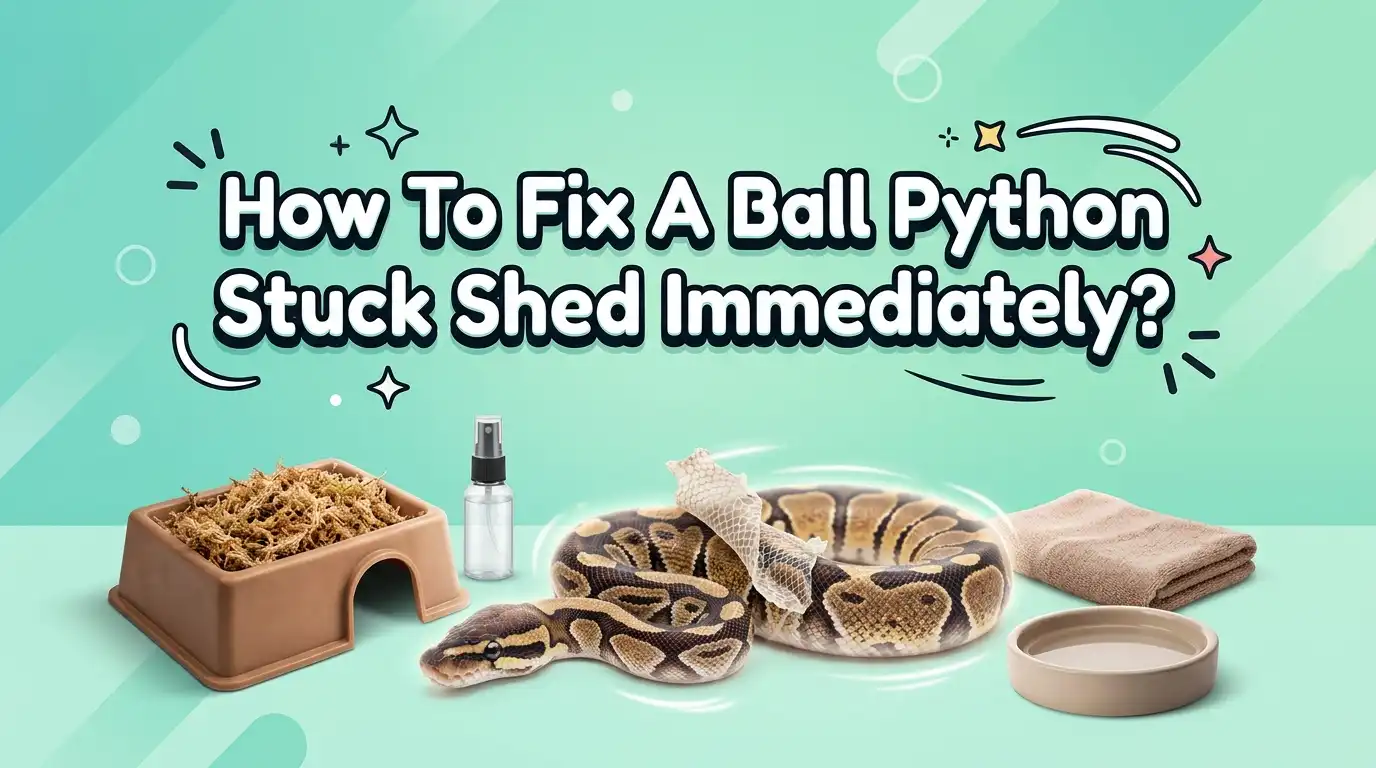
How To Fix A Ball Python Stuck Shed Immediately?
Your ball python just finished shedding, but something looks wrong. Patches of dull, dry skin still cling to its body. Maybe the tail tip looks crusty, or the eyes seem cloudy and wrinkled.
This is called a stuck shed, and it can worry any snake owner. The good news is that you can fix it at home most of the time. You just need the right steps, gentle hands, and a little patience.
This guide walks you through every safe method to remove stuck shed right now and stop it from coming back.
Key Takeaways
- Low humidity is the main cause. Most stuck shed problems come from a dry enclosure. Ball pythons need humidity between 60 and 80 percent to shed cleanly. Fixing humidity solves the root issue.
- Never peel skin dry. Always soften old skin with moisture first. Pulling dry skin can tear scales and injure your snake. Patience beats force every single time.
- The humid box method works best. A simple container with damp paper towels or moss lets your snake remove shed on its own. This is gentle and low stress.
- Watch the tail and eyes closely. Stuck shed on the tail tip can kill tissue. Retained eye caps need careful handling. These two spots need the most attention.
- See a vet for stubborn cases. If retained skin will not come off after two or three days of treatment, a reptile vet can remove it safely without hurting your snake.
- Prevention is the real fix. Once you solve the current shed, raise humidity and add a humid hide so it never happens again.
What A Stuck Shed Actually Looks Like
A healthy ball python sheds its skin in one full piece, like a sock turning inside out. A stuck shed looks very different.
You will see patches of old skin stuck to the body, often dry, dull, and crinkly. The fresh skin underneath looks bright and shiny by comparison.
Common trouble spots include the tail tip, the head, the belly, and the eyes. Stuck eye caps make the eyes look cloudy or sunken even after the shed.
Dehydration and low humidity cause most of these problems. The skin dries out before the snake can rub it off. Spotting the issue early gives you the best chance to fix it quickly and avoid lasting harm to your pet.
Why Acting Fast Matters For Your Snake
Stuck shed is not always an emergency, but some cases turn serious fast. The biggest danger sits at the tail tip. Retained rings of skin can tighten as they dry.
This squeezes the tail and cuts off blood flow. Without treatment, the tail tissue can die and fall off. That is painful and permanent.
Stuck eye caps create their own risk. Layers of retained skin can build up over several sheds. This can harm the eye and reduce your snake’s vision. Skin stuck on the body is less urgent but still needs removal.
Leaving it on can trap bacteria and cause skin infections. The sooner you treat the problem, the easier and safer the fix becomes. Quick action protects your snake from lasting damage.
Step One: Raise The Humidity Right Away
The fastest first move is to boost the humidity inside the enclosure. Ball pythons need 60 to 80 percent humidity to shed well. Dry air is almost always the reason skin sticks. Raising moisture softens the stuck shed naturally.
Start by misting the enclosure with warm water using a spray bottle. Add a larger water bowl on the warm side so more water evaporates into the air. You can cover part of a screen lid with foil or a damp towel to trap moisture.
Switch to a substrate that holds water, like coconut fiber or cypress mulch. Check the level with a digital hygrometer so you know it stays high. This simple change often loosens stuck skin within a day.
Pros: Easy, gentle, low stress, and fixes the root cause.
Cons: Works slowly, so it may not help a severe stuck shed fast enough on its own.
Step Two: Build A Simple Humid Hide Box
A humid hide is your best tool for fixing stuck shed safely. It gives your snake a warm, moist space to loosen the old skin on its own terms. You can make one in five minutes.
Take a plastic container with a lid and cut a hole in the side big enough for your snake to enter. Fill it with damp sphagnum moss or damp paper towels. The material should feel wet but not dripping.
Place the box on the warm side of the enclosure. Your snake will crawl in, and the moisture will soften the stuck shed. Many snakes remove all retained skin inside this box without any help.
Pros: Very gentle, low stress, mimics natural shedding, lets the snake control the process.
Cons: Takes patience, and the box needs to stay damp, so you must check and re-wet it.
Step Three: Give Your Snake A Warm Soak
If the humid hide does not work alone, a warm soak is the next step. This method softens stuck shed quickly and helps with stubborn patches.
Fill a container with about one inch of lukewarm water, around 85 to 90 degrees Fahrenheit. The water should never feel hot to your wrist.
Place your snake in the container and let it soak for 15 to 30 minutes. Add a rock or a folded towel so it can rest above the water if it wants.
Stay nearby the whole time since ball pythons are not strong swimmers. After the soak, the old skin should peel off easily. You can gently rub it away with your fingers or a soft cloth.
Pros: Fast, effective, softens skin well across the whole body.
Cons: Soaking can stress some snakes, and water that is too deep poses a drowning risk.
Step Four: Use The Damp Pillowcase Trick
This old reptile keeper method works great for snakes that hate soaking. The damp pillowcase uses gentle friction to rub off stuck shed while keeping your snake calm and contained. It feels less scary than a water bath for many ball pythons.
Take a clean pillowcase and dampen it with warm water, then wring out the extra. Place your snake inside and tie the top closed loosely. Set the bag in a warm, safe spot for one to two hours.
As your snake moves around, the soft, wet fabric rubs against the skin and pulls the old shed away. When you open it, much of the stuck skin often stays behind in the cloth.
Pros: Low stress, no drowning risk, uses natural movement to do the work.
Cons: Slower than soaking, and not every snake moves enough inside the bag to shed fully.
Step Five: Gently Remove Stubborn Body Skin
Sometimes skin stays stuck even after soaking. At this point you can help remove it by hand, but only after the skin is fully softened. Never pull dry skin. Dry removal tears scales and hurts your snake.
Hold your snake gently and look for a loose edge of old skin. Roll or peel it back slowly in the same direction the scales lie, moving from head to tail. A damp cotton swab or a soft, wet cloth helps lift edges.
Wipe along the body with the wet cloth and let stuck pieces catch on the fabric. Stop if the skin does not come off easily. Forcing it means it needs more soaking time first.
Pros: Removes patches the snake cannot reach, gives you direct control.
Cons: Risk of injury if rushed, and a wriggly snake makes the job harder.
How To Safely Handle Stuck Eye Caps
Stuck eye caps need extra care because the eye is delicate. A retained eye cap looks like a cloudy, wrinkled, or sunken spot over the eye. Do not try to pick it off with tweezers or your nails. This can scratch or even pop the eye.
Start with the gentle methods first. Raise humidity, use a humid hide, and give warm soaks. Most eye caps come off on their own once moisture builds up. If one stays after a soak, dampen a cotton swab with warm water and roll it very softly over the eye.
The cap may stick to the swab and lift away. If it does not budge after two or three sheds, take your snake to a reptile vet. They remove eye caps safely as a routine procedure.
Pros: Gentle methods protect the eye while still working.
Cons: Manual removal carries real injury risk, so many cases need a vet.
What To Do About A Stuck Tail Tip
The tail tip is the most dangerous place for stuck shed. Retained rings of dry skin can tighten and choke off blood flow. This leads to tissue death if you ignore it. So treat a stuck tail tip as a priority.
Soak the tail in warm water or wrap it in a warm, damp cloth for several minutes. Once the skin softens, gently unwind the old shed from the tip. Work slowly and watch the color. A healthy tail tip looks pink or normal in color.
If the tip looks dark, black, or shriveled, the tissue may already be damaged. In that case, see a reptile vet right away. Catching a stuck tail early almost always prevents permanent harm and keeps the full tail healthy.
Pros: Quick soaking usually saves the tail when done early.
Cons: Late treatment can mean tail loss, so timing is critical.
When To Call A Reptile Vet
Most stuck shed cases clear up at home, but some need a professional. Knowing when to call a vet protects your snake from harm. You should reach out if home methods fail after two or three days of steady treatment.
See a vet right away if you notice a dark or shriveled tail tip, layers of retained eye caps, or skin that will not loosen no matter what you try. A vet can also check for dehydration, infection, or an underlying illness that causes repeated bad sheds.
Reptile vets remove stuck shed and eye caps quickly and safely using the right tools. They can also test why the problem keeps happening. A single visit often solves a stubborn case and gives you peace of mind about your pet’s health.
Pros: Safe, expert removal and a check for deeper health issues.
Cons: Costs money and may require travel to find a reptile specialist.
Common Mistakes That Make Stuck Shed Worse
A few mistakes can turn a minor stuck shed into a serious problem. The biggest one is pulling skin off while it is dry. This rips scales and can cause bleeding. Always soften skin first with moisture. Patience prevents injury.
Another mistake is using water that is too hot or too deep during a soak. Hot water can burn, and deep water can drown a tired snake. Keep water shallow and lukewarm. Picking at eye caps with sharp tools is also risky and can blind your snake.
Some owners ignore the tail tip until it turns black, which leads to tail loss. Skipping the humidity fix is another common error. Without solving the dry air, the next shed will stick too. Avoid these traps and your snake heals faster.
How To Prevent Stuck Shed In The Future
Fixing the current shed is only half the job. Stopping it from happening again is the real win. Almost every stuck shed traces back to low humidity, so that is where prevention starts. Keep your enclosure humidity between 60 and 80 percent at all times, not just during shedding.
Add a permanent humid hide filled with damp moss so your snake always has a moist spot. Provide a water bowl large enough to soak in if your snake chooses. Use a moisture holding substrate and check humidity daily with a digital hygrometer.
Make sure your snake stays hydrated and well fed, since dehydration causes poor sheds. Add rough surfaces like rocks or branches so your snake has something to rub against. These simple habits lead to clean, full sheds every time.
Signs Your Snake Is About To Shed
Knowing the shed cycle helps you prepare and prevent problems. A ball python gives clear warning signs before it sheds. The first sign is dull, faded skin. The bright colors look gray or hazy. Next, the belly may take on a pinkish tone.
The clearest sign is the eyes turning blue or cloudy. This is called being “in blue.” It happens because fluid builds up under the old skin to loosen it. During this time, your snake may hide more, eat less, and act grumpy.
This is the moment to raise humidity and refresh the humid hide. The eyes clear up a few days before the actual shed. Within a week or so, your snake sheds its skin. Watching for these signs lets you act early and avoid stuck shed completely.
Frequently Asked Questions
How long can stuck shed stay on a ball python before it becomes dangerous?
Stuck shed on the body can usually wait until the next shed without harm. The tail tip and eye caps are different. A stuck tail can cut off blood flow within days, so treat it fast. Eye caps that stay over several sheds can hurt vision. Act quickly on those two spots.
Can I just leave stuck shed alone and let it come off next time?
Sometimes yes, for small patches on the body. Skin stuck on the tail or eyes should never wait. Those spots can cause real injury. Even body patches are best removed to prevent infection. The safest choice is to soften and remove stuck shed soon after you notice it.
Is soaking my ball python safe?
Yes, when you do it right. Use lukewarm water about one inch deep, never hot or deep water. Stay with your snake the whole time. Soak for 15 to 30 minutes. Some snakes find it stressful, so a humid hide or damp pillowcase may work better for them.
Why does my ball python keep getting stuck shed?
The most common reason is low humidity and dehydration. Dry air keeps the skin from loosening. Check that your enclosure stays at 60 to 80 percent humidity. Add a humid hide and a larger water bowl. If sheds stay bad after fixing humidity, ask a reptile vet to check for health issues.
Should I pull off the stuck eye cap myself?
No, not with tweezers or your nails. The eye is too easy to injure. Try humidity, soaks, and a gently rolled damp cotton swab first. Most eye caps come off this way. If one stays after a few sheds, let a reptile vet remove it safely.
What humidity level prevents stuck shed?
Keep humidity between 60 and 80 percent at all times. Many keepers raise it toward 70 to 80 percent during a shed cycle. Use a digital hygrometer to track it. Steady humidity is the single best way to keep every shed clean and complete.

Hi, I’m Liza — pet lover, lifelong animal enthusiast, and the voice behind Liza4Pets. I created this space to share honest, practical pet care advice for fellow pet parents who want the best for their furry (and not-so-furry) companions.