Why Is My Betta Fish Flaring Its Gills At Me?
Your betta fish puffs out its gills the moment you walk by. The fins spread wide. The body looks bigger and bolder. It almost feels like your tiny pet is picking a fight with you.
You might wonder if you did something wrong. You might worry your fish is sick, scared, or angry. The good news is that flaring is a normal betta behavior.
The better news is that you can control it with a few easy changes. This post explains every reason your betta flares at you. It also gives you clear, step by step fixes you can use today.
Key Takeaways
- Flaring is natural behavior. Your betta spreads its gills and fins to look bigger and defend its space. It does not mean your fish hates you.
- You might be a perceived threat. Bettas see movement and color well. Your hand, your shadow, or your bright clothing can trigger a defensive flare.
- Reflections cause the most flaring. Your betta often flares at its own image in the glass because it thinks the reflection is a rival male.
- A little flaring is healthy exercise. Short flaring sessions, around a few minutes a day, keep your betta active and strong.
- Too much flaring leads to stress. Constant flaring for more than 20 minutes a week can lower appetite, weaken the immune system, and cause faded color.
- Simple fixes solve the problem fast. Adjusting light, adding plants, reducing reflections, and improving water quality calm most bettas quickly.
What Flaring Actually Looks Like In Bettas
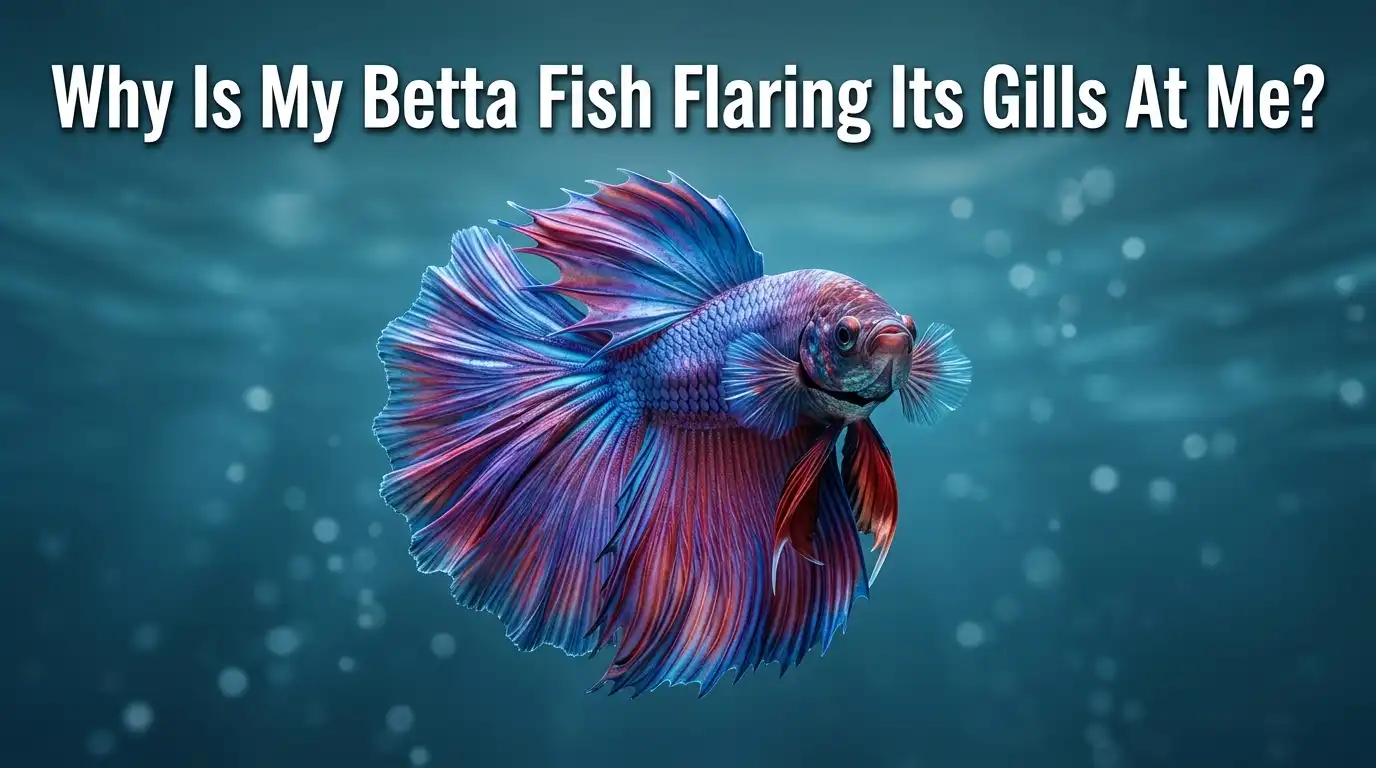
Flaring is easy to spot once you know the signs. Your betta pushes out the flaps under its gills. This part is called the beard. The beard makes the fish look much larger. At the same time, the betta spreads all of its fins wide open.
The body may turn sideways to show its full size. Sometimes the colors look brighter during a flare. This display is your betta saying “I am big and strong, back off.” It is a threat posture borrowed from wild fighting behavior.
A short flare is normal and even beautiful to watch. A constant flare, however, points to a problem you should fix. Learning the look helps you measure how often it happens.
Why Your Betta Flares At You Specifically
Your betta flares at you because it sees you as a possible intruder. Bettas have excellent vision for movement and color. They can even see ultraviolet light. Your sudden hand movements near the tank look like a threat.
Bright shirts, fast gestures, and tapping on the glass all trigger this response. Your betta cannot tell that you bring food and care. It only knows that a large shape just entered its territory. Some bettas also flare at you out of excitement and recognition.
Many owners report that their fish flares when they return from a trip. So a flare can mean “go away” or “hey, I see you.” Watching the rest of the body language tells you which one it is.
The Reflection Problem And How To Fix It
Reflections are the number one reason bettas flare nonstop. Your betta sees its own image in the glass. It does not know the image is itself.
It thinks another male betta has invaded its home. So it flares for hours, trying to scare off a rival that never leaves. This happens most when the tank light is on and the room is dark.
You can fix this in a few simple steps. First, turn off or dim the aquarium light during dark room hours. Second, keep the room lit so the glass reflects less. Third, move the tank away from dark walls or windows. Fourth, add a background to the back panel.
Pros: These fixes are free or cheap and work fast. Cons: You may need to test a few lighting setups before you find the right balance.
Adding Plants And Decor To Break Up The Space
Open tanks with bare glass make flaring worse. Your betta sees long, clear sightlines and its own reflection everywhere. Adding plants and decor breaks up these open spaces.
This gives your fish places to rest, hide, and feel safe. Live plants like java fern, water sprite, and marimo moss work well. Silk plants are a soft alternative that will not tear fins. Caves, driftwood, and floating logs also help a lot.
Place items near the front and corners where reflections appear strongest. A planted tank feels more like a natural home and less like a fighting arena. Your betta then spends time exploring instead of flaring.
Pros: Plants improve water quality and reduce stress at the same time. Cons: Live plants need light and basic care, which takes a little extra effort.
Tinting The Water To Reduce Reflections
Tinting the water is a clever trick many betta keepers use. You add natural tannins to the tank. Tannins come from items like Indian almond leaves or driftwood.
The water turns a light tea color that lowers reflections in the glass. This makes it harder for your betta to see its own image. As a bonus, tannins support healthy fins and mimic the betta’s natural waters.
Start with a small amount and watch the color change. Always condition new water before you add tannins. Add slowly until the reflection problem fades.
Pros: Tannins reduce flaring and may boost fin health and reduce harmful bacteria. Cons: The tea colored water is not for everyone, and it can lower the pH if you overdo it. Test your water often.
When Flaring Is Healthy For Your Betta
Not all flaring is bad. A short flare gives your betta exercise and mental stimulation. Experts agree that a few minutes of flaring each day keeps a betta fit and active.
It works the muscles and prevents boredom. Some owners even let their fish flare at a mirror for about five minutes once a week. This acts like a tiny workout session.
The key is moderation. Brief, occasional flaring is a sign of a strong and alert fish. You only need to worry when the flaring never stops.
Pros: Controlled flaring builds strength and shows your betta has good energy. Cons: It is easy to let it go too long, so always remove the mirror after a short time and watch closely.
When Flaring Becomes A Stress Problem
Constant flaring is a warning sign you should not ignore. Flaring for more than 20 minutes a week can harm your betta. A stressed fish burns energy it should save.
Over time, this lowers the immune system and invites disease. Your betta may stop eating. Its colors may fade. Stress stripes, which are horizontal lines on the body, may appear.
Watch for these signs alongside the flaring. If your fish flares all day and shows dull color or no appetite, act quickly. Remove the trigger, whether it is a reflection, a tank mate, or bright light. Calm surroundings help your betta recover its health and bright color.
Checking For Aggressive Tank Mates
Tank mates can trigger heavy flaring and even fights. Bettas are territorial by nature. A male betta will flare hard at any fish it sees as a rival.
Two male bettas should never share a tank. Even peaceful tank mates can stress a betta if the space is too small. One owner found his betta attacking small rasboras at night.
Watch your tank carefully after adding any new fish. If you see chasing, nipping, or nonstop flaring, separate the fish right away. Choose calm, fast, non colorful tank mates and give everyone plenty of room. Some bettas simply do better living alone.
Pros: A solo betta avoids fights and lives with less stress. Cons: A solo tank means you lose the variety of a community setup.
Improving Water Quality To Calm Your Betta
Poor water quality stresses bettas and makes flaring worse. Dirty water raises ammonia and nitrite, which both harm fish. Clean, stable water keeps your betta calm and healthy. Follow a simple routine to keep the tank in good shape.
Change about 20 to 25 percent of the water once a week. Test the water weekly with a basic kit. Keep ammonia and nitrite at zero. Keep nitrate under 20 ppm.
Use a gentle filter, because strong currents stress bettas and damage fins. Keep the water warm, around 78 to 80 degrees Fahrenheit, since bettas are tropical fish.
Pros: Good water prevents disease and reduces stress driven flaring. Cons: Weekly testing and water changes take time, but the routine becomes quick with practice.
Ruling Out Illness And Fin Rot
Sometimes flaring hides a health problem. You should always check your fish for signs of sickness. Look closely at the fins and gills when your betta flares.
Watch for torn or ragged fins, which can signal fin rot. Check for white spots, which point to ich. Look for swelling, clamped fins, or rapid gill movement.
If your betta gasps at the surface, the tank may lack oxygen. Add an air stone or gentle filter to raise oxygen levels. Treat any disease as soon as you spot it, since early action saves fish.
A healthy betta flares now and then. A sick betta flares while showing other clear symptoms. Pair what you see with the flaring to find the real cause.
How To Tell If Your Betta Is Happy
A happy betta is easy to recognize once you know the signs. A content fish swims around the tank and explores often. It eats with a strong appetite. It shows bright, rich colors. It may even flare at you in a friendly, excited way when you arrive.
Compare this with an unhappy betta. A stressed fish hides too much, stays at the bottom, or refuses food. Its color turns dull and stress stripes appear.
Build a bond by spending calm time near the tank without sudden movements. Some owners draw doodles or stick notes on the glass for the fish to follow. Over time, your betta learns you are safe and friendly.
Step By Step Plan To Reduce Flaring
Here is a clear plan you can follow today. Work through each step in order.
First, find the trigger. Watch your betta and note when it flares. Second, fix reflections. Dim the tank light and keep the room bright. Third, add a background and place plants near the front glass. Fourth, consider tinting the water with tannins if reflections continue.
Fifth, check your tank mates and remove any that cause fights. Sixth, test and clean the water to keep it stable and warm. Seventh, inspect your fish for illness and treat any problems.
Pros: This step by step method targets every common cause. Cons: You may need a week or two to see your betta fully relax, so stay patient.
Frequently Asked Questions
Is it normal for my betta to flare at me every day?
A short daily flare is normal and healthy. It gives your betta exercise. You should only worry if the flaring lasts a long time and comes with faded color, hiding, or loss of appetite. In that case, look for stress triggers and fix them.
Does flaring mean my betta is angry at me?
Not always. Flaring is a defensive display, not a personal grudge. Your betta may see your movement as a threat, or it may flare from excitement when it recognizes you. Watch the rest of its body to tell which one it is.
How long is too long for a betta to flare?
A few minutes a day is fine. Flaring for more than 20 minutes a week can stress your fish. Constant all day flaring is a clear sign you need to remove a trigger like a reflection or a rival fish.
Will a mirror help or hurt my betta?
A mirror can help in small doses. Let your betta flare at a mirror for about five minutes, then remove it. This gives healthy exercise without long term stress. Never leave a mirror in the tank all day.
Can flaring damage my betta’s fins?
Yes, too much flaring can lead to stress and even fin nipping. Long term stress also weakens the immune system. Reduce flaring by fixing reflections, adding plants, and keeping the water clean and warm.
My betta stopped flaring completely, is that bad?
Some calm bettas rarely flare, and that is fine. If your fish also seems dull, inactive, or off its food, check the water and look for illness. A healthy fish that simply has a relaxed personality is nothing to worry about.

Hi, I’m Liza — pet lover, lifelong animal enthusiast, and the voice behind Liza4Pets. I created this space to share honest, practical pet care advice for fellow pet parents who want the best for their furry (and not-so-furry) companions.