Why Is My Horse Dropping Grain While Eating?
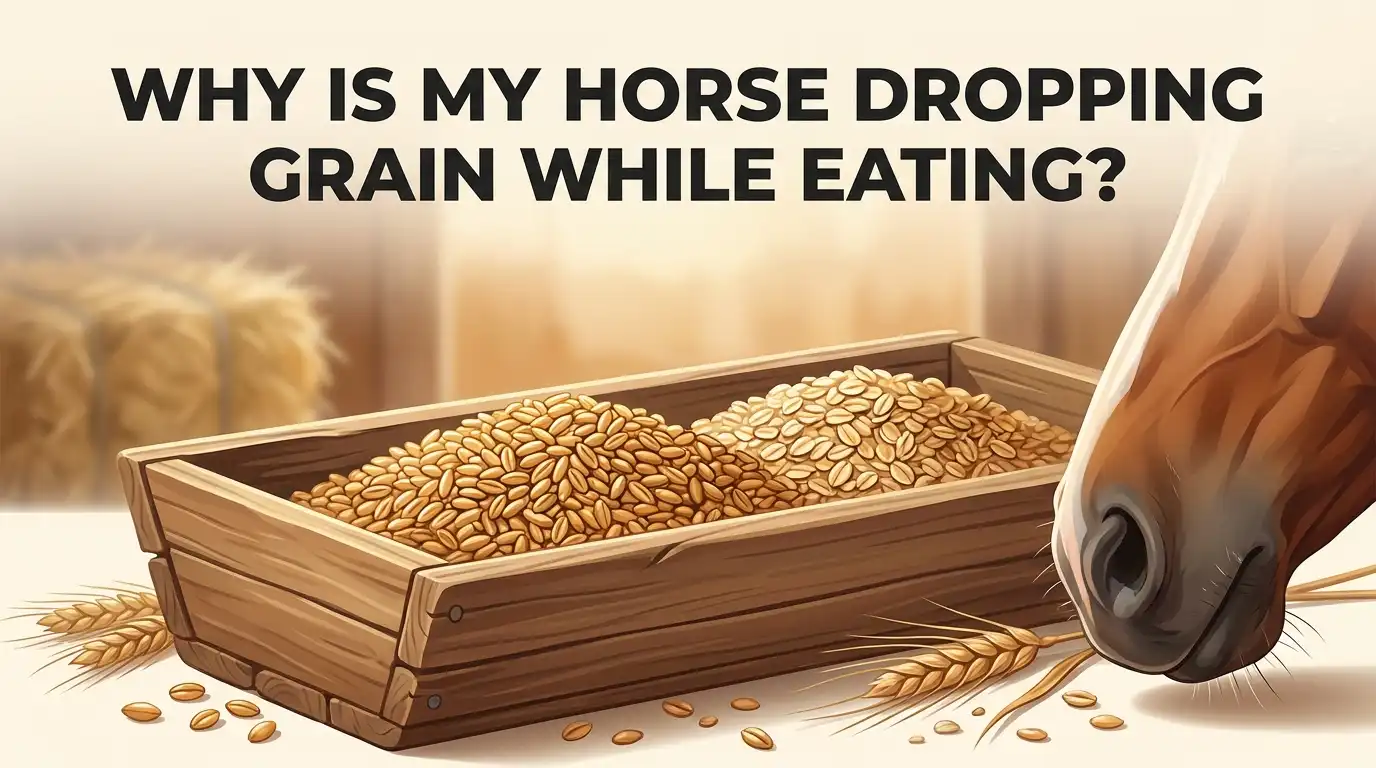
Watching your horse spill grain all over the stall floor can feel confusing and worrying. You feed a full scoop, yet half of it ends up on the ground. Your horse chews, pauses, and lets the feed fall right back out.
This behavior has a name. Vets call it quidding. It often signals that something inside your horse’s mouth needs attention. Sometimes the cause is simple.
Other times it points to a dental or health problem that needs a vet visit. The good news is that most cases improve fast once you find the root cause.
Key Takeaways
- Quidding is the main term for dropping grain or hay. It usually means your horse feels pain or discomfort while chewing, and it deserves a closer look right away.
- Dental problems cause most cases. Sharp enamel points, gaps between teeth, fractured teeth, and gum disease all make chewing painful. A dental exam and floating often solve the issue.
- Senior horses drop grain more often. Older horses lose teeth and wear them down. Horses over 20 should get dental checks twice a year instead of once.
- Feeding changes help a lot. Soaked feed, mashes, and hay cubes give your horse soft meals that need little chewing. These support weight and comfort during recovery.
- Fast eating and bad setups matter too. Bolting feed, deep buckets, and stony ground all cause spilling. Simple management fixes can stop the mess quickly.
- Call your vet for warning signs. Fever, bad breath, drooling, weight loss, or feed coming out the nose need urgent attention. Early action protects your horse from bigger problems.
What Does Quidding Actually Look Like
Quidding is the word vets use when a horse drops partly chewed food from its mouth. With grain, you see loose pellets or sweet feed falling out as your horse eats.
With hay, your horse often forms small wads and drops them. These wads look like little bird nests on the ground. This is a classic sign that chewing feels hard or painful.
You may also notice other clues. Your horse might eat much slower than normal. It may tilt its head to one side while chewing. Some horses drool more or drop feed only from one side.
Watch your horse eat for a few minutes. These small details help your vet find the cause faster. Take a short video if you can. It gives your vet clear evidence to work with.
Why Dropping Grain Should Never Be Ignored
Chewing is the first and most important step in digestion. Your horse uses its teeth to grind grain and hay into small pieces.
This process mixes feed with saliva and makes nutrients easy to absorb. When your horse drops feed, it swallows fewer nutrients from every meal. Over time, this leads to real problems.
The most common result is weight loss. Your horse eats less than it needs and slowly drops condition. Poor chewing also raises the risk of choke, where feed lodges in the esophagus.
Large unchewed pieces reaching the gut can trigger colic too. These are serious health risks, not minor annoyances.
A horse that hides mouth pain may look fine on the outside while struggling inside. That is why you should treat dropped grain as an early warning. Acting quickly protects both your horse’s comfort and its long term health.
Sharp Enamel Points: The Most Common Culprit
Sharp enamel points top the list of dental findings in horses. Here is why they form. Your horse’s upper jaw is wider than its lower jaw.
As your horse chews in a side to side motion, the teeth wear unevenly. This leaves sharp edges on the outside of the upper teeth and the inside of the lower teeth. These points can cut the cheeks and tongue, making every bite painful.
A horse with sharp points often drops grain, forms mouth ulcers, and tilts its head while eating. The fix is a routine procedure called floating. Your vet or equine dentist files down the sharp edges with a special tool. Most horses feel relief within days.
Pros: Floating is quick, common, and low cost. It solves the problem fast and prevents future damage.
Cons: Your horse needs light sedation, and points can return, so yearly checks stay important.
Gaps Between Teeth and Gum Disease
Gaps between teeth are called diastemata. These spaces trap feed between the teeth. The trapped feed rots and inflames the gums.
This condition is very painful and is a leading cause of periodontal disease. Your horse may chew, feel pain, and then drop the grain to avoid it. Older horses face a higher risk of these gaps.
Gum disease starts as gingivitis, with red and swollen gums. Left alone, it can progress to periodontitis, which loosens the teeth.
Your vet treats this by cleaning the pockets, reshaping teeth, and sometimes using special medications. In severe cases, a loose tooth may need removal.
Pros: Cleaning and treatment ease pain and can save teeth if caught early.
Cons: Gaps rarely have a permanent cure. Your horse needs frequent monitoring and soft feed for life. Deep cases may need repeated dental visits.
Fractured or Loose Teeth
A cracked or broken tooth causes sharp, sudden pain. Fractures happen from trauma, cavities, or chewing on small stones hidden in feed.
Horses often pick up tiny stones when they eat off the ground. A fractured tooth traps rotting feed and can lead to infection. Your horse chews, hits the painful spot, and drops the grain to protect itself.
Your vet checks for fractures during a full oral exam with a speculum and good light. Treatment depends on the damage. Small enamel chips can be smoothed.
Badly broken teeth usually need extraction. Most extractions happen with the horse standing under sedation.
Pros: Removing the bad tooth ends the pain and stops infection from spreading. Recovery is often smooth.
Cons: Extraction is a bigger procedure than floating. Your horse may need pain relief and monitoring afterward. The gap left behind changes how nearby teeth wear over time.
Retained Baby Teeth in Young Horses
Young horses can drop grain too, and the reason is different from older horses. Between two and four years of age, your horse replaces its baby teeth with adult teeth.
Normally the baby teeth thin out and fall away on their own. Sometimes they do not. These stuck baby teeth are called caps.
When caps stay in place beside the erupting adult teeth, they cause pressure and pain. Your young horse may drop feed, eat slowly, resist the bit, or drool.
These signs often appear during training age, so owners sometimes blame behavior instead of teeth.
The fix is simple. Your vet removes the cap under standing sedation. Most horses recover in a few days and eat normally again.
Pros: Cap removal is fast and low risk. It prevents crooked adult teeth from forming.
Cons: Leaving caps in place can cause long term dental problems, so this needs prompt action rather than a wait and see approach.
Why Senior Horses Drop Grain More Often
Age changes everything in your horse’s mouth. Horse teeth erupt slowly throughout life to replace what grinding wears away. Eventually, older horses run out of tooth to erupt.
Teeth wear smooth, loosen, or fall out entirely. This makes chewing grain and hay very hard. Senior horses also face more infections and gaps between teeth.
Horses with PPID, once called Cushing’s disease, carry an even higher risk of mouth infections. This makes regular care crucial for aging horses. Because problems build up so fast, vets recommend that horses over 20 get dental exams twice a year instead of once.
Pros: Twice yearly checks catch problems early and keep your senior comfortable and eating.
Cons: Some dental damage in old horses cannot be reversed. You will likely need to switch to soft feeds and mashes as a permanent management step.
TMJ Pain and Jaw Problems
The temporomandibular joint, or TMJ, is the hinge that lets your horse open and close its mouth. Your horse has one on each side of the jaw.
When these joints hurt, chewing becomes uncomfortable, and your horse may drop grain as a result. TMJ problems often come from aging and joint wear.
Signs go beyond dropped feed. Your horse may show jaw stiffness, yawn a lot, shake its head, or act irritable. These clues sometimes get mistaken for training or behavior issues. A careful vet exam separates jaw pain from tooth pain.
Treatment focuses on reducing inflammation and pain, and sometimes correcting the bite through dental work.
Pros: Once you identify TMJ pain, targeted care improves comfort and eating.
Cons: TMJ conditions can be tricky to diagnose and may need imaging. Some cases need ongoing management rather than a one time fix.
When the Problem Is Bolting or Fast Eating
Not every case comes from pain. Some horses simply eat too fast. This is called bolting feed. Your horse grabs huge mouthfuls, barely chews, and spills grain everywhere.
Greedy eaters and horses fed in a group often bolt because they fear losing their meal. Fast eating also raises the risk of choke and colic.
You can slow your horse down with a few easy tricks. Spread the grain in a wide, shallow pan so your horse cannot grab big mouthfuls.
Add smooth, large, clean rocks to the feed pan. Your horse must eat around them, which slows each bite. Feed in a quiet, separate space to reduce stress.
Pros: These fixes are cheap, fast, and easy. They cut spilling and lower choke risk.
Cons: Rocks must be large and clean so your horse cannot swallow them. Some horses ignore the tricks and need more than one method combined.
How to Feed a Horse With Dental Problems
If your horse cannot chew well, you can make meals soft and easy. This keeps weight on while you treat the cause. The main tool is water.
Soaking feed turns hard pellets into a soft mash that needs almost no chewing. Add warm water to your horse’s pellets and wait until they break down fully. Beet pulp and hay cubes also soak into a soft, safe meal.
For horses that have lost weight, your vet may suggest adding oil to boost calories without extra chewing. Always work with your vet or an equine nutritionist to keep the diet balanced.
Pros: Soaked feed is gentle, hydrating, and easy for sore or toothless mouths. It supports weight gain during recovery.
Cons: Soaked feed spoils fast, especially in warm weather, so make it fresh and remove leftovers. It also takes extra prep time each day.
Simple Feeding Setup Changes That Help
Sometimes the fix has nothing to do with teeth at all. Your feeding setup may cause the spilling. Deep, narrow buckets make some horses scoop feed out and drop it. Ground feeding on stony soil lets your horse pick up small rocks that crack teeth or get spat out with grain.
Try these steps. Use a wide, shallow pan instead of a deep bucket. Place feed at a natural, comfortable height for your horse.
Clear the feeding area of stones and dirt. Keep the spot clean and dry so your horse feels calm while eating. A rubber mat under the pan catches dropped grain and keeps it clean enough to still be eaten.
Pros: These changes cost little and often reduce spilling right away. They also protect teeth from stone damage.
Cons: Setup fixes alone will not help if the real cause is dental pain. Treat them as one part of a bigger check, not a complete answer.
Warning Signs That Mean You Should Call the Vet
Some situations need a vet right away, not a wait and see approach. Call your vet promptly if you see any of these red flags.
Feed or water coming out of your horse’s nose can mean choke, which is an emergency. A fever, foul smell from the mouth, bleeding gums, or visible ulcers all point to infection or serious dental disease.
Other urgent signs include steady weight loss, heavy drooling, and clear pain during meals. Even without these red flags, book an oral exam if quidding lasts more than a few meals. This matters most for seniors and for young horses changing teeth.
Your vet will do a full oral exam using a speculum, good lighting, and sedation if needed. Early diagnosis prevents pain, saves money, and protects your horse from lasting harm. Acting fast is always the safer choice.
Building a Long Term Dental Care Routine
The best way to stop dropped grain is to prevent the causes before they start. Regular dental care is your strongest tool.
Book a dental exam once a year for most horses and twice a year for those over 20. Your vet floats sharp points, checks for gaps, and spots early gum disease during these visits.
Pair dental care with smart daily habits. Feed off clean, stone free ground or use a raised pan. Check tack and bits for a proper fit, since ill fitting bits irritate the mouth. Keep fresh water available at all times. Manage conditions like PPID with your vet’s guidance.
Pros: A steady routine catches problems early and keeps your horse eating well for years. It saves money over time.
Cons: Routine care has an ongoing cost and requires scheduling. Still, prevention is far cheaper and kinder than treating advanced disease.
Frequently Asked Questions
Is it normal for a horse to drop a little grain?
A tiny bit of spilling can be normal for some horses, especially messy or fast eaters. The concern comes when your horse drops a large amount, drops partly chewed wads, or shows other signs like weight loss or slow eating. When in doubt, watch closely and ask your vet. Regular dropping is worth a dental check even if your horse seems otherwise fine.
Can dropping grain fix itself without treatment?
Usually not. Most cases come from dental pain or physical problems that need treatment to improve. Waiting often lets the issue get worse and adds risks like weight loss, choke, and colic. The safer path is a vet exam to find the cause. Once treated, many horses stop dropping grain quickly and return to normal eating.
How much does a dental float cost?
Costs vary by region, vet, and how much work your horse needs. A routine float is generally affordable and far cheaper than treating advanced dental disease later. Think of it as regular maintenance rather than an emergency expense. Ask your local vet for a quote, and remember that seniors may need two visits a year.
What can I feed a horse that has lost teeth?
A horse with few or no teeth can thrive on soaked feeds. Soaked hay cubes, beet pulp, and complete senior feeds turn into a soft mash that needs no chewing. Add warm water and let the feed break down fully before serving. Work with your vet or nutritionist to keep the diet balanced and to add safe calories if needed.
Should I feed soaked grain to a horse that eats too fast?
Soaked feed can help a fast eater because the mushy texture is harder to bolt in big mouthfuls. Pairing it with a wide, shallow pan slows things down even more. Just make the mash fresh each time and remove any leftovers, since soaked feed spoils quickly, especially in warm weather.

Hi, I’m Liza — pet lover, lifelong animal enthusiast, and the voice behind Liza4Pets. I created this space to share honest, practical pet care advice for fellow pet parents who want the best for their furry (and not-so-furry) companions.