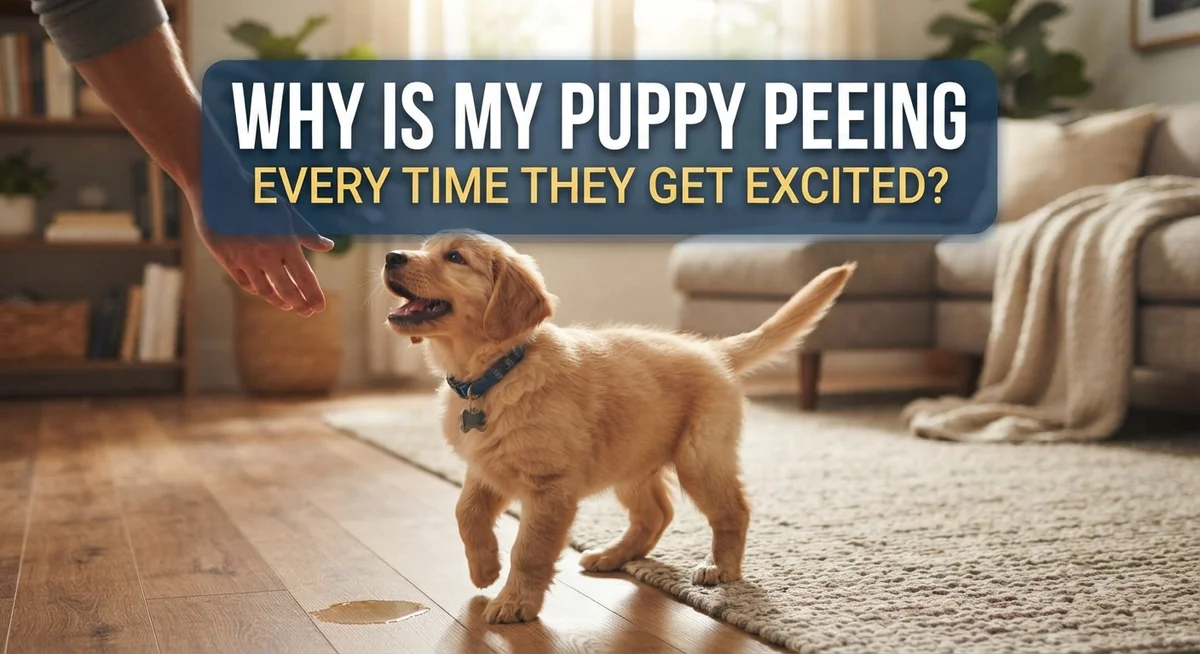
Why Is My Puppy Peeing Every Time They Get Excited?
Does your puppy sprinkle a little pee every time you walk through the door? Or maybe during playtime when the excitement hits its peak?
You are not alone. This is a very common puppy phase.
Excitement peeing happens when your puppy’s tiny bladder muscles cannot keep up with big emotions. Their body just is not ready yet to hold urine when joy takes over.
The good news? This is not a training failure. It is not misbehavior either.
In a Nutshell
- It’s involuntary. Your puppy’s bladder muscles are still growing. They simply cannot control urine flow when big feelings take over.
- It happens during joy or stress. Greetings, playtime, or even feeling a bit overwhelmed can trigger a little leak. Both happy and anxious moments can cause this.
- It is not a training issue. This differs completely from housebreaking accidents. Your puppy is not ignoring potty training rules.
- Calm greetings help a lot. Loud, intense hellos can overstimulate your pup. Try staying relaxed and quiet when you walk in the door.
- Punishment makes things worse. Scolding your puppy adds anxiety, which can actually increase excitement peeing. Never correct this behavior harshly.
- It fades with age. As your puppy grows, bladder control improves naturally. Most puppies outgrow this phase completely.
What Is Excitement Urination in Puppies?
Excitement urination in puppies is a real phenomenon that happens to many young dogs. It occurs when your puppy loses bladder control during moments of high emotion. This is not a sign of bad behavior or failed training.
Your puppy’s bladder muscles are still developing. Think of them like tiny, weak muscles that cannot hold urine when excitement floods through their body. When your puppy gets thrilled to see you or starts playing with energy, those underdeveloped muscles simply cannot keep up with the rush of emotions.
The key thing to understand is that this happens involuntarily. Your puppy is not doing this on purpose or to upset you. Their body is responding to stimulation faster than their bladder control can handle. It is similar to how a human child might have accidents when they are very excited or stressed.
Excitement peeing differs from regular housebreaking accidents. A puppy with incomplete training might have accidents anywhere at any time. But excitement peeing happens specifically during moments of joy, greetings, or play. You will notice a pattern tied directly to emotional triggers.
This response can also show up when puppies feel overwhelmed or anxious, not just happy. A nervous puppy meeting someone new might leak urine as a sign of stress. Some puppies do this when they feel threatened or uncertain about a situation.
The good news? This is completely normal for young puppies. As your puppy grows older, their bladder muscles strengthen naturally. Most puppies outgrow excitement peeing on their own. Understanding what is happening helps you respond with patience instead of frustration, which makes the whole process easier for both of you.
The Science Behind Excitement Peeing: Bladder Control and Emotions
Your puppy’s body is still maturing, and their bladder control is one of the last systems to fully develop. When excitement floods your puppy’s brain, their bladder muscles simply cannot hold back the urine. This is pure biology, not misbehavior.
Here’s what happens inside your puppy’s body. The bladder sphincter muscles need strength to close tightly and prevent leaks. In young puppies, these muscles are weak and underdeveloped. Add a surge of happy hormones or stress chemicals, and the sphincter relaxes involuntarily.
Excitement and anxiety trigger the same physical response. Your puppy’s nervous system floods with adrenaline during greetings, playtime, or even when they feel overwhelmed. This chemical rush tells the bladder to empty. Your puppy has zero control over this process.
A full bladder makes the problem worse. When your puppy’s bladder is already near capacity, even mild excitement can cause a leak. This is why potty breaks before play sessions matter so much.
The emotional side also plays a role. Some puppies pee when they feel threatened or intimidated, even if you don’t realize you’re being intimidating. Looming over a small puppy, making direct eye contact, or using a loud voice can trigger this response.
The key point: this is not a sign of incomplete housebreaking. Your puppy is not being stubborn or disobedient. Their body is simply reacting to physical and emotional triggers beyond their control.
Understanding this science helps you stay calm and patient. Your puppy needs time, gentle handling, and regular bathroom breaks. As their body matures over the next several months, bladder control will improve naturally.
Excitement Peeing vs. Submissive Urination: Spotting the Difference
Excitement peeing and submissive urination look similar on the surface, but they come from different triggers. Learning to spot the difference helps you respond the right way.
Excitement peeing happens during happy moments. Your puppy leaks urine when you come home, during playtime, or when guests arrive. The tail wags. The body wiggles. Your puppy seems genuinely thrilled. The pee is just an involuntary side effect of that overwhelming joy and energy.
Submissive urination stems from fear or anxiety. Your puppy may crouch low, tuck their tail between their legs, or flatten their ears. They might pee when you raise your voice, make direct eye contact, or approach them in a way that feels threatening. This response says “I’m not a threat” rather than “I’m so happy to see you.”
The context matters most. Ask yourself: Is my puppy celebrating or cowering? A happy puppy bounces around with confidence. A nervous puppy shrinks away and seems uncomfortable.
Your response should differ for each type. With excitement peeing, keep greetings calm and low energy. Avoid sudden movements or intense attention. With submissive urination, build your puppy’s confidence slowly. Use gentle handling, positive experiences, and patience.
Both responses fade with time and proper management. Excitement peeing improves as bladder control develops. Submissive urination decreases as your puppy feels safer and more secure in their environment.
The key is recognizing which one you’re dealing with. This knowledge lets you choose the best approach for your puppy’s specific needs. Never punish either response, as this only increases anxiety and makes the problem worse.
How to Respond in the Moment: Calm Greeting Techniques
Your response during the moment makes a real difference. When your puppy starts to pee from excitement, stay completely calm and quiet. Your energy directly affects your puppy’s emotional state.
Keep your greeting low energy and relaxed. Avoid sudden movements, loud voices, or reaching down quickly. These actions trigger more excitement and make the peeing worse. Instead, turn your body sideways and let your puppy approach you at their own pace.
Crouch down slowly if you want to greet your puppy. This posture feels less threatening and overwhelming. Let your puppy sniff your hands before you touch them. Speak in a soft, gentle voice rather than excited tones.
Don’t make eye contact directly at first. Direct staring can feel confrontational to your puppy, even when you mean it kindly. Look at their body instead. This simple shift helps your puppy feel safer.
Redirect your puppy’s attention to something calm. Suggest a short walk outside or offer a chew toy. This gives their bladder a break and channels their energy productively.
Never punish or scold your puppy for excitement peeing. This creates anxiety, which actually makes the problem worse. Your puppy cannot control this response, so corrections are unfair and ineffective.
Timing matters too. Greet your puppy after they’ve had a recent potty break. A fuller bladder makes accidents more likely. Wait a few minutes before intense interaction or play.
Stay patient and consistent with calm greetings. Your puppy’s bladder control improves naturally as they grow. Your relaxed response teaches them that greetings are safe, calm events rather than overstimulating moments.
Daily Habits That Reduce Excitement Accidents
Daily habits shape how often your puppy has accidents. The first step is scheduling regular potty breaks before anything exciting happens. Take your puppy outside first thing in the morning, after meals, after naps, and before playtime or visitors arrive.
A consistent routine helps their bladder develop predictability. Your puppy learns when to expect relief, so they hold urine better during high energy moments. Timing is everything here.
Keep your home environment calm during peak excitement times. If your puppy gets wound up when you arrive home, spend the first few minutes in quiet activities. Pet them gently while sitting down. Let them settle before engaging in active play.
Manage water intake strategically too. Don’t leave the water bowl out all day. Offer water after potty breaks and meals, then remove it a few hours before bedtime or expected guests. This reduces the full bladder factor that makes accidents worse.
Exercise helps tremendously. A tired puppy is a calmer puppy. Morning walks and play sessions burn energy, so your puppy feels less explosive during evening interactions. Tired puppies also sleep more deeply, giving their bladder system a break.
Create a designated calm space where your puppy can retreat. This reduces overall stimulation levels throughout the day. Use this space before stressful situations like vet visits or car rides.
Practice low energy interactions consistently. Every family member should greet your puppy the same way—quiet, gentle, and patient. Mixed signals confuse puppies and trigger more accidents.
These daily habits work together to reduce excitement accidents naturally. Your puppy’s bladder strengthens with age, but these routines help them succeed right now.
Common Mistakes That Make Excitement Peeing Worse
Many owners accidentally make excitement peeing worse without realizing it. The biggest mistake is using harsh corrections or punishment. Your puppy isn’t being naughty—they’re losing bladder control involuntarily. When you scold, yell, or rub their nose in accidents, you create anxiety. This anxiety actually triggers more accidents, not fewer.
Intense greetings fuel the problem too. Jumping around, squealing with excitement, and immediate physical contact overwhelm your puppy’s nervous system. Their bladder can’t handle the surge of emotions combined with an overstimulated body. What feels like celebration to you feels chaotic to them.
Another common mistake is ignoring the full bladder factor. Many owners let puppies drink freely, then immediately engage in playtime or excited interactions. A full bladder plus high emotion equals accidents. You’re setting your puppy up to fail by not timing potty breaks strategically around excitement periods.
Some owners also make the mistake of giving attention right after an accident happens. Even negative attention (scolding) teaches your puppy that peeing gets a reaction. Your puppy doesn’t connect the punishment to the accident—they just learn that exciting moments lead to your attention.
Inconsistency creates confusion too. If you stay calm one day but react excitedly the next, your puppy never learns what to expect. Consistency matters more than perfection. Your puppy needs predictable, calm responses every single time.
Finally, avoid making direct eye contact or looming over your puppy during greetings. These postures feel threatening, even when you mean well. Threatened puppies are more likely to have submissive or excitement peeing accidents.
The path forward is simple: stay calm, keep interactions low energy, and manage their bladder strategically. Your patience now prevents problems later.
When to Worry: Signs It Might Be a Medical Issue
Excitement peeing is usually normal puppy behavior, but certain signs suggest a medical issue needs attention. Understanding the difference helps you decide whether to schedule a vet visit.
Watch for excessive urination outside excitement moments. If your puppy pees frequently throughout the day, even during calm times, a urinary tract infection or other condition might be present. Healthy puppies have predictable bathroom patterns. Constant accidents suggest something beyond excitement control.
Blood or cloudiness in urine is a red flag. Normal puppy urine appears clear to pale yellow. If you notice pink, red, or cloudy urine, contact your veterinarian right away. These signs point to infection or inflammation.
Straining during urination matters too. Your puppy should pee without difficulty or discomfort. If they squat repeatedly but produce little urine, or seem to strain, this indicates a potential problem. Pain during bathroom time also warrants a vet check.
Increased thirst combined with frequent peeing needs investigation. Puppies drink regularly, but sudden increases paired with constant accidents can signal diabetes, kidney issues, or hormonal imbalances.
Fever or lethargy alongside accidents suggests illness. A healthy puppy with excitement peeing acts normal otherwise. If your puppy seems tired, has a warm nose, or shows behavioral changes, medical causes may be involved.
Age matters for context too. Very young puppies (under 8 weeks) have minimal bladder control naturally. Older puppies (4 months plus) should show improvement. If an older puppy suddenly starts accident patterns they previously outgrew, get a professional evaluation.
Trust your instincts. When something feels off beyond normal excitement peeing, your veterinarian can run simple tests to rule out medical causes and give you peace of mind.
At What Age Does Excitement Peeing Usually Stop?
Your puppy’s excitement peeing usually stops between 12 and 16 weeks of age. This is when their bladder muscles become strong enough to handle the demands of play and affection.
Some puppies continue occasional accidents until 6 months old. This doesn’t mean something is wrong. Their nervous system is still maturing, and the connection between their brain and bladder needs time to fully develop.
The exact timeline depends on your individual puppy. Larger breed puppies sometimes take longer than smaller breeds. Genetics play a role too. Some puppies naturally develop bladder control faster than others.
You’ll notice improvement happens gradually, not overnight. Your puppy might go a full week without accidents, then have one during an especially exciting moment. This is completely normal progress.
By 4 to 5 months old, most puppies can hold their urine for several hours. Their bladder capacity grows, and their impulse control strengthens. You’ll see fewer accidents during greetings and playtime.
Don’t rush the process or get discouraged. Puppies cannot control excitement peeing through willpower or training. They physically cannot stop it until their body develops enough. Punishing your puppy during this phase only creates anxiety, which makes accidents worse.
Keep a consistent routine with regular potty breaks. This gives their bladder practice and builds their confidence. Most puppies stop excitement peeing entirely by 6 to 12 months old.
If your puppy is older than 6 months and still having frequent accidents during excitement, talk to your veterinarian. They can rule out any underlying issues and confirm your puppy is developing normally. Until then, stay patient and keep greetings calm.
Final Thoughts
Excitement peeing feels frustrating, but it’s rarely a sign of a bigger problem. Your puppy’s body simply hasn’t caught up with their emotions yet.
Bladder control takes time to develop. Most puppies grow out of this phase by four to six months old.
Until then, patience matters more than punishment. Scolding or yelling only adds stress, which can make accidents happen more often, not less.
Focus on what you can control. Keep greetings calm and quiet. Take your puppy outside before exciting moments like playtime or visitors arriving.
Watch your puppy’s body language too. Submissive postures like crouching or rolling over often pair with excitement peeing. Respond gently, not harshly.
If accidents happen alongside other symptoms, pay closer attention. Unusual thirst, cloudy urine, or lethargy deserve a vet visit.
Otherwise, treat this stage as temporary. Your puppy isn’t misbehaving or ignoring training.
Their little body just gets overwhelmed sometimes. That’s completely normal for young dogs still learning to manage big feelings.
Every puppy moves through this phase differently. Some outgrow it quickly, while others need extra weeks.
Stay consistent with your approach. Calm energy from you helps your puppy feel secure during exciting moments.
Celebrate small improvements along the way. Fewer accidents, calmer greetings, and steadier bladder control all show real progress.
Trust the process, and trust your puppy. This phase does pass with time and patience.
Soon enough, those excited jumps and tail wags won’t come with any puddles at all. Your consistent, gentle guidance makes all the difference.
Frequently Asked Questions
Is excitement peeing a sign that my puppy isn’t housetrained?
No, excitement peeing is different from incomplete housetraining. Your puppy has an involuntary response to strong emotions. Housetraining teaches your puppy where to go. Excitement peeing happens because their bladder muscles simply cannot hold urine when they feel overwhelmed with joy or nervousness.
A housetrained puppy still has accidents during excitement. This is normal and temporary. Once their bladder develops strength, the accidents stop on their own.
Can I punish my puppy to stop excitement peeing?
Punishment makes things worse, not better. Your puppy cannot control this response, so scolding creates anxiety. Increased anxiety often triggers more accidents.
Avoid harsh corrections or yelling. Instead, stay calm during greetings and playtime. Keep interactions low key until your puppy matures. Reward calm behavior with praise and treats.
What’s the difference between excitement peeing and submissive peeing?
Both involve involuntary urination, but the triggers differ. Excitement peeing happens during happy moments like greetings or play. Your puppy wags their tail and acts joyful.
Submissive peeing occurs when your puppy feels threatened or scared. Your puppy may crouch low, tuck their tail, or show fearful body language. This response suggests your puppy feels overwhelmed or unsafe.
Handle submissive peeing gently. Avoid looming over your puppy or using an intense tone. Let your puppy approach you on their own terms.
Should I limit water intake to reduce accidents?
No, do not restrict water. Your puppy needs constant access to fresh water for health. Dehydration causes serious problems.
Instead, schedule potty breaks before excitement happens. Take your puppy outside before visitors arrive or before playtime. This empties their bladder beforehand and reduces the chance of accidents.

Hi, I’m Liza — pet lover, lifelong animal enthusiast, and the voice behind Liza4Pets. I created this space to share honest, practical pet care advice for fellow pet parents who want the best for their furry (and not-so-furry) companions.