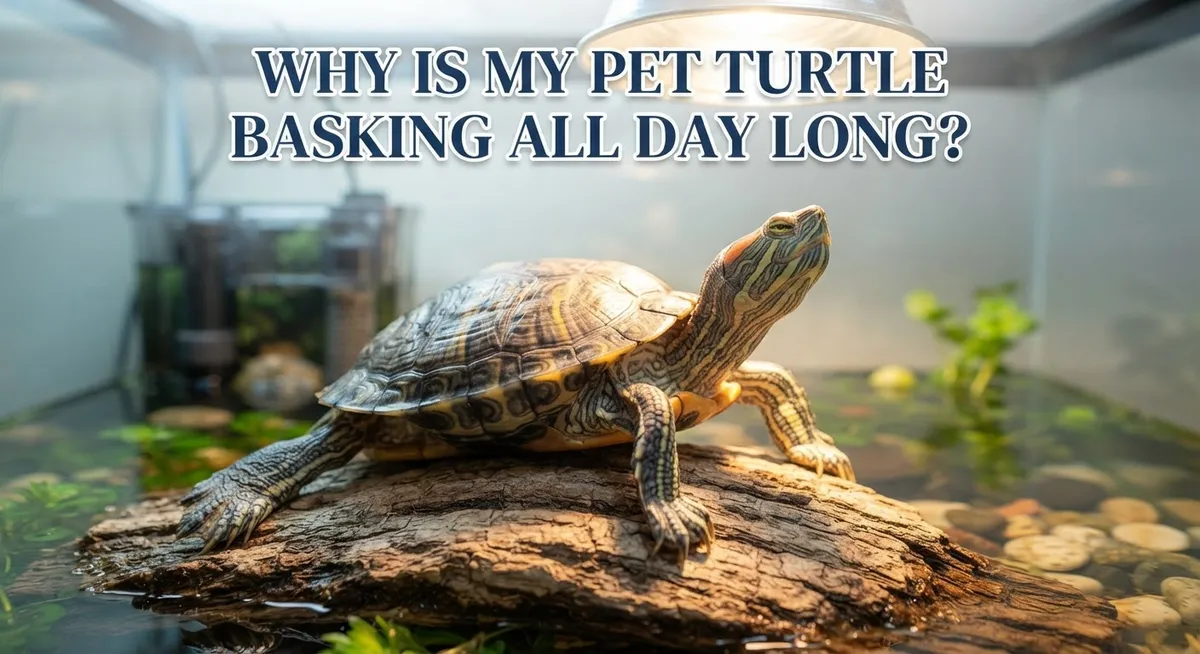
Why Is My Pet Turtle Basking All Day Long?
Does your pet turtle spend most of its day parked under the heat lamp? A little basking is normal. But nonstop basking often means something is wrong.
Turtles bask to warm their bodies and boost their immune systems. This is natural behavior. However, when basking turns into an all day habit, it can signal an underlying problem.
Your turtle might be dealing with cold water temperatures. It could also point to poor UVB lighting or even an illness. Some turtles bask excessively because they feel sick and need extra warmth to fight infection.
In a Nutshell
- Cold water is often the culprit. If your turtle’s tank water feels too cool, your pet will climb out and stay under the lamp to warm up.
- UVB lighting matters a lot. Without enough UVB, your turtle cannot process calcium properly. This pushes them to bask more than usual.
- Watch for illness signs. Lethargy, poor appetite, and constant basking together often point to an infection or health problem.
- Daytime basking is normal. But if your turtle basks at night too, something is off in their environment.
- Small tanks cause stress. A cramped enclosure limits swimming space and pushes turtles to stay put under heat lamps.
- Temperature checks are key. Your basking spot should hit around 95°F, while nighttime temps should drop to about 75°F.
- Behavior changes need attention. Reduced eating paired with more basking time signals it’s time to check your turtle’s health and habitat setup.
Understanding Normal vs. Excessive Basking Behavior
Your turtle’s basking habits tell you a lot about its health and comfort. Normal basking happens during the day when your turtle climbs onto a rock or platform to dry off and warm up. Most turtles bask for 30 minutes to a few hours spread throughout daylight hours.
Excessive basking is different. If your turtle stays on the basking spot almost constantly, rarely entering the water, this signals a problem. Your turtle is trying to self-heal by generating warmth, which boosts immune function when something feels wrong.
The key difference lies in frequency and duration. A healthy turtle alternates between swimming, exploring, eating, and basking. An unhealthy turtle camps out under the heat lamp and ignores food or movement.
Watch the timing too. Nocturnal basking is never normal. Turtles are diurnal, meaning they’re active during the day. If your turtle basks at night when it should rest, your enclosure temperature is likely incorrect.
Pay attention to accompanying behaviors. When excessive basking pairs with lethargy, reduced eating, or inactivity, illness becomes likely. Your turtle might have an infection or respiratory issue. Single basking without other symptoms sometimes just means environmental adjustments are needed.
Size matters as well. Overcrowded tanks stress turtles and cause them to stay under heat lamps rather than explore. A cramped space limits natural swimming and resting behaviors.
The bottom line: occasional daytime basking is healthy. All day basking, especially at night or combined with sluggishness, means something requires attention. Check your water temperature, lighting setup, and tank size first. If problems persist after environmental fixes, contact a reptile veterinarian for evaluation.
Why Turtles Bask: The Biology Behind the Behavior
Turtles bask for several important biological reasons. The main purpose is temperature regulation. Your turtle’s body needs warmth to function properly, digest food, and stay active. Unlike mammals, turtles cannot generate their own body heat. They rely on external heat sources to reach their ideal operating temperature.
When your turtle basks under a heat lamp, it absorbs warmth through its shell and skin. This process helps activate enzymes needed for digestion and metabolism. A warm turtle processes food efficiently and moves around more.
Basking also serves an immune system function. When turtles feel sick or stressed, they bask more intensely to raise their body temperature. Heat helps their immune system fight off infections and bacteria. This is why excessive basking can signal illness rather than just comfort seeking.
UVB light exposure during basking is equally critical. Your turtle’s skin absorbs UVB rays and converts them into vitamin D3. This vitamin allows your turtle to absorb calcium from food and build strong bones and shell. Without proper UVB exposure, your turtle develops serious health problems.
The basking spot also serves as a resting platform. Turtles need a dry area where they can completely emerge from water. This prevents shell rot and other moisture related issues. Your turtle’s shell needs air time to dry out properly.
Natural behavior includes regular basking throughout the day. Healthy turtles bask for 20 to 30 minutes at a time, then return to water. They repeat this cycle several times daily. This pattern supports their metabolism, immune function, and shell health.
When your turtle basks excessively beyond this normal rhythm, environmental or health problems usually exist. The basking behavior itself is healthy. The frequency and duration tell you whether something needs adjustment.
Top Causes of Excessive Basking in Pet Turtles
Your turtle’s excessive basking usually points to a few specific problems. Understanding these causes helps you fix the issue quickly.
Temperature problems rank as the top reason. If your water stays too cold, your turtle cannot digest food properly or regulate its body. Your turtle then spends all day under the heat lamp trying to warm up. Check that your water temperature matches your species’ needs, typically between 75°F and 80°F depending on the type.
Inadequate UVB lighting creates another common issue. Your turtle needs UVB exposure to produce vitamin D and absorb calcium. Without enough UVB, your turtle feels weak and stays basking longer, trying to get more light. Replace your UVB bulbs every six to twelve months since they lose strength over time.
Nutritional deficiencies also trigger excessive basking. A diet lacking proper nutrients weakens your turtle’s immune system. Your turtle then basks constantly to boost immunity through heat and light exposure.
Illness or infection represents the most serious cause. Sick turtles bask excessively as their body tries to self heal through warmth. Watch for lethargy, poor appetite, or swollen eyes alongside constant basking. These signs suggest a veterinary visit is needed.
Environmental stress from small tanks or poor conditions pushes turtles to stay put. A cramped space offers little incentive to swim, so your turtle remains under the basking lamp.
The key is recognizing that occasional daytime basking is normal behavior. But when your turtle abandons the water almost entirely, something needs adjustment. Start by checking your temperature and lighting setup, then observe your turtle’s overall activity level and eating habits.
Warning Signs and Symptoms to Watch For Alongside Basking
When your turtle basks excessively, watch for specific warning signs that suggest underlying problems. Lethargy is a major red flag. If your turtle moves slowly or stays motionless for long periods, illness may be present.
Poor appetite signals trouble. A turtle that refuses food or eats very little while spending all day basking needs immediate attention. Reduced eating combined with excessive basking suggests your turtle is fighting an infection or health issue.
Look for physical symptoms on your turtle’s body. Swollen eyes, discharge from the nose, or soft spots on the shell indicate infection. Lumps, bumps, or discolored patches also warrant concern. Check if your turtle’s skin looks dry or flaky instead of smooth.
Inactivity in water is concerning. Healthy turtles swim, explore, and interact with their environment. If your turtle only stays on the basking spot and avoids water almost completely, something is wrong.
Notice behavioral changes beyond basking. Does your turtle seem stressed or hide constantly? Does it bask at unusual times, like at night? Abnormal timing suggests environmental problems rather than simple preference.
Watch for respiratory issues too. Listen for wheezing, clicking sounds, or open mouth breathing. These signs point to respiratory infections, which turtles often develop from poor conditions.
Combine observations with temperature checks. Even if your turtle shows no obvious symptoms, verify that water temperature stays between 75 and 80 degrees Fahrenheit. The basking spot should reach about 95 degrees. If temperatures are correct but basking continues excessively, schedule a veterinary visit. Multiple warning signs together demand professional evaluation quickly.
Step-by-Step Guide to Diagnosing the Problem
Start by observing your turtle’s basking schedule over several days. Write down when your turtle climbs onto the basking spot and how long it stays there. This tracking helps you spot patterns and determine if the behavior is truly excessive or within normal range.
Next, check your water temperature with a reliable thermometer. Place the thermometer in the tank’s main swimming area and record the reading. Most turtle species need water between 75 and 80 degrees Fahrenheit. If your water runs colder, your turtle will bask constantly to warm up.
Then, measure your basking spot temperature. The basking area should reach approximately 95 degrees Fahrenheit. Use a separate thermometer on the basking platform itself. A cooler basking spot forces your turtle to spend extra time there trying to reach the right temperature.
Inspect your lighting setup carefully. Your turtle needs access to UVB lighting for 8 to 10 hours daily. Check if your UVB bulb is still functioning properly. Many bulbs lose effectiveness after 6 to 12 months even if they still produce light.
Observe your turtle’s overall behavior beyond basking. Note whether it eats normally, swims actively, and shows interest in its surroundings. A turtle that basks all day but eats well and moves around in water may simply have environmental issues.
Finally, examine your turtle’s shell and skin for any unusual spots, discoloration, or discharge. Look at the eyes for swelling or cloudiness. These physical signs combined with excessive basking suggest illness requires veterinary attention.
This step by step approach narrows down the cause and guides your next actions.
How to Correct Temperature and Lighting Setup
Your turtle’s environment plays the biggest role in stopping excessive basking. The right temperature and lighting setup fixes most basking problems quickly.
Start by checking your water temperature with a reliable thermometer. Most turtles need water between 75 and 80 degrees Fahrenheit. If your water runs too cold, your turtle stays on the basking spot longer to warm up. Cold water forces turtles to bask constantly because they cannot regulate body heat in the water itself.
Next, measure your basking spot temperature. This area should reach around 95 degrees Fahrenheit for most turtle species. Your turtle uses this warm spot to dry off and absorb heat. If the basking area feels too cool, your turtle will spend all day trying to get warm enough.
Lower your ambient night temperature to around 75 degrees Fahrenheit. Turtles need a temperature drop at night to maintain healthy sleep cycles. Without this drop, your turtle may bask excessively during the day because its internal clock gets confused.
UVB lighting is equally important. Turtles need 10 to 12 hours of UVB light daily. Insufficient UVB causes calcium absorption problems and shell issues. Your turtle may bask constantly trying to get enough UV exposure. Replace UVB bulbs every 6 to 12 months because they lose strength over time even when they still appear lit.
Check that your basking lamp sits 8 to 10 inches above the basking spot. Distance affects heat and light intensity. Position your thermometer at turtle level, not on the tank wall, for accurate readings.
These adjustments usually reduce excessive basking within days. Monitor your turtle’s behavior closely as you make changes.
Common Mistakes That Trigger Constant Basking
Your turtle’s constant basking often stems from mistakes in setup or care routines. Understanding these errors helps you fix the problem quickly.
Small enclosures are a major culprit. Turtles in cramped spaces cannot regulate their body temperature properly. They stay on the basking spot because they lack adequate water depth and swimming room. A proper tank gives your turtle zones to cool down in the water and warm up on land.
Inadequate heating is another common mistake. Many owners assume room temperature is enough. Water that stays too cold forces your turtle to bask constantly to raise its body heat. Your turtle essentially becomes stuck trying to warm itself up.
Insufficient UVB lighting creates serious problems. Turtles need UVB rays to process calcium and maintain shell health. Without proper lighting, your turtle basks excessively because its body is trying to compensate for the missing UV exposure. This is actually a sign of distress, not relaxation.
Ignoring behavioral changes is dangerous. Owners sometimes miss that their turtle’s basking pattern has shifted. Sudden increases in basking time signal trouble. Your turtle might be fighting an infection or illness by self heating.
Poor feeding schedules also trigger excessive basking. A malnourished turtle lacks energy and stays put more often. Nutritional deficiencies weaken your turtle’s immune system, making it seek warmth constantly.
Neglecting nighttime temperature drops prevents your turtle from resting properly. Turtles need cooler nights to maintain healthy sleep cycles. Without this temperature variation, your turtle becomes confused and basks at odd hours.
Fixing these mistakes involves honest assessment of your current setup. Review each element: tank size, water temperature, basking spot heat, UVB hours, and feeding routine. Small adjustments often resolve excessive basking within days.
When to Seek Veterinary Care
Your turtle’s constant basking is your signal to pay attention. Excessive basking combined with other symptoms means your pet needs professional help. Schedule a veterinary visit if you notice lethargy, poor appetite, or inactivity alongside the basking behavior.
Watch for visible signs of illness on your turtle’s body. Look for soft spots on the shell, unusual discoloration, discharge from the eyes or nose, or swollen areas. These signs point to infections or metabolic issues that require immediate treatment.
If your turtle basks all day but shows no obvious symptoms, verify that water temperature and lighting are correct first. Give your setup adjustments 3 to 5 days to take effect. Many turtles reduce excessive basking once their environment improves.
Contact your veterinarian if the behavior continues after you’ve corrected temperature and lighting. Persistent excessive basking suggests an underlying health problem that needs professional diagnosis.
Pay special attention to nocturnal basking. Turtles that bask during nighttime hours show abnormal behavior. This pattern warrants a veterinary evaluation even without other symptoms present.
Your turtle cannot communicate pain or illness through words. Behavioral changes are their way of telling you something is wrong. Take excessive basking seriously, especially when it appears suddenly or intensifies over time.
Find a veterinarian who specializes in reptiles. General animal doctors may lack expertise in turtle health. A reptile specialist can perform proper examinations and identify problems that you might miss at home.
Document your turtle’s behavior before your appointment. Write down when the basking started, how long it lasts daily, and any other changes you’ve noticed. This information helps your veterinarian make an accurate diagnosis and recommend the right treatment plan.
Final Thoughts
Your turtle’s basking habits tell a story. Every hour spent under the lamp reflects something about its environment or its health.
Excessive basking rarely happens without reason. Your turtle relies on you to notice these shifts and respond quickly.
Small adjustments often bring big results. Fixing water temperature and lighting can solve the problem within days. Many owners see their turtle return to normal activity levels once these basics get corrected.
Trust your instincts as a pet owner. You know your turtle’s normal patterns better than anyone else.
If something feels off, it probably is. Do not wait for symptoms to worsen before taking action.
Regular observation makes a huge difference. Spend a few minutes each day watching your turtle’s behavior and habits.
This simple habit helps you catch problems early. Early detection often leads to easier and faster solutions.
Your turtle cannot speak, but its actions speak clearly. Constant basking, reduced appetite, and lethargy all carry meaning.
Learning to read these signals takes time. Patience and attention will make you a better turtle owner.
Remember that healthy turtles are active and curious. They swim, explore, and bask in balanced amounts throughout the day.
A well cared for turtle shows this balance naturally. Your goal is to create an environment that supports this natural rhythm.
Do not hesitate to seek professional help when needed. Veterinarians who specialize in reptiles offer valuable guidance and support.
Your turtle depends on you for its wellbeing. With careful attention and quick action, you can help it thrive for years to come.
Every turtle deserves a happy and healthy life. Your efforts today shape its future comfort and health.
Frequently Asked Questions
Is all day basking normal for turtles?
No, excessive daytime basking is not normal. Turtles do bask during the day to warm up and absorb UVB rays. However, constant basking with little time in water signals a problem. Your turtle may be trying to self heal by raising its body temperature. This behavior often points to illness, poor water conditions, or inadequate lighting.
What water temperature should my turtle have?
Most turtle species need water between 75°F and 80°F. The basking spot should reach around 95°F. If your water is too cold, your turtle will stay on the basking platform trying to warm up. Check your heater regularly to ensure it works properly. Temperature drops at night are normal and healthy.
How much UVB lighting does my turtle need?
Your turtle needs 10 to 12 hours of UVB lighting daily. UVB rays help turtles process calcium and maintain strong shells. Without enough UVB, turtles become weak and may bask excessively trying to find alternative heat sources. Replace your UVB bulb every 6 to 12 months, as they lose effectiveness over time.
When should I call a reptile veterinarian?
Contact a vet if basking continues after you’ve corrected temperature and lighting. Watch for lethargy, poor appetite, or visible wounds. Swollen eyes, discharge from the nose, or soft shells also require professional help. Do not wait to see if the problem resolves on its own. Early treatment prevents serious complications.
Could my turtle be sick?
Yes. Excessive basking combined with reduced eating, inactivity, or lethargy suggests illness. Respiratory infections, shell disease, and parasites all cause abnormal behavior. Some turtles hide illness well, so behavioral changes are your best clue. A reptile vet can examine your turtle and run tests if needed.

Hi, I’m Liza — pet lover, lifelong animal enthusiast, and the voice behind Liza4Pets. I created this space to share honest, practical pet care advice for fellow pet parents who want the best for their furry (and not-so-furry) companions.