Health Extension Dog Food Review 2026: Worth Buying?
Your dog eats the same food almost every single day. That one choice shapes their energy, their coat, their digestion, and the number of vet visits you pay for. So picking a bag off the shelf deserves more thought than grabbing whatever is on sale.
Health Extension keeps showing up in vet clinics, small pet boutiques, and dog owner groups. The brand promises real meat first, over thirty superfoods, live probiotics, and zero corn, wheat, or soy. That sounds great on paper. Marketing copy always does.
This review looks at the actual ingredient panels, the protein and fat numbers, the price per pound, and the honest complaints owners raise. I also cover what this food does poorly, because no kibble is perfect and any review that pretends otherwise is selling you something.
Key Takeaways:
- Real meat leads every recipe. Deboned chicken, chicken meal, or lamb sits at the top of the ingredient list. The dry matter protein lands near 27.7 percent with fat around 20.7 percent, which beats the average grocery store kibble by a clear margin.
- The superfood list is unusually long. Turmeric, ginger, coconut oil, apple cider vinegar, bovine colostrum, blueberries, kelp, and seven mushroom varieties appear in the panel. Most competing brands add three or four of these. Health Extension adds thirty plus.
- Zero recalls since 1963. The brand has never appeared on an FDA pet food recall list. That is a rare record in this industry and a strong trust signal for cautious owners.
- The price hurts. A thirty pound bag runs close to eighty five dollars, roughly 2.80 dollars per pound. Large breed owners will feel this every month.
- Protein sources are limited. Chicken dominates the dry lineup. Lamb and a few grain free options exist, but dogs with poultry sensitivity have fewer choices here than with other premium brands.
- Best fit: small to medium dogs, sensitive stomachs, picky eaters, and owners who value ingredient transparency over cost savings.
What Is Health Extension Dog Food?

Last update on 2026-10-31 / Affiliate links / Images from Amazon Product Advertising API
Health Extension is a family owned pet food company based in Hauppauge, New York. The business started in 1963 under the name Vets Choice. It rebranded as Health Extension in 2015. Three generations of the same family still run it, and the company has taken no outside investors.
That ownership structure matters more than it sounds. Independent brands answer to their customers instead of quarterly targets. You can see that in the ingredient panels, which read more like a health food label than a pet food label.
The lineup covers dry kibble, gently cooked fresh pouches, canned wet food, air dried food, meal toppers, treats, and cat food. The dry range includes Original, Little Bites for toy breeds, Large Bites, Lite for weight control, puppy formulas, and grain free recipes.
Manufacturing happens in the United States. Most ingredients are sourced domestically, though a few minerals and supplements come from overseas, which is standard across the entire industry. Every batch passes through more than one hundred forty quality checkpoints before it ships.
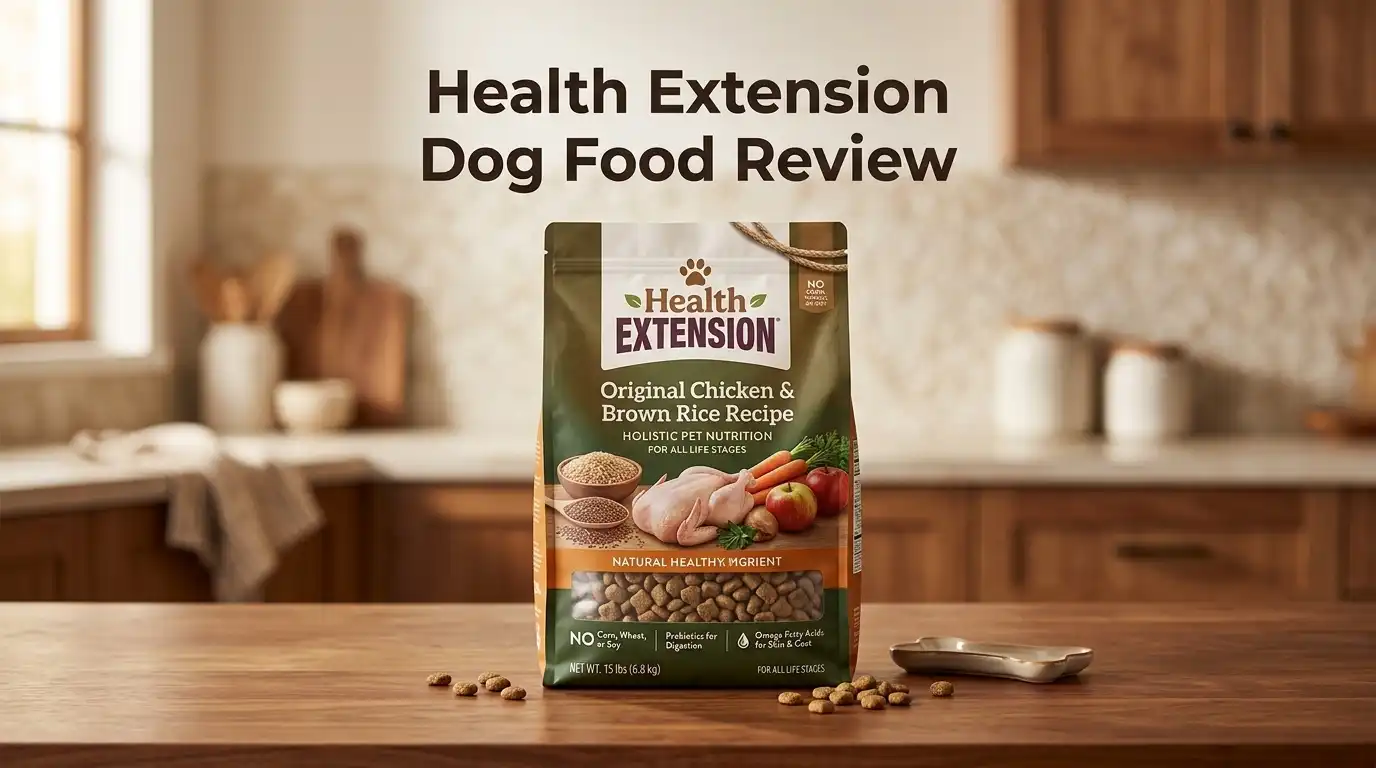
Health Extension Original Chicken And Brown Rice Recipe
This is the flagship bag and the one most owners start with. It carries an AAFCO all life stages statement, so puppies, adults, and seniors can eat the same food from one bag. Multi dog households love that.
The guaranteed analysis shows 24 percent crude protein and 18 percent crude fat minimum, with fiber capped at 4 percent and moisture at 10 percent. On a dry matter basis that works out to about 27 percent protein and 20 percent fat. Those are solid working numbers for an active dog.
Deboned chicken leads, followed by chicken meal, brown rice, oatmeal, and chicken fat preserved with mixed tocopherols. Menhaden fish meal adds omega 3 fatty acids. The presence of chicken meal in slot two is a good sign, since meal carries far more concentrated protein than fresh meat after cooking.
The thirty pound bag costs around eighty five dollars. Kibble size is medium and slightly oily to the touch, which helps palatability. Picky dogs tend to accept this recipe quickly, based on both brand testimonials and independent owner reports.
The Unboxing Experience And First Impressions
The bag arrives in a plain shipping carton with minimal padding, which is fine since kibble bags are tough. The bag itself feels heavier than typical plastic. It uses a thick multilayer material with a full width zipper closure across the top.
That zipper is a genuine convenience. No rolling the top down and clipping it. No pouring thirty pounds into a plastic bin. Just zip it shut and the food stays fresh for weeks. I wish more brands did this at every bag size.
Cut the top strip off and the smell hits you immediately. It reads as roasted chicken and something faintly herbal, probably the turmeric and ginger. It does not smell like rendered fat or artificial smoke flavor. Several owners describe it as the first dog food they did not mind storing in the kitchen.
The kibble pieces look uniform, dark golden brown, with visible flecks of dried fruit and vegetable. Dust at the bottom of the bag is minimal, which usually points to careful handling during production and shipping.
Health Extension Little Bites For Toy And Small Breeds

Last update on 2026-10-31 / Affiliate links / Images from Amazon Product Advertising API
Small dogs get a formula built around their mouth size rather than a shrunken version of the adult recipe. The kibble pieces measure roughly the size of a pencil eraser. Teacups, Yorkies, Chihuahuas, and Maltese handle them without struggling.
The recipe mirrors the Original formula closely. Deboned chicken, chicken meal, brown rice, oatmeal, and chicken fat form the base. The same thirty plus superfoods follow. Nothing is watered down for the small breed version, which some brands quietly do.
Little Bites carries an all life stages rating, so small breed puppies can eat it too. Calorie density runs high, which matters because toy breeds burn energy fast and eat tiny volumes. A four pound dog needs roughly a third of a cup per day.
Bag sizes start at one pound and go up to eighteen pounds. The smaller bags are a smart way to test acceptance before committing to a big purchase. Owners of dental challenged seniors also report that these pieces soften quickly in warm water without turning to paste.
Top 3 Alternative for Health Extension Dog Food


Last update on 2026-10-31 / Affiliate links / Images from Amazon Product Advertising API
Blue Buffalo Life Protection Formula Chicken Adult Dry Dog Food

Last update on 2026-11-02 / Affiliate links / Images from Amazon Product Advertising API
Wellness Complete Health Adult Chicken and Oatmeal Dry Dog Food

Last update on 2026-10-31 / Affiliate links / Images from Amazon Product Advertising API
Nutro Natural Choice Adult Chicken and Brown Rice Dry Dog Food
Ingredient Breakdown: What Is Actually In The Bag
The first five ingredients carry most of the nutritional weight. Health Extension puts deboned chicken, chicken meal, brown rice, oatmeal, and chicken fat in those positions. Fresh chicken holds around 73 percent water, so chicken meal does the heavy protein lifting after cooking.
Brown rice and oatmeal supply digestible carbohydrates. Pearled barley adds fiber. Menhaden fish meal brings omega 3 fats from a small ocean fish with low mercury exposure. Flaxseed adds more plant based omega 3 and soluble fiber.
Beet pulp appears in position eight. Some owners treat beet pulp as filler. Nutritionists generally disagree, since moderate amounts support stool quality and gut health. It is a controversy worth knowing about, not a reason to walk away.
Further down you find coconut oil, apple cider vinegar, bovine colostrum, turmeric, ginger, blueberries, cranberries, goji berries, pomegranate, papaya, kelp, green mussel, carrots, pumpkin, spinach, kale, ashwagandha, and seven mushrooms including reishi, lions mane, and cordyceps.
Minerals are chelated, meaning bound to protein for better absorption. Eight strains of dried fermentation product serve as probiotics.
Guaranteed Analysis And The Numbers That Matter
Numbers tell you more than marketing claims. Here is how Health Extension stacks up across the dry range.
Average protein across the brand sits near 27.7 percent dry matter. Average fat lands near 16.1 percent. Estimated carbohydrates come in around 43.9 percent. The fat to protein ratio is roughly 58 percent.
Compare that to a typical supermarket kibble running 22 percent protein and heavy carbohydrate loads. Health Extension clears that bar comfortably. It does not, however, hit the 34 to 40 percent protein levels that high performance and raw inspired brands advertise.
That is a deliberate choice. This is a balanced everyday food, not a sport dog formula. Working dogs, sled dogs, and hard training hunting dogs may need something denser.
Calcium and phosphorus levels stay within safe ranges for growth, which supports the all life stages claim. Large breed puppy owners should still check the specific bag for controlled calcium, since rapid skeletal growth demands tight mineral limits. Vitamin E sits at 150 IU minimum and omega 3 content is listed on most labels.
Superfoods, Probiotics, And Colostrum Explained
The thirty plus superfood blend is the brand’s main selling point, so it deserves honest scrutiny. Some of these ingredients carry real research behind them. Others are present in amounts too small to do much.
Coconut oil supplies medium chain triglycerides. Research links MCT to improved cognitive function in aging dogs and support for chronic skin conditions. This one earns its place near the middle of the list.
Bovine colostrum contains immunoglobulins that may support immune function, especially in puppies and recovering dogs. Turmeric provides curcumin, an anti inflammatory compound, though absorption improves when paired with black pepper, which this recipe includes.
The eight probiotic strains include Lactobacillus acidophilus, Lactobacillus casei, Enterococcus faecium, and several Bacillus species. Probiotic survival through kibble extrusion is a real question, since heat kills live cultures. Brands add them after cooking to protect viability, but potency at feeding time varies.
Be realistic. The mushrooms and berries sit far down the panel, meaning trace amounts. They help. They are not medicine.
Which Dogs Benefit Most From Health Extension
This food fits certain dogs better than others, and matching matters more than brand loyalty.
Sensitive stomach dogs do well here. The combination of brown rice, oatmeal, beet pulp, probiotics, and pumpkin creates a gentle digestive profile. Owners frequently report firmer stools within two weeks of switching.
Picky eaters respond to the aroma and the light fat coating. Multiple long term customers say this was the food their dog finally stopped walking away from. That alone justifies the price for some households.
Small and toy breeds get purpose built kibble sizes across several formulas, including a Lite version for weight management.
Itchy or dull coated dogs may improve thanks to fish meal, flaxseed, coconut oil, and the omega rich fat profile. Coat improvement is the single most common positive comment across owner reviews.
Senior dogs benefit from the MCT content and joint supporting green mussel.
Dogs who fit less well include large breeds on tight budgets, dogs with diagnosed chicken allergy, and highly athletic dogs needing 32 percent protein or more.
What Health Extension Does Not Do Well
An honest review names the weak spots. Here are the real ones.
Price is the biggest problem. At roughly 2.80 dollars per pound, feeding an eighty pound Labrador costs well over one hundred dollars monthly. Diamond Naturals and Nutro deliver decent nutrition at half that.
Protein variety is thin. Chicken appears in most dry recipes. Lamb exists. Turkey appears in grain free options. If your dog reacts to poultry, your choices shrink fast compared to brands offering duck, venison, rabbit, and bison.
Availability is inconsistent. Health Extension sells mainly through independent pet shops, Chewy, Amazon, and its own site. Big box stores rarely stock it. Running out on a Sunday night is a genuine risk if you do not plan ahead.
The superfood marketing oversells. Thirty plus ingredients sounds impressive, but many appear in trace amounts. Do not expect a mushroom blend at the bottom of the panel to transform your dog.
Some bags arrive damaged in shipping. A handful of buyers report torn corners and broken zippers. Customer service resolves it, but it is an annoyance.
Pros And Cons Of Health Extension Dog Food
Pros
- Real meat sits first in every recipe, followed by a concentrated meat meal for genuine protein density.
- Zero recalls in over sixty years of operation, an industry leading safety record verified against FDA recall databases.
- No corn, wheat, soy, by products, GMO ingredients, artificial colors, flavors, or chemical preservatives appear in the formulas.
- Chelated minerals and eight probiotic strains improve nutrient absorption and digestive comfort for sensitive dogs.
- All life stages certification on many recipes lets multi dog homes feed one bag to puppies, adults, and seniors.
- Heavy duty resealable bags with full width zippers keep kibble fresh without extra storage containers.
- Strong palatability record, with picky eater acceptance mentioned repeatedly by long term customers.
Cons
- Premium pricing makes it hard to justify for large breed and multi dog households on a set budget.
- Chicken heavy lineup limits options for dogs with poultry sensitivities or rotation feeding plans.
- Limited retail availability means relying on online ordering and subscription timing.
- Superfood quantities are small, so the health claims run ahead of the actual inclusion rates.
- Fat content near 18 percent is high for sedentary or weight prone dogs unless you choose the Lite formula.
- Occasional shipping damage to bags reported by online buyers.
Price, Value, And Cost Per Serving
Sticker shock is real. A thirty pound bag of Original Chicken and Brown Rice runs about eighty five dollars, which works out near 2.80 dollars per pound. Little Bites in smaller bags costs more per pound.
Gently cooked fresh pouches sit at 2.99 dollars for three ounces and 6.99 dollars for nine ounces. Variety packs start around twenty five dollars. Those are topper prices, not full meal prices, unless you own a very small dog.
Now do the math per serving. A thirty pound dog eats roughly two cups daily, or about 1.1 pounds every three days. That lands near 1.05 dollars per day. For a small breed eating half a cup, daily cost drops under forty cents.
Small dog owners get real value here. Large dog owners pay a premium that competitors undercut easily.
Subscription discounts through the brand site and Chewy shave ten to fifteen percent off. Buying the largest bag size always lowers cost per pound. Factor in fewer digestive issues and the value equation improves, though nobody can promise vet savings.
Recall History And Safety Record
This section is short because there is almost nothing to report, and that is the point.
Health Extension has never appeared on an FDA pet food recall list since the company started in 1963. Independent recall trackers confirm no recalls through 2026. In an industry where salmonella, vitamin D overages, and aflatoxin recalls hit major brands regularly, a clean six decade record carries weight.
The company credits its testing protocol. Every production run passes more than one hundred forty checkpoints covering raw ingredient screening, nutrient verification, pathogen testing, and finished product analysis. Batch codes on each bag allow full traceability back to source.
Ingredients are sourced primarily inside the United States. A small portion of vitamins and minerals come from international suppliers, which is true of essentially every pet food sold in America, including the most expensive ones.
No recall record does not guarantee future safety. It does show consistent process control over a long period. Always register your bag code and check the brand site if a general industry alert appears.
How To Switch Your Dog To Health Extension
Never swap foods overnight. Sudden changes cause loose stools, gas, and vomiting, then owners blame the new food when the transition method was the problem.
Use a seven to ten day schedule. Days one and two, mix 25 percent new food with 75 percent old. Days three and four, move to a 50 50 split. Days five and six, go to 75 percent new. By day seven, feed the new food alone.
Sensitive dogs need fourteen days. Stretch each stage out and watch stool quality before advancing.
Add a spoonful of plain canned pumpkin during the switch if stools loosen. It firms things up naturally without medication.
Measure portions with an actual cup, not a scoop or a mug. Feeding charts on the bag are starting points, not rules. Adjust based on body condition. You should feel ribs easily under a thin fat layer without seeing them.
Keep fresh water available at all times. Kibble contains only ten percent moisture, so hydration matters more than most owners realize.
Real Owner Feedback: What People Actually Say
Brand testimonials skew positive by design, so I looked across Amazon, Chewy, Reddit dog food communities, and the brand site to find patterns.
The most repeated praise involves coat quality. Owners describe shinier, softer fur within four to six weeks. Bulldog, beagle, and terrier owners mention this constantly.
Digestive improvement ranks second. Several people switched after their previous food caused chronic soft stools and saw firm results quickly.
Longevity anecdotes come up often. One owner reported feeding a wire fox terrier this brand from puppyhood through age twelve with excellent vet checkups. These stories are encouraging but they are not controlled evidence.
Negative feedback clusters around three themes. Price complaints lead. Formula changes over the years upset a few long term buyers whose dogs rejected the updated recipe. Availability gaps frustrate people who cannot find bags locally.
A minority of dogs simply refuse it. Palatability is individual. Independent review site Dog Food Advisor rates the dry range between 4.5 and 5 stars, which aligns with the general sentiment.
Final Verdict: Is Health Extension Worth It In 2026?
Yes, for the right dog and the right owner.
Health Extension delivers genuine ingredient quality, a clean safety record spanning sixty plus years, useful functional additions like MCT rich coconut oil and chelated minerals, and packaging that respects your kitchen. The nutrition numbers hold up against independent analysis rather than relying on marketing language.
The value is strongest for small and medium dogs. Daily cost stays reasonable, the Little Bites kibble suits tiny mouths, and sensitive stomachs generally respond well.
The value weakens for large breeds. Feeding a big dog this food costs real money every month, and several competitors deliver eighty percent of the nutrition at half the price.
Buy it if ingredient transparency, digestive health, and a spotless recall history matter more to you than saving twenty dollars a bag. Skip it if your dog reacts to chicken, needs very high protein for athletic work, or if the monthly cost creates stress.
Start with a small bag. Your dog casts the deciding vote.
Frequently Asked Questions
Is Health Extension good for puppies?
Yes. Many recipes carry an AAFCO all life stages statement, which covers growth. Little Bites Chicken and Brown Rice Puppy is built specifically for small breed puppies. Large breed puppy owners should verify controlled calcium levels on the specific bag before feeding, since oversized breeds need tight mineral limits during skeletal development.
Has Health Extension ever been recalled?
No. The brand has never appeared on an FDA recall list since it began operating in 1963. Independent recall trackers confirm a clean record through 2026. The company runs more than one hundred forty quality checkpoints per batch and provides full traceability through bag codes.
Where is Health Extension dog food made?
Production happens in the United States. The company is based in Hauppauge, New York, and remains family owned across three generations. Most ingredients are sourced domestically, though a small portion of vitamins and minerals come from international suppliers, which is standard industry practice.
Is Health Extension grain free?
Both options exist. The Original, Little Bites, Lite, and Large Bites recipes include brown rice, oatmeal, and barley. A separate grain free line uses potatoes, chickpeas, and sweet potatoes instead. Talk to your vet before choosing grain free, since diet associated heart concerns remain under study.
How much does Health Extension cost per month?
A small dog eating half a cup daily costs roughly twelve dollars monthly. A thirty pound dog costs near thirty dollars. An eighty pound dog can exceed one hundred dollars. Subscription discounts and larger bag sizes lower the per pound price noticeably.
Does Health Extension help with allergies?
It may help dogs reacting to corn, wheat, soy, or artificial additives, since none appear in the formulas. It will not help a dog allergic to chicken, because poultry dominates the lineup. True food allergies require an elimination diet designed with your veterinarian rather than a brand switch.

Hi, I’m Liza — pet lover, lifelong animal enthusiast, and the voice behind Liza4Pets. I created this space to share honest, practical pet care advice for fellow pet parents who want the best for their furry (and not-so-furry) companions.