
How To Fix Overgrown Teeth In A Pet Hamster?
Does your hamster have long front teeth that look scary? This is a common problem for pet hamsters. It happens because their teeth never stop growing.
Overgrown teeth can cause real pain. Your hamster may stop eating. It may also drool or lose weight fast.
The good news is you can help your furry friend. This guide will show you simple ways to fix this issue.
In a Nutshell
- Hamster teeth never stop growing. Regular chewing is the only way to keep them short and healthy.
- Prevention works best. Give your hamster soft wood blocks and wooden chew toys every day. Fibrous foods also help grind teeth down naturally.
- Watch for warning signs. Drooling, trouble eating, or visibly long front teeth mean you need to act fast.
- DIY trimming is risky. Wrapping your hamster in a towel and using tiny clippers can work, but one wrong move can hurt your pet badly.
- Vets are the safer choice. A trained professional can trim overgrown teeth without causing pain or injury.
- Consistency matters most. Keep chew toys stocked and check your hamster’s teeth often. This simple habit prevents most dental problems before they start.
Why Hamster Teeth Grow Continuously
Hamster teeth are different from human teeth in one major way. They never stop growing throughout your pet’s entire life. This continuous growth is completely natural and normal for hamsters.
Your hamster’s front teeth grow constantly because of how their body works. The teeth push upward from the roots inside the jaw. This process happens every single day, without pause. Nature designed hamsters this way so they could survive in the wild by gnawing through tough materials.
In nature, hamsters chew on seeds, nuts, bark, and roots constantly. All this chewing wears down their teeth at the same rate they grow. The wear and growth stay balanced. This balance keeps their teeth at a healthy length.
Pet hamsters face a different situation. They don’t have access to the same hard materials that wild hamsters encounter. Without proper chewing opportunities, the growth outpaces the wear. This imbalance causes teeth to become overgrown and problematic.
Overgrown teeth create serious issues for your hamster. Long front teeth make eating difficult and painful. Your hamster may struggle to grab food or chew properly. The teeth can also curve back into the mouth and damage the jaw or cheek tissues. This causes discomfort and potential infections.
The solution lies in understanding what your hamster needs to chew. Soft wood blocks, wooden toys, and fibrous materials all help. When your hamster chews regularly, the friction naturally grinds the teeth down. This mimics what happens in nature.
Prevention is far easier than treatment. Providing the right chewing materials from day one keeps most hamsters healthy. Regular chewing maintains the natural balance between growth and wear. Your hamster stays comfortable and happy. You avoid expensive vet visits and stressful trimming procedures.
Signs and Symptoms of Overgrown Teeth
Your hamster’s teeth may be growing too long if you notice certain warning signs. These signs tell you it’s time to take action before the problem gets worse.
Drooling is one of the first clues. If your hamster drools more than usual, overgrown teeth might be pressing against the mouth. You’ll see wet fur around the chin and neck area. This happens because the teeth block the mouth from closing properly.
Difficulty eating is another major red flag. Your hamster may drop food while chewing or seem to struggle during meals. You might notice your pet eating less food than normal. Some hamsters stop eating their favorite treats altogether. Weight loss can follow if eating becomes too painful.
Look at your hamster’s front teeth directly. Healthy hamster teeth are small and barely visible when the mouth is closed. Overgrown teeth stick out noticeably and look much longer than normal. The front teeth may curve or point in odd directions. You might even see one tooth growing longer than the other.
Behavioral changes signal dental pain too. Your hamster may become less active or hide more often. A normally friendly pet might act grumpy or bite when you try to handle it. Some hamsters grind their teeth audibly, making clicking sounds.
Bad breath is worth noting as well. Overgrown teeth can trap food and bacteria inside the mouth. This creates an unpleasant smell that’s different from your hamster’s normal scent.
Check your hamster’s mouth weekly to catch problems early. Gently lift the upper lip and look at the front teeth. Caught early, overgrown teeth respond better to prevention and treatment. If you spot any of these signs, contact your veterinarian right away. Professional help prevents serious complications and keeps your hamster comfortable and healthy.
Preventing Overgrown Teeth Through Diet and Chew Toys
Your hamster’s teeth grow continuously throughout its entire life. This means prevention through proper diet and chew toys is your best defense against overgrowth. The good news is that this approach actually works well when done consistently.
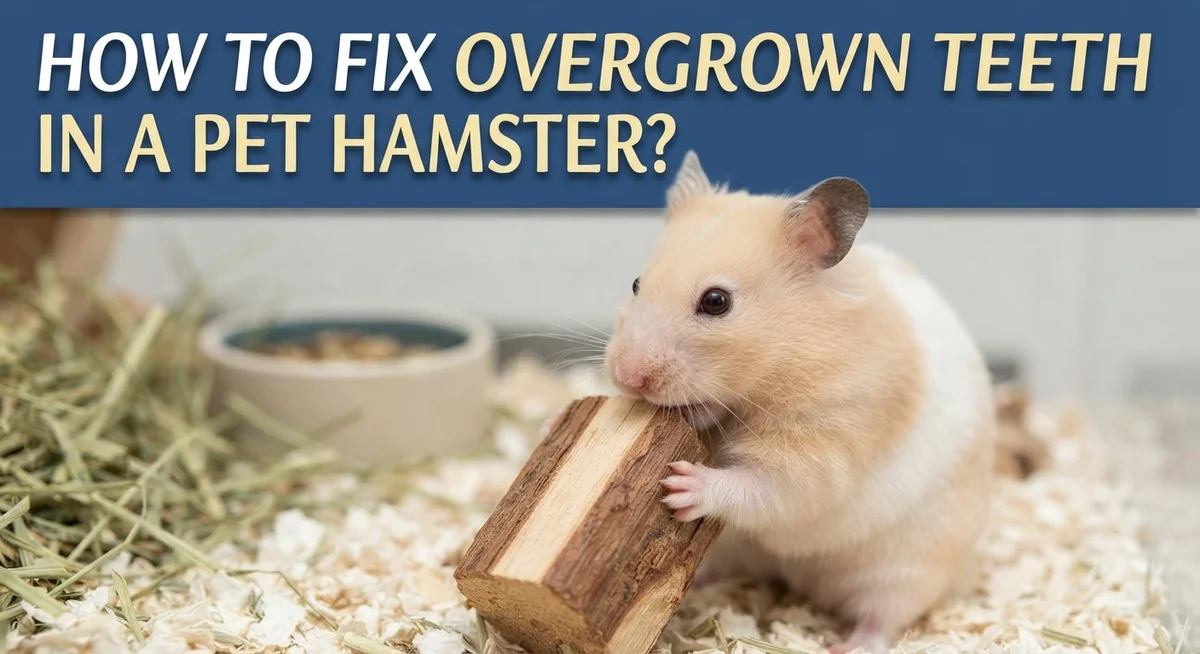
Soft wood blocks are essential. Place them in your hamster’s cage so your pet can gnaw on them daily. This natural chewing action wears down the teeth gradually and keeps them at a healthy length. Your hamster will instinctively use these blocks, making prevention almost automatic.
Wooden chew toys serve the same purpose. Offer a variety of safe wooden options so your hamster stays interested and engaged. Rotate them occasionally to maintain novelty. Your hamster needs access to chewing materials every single day, not just occasionally.
Diet plays a bigger role than many people realize. Include fibrous materials in your hamster’s regular food. These foods require more chewing, which naturally grinds teeth down during eating. Think of every meal as an opportunity for dental maintenance.
The combination of chew toys and proper diet creates an environment where teeth stay healthy on their own. Your hamster won’t need intervention because the teeth wear down at the same rate they grow. This balance happens naturally when you provide the right conditions.
Check your hamster’s teeth weekly. Look at the front teeth directly to see if they appear normal sized. If you notice they’re getting longer despite having chew toys available, something else may be wrong. At that point, a veterinarian visit becomes necessary.
Consistency matters most. Stock those chew toys regularly and maintain a diet rich in fibrous materials. This simple routine prevents most overgrowth problems before they start. Your hamster stays healthy, and you avoid the stress of dealing with dental emergencies later.
Step-by-Step: How Vets Trim Overgrown Hamster Teeth
A veterinarian uses specific techniques to safely trim your hamster’s overgrown teeth. Here’s what happens during the procedure.
First, the vet wraps your hamster gently in a soft towel. This restraint keeps your pet calm and still during trimming. The towel also protects the vet’s hands from accidental bites. Your hamster may feel nervous, so a calm environment helps the process go smoothly.
Next, the vet tilts your hamster’s head carefully to access the front teeth. Proper positioning is essential for safety and accuracy. The vet needs a clear view of both the upper and lower teeth before beginning any trimming.
The vet uses specialized micro tools or cat nail clippers designed for small animals. These tools are much smaller than human nail clippers. The clipper has a small hole that fits over each tooth. This design prevents the vet from accidentally cutting gum tissue or damaging surrounding teeth.
The trimming happens slowly and deliberately. The vet positions the clipper hole directly over the overgrown tooth. Then they squeeze gently to make one clean cut. Rushing this step risks injuring your hamster’s mouth or causing bleeding.
Your hamster may need multiple visits if teeth are severely overgrown. Vets trim only a small amount at each appointment. This approach allows your hamster’s mouth to heal between sessions and prevents shock to the system.
After trimming, the vet checks that your hamster can eat and drink normally. They examine the mouth for any cuts or bleeding. Your vet will also discuss prevention strategies to stop the problem from returning.
Professional trimming takes 10 to 15 minutes typically. Your hamster goes home the same day. Recovery is quick, and most hamsters resume normal eating within hours. This professional approach keeps your pet safe and healthy.
At-Home Restraint and Trimming Precautions
If you decide to help your hamster at home, you must understand the serious risks involved. Attempting to trim teeth yourself can cause permanent injury to your pet. Hamster mouths are tiny and delicate. One wrong move can damage the tooth root, cause severe bleeding, or fracture the jaw.
Proper restraint is your first step if you proceed carefully. Wrap your hamster gently in a soft, clean towel. This keeps your pet from squirming suddenly during the process. Make sure the towel is loose enough that your hamster can still breathe comfortably.
Tilt your hamster’s head back slowly and carefully. You need a clear view of the front teeth. Never force the head into an unnatural position. Your hamster’s neck is fragile and bends easily.
Use only appropriate tools designed for small animals. Regular scissors or human nail clippers are too large and imprecise. Cat nail clippers work better for hamster teeth because they are smaller. Position the clipper hole directly over the tooth you want to trim.
Apply pressure slowly and steadily. Quick, jerky movements cause fractures and pain. Trim only a tiny amount from the tip. Never cut more than you can see clearly.
Watch for signs of stress in your hamster. Heavy breathing, struggling, or squeaking means you should stop immediately. Your hamster’s safety matters more than finishing the trim.
The reality is simple: professional veterinary care prevents complications. Vets have proper lighting, tools, and training that you do not have at home. They can also examine the tooth roots to spot problems you cannot see.
Home trimming should only happen if professional help is truly unavailable. Even then, the risks are high. Prevention through chew toys and proper diet remains your best strategy. This approach keeps your hamster healthy without any danger at all.
Common Mistakes That Worsen Dental Problems
Many pet owners make simple mistakes that make their hamster’s dental problems worse. Understanding these errors helps you protect your pet’s teeth.
The biggest mistake is not providing chew toys at all. Hamsters need something to chew on every single day. Without proper chewing materials, their teeth grow unchecked and become overgrown quickly. This is completely preventable with the right setup.
Another common error is offering the wrong types of chew materials. Plastic toys don’t help because hamsters can’t properly wear down their teeth on them. Some owners also skip wooden blocks, thinking their hamster doesn’t need them. Your hamster actually relies on chewing wood to keep teeth at a healthy length naturally.
Ignoring early warning signs is another major mistake. If your hamster drools more than usual, stops eating normally, or seems to favor one side of its mouth, these are red flags. Many owners wait too long before seeking help, allowing the problem to become severe.
Some people attempt trimming without proper training or tools. This causes broken teeth, bleeding, and serious pain for your hamster. Using incorrect tools like regular scissors or human nail clippers can fracture teeth instead of trimming them smoothly.
Neglecting diet changes is also problematic. Hamsters need fibrous foods that require chewing. Soft pellets alone don’t provide enough wear on teeth. Adding hay and appropriate vegetables gives your hamster natural opportunities to grind their teeth down.
The most important mistake to avoid is delaying professional help. If your hamster’s teeth look overgrown or your pet stops eating, contact a veterinarian immediately. Early intervention prevents serious complications and keeps your hamster comfortable.
Prevention through consistent chew toy provision and proper diet stops most dental problems before they start. This approach is far simpler than dealing with overgrown teeth later.
When to See a Veterinarian Immediately
Your hamster needs immediate veterinary care if you notice certain warning signs. These signs tell you that overgrown teeth have become a serious problem.
Watch for difficulty eating or drinking. If your hamster struggles to consume food or water, the teeth are likely interfering with normal mouth function. Your pet may drop food while chewing or seem frustrated during meals. This behavior indicates urgent dental issues.
Look for visible signs of injury or bleeding in the mouth. If you see blood around the lips or teeth, infection may have started. Dental problems can spread quickly in small animals. Your hamster cannot tell you about pain, so visible bleeding is a red flag.
Notice if your hamster stops eating altogether. Loss of appetite happens when teeth pain becomes severe. Your hamster may hide more than usual or seem lethargic. These are signs of significant discomfort or infection.
Check for swelling around the face or jaw. Puffiness near the cheeks or chin suggests an abscess or infection. Swollen areas feel warm or tender. This requires immediate professional attention to prevent serious complications.
Pay attention to drooling or wet fur around the mouth. Excessive drooling means your hamster cannot swallow properly. The teeth may be so overgrown that the mouth cannot close completely.
Watch for behavioral changes like aggression or unusual quietness. Pain makes hamsters act differently than normal. Your pet may bite when touched or refuse to interact.
Do not delay when you see these signs. Contact your veterinarian right away. Dental infections in hamsters progress rapidly and can become life threatening. Your vet can assess the situation and provide proper treatment. Early intervention prevents serious complications and keeps your hamster healthy and comfortable.
Final Thoughts
Overgrown teeth in hamsters are a real problem. But they are also very manageable. Your hamster depends on you to notice changes early.
Prevention works better than any treatment. Give your hamster wood blocks and safe chew toys every day. This simple habit keeps teeth worn down naturally.
Fibrous foods also play a big role. Hay, fresh vegetables, and fibrous treats help grind teeth during normal eating. This reduces the chance of overgrowth happening in the first place.
If you notice overgrown teeth, do not panic. Many hamsters recover fully with proper care. The key is acting quickly instead of waiting.
Home trimming is possible, but it carries risk. A vet visit remains the safest choice for your pet. Vets have proper tools and experience with tiny hamster mouths.
Think about your hamster’s comfort throughout this process. Stress makes any procedure harder for both of you. Stay calm and gentle no matter which path you choose.
Regular checkups matter more than most owners realize. Look at your hamster’s mouth weekly if possible. This helps you catch problems before they become severe.
Small changes in your hamster’s habits often signal dental trouble. Watching food intake and behavior gives you useful clues. Trust your instincts if something feels wrong.
Every hamster is different. Some hamsters need more frequent tooth checks than others. Pay attention to your specific pet’s needs and history.
The bottom line is simple. Chew toys prevent most dental issues. Vet care fixes problems safely when they happen anyway.
Your hamster counts on you for good dental health. With consistent care and quick action, overgrown teeth become a manageable issue rather than a crisis. Stay observant, stay proactive, and your hamster will thank you with a happy, healthy life.
Frequently Asked Questions
Why do hamster teeth keep growing?
Hamster teeth are always active. They grow continuously throughout your pet’s life. This is completely normal biology. In the wild, hamsters wear down their teeth by chewing on hard materials and fibrous plants. Without this natural wear, teeth become overgrown inside a cage.
Your hamster’s teeth need constant use. Chewing helps grind them down to proper length. Without adequate chewing opportunities, the teeth grow too long and cause problems.
Can I trim my hamster’s teeth at home?
You technically can trim teeth yourself, but experts recommend against it. Home trimming carries serious injury risks. Your hamster could experience bleeding, infection, or nerve damage.
A veterinarian has proper tools and training. They know exactly how much to trim. They understand hamster anatomy deeply. Professional trimming is safer and more effective.
If you must trim at home, use only appropriate micro-tools. Never use regular scissors. Wrap your hamster gently in a soft towel. Tilt the head carefully and position the tool correctly. Squeeze slowly. One mistake can hurt your pet permanently.
How do I prevent overgrown teeth?
Prevention is the best approach. Provide soft wood blocks for daily chewing. Offer wooden chew toys regularly. Include fibrous foods in your hamster’s diet. These foods require more chewing.
Consistency matters most. Make chewing materials available every single day. Rotate different types of safe wood. This keeps your hamster interested and engaged.
What signs show my hamster has dental trouble?
Watch for difficulty eating or drinking. Notice if your hamster stops eating altogether. Check for visible bleeding around the mouth. Look for face or jaw swelling. Pay attention to excessive drooling or wet fur around the mouth.
Any of these signs means your hamster needs veterinary care immediately. Don’t wait or hope the problem resolves itself.

Hi, I’m Liza — pet lover, lifelong animal enthusiast, and the voice behind Liza4Pets. I created this space to share honest, practical pet care advice for fellow pet parents who want the best for their furry (and not-so-furry) companions.