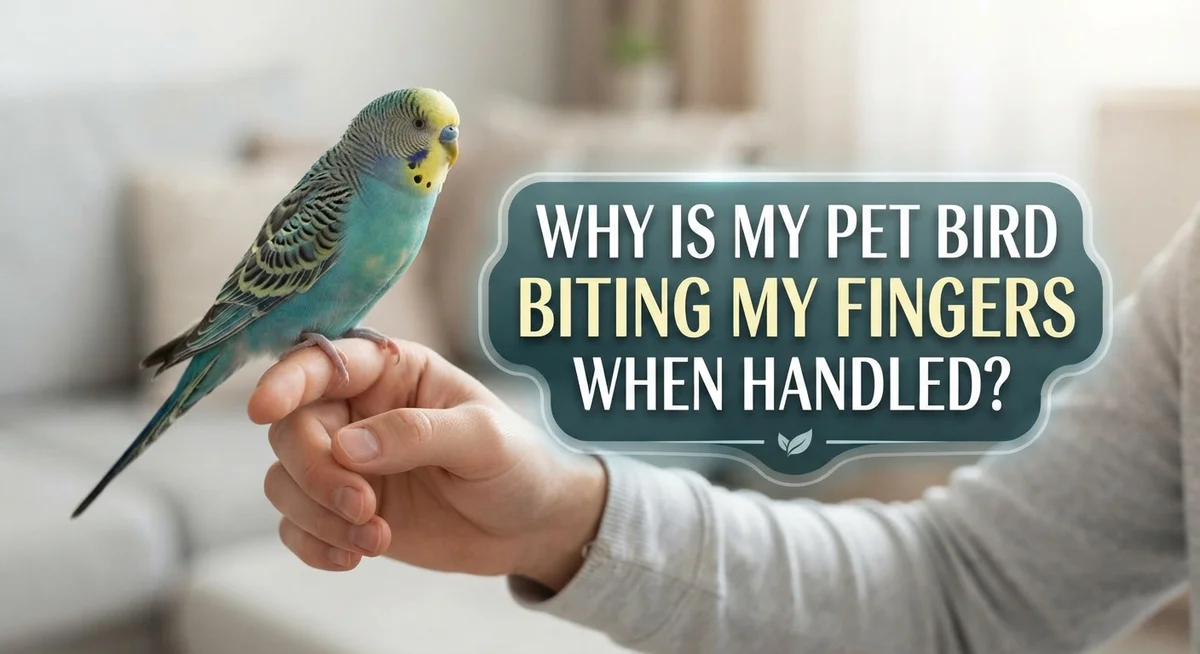
Why Is My Pet Bird Biting My Fingers When Handled?
Does your pet bird nip your fingers every time you try to handle it? You are not alone. Many bird owners deal with this same puzzling habit.
Biting is not a natural behavior for birds in the wild. It often develops because of how birds live in our homes.
Your feathered friend might bite for many reasons. Territorial feelings, fear, or simple excitement can all play a part.
In a Nutshell
- Biting is a learned habit, not something birds naturally do in the wild. Captivity changes their behavior.
- Your bird may bite from territorial feelings. It might feel protective of its cage or space.
- Sometimes your bird simply does not recognize your fingers as part of you. It sees them as a separate object to explore.
- Playful nipping is often the real cause. Your bird may just be excited, not angry or aggressive.
- Birds do not understand that biting hurts you. They lack awareness of causing pain.
- Even during feeding, your bird might bite. This shows biting is separate from hunger or food behavior.
- Reacting to a bite with force or yelling will not help. It can actually make the behavior worse.
- Most nips are minor and harmless. They cause slight discomfort, not real injury.
Understanding Bird Biting: Is It Really Aggression?
Bird biting during handling is not always what it seems. Many people assume their feathered friend is being aggressive, but the reality is often quite different. Biting is actually a learned behavior, not an instinctive act birds perform in nature.
Your bird may bite for several reasons that have nothing to do with anger or hostility. Territorial feelings drive some birds to bite when you enter their space or touch their favorite perch. Your pet simply wants to protect what it considers its own area.
Another common cause is simple lack of recognition. Your bird might not see your fingers as part of you at all. To your feathered friend, your hand looks like a separate object entering its territory. This confusion can trigger a defensive bite response.
Playful nipping accounts for many biting incidents too. Young birds especially nip as a form of exploration and play. They do not understand that their small beak causes discomfort or pain to you. What feels like rough play to your bird feels like a bite to your hand.
Excitement also plays a role in some cases. When your bird gets overstimulated or energetic, it may nip your fingers without any aggressive intent. The biting happens simply because your pet is in a heightened emotional state.
Here’s an important fact: biting during feeding is separate from aggressive behavior. Your bird might bite your finger even when you offer food. This does not mean your pet is attacking you. It just means your bird is using its beak the way it naturally does.
Understanding these differences changes how you respond. When you recognize that most biting is not true aggression, you can stay calm and patient. This calm approach actually helps reduce the biting over time. Your bird learns better from your steady responses than from reactions based on fear or frustration.
Territorial Behavior and Why Birds Guard Their Space
Territorial behavior is one of the most common reasons your pet bird bites your fingers during handling. Birds have a strong sense of personal space, and they protect it fiercely. When you reach toward your bird, it may see your hand as an invader entering its territory.
Your bird’s cage is its safe zone. Many birds become defensive when you try to take them out or touch them inside this space. The bird doesn’t recognize your fingers as part of you. Instead, it sees a separate object entering its world. This confusion triggers a defensive bite to protect what it considers its own.
Some birds are more territorial than others. Certain species have stronger protective instincts. Your individual bird’s personality also matters. A bird raised alone may be more territorial than one raised with other birds or people.
Excitement can intensify territorial responses too. When your bird gets excited or startled, it may bite harder and more often. The bird’s emotions run high, and biting becomes its first response.
Understanding this behavior helps you stay calm. Your bird isn’t trying to hurt you on purpose. It’s simply defending what feels like its space. This knowledge changes how you approach handling sessions.
You can reduce territorial biting by respecting your bird’s boundaries. Move slowly and predictably around your bird. Let your bird come to you when possible. Spend time near the cage without reaching in. This builds trust and reduces the defensive response.
Territorial biting often decreases as your bird gets more comfortable with you. Patience is key here. Consistency matters too. When you handle your bird the same way every time, it learns to expect you. Your bird eventually recognizes you as safe rather than threatening. This shift takes time, but it happens with steady effort and calm interactions.
Socialization Gaps: When Your Bird Doesn’t Recognize You as a Friend
Your bird may not recognize your fingers as part of you. This gap in recognition is a major reason behind biting during handling. When your bird sees your hand approaching, it may view your fingers as separate objects rather than extensions of a trusted person.
Birds need time to learn who you are. In the wild, birds don’t interact with human hands. Your pet must build this understanding through repeated, positive contact. Without proper socialization, your bird treats your fingers like unfamiliar objects in its space.
Young birds that miss early socialization often bite more frequently. They haven’t learned that your hand belongs to someone safe. Adult birds adopted from unknown backgrounds may also struggle with this recognition. They lack the foundation of trust that comes from growing up with human contact.
The solution involves gradual, patient exposure. Spend time near your bird without forcing interaction. Let your bird see your hand in its space regularly. Offer treats from your palm so your bird associates your fingers with positive things. This builds the connection slowly but effectively.
Some birds respond well to being near you during calm activities. Sitting quietly while your bird is on a nearby perch helps. Your bird learns your presence means safety, not threat. Over time, your fingers become familiar rather than foreign.
Patience matters more than speed here. Rushing the process often backfires and increases biting. Your bird needs consistent, gentle exposure to understand you’re a friend. This recognition develops at your bird’s pace, not yours.
Track your progress carefully. Notice if biting decreases during certain activities or times. This tells you what’s working. Celebrate small improvements like your bird accepting treats from your hand without nipping. These moments show recognition is growing. Building this bond takes weeks or months, but the effort pays off through reduced biting and stronger trust.
Playful Nipping vs. Aggressive Biting: Spotting the Difference
Your bird’s biting behavior falls into two distinct categories. Playful nipping feels like gentle pecks. Your bird applies light pressure and may even seem to enjoy the interaction. These small nips rarely break skin or cause real pain.
Aggressive biting looks and feels completely different. Your bird uses full force and intensity. The bite happens suddenly without warning. Your bird may also display other signs like raised feathers, hissing sounds, or lunging movements.
Playful nipping often occurs during excited moments. Your bird gets stimulated by activity or attention. The nipping happens as part of normal play behavior. Your bird doesn’t understand that beak pressure hurts human skin. Birds have thick, protective feathers. What feels gentle to a bird can pinch your finger.
Aggressive biting carries real intent behind it. Your bird aims to hurt or defend itself. This type of bite connects with your bird’s emotional state. Fear, anger, or extreme territoriality trigger aggressive responses. The bite happens with clear purpose and force.
Watch your bird’s body language carefully. Relaxed posture suggests playful behavior. Your bird’s feathers lie flat against its body. The bird approaches you calmly without tension.
Tense posture signals aggression. Your bird puffs up its feathers. Eye contact becomes intense and focused. Your bird may hiss or make warning sounds before biting.
Timing matters too. Playful nipping happens during regular handling sessions. Aggressive biting occurs when your bird feels threatened or cornered. Your bird may bite when you reach toward its cage or favorite toy.
Understanding this difference changes your response strategy. Playful nipping needs gentle redirection, not punishment. Aggressive biting requires you to respect your bird’s boundaries and back away. Both types respond better to calm, consistent handling over time. Your patience helps your bird learn what behavior works best.
How Excitement and Overstimulation Lead to Biting
Excitement and overstimulation are major triggers for biting behavior in pet birds. When your bird gets too excited during handling, its impulse control drops significantly. The bird may bite without meaning to cause harm.
Think of it like this: your bird’s brain gets flooded with stimulation. Too much touching, loud noises, or rapid movements push your bird past its comfort zone. Once overstimulated, your bird loses the ability to distinguish between gentle interaction and defensive action. Biting becomes the quickest way to communicate “stop now.”
Recognizing overstimulation signs prevents most biting incidents. Watch for rapid head movements, feather fluffing, or jerky body motions. Your bird might also pace back and forth on your hand. These are clear signals that handling time needs to end immediately. Ignoring these warnings almost always results in a bite.
The tricky part is that excitement feels positive to you. Your bird seems happy and engaged. But happiness and overstimulation exist on the same spectrum. Your bird can shift from one state to the other in seconds. What felt like playful interaction becomes too much stimulation very quickly.
Short handling sessions work better than long ones. Keep interactions to five or ten minutes initially. Let your bird rest between sessions. This prevents your bird from reaching that overstimulated threshold where biting happens.
Pay attention to your bird’s individual limits. Some birds tolerate longer handling sessions. Others need frequent breaks. Your specific bird’s personality determines the right approach. Start conservatively and gradually increase time only if your bird stays calm and relaxed.
Environmental factors matter too. Loud household noise, other pets nearby, or changes to the room can overstimulate your bird. Calm, quiet settings help your bird stay in a receptive mood. When your bird feels safe and comfortable, biting becomes far less likely.
Effective Deterrent Techniques to Curb Biting Behavior
Deterrent techniques work by making biting an unpleasant experience for your bird. The goal is to condition your bird away from this behavior through consistent, safe methods.
Bitter taste deterrents are highly effective because birds find certain flavors repulsive. You apply these substances to your fingers or hands before handling sessions. Your bird learns that biting your fingers results in a bad taste, not a reward. This creates a negative association with the biting behavior itself.
The key to success is consistency. You must apply the deterrent every single time you handle your bird for several weeks. Inconsistent use confuses your bird and slows the learning process. Your bird needs to understand that fingers always taste bad when bitten.
Timing matters tremendously when using deterrents. Apply the substance right before you plan to interact with your bird. This ensures maximum effectiveness during the handling session. Reapply as needed if you continue handling for extended periods.
Combine deterrents with positive reinforcement for best results. When your bird interacts with your fingers without biting, reward this behavior immediately. Use treats, gentle praise, or quiet time together as rewards. Your bird learns that not biting brings good things.
Watch for signs that the technique is working. Biting should decrease gradually over weeks, not days. Some birds respond faster than others depending on age and temperament. Track which handling situations show the most improvement.
Important note: deterrents work best alongside other strategies. Use them with shorter handling sessions and respect for your bird’s boundaries. Never use deterrents as punishment or punishment-style tools. The goal is teaching, not punishing.
If biting persists after consistent deterrent use for several weeks, consider consulting an avian behavior specialist. Some birds need additional support beyond basic techniques. Patience combined with proper deterrent application typically produces excellent results within a few months.
Mistakes to Avoid When Responding to a Bite
When your bird bites, your first instinct might be to react strongly. Resist this urge. Many people make critical mistakes that actually make biting worse instead of better.
The biggest error is responding to a bite with punishment or retaliation. Some handlers bite back, yell loudly, or jerk their hand away suddenly. These reactions teach your bird that biting gets attention. Your bird doesn’t understand you’re trying to punish them. They only learn that biting creates an exciting response from you.
Never assume all biting means aggression. This mistake causes people to handle their birds less frequently. Your bird then becomes even less socialized and more likely to bite. You end up in a cycle where fear prevents proper interaction.
Avoid yanking your hand away quickly after a bite. This sudden movement can startle your bird and reinforce the biting behavior. It also makes your bird more defensive during future handling sessions.
Don’t ignore the bite completely either. Pretending nothing happened sends no clear message to your bird. Your bird needs to understand that biting has a consequence, but that consequence should be calm and consistent.
The key mistake is inconsistency. If you respond one way to a bite today and differently tomorrow, your bird gets confused. Birds learn through patterns. They need the same response every single time.
Avoid blaming your bird for biting. Your bird isn’t being mean or spiteful. They’re communicating something through their behavior. Maybe they’re overstimulated, territorial, or simply don’t recognize your fingers as part of you.
Stop assuming biting will go away on its own. It won’t. Without proper intervention, biting often becomes stronger and more frequent. Your bird needs guidance, patience, and consistent responses to learn better behavior.
The right approach combines calm reactions with strategic deterrents and positive reinforcement when your bird behaves well.
Final Thoughts
Biting feels frustrating when it happens to you. But your bird isn’t trying to hurt you on purpose. Most nips come from excitement, confusion, or simple lack of practice with gentle touch.
Understanding this changes everything. Your bird doesn’t see your finger as part of you. It sees a moving object during an exciting moment.
Patience makes the biggest difference in fixing this behavior. Birds learn through repetition and consistency, not through fear or punishment.
Give your bird time to learn what gentle touch means. Reward calm behavior every single time you see it. Small wins add up quickly.
Remember that every bird is different. Some birds stop biting within weeks. Others take months of steady practice and patience.
Don’t compare your bird’s progress to another bird’s timeline. Focus on your own pet’s small improvements instead.
Keep your handling sessions positive and short. Stop before your bird gets overstimulated or tired. This alone prevents many biting incidents.
Combine deterrents with treats, praise, and gentle voice tones. Birds respond well to positive experiences paired with correction.
Watch your bird closely during handling sessions. Learning its body language helps you prevent bites before they happen.
If biting continues despite your best efforts, don’t feel discouraged. Some birds need extra guidance from an avian specialist.
There’s no shame in asking for help. Professional guidance often speeds up progress and gives you clearer answers.
Trust the process and stay consistent with your approach. Your bird wants to bond with you, even when biting suggests otherwise.
With time, patience, and the right techniques, most biting behavior improves significantly. Your relationship with your pet bird will grow stronger as trust builds between you both.
Keep practicing, stay calm, and celebrate small victories along the way.
Frequently Asked Questions
Why does my bird bite even when I offer food?
Biting and feeding are completely separate behaviors. Your bird may bite your fingers while you’re holding food because it doesn’t recognize your hand as part of you. The bird sees your finger as an object to investigate or defend against, not as connected to the person offering the treat.
This happens especially when birds lack socialization. They haven’t learned that fingers belong to a friendly handler. Offering food doesn’t stop the biting because the bird’s territorial response overrides its hunger drive.
Is my bird’s biting serious or just playful?
Most bird bites are playful nipping rather than aggressive attacks. Your bird may not understand that its beak causes you pain. What feels like a hard bite to you might be normal exploration to your feathered friend.
Serious bites draw blood and happen repeatedly during aggressive episodes. Playful nipping feels uncomfortable but causes minor discomfort. Watch your bird’s body language. Ruffled feathers and hissing indicate real aggression. Relaxed posture with curious pecking usually means playful behavior.
Why does my bird bite me but not other people?
Your bird may not recognize you as its handler yet. Lack of socialization means your bird hasn’t bonded with you properly. This creates territorial behavior around your hands and fingers.
Alternatively, your bird might bite you more because you spend more time handling it. Increased contact gives more chances for biting to happen. Other people may handle the bird less frequently, so fewer biting incidents occur.
Can biting get worse over time?
Yes, biting can become a learned habit if it’s not addressed. When your bird bites and gets a reaction (any reaction), it learns that biting works. The behavior strengthens with repetition.
However, biting doesn’t automatically worsen. Consistent, calm responses combined with positive reinforcement can actually reduce biting. Your patience and steady approach matter more than you might think.

Hi, I’m Liza — pet lover, lifelong animal enthusiast, and the voice behind Liza4Pets. I created this space to share honest, practical pet care advice for fellow pet parents who want the best for their furry (and not-so-furry) companions.