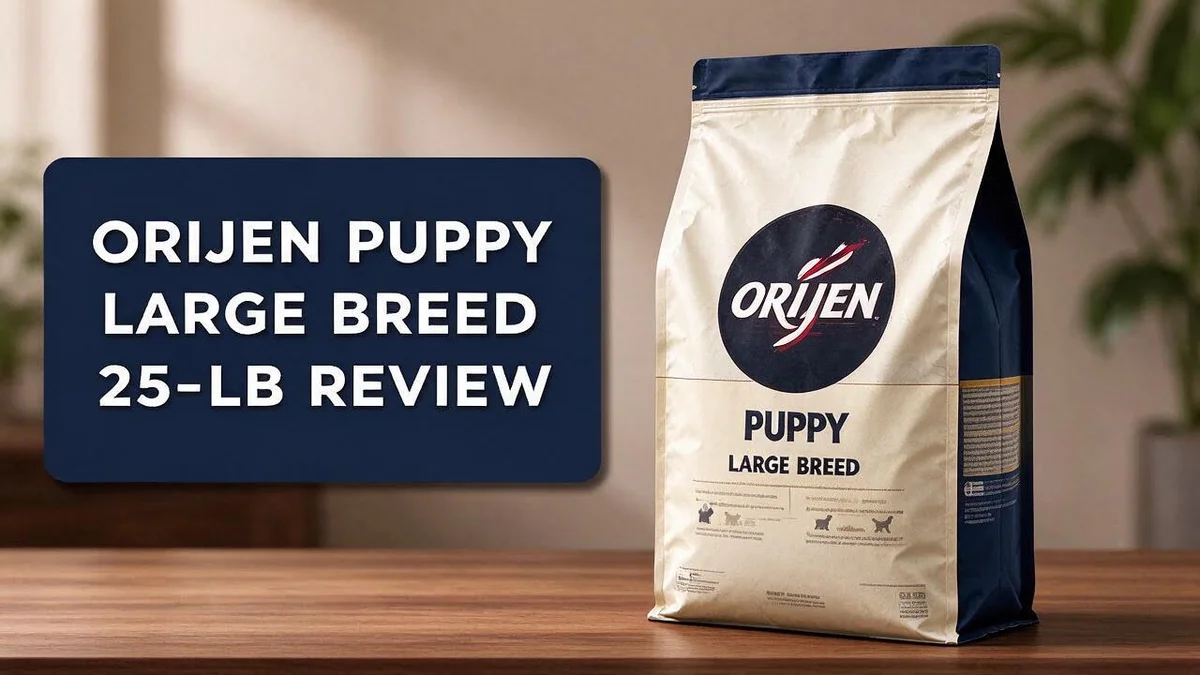
Orijen Puppy Large Breed Dog Food Review 2026
Choosing the right food for a growing puppy can feel like a big job. Large breed pups need steady growth, and the right formula makes a real difference.
The Orijen Puppy Large Breed 25 lb bag aims to meet those needs. It offers 38 percent protein and keeps carbohydrates capped at 20 percent.
Many owners report a clear coat improvement after switching. The recipe features free run chicken, turkey, wild caught fish, and cage free eggs.
Still, this food is very rich for some pups. Certain dogs get runny stools, and sensitive stomachs may struggle with the richness.
In this review, you will see whether this formula fits your puppy. Keep reading to learn what works, what does not, and how it compares to top rivals.
In a Nutshell
-
Animal based ingredients: Free run chicken, turkey, wild caught fish, and cage free eggs form the core of this recipe. Many pet parents look for named meats, and this list delivers them clearly.
-
Very high protein: At 38 percent protein, this food packs a lot of protein into every cup. Some owners feel that level is too high for large breed puppies, so it helps to check with your vet.
-
Carbs kept low: Carbohydrates stay capped at 20 percent. The formula also uses a low glycemic approach, which means it releases energy more slowly.
-
Calorie control matters: Limited calories help support a healthy weight. This design also aims to ease stress on growing bones and joints.
-
Watch the stomach: Rich food can cause runny stools in some dogs. One sensitive stomach pup reacted to the richness, so a slow switch over several days works best.
-
Other options to compare: Orijen Amazing Grains Small Breed, Halo Elevate Healthy Grains, and Wellness CORE+ Small Breed give you different choices. Hill’s and Purina also come up in side by side comparisons, so you can weigh each brand before you decide.
Nutritional Profile and Protein Levels


Last update on 2026-11-02 / Affiliate links / Images from Amazon Product Advertising API
Protein helps a growing puppy build lean muscle and strong tissue. Puppies grow fast, so their bodies use a lot of it every day.
Always read the guaranteed analysis on a dry matter basis. Wet foods hold more water, so their numbers can look different on the bag. Comparing dry matter figures gives you a fair view of what your pup actually eats.
Large breed puppies need a careful balance. Protein is only one part of the picture. Growth speed matters just as much, since fast weight gain can put stress on developing joints.
Calcium and phosphorus levels deserve a close look too. Large breed puppies need controlled mineral intake to support healthy bone development. Check the label and ask your vet whether the mineral balance fits your pup’s age and size.
Watch your puppy’s body condition each week. You should feel the ribs gently under a thin layer of fat. If the ribs feel hard to find, cut back on portions. If the ribs stand out, add food slowly.
Switching foods works best with a slow transition. Mix the new food with the old food for seven to ten days. Increase the new food a little more each day. This gives your puppy’s system time to adjust to the new protein level.
Measured feeding matters with a rich formula. Use a measuring cup rather than guessing. Small changes in portion size can shift your puppy’s weight over a few weeks.
Your puppy’s needs will change as they grow. A diet that suits a three month old pup may not suit a pup approaching adulthood. Plan a check in with your vet at each growth stage.
Keep a simple log of weight, energy, and coat quality. Notes like these help you spot trends early. They also give your vet clear facts to work with during each visit.
Ingredient Quality and Sourcing
Ingredient quality starts with the label. A strong puppy food names its meat sources clearly. This formula lists real animals instead of vague terms. Clear names help you judge what your puppy eats every day.
Free run and wild caught sourcing choices. Free run chicken and turkey come from birds that move around rather than live in tight cages. Wild caught fish comes from natural waters. Many pet parents like these choices because they feel closer to a natural diet.
Whole meats and meals both matter. Whole meat adds moisture and natural flavor. Meals pack protein into a smaller weight. Both can fit a healthy puppy diet, so balance matters more than any single word on the bag.
Cage free eggs add useful nutrients. Eggs supply high quality protein and healthy fats that support growing bodies. They also give many dogs a tasty bite that helps picky eaters.
Grain free is not always necessary. Owners describe this formula as grain free, which means it contains no wheat, corn, or rice. Grains are not harmful for most puppies. Ask your vet whether a grain free diet suits your pup before you switch.
Quality does not guarantee a perfect fit. One owner noted that a sensitive stomach reacted to the richness, even with good ingredients. Every puppy digests food differently. Watch stool quality and energy during the first few weeks.
Good ingredients support healthy growth. Quality proteins provide amino acids that help muscle and tissue develop. Pair these ingredients with careful portions for the best results.
Check how the brand shares sourcing details. Good brands explain where their chicken, turkey, and fish come from. If the details feel vague, contact the company directly. Clear answers show that the brand takes ingredient care seriously.
Digestive Response and Stool Quality
Your puppy’s stool gives you a daily clue about digestion. Checking it often helps you spot problems early and adjust with confidence.
Firm, well formed stool usually means the food agrees with your pup. It should hold its shape and pick up cleanly. Soft stool that spreads or looks like paste deserves a closer look.
Stool texture often shifts when a puppy eats a dense formula. The gut may need extra time to adapt to every bite. Watching these changes helps you judge whether the food fits your dog.
Richness works in two ways. Dense kibble delivers lots of nutrients in small portions. A growing digestive system may struggle to process that much at once.
Dogs with sensitive stomachs need extra attention. Their gut may react faster to changes in fat or protein. Keep a close eye on them during the first few weeks.
Look for patterns rather than single events. One soft stool after a new treat is normal. Repeated loose stools over several days signal a need for action.
Water intake matters too. Fresh water helps the gut process dry food. Puppies who drink less may form harder stool, so keep the bowl filled.
Portion control can calm things down. Measure meals carefully rather than free feeding. Smaller, steady meals give the digestive system an easier load.
Treats, table scraps, and sudden food swaps can also change stool quality. Keep extras minimal while your puppy adjusts to the new bag.
A healthy puppy usually has regular bowel movements each day. Frequency can vary with meal size and activity level.
Watch for these warning signs. Blood, black tarry stool, vomiting, or ongoing diarrhea need a vet visit quickly. Puppies can dehydrate fast.
Keep notes on color, shape, and frequency for one week. Bring that record to your vet for faster answers. A vet can also check for parasites and rule out other causes.
Top 3 Alternatives
If you want other options for your growing puppy, these three foods are worth a look. Each one supports large breed puppies in its own way.
Royal Canin Large Puppy

Last update on 2026-11-02 / Affiliate links / Images from Amazon Product Advertising API
This food is made for large breed puppies during their early growth stages. It supports healthy bone and joint development. Many owners like how easy it is to find and how consistent each batch feels.
Pick this option if you want a formula designed for your puppy’s size.
Blue Buffalo Large Breed

Last update on 2026-11-02 / Affiliate links / Images from Amazon Product Advertising API
This recipe lists real meat as the first ingredient. It also includes fruits and vegetables for everyday nutrition. Many dog owners appreciate the variety of flavors and textures.
This choice works well if you prefer a meat focused diet for your pup.
Wellness CORE Puppy

Last update on 2026-11-02 / Affiliate links / Images from Amazon Product Advertising API
This food centers on high protein and a simple nutrient mix. Owners who want fewer fillers often choose this option. Your puppy may need a gentle switch. Mix the new food into the old food slowly over several days.
This food suits active puppies with plenty of energy.
Every puppy is different. Check with your vet before you change your puppy’s diet. Your vet can help you find the right food based on your puppy’s weight, age, and health needs.
Coat and Skin Results
Many owners say their puppy’s coat looks shinier after the switch. Reports describe a significant coat improvement, with fur that feels softer to the touch.
Coat changes take time, so patience matters. A puppy’s coat keeps replacing itself as the pup grows. The newest hair shows the effect of the diet best.
Check the fur along the shoulders and back for clear signs. Shine and softness are easy to track. Run your hand along your puppy’s side each week.
Healthy fur should feel smooth and full, not dry or brittle. Take a photo on the same day each week. Photos make small changes easier to see over time.
Skin tells a similar story. Look at the skin under the fur, especially the belly and the area behind the ears.
Healthy skin looks clean and pale pink, with no redness or flakes. Small bumps or dark patches need a vet visit.
Itching deserves attention. Some scratching is normal, but constant licking or chewing is not. Ongoing itch can point to allergies, a skin infection, or dry skin. Call your vet if you see hair loss or sores.
Brushing helps too. Brush two or three times each week with a soft slicker brush. This spreads natural oils along the coat and removes loose hair. It also helps you spot skin changes early.
Wild caught fish adds natural oils. Many owners link these oils to a healthy, glossy coat.
Every puppy reacts in a different way. Genetics, breed mix, and seasonal shedding all affect the coat. Keep simple notes and share them at each vet visit. Results may show up within a couple of months, though timing varies.
Coat health reflects overall care, not food alone. Regular exercise, gentle grooming, and routine vet checkups also support a shiny coat.
Value and Cost per Feeding
Feeding is where daily planning really counts. A good plan keeps your puppy growing at a steady pace and feeling their best.
Start with the feeding chart on the bag. It gives you a starting point based on your puppy’s expected adult weight. Then adjust from there.
Weigh your puppy every week or two. Steady weight gain is a good sign. Rapid jumps mean you should cut back a little.
Large breed puppies need slow, controlled growth. Fast growth can strain their joints, so measure meals carefully. Ribs should be easy to feel under a thin layer of fat.
Use a kitchen scale for accuracy. Cups can vary a lot from one scoop to the next. Weighing each meal keeps portions consistent.
Plan the number of meals per day with your vet. Most puppies eat three to four meals daily until about six months old. Then they often move to two.
Keep feeding times the same each day. A steady routine helps your puppy feel secure and ready to eat.
Store the bag the right way. Keep kibble in its original bag inside an airtight bin. Heat, air, and moisture can dull flavor and fat quality over time.
Choose a bag size you can finish within about six weeks of opening. Food stays fresher, and you avoid tossing stale kibble at the bottom of the bag.
Track how much your puppy eats each day. Write it down for a week. Patterns show whether you need to adjust portions before weight changes become a problem.
Treats count too. Keep them under about ten percent of daily calories so the main meals still provide complete nutrition.
Watch for changes in appetite. A puppy that suddenly refuses meals may need a checkup. Ask your vet about any lasting change.
Clean the bowl daily to keep meals fresh. Wash it with warm soapy water after each meal.
Good planning makes every bowl count. Your puppy grows best with steady meals, regular weighing, and a bag stored well.
Pros and Cons
Pros
- Owners like the ingredient list
- Some reviewers praise the packaging
- Carbohydrates stay capped at 20 percent
- Calorie limits help support a healthy weight
- Free run chicken, wild caught fish, and cage free eggs add real protein variety
Cons
- A 38 percent protein level may feel high for large breed puppies
- Some dogs get runny stools from the rich formula
- A puppy with a delicate system may not handle the food well
- Reviews are mixed, so results can vary from dog to dog
Who Should Buy It
This food suits owners who want a meat rich meal for a growing large breed puppy. People who read ingredient labels closely often feel at ease with the recipe.
Puppies with a steady digestive history make the best match. If your pup already handles the current diet well, a slow switch may go smoothly.
Adult dogs in the same home should eat their own food. Puppy formulas carry extra calories and nutrients, so older dogs may gain weight if they share the bowl.
Some buyers should look elsewhere. Owners who want a lower protein option may prefer another formula. Shoppers who need a quick fix for a picky eater may also find the richness hard to manage.
Active families are often a good fit. Energetic puppies burn more calories, so the dense food can support long play sessions.
Buyers who need a small breed formula should choose a different option from this lineup. Large breed growth needs call for a recipe designed for that stage.
Vet guidance matters before any diet change. A vet can confirm the right approach for a specific breed mix and growth rate. This step protects your puppy from unnecessary risk.
Plan a gradual switch no matter what. Mix the new food with the old food over about seven days. Increase the new portion a little each day, and keep a simple log of appetite and energy.
Owners who enjoy measuring meals and keeping a routine will feel at home with this formula. Those who want a quick, low effort routine may prefer a simpler option.
The best buyer is patient and organized. This puppy food rewards careful planning. A little effort at the start often leads to a smoother growing season for both dog and owner.
Final Verdict
Orijen Puppy Large Breed is a strong choice for many growing pups. It is not a perfect fit for every home, though. The best decision depends on your puppy’s own needs.
Start with one simple test. Ask yourself whether your puppy handles rich food well. A calm tummy and firm stools point to a good match.
Next, think about your timeline. Large breed puppies grow fast, so checkpoints matter. Schedule a vet visit after the first month. Bring your weight notes and feeding log so the appointment goes smoothly.
Watch your puppy’s energy levels too. A happy pup with steady play and good sleep usually shows the food agrees with them. A pup who seems sluggish, itchy, or restless deserves a closer look.
Daily routines matter as well. Consistent portions make it easier to spot changes early. Write down any shifts in appetite or mood so you can share them with your vet.
Here is the key takeaway. This food offers real protein, a grain free recipe, and a coat boost for many dogs. However, the rich formula and high protein level need careful watching. Puppies with sensitive stomachs may need a different plan.
No single bag can do all the work. Good growth comes from steady feeding, gentle exercise, and regular checkups. Think of this food as one helpful piece of the puzzle.
Final advice is simple. Trust your vet and your puppy. Watch the stool, track the weight, and adjust when needed. Your puppy will show you whether this food works.
Frequently Asked Questions
Is this food grain free?
Some reviews describe it as grain free, but the label on your bag is the best source. Check the bag before you buy to confirm the ingredients. Reading the label yourself makes it easy to know what your puppy eats.
When should my puppy switch to adult food?
Large breed puppies often stay on puppy food for longer than smaller dogs. Ask your vet when the switch makes sense for your dog’s growth plan. Do not guess the timing on your own, because each puppy grows at a different pace.
Can I add toppers or treats?
Extra foods add calories, so they change the daily total. Keep treats small and count them in your plan. Many owners choose small training bites because they are easy to measure and use.
What if my puppy refuses to eat it?
Picky eaters may need a few days to adjust to a new bowl. Offer meals at set times and remove uneaten food after about 20 minutes. This keeps mealtime calm and helps your puppy learn a simple routine.

Hi, I’m Liza — pet lover, lifelong animal enthusiast, and the voice behind Liza4Pets. I created this space to share honest, practical pet care advice for fellow pet parents who want the best for their furry (and not-so-furry) companions.